
When you don’t get enough sleep, your body’s immune system fundamentally goes offline. Sleep deprivation drastically reduces production of protective cytokines, antibodies, and infection-fighting cells that defend against pathogens. You’re three times more likely to catch a cold with chronic sleep loss, and less than seven hours nightly leaves you vulnerable to infections your well-rested body would easily fight off. Understanding the deeper mechanisms reveals why quality sleep isn’t optional for ideal health.
How Sleep Deprivation Disrupts Immune Cell Production
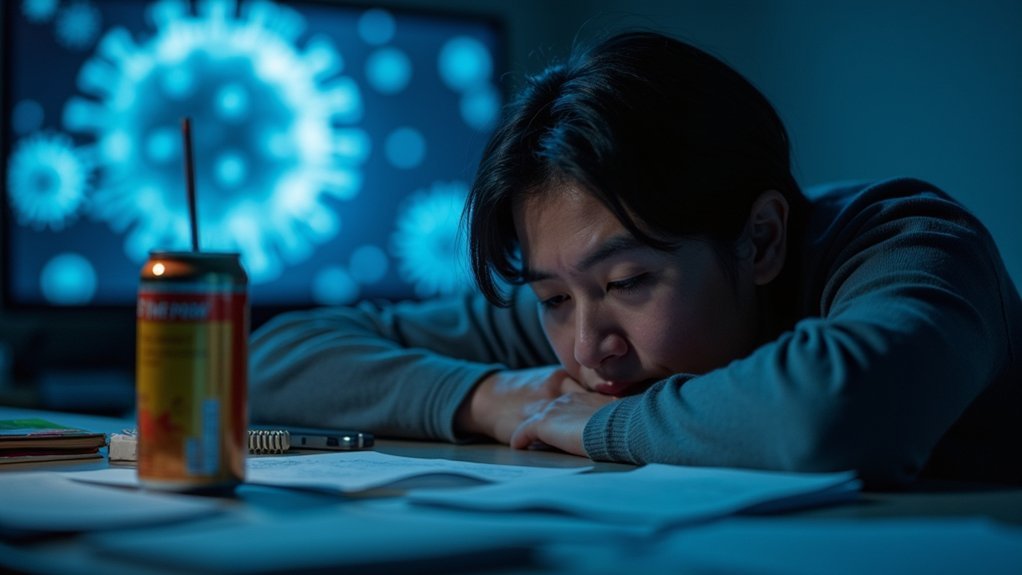
When you don’t get enough sleep, your body’s ability to produce essential immune cells takes a significant hit. Sleep deprivation dramatically reduces the production of protective cytokines, antibodies, and infection-fighting cells that your immune system relies on to defend against pathogens.
During quality sleep, your body naturally manufactures these important immune components, but insufficient rest disrupts this critical process.
Quality sleep acts as your body’s natural immune factory, while sleep deprivation shuts down this essential production line.
Your monocytes, which are key players in your innate immune response, don’t function properly when you’re sleep-deprived. This dysfunction leads to increased inflammation and compromised immune defenses.
Research demonstrates that getting less than seven hours of sleep chronically makes you three times more susceptible to infections like the common cold, highlighting how sleep deprivation fundamentally weakens your body’s cellular immunity production.
The Critical Role of Cytokines in Sleep-Immune System Connection
Among the immune components affected by sleep loss, cytokines stand out as particularly important signaling proteins that orchestrate your body’s defense mechanisms.
When you don’t get adequate rest, your immune system’s ability to produce these essential molecules becomes severely compromised.
Sleep deprivation creates a cascade of problems affecting cytokine production:
- Your protective cytokine levels drop markedly, weakening infection-fighting capabilities
- Inflammatory cytokine production becomes disrupted, impairing pathogen response
- The balance between pro-inflammatory and anti-inflammatory signals gets thrown off
- Chronic sleep loss leads to persistent low-grade inflammation throughout your body
- Your overall disease susceptibility increases due to reduced cytokine activity
Quality sleep enhances both types of cytokines, maintaining the delicate immune balance your body needs for ideal health.
Increased Infection Risk From Chronic Sleep Loss
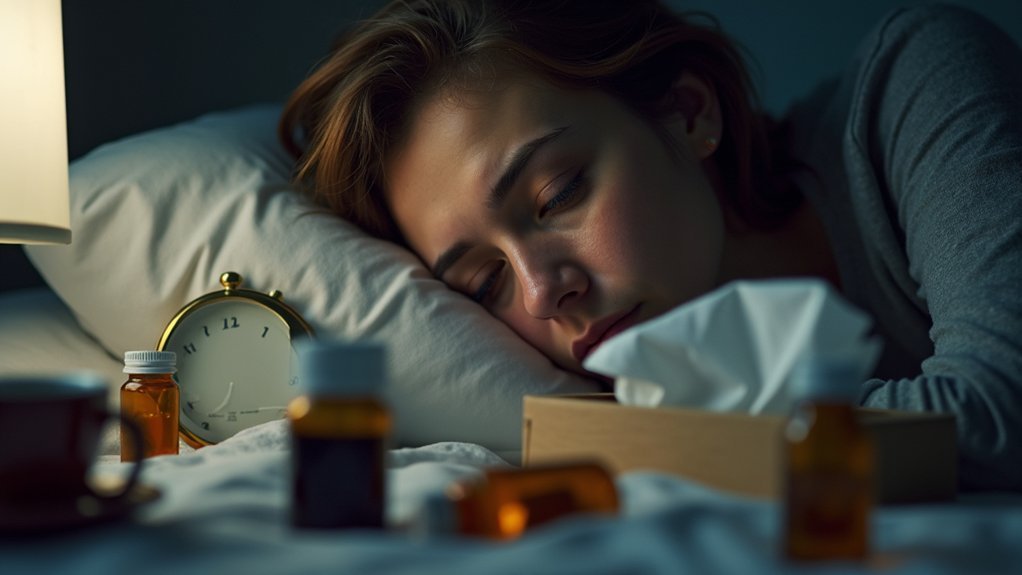
Since chronic sleep deprivation disrupts your cytokine production, it’s no surprise that consistently sleeping less than seven hours per night triples your risk of catching a cold compared to getting eight hours or more.
When you don’t get adequate rest, your body produces fewer protective cytokines and infection-fighting cells essential for mounting an effective immune response against viruses.
Your compromised immune system becomes markedly less capable of defending against pathogens when you’re chronically sleep-deprived.
If you’re sleeping less than six hours nightly, you’re particularly vulnerable to infections.
The infection risk doesn’t just stop at getting sick – sleep deprivation also slows your recovery process, prolonging symptoms and further weakening your immune response, creating a cycle of vulnerability.
Sleep Quality’s Impact on Vaccine Effectiveness and Recovery
Beyond simply increasing infection risk, inadequate sleep directly undermines your body’s ability to build immunity from vaccines.
When you don’t prioritize sleep quality around vaccination time, you’re sabotaging vaccine effectiveness and compromising your immune system’s response.
Research reveals stark differences in protection levels:
- Less than 4 hours of sleep considerably reduces antibody production
- Consistent 8+ hour sleep patterns strengthen immune responses markedly
- Poor sleep quality weakens your adaptive immune system’s function
- Sleep deprivation before vaccination limits initial antibody formation
- Insufficient post-vaccination rest undermines long-term disease protection
Your sleep habits directly determine how well vaccines work.
Quality sleep isn’t optional when getting vaccinated—it’s the difference between robust immunity and wasted protection.
Without adequate rest, you’ll develop weaker antibody titers and reduced protection against targeted diseases, making quality sleep essential for maximizing immunization benefits.
Restoring Immune Function Through Proper Sleep Habits

When you’ve damaged your immune system through poor sleep habits, the path to recovery requires deliberate changes to your nightly routine.
Establishing consistent sleep schedules between 7-9 hours nightly allows your system to produce essential protective cytokines and antibodies for fighting infections. You’ll optimize vaccine effectiveness by prioritizing quality rest before and after immunizations, as insufficient sleep dramatically reduces antibody production.
Create a sleep-friendly environment by eliminating distractions and incorporating relaxation techniques. These changes directly support your immune function while reducing inflammation and infection susceptibility.
If you’re struggling with persistent sleep disorders, seek medical consultation for therapies like cognitive behavioral therapy for insomnia. This professional intervention can restore your immune capabilities and enhance overall well-being through improved sleep quality.
Frequently Asked Questions
Does Lack of Rest Weaken the Immune System?
Yes, lack of rest greatly weakens your immune system. You’ll produce fewer protective cytokines and antibodies, making you three times more likely to catch infections and reducing your body’s ability to fight illnesses effectively.
What Would Cause Your Immune System to Weaken?
Several factors can weaken your immune system, including chronic stress, poor nutrition, excessive alcohol consumption, smoking, sedentary lifestyle, certain medications, aging, and underlying health conditions like diabetes or autoimmune disorders.
Can Sleep Deprivation Make Your Body Weak?
Yes, sleep deprivation weakens your body by reducing infection-fighting cells and protective cytokines. You’ll become three times more likely to catch colds, experience increased inflammation, and recover more slowly from illnesses.
Why Do I Feel Sick if I Don’t Sleep Enough?
When you don’t sleep enough, you’ll feel sick because your body produces fewer protective cytokines and antibodies. Your immune system can’t fight off infections effectively, leaving you vulnerable to viruses and prolonging recovery time.
In Summary
You can’t afford to ignore sleep’s crucial role in your immune defense. When you’re sleep-deprived, you’re disrupting immune cell production, throwing off cytokine balance, and increasing your infection risk. You’ll also find vaccines less effective and recovery times longer. Don’t let chronic sleep loss compromise your health. Make quality sleep a priority—aim for 7-9 hours nightly. Your immune system depends on it to keep you healthy and resilient.


