
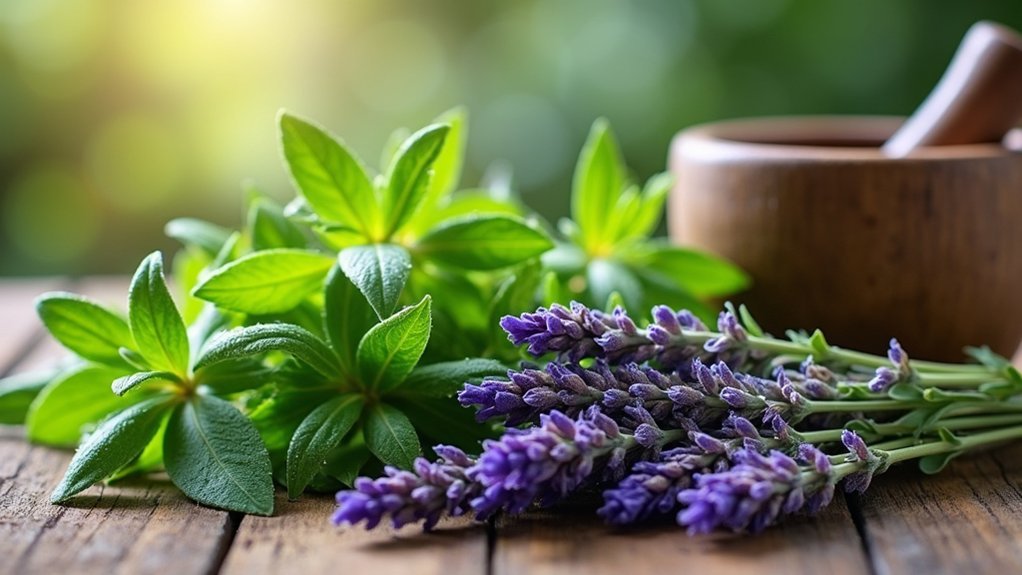
You can enhance your recovery sleep with powerful natural herbs like valerian root, which reduces the time you spend falling asleep, and passionflower, which boosts GABA levels for deep relaxation. Ashwagandha stabilizes cortisol levels to combat stress-related insomnia, while chamomile provides gentle sedation without morning grogginess. Lemon balm acts as a natural brake for your overactive nervous system, and rhodiola rosea targets stress-induced exhaustion that disrupts quality rest. Discover the specific dosages and mechanisms that’ll transform your nightly restoration.
Understanding the Role of Herbs in Recovery Sleep
While your body works tirelessly to heal during recovery, quality sleep becomes one of your most powerful allies in the restoration process.
Your body’s natural healing power reaches its peak when supported by the restorative embrace of deep, quality sleep.
Recovery demands deeper, more restorative rest than typical sleep, yet stress and anxiety often interfere with achieving this vital healing state. This is where herbs step in as natural allies for your recovery journey.
Related guide: Best Chamomile Products for Natural Sleep Enhancement, According to Sleep Experts
Herbal remedies work synergistically with your nervous system, offering calming effects that promote restful sleep without the harsh side effects of pharmaceutical options.
These plant-based solutions don’t just address sleep quality—they support cognitive function and provide healing properties that enhance your body’s natural recovery mechanisms.
Lemon Balm for Nervous System Relaxation
When you’re dealing with an overactive nervous system during recovery, lemon balm acts as a natural brake that calms frayed nerves and restores balance.
You’ll find that this gentle herb reduces cortisol and other stress hormones that can keep your body in a heightened state of alert.
As your nervous system settles, lemon balm promotes the deeper, more restorative sleep phases your body needs to heal and recover effectively.
Calms Overactive Nerves
Although modern life constantly bombards your nervous system with stressors, lemon balm (Melissa officinalis) offers a gentle yet powerful solution for calming overactive nerves.
This remarkable herb delivers calming effects that directly target anxiety while helping you promote relaxation throughout your entire system. When your nerves feel frayed and overstimulated, lemon balm’s rosmarinic acid works to modulate neurotransmitter systems in your brain, creating a natural pathway to tranquility.
You’ll find this versatile herb doesn’t just quiet mental chatter—it actively works to improve sleep quality, ensuring you get the deep recovery rest your body needs.
Regular use supports cognitive function and mood improvement, making lemon balm one of the most effective herbal remedies for extensive nervous system support during recovery.
Reduces Stress Hormones
Since elevated cortisol levels can wreak havoc on your recovery process, lemon balm’s ability to reduce stress hormones makes it an invaluable ally in your healing journey.
This herb’s calming properties directly target your body’s stress response system, effectively lowering cortisol production while reducing stress throughout your day.
When you’re dealing with elevated anxiety levels, lemon balm works by modulating neurotransmitter activity in your brain, creating natural relaxation without drowsiness.
Research shows participants experienced significant reductions in stress compared to control groups.
Beyond cortisol management, lemon balm excels at promoting sleep quality and helping improve mood.
Among herbal remedies for recovery, you can take 300-600mg daily through teas, tinctures, or capsules to optimize your body’s natural healing mechanisms.
Promotes Deep Sleep
While stress reduction sets the foundation for healing, lemon balm’s most powerful recovery benefit lies in its ability to promote deep, restorative sleep through nervous system relaxation.
This herb’s calming effects work by enhancing neurotransmitter function, specifically protecting GABA from breakdown through compounds like rosemary acid.
Lemon balm’s sleep-promoting properties include:
- Reducing anxiety that keeps you awake at night
- Extending sleep duration for better recovery cycles
- Improving sleep quality through deeper rest phases
- Supporting nervous system calm during restorative hours
You can incorporate these herbal remedies into your routine by taking 300-600mg doses as teas, tinctures, or capsules before bed.
If you’re struggling with insomnia, lemon balm offers a natural path to the restorative sleep your body needs for ideal recovery.
Oat Straw for Tension Relief and Sleep Support
When stress and sleepless nights become overwhelming, oat straw (Avena sativa) offers a gentle, natural solution that’s been trusted for centuries. This remarkable herb’s calming properties help you achieve deeper relaxation while effectively reducing tension and anxiety.
Rich in antioxidants, oat straw works to support the nervous system, naturally enhancing your sleep quality and duration.
Packed with powerful antioxidants, oat straw naturally nourishes your nervous system to deliver longer, more restorative sleep cycles.
You’ll appreciate how this natural herb promotes mental clarity during the day while providing mood stabilization as bedtime approaches. Traditional uses highlight oat straw’s ability to soothe frayed nerves and combat insomnia effectively.
For anxiety relief, you can choose from various forms including teas, tinctures, or capsules. With minimal side effects and proven safety, oat straw stands out among natural herbs for promoting restful recovery sleep.
Passionflower as a Natural Sleep Aid
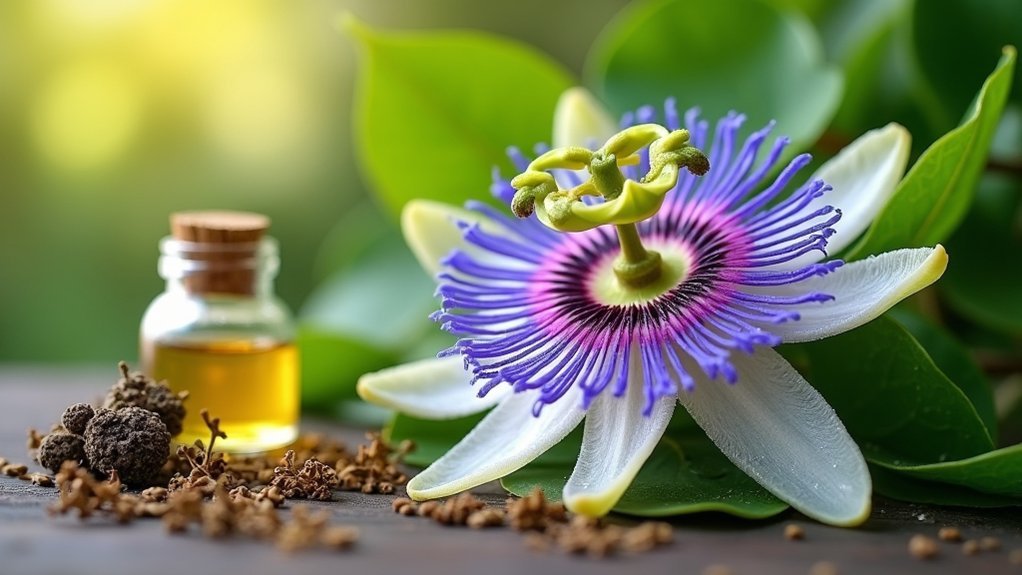
Passionflower (Passiflora incarnata) emerges as another powerful ally in your quest for restful sleep, offering distinct advantages that complement oat straw’s gentle approach.
This natural sleep aid’s calming effects greatly improve sleep quality while reducing anxiety through its active compounds.
Passionflower’s mechanisms enhance GABA levels in your brain, promoting deep relaxation and extended sleep duration. You’ll find it particularly effective for minimizing sleep disturbances and combating insomnia.
Consider these key benefits of passionflower supplementation:
- Increased total sleep time through enhanced GABA activity
- Reduced anxiety levels via flavonoids and alkaloids
- Fewer sleep interruptions for more restorative rest
- Multiple consumption options including teas, tinctures, and capsules
While generally safe, potential side effects include dizziness and sedation.
Consult a healthcare professional before incorporating passionflower into your recovery routine.
Valerian Root for Deep Restorative Sleep
As you explore deeper sleep solutions, valerian root (Valeriana officinalis) stands out as one of nature’s most potent sedatives for achieving truly restorative sleep.
Its sedative properties greatly improve sleep quality by reducing the time you’ll spend tossing and turning before falling asleep.
Valerian’s active compounds, particularly valerenic acid, enhance GABA availability in your brain, producing powerful calming effects that promote deeper rest cycles.
You’ll find this herb particularly effective for combating insomnia and sleep disturbances naturally.
While valerian’s generally safe for short-term use, you should be aware of potential side effects including dizziness, gastrointestinal discomfort, and daytime drowsiness.
Always consult a healthcare professional before starting valerian, especially if you’re taking medications or have existing health conditions, to determine a safe dosage.
Chamomile for Calming Sleep Preparation
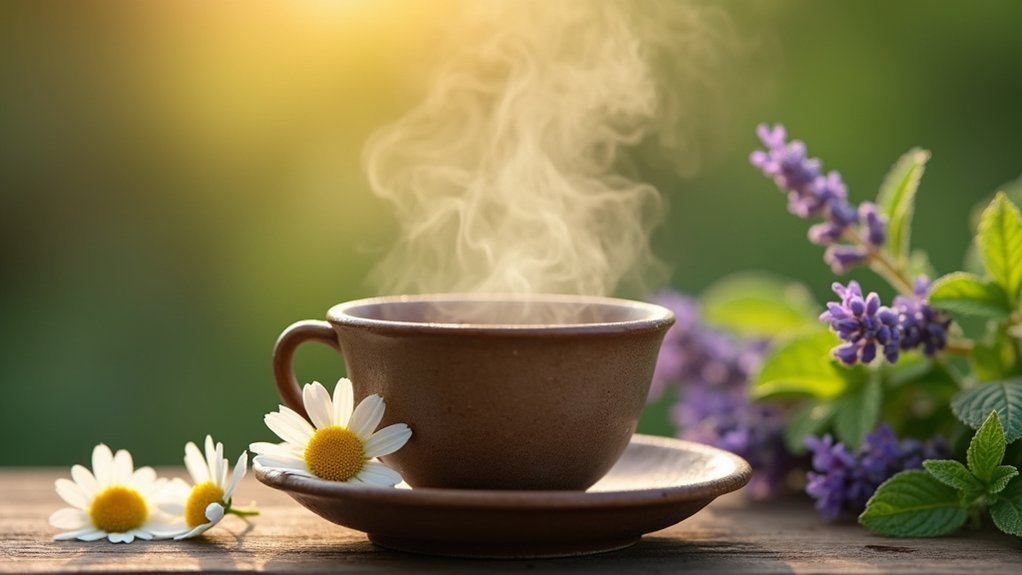
For centuries, chamomile has earned its reputation as nature’s gentle sleep companion, offering a softer approach to bedtime preparation than stronger sedatives like valerian. This natural herb contains apigenin, which binds to brain receptors promoting calming relaxation and quality sleep.
Chamomile’s recovery benefits include:
Chamomile delivers proven sleep enhancement, anti-inflammatory support, and gentle sedation without dependency risks or morning grogginess.
- Enhanced sleep quality – Studies show chamomile tea considerably reduces insomnia symptoms.
- Safe nightly use – Generally well-tolerated for most people without dependency risks.
- Anti-inflammatory properties – Reduces bodily stress while supporting overnight recovery.
- Gentle sedation – Creates drowsiness without morning grogginess.
You’ll find chamomile tea works best when consumed 30-45 minutes before bedtime. Its mild, honey-like flavor makes it enjoyable while preparing your body for restorative sleep.
However, if you’re allergic to ragweed, consult your healthcare provider first.
Ashwagandha for Stress-Related Sleep Issues
If you’re struggling with stress-induced insomnia, ashwagandha works by stabilizing cortisol levels through its active compounds called withanolides, which create a more conducive environment for restful sleep.
You’ll find that this adaptogenic herb doesn’t just mask sleep problems but actually reduces the underlying stress and anxiety that’s keeping you awake at night.
Taking 600 mg daily has shown significant improvements in sleep onset and quality, though you’ll want to time your dosage properly and consult a healthcare professional for personalized guidance.
Ashwagandha’s Sleep Mechanism
When stress disrupts your sleep patterns, ashwagandha works through multiple biological pathways to restore natural rest cycles. This natural option targets your body’s stress response system, helping you achieve better sleep quality and enhanced recovery.
The herb’s sleep-promoting mechanisms include:
- Cortisol regulation – Withanolides help balance cortisol levels, reducing nighttime stress hormones that keep you awake.
- Anti-inflammatory effects – Active compounds decrease inflammation that can interfere with restful sleep.
- Nervous system support – The herb promotes relaxation by calming your central nervous system.
- Insomnia reduction – Regular supplementation directly addresses sleep disturbances and promotes deeper rest.
These combined actions improve your overall well-being while supporting your body’s natural ability to relax and recover during sleep.
Stress Hormone Reduction
Understanding these sleep mechanisms reveals why ashwagandha proves particularly effective for stress-related insomnia. Through stress hormone reduction, this adaptogenic herb considerably lowers cortisol levels, directly addressing anxiety that disrupts your recovery rest.
When you take 600mg daily, ashwagandha modulates your stress response by supporting the hypothalamic-pituitary-adrenal axis, helping you cope better with daily pressures.
This cortisol reduction creates a cascading effect that can improve sleep quality and enhance your overall well-being. You’ll find that ashwagandha tackles the root cause of stress-related sleep disturbances rather than masking symptoms.
However, you should consult a healthcare professional before starting supplementation, as side effects may include mild gastrointestinal discomfort in some individuals.
Optimal Dosage Timing
Timing your ashwagandha supplementation correctly maximizes its stress-relieving and sleep-promoting benefits. The ideal dosage of 600 mg daily works best when taken during evening hours, supporting your body’s natural wind-down process for stress-related sleep issues.
Here’s how to enhance your ashwagandha timing:
- Take it 1-2 hours before bedtime to allow absorption and promote relaxation.
- Maintain consistent use daily at the same time to establish routine effectiveness.
- Choose your preferred form – you can consume in various forms like capsules, powder, or tea.
- Integrate seamlessly into your existing evening routine for maximum incorporating natural herb benefits.
This flexibility in how you schedule supplementation helps improve sleep quality while fitting your lifestyle.
Always consult a healthcare professional before starting to avoid potential interactions and guarantee proper timing for your specific needs.
Rhodiola Rosea for Recovery-Enhanced Rest
Although recovery often focuses on physical rest, mental fatigue can greatly impair your body’s ability to recuperate effectively. Rhodiola rosea offers a powerful solution by targeting stress-induced exhaustion that disrupts quality recovery.
This adaptogenic herb works to enhance your body’s natural healing processes while addressing mental fatigue that keeps you from achieving restorative rest.
Studies show 400 mg daily can improve concentration and reduce burnout symptoms, making it particularly valuable for promoting relaxation after intense physical or mental demands.
Rhodiola rosea supports cognitive function while helping optimize sleep quality, contributing to overall well-being during recovery periods.
However, you should be aware of potential side effects including dizziness, headache, and dry mouth. Always consult a healthcare professional before incorporating rhodiola rosea into your recovery routine.
Safety Considerations and Proper Dosage Guidelines
While rhodiola rosea and other recovery herbs offer significant benefits, you must prioritize safety through proper dosage and professional guidance.
Recovery herbs provide powerful benefits, but safe usage demands careful attention to proper dosing and expert medical consultation before beginning any regimen.
Herbal supplements can interact with medications or worsen underlying health conditions, making it essential to consult with a healthcare professional before starting any herbal remedies.
Consider these safety considerations and proper dosage guidelines:
- Follow recommended dosages – Ashwagandha works effectively at 600mg daily, while ginseng requires only 200mg per day for maximum benefits.
- Monitor for side effects – Valerian root may cause dizziness or gastrointestinal issues requiring careful monitoring.
- Choose quality products – Look for Traditional Herbal Registration (THR) marks ensuring safety and efficacy through proper quality control.
- Exercise caution with health conditions – Certain herbs may negatively interact with existing treatments.
Frequently Asked Questions
What Is the Most Powerful Healing Herb?
Ashwagandha’s your most powerful healing herb due to its adaptogenic properties. You’ll experience reduced stress, enhanced well-being, and accelerated recovery processes throughout your body when you incorporate this remarkable herb into your wellness routine.
What Herb Did Jesus Use for Healing?
You’ll find Hyssop mentioned as Jesus’s healing herb in biblical accounts, particularly for purification and cleansing. It’s got antiseptic properties that support respiratory health, wound healing, and digestive wellness naturally.
What Is the King of Healing Herbs?
Ashwagandha’s earned its title as the king of healing herbs through its powerful adaptogenic properties. You’ll benefit from its withanolides that reduce inflammation, improve cognitive function, and help your body manage stress effectively.
What Is the Best Herb for Fatigue?
You’ll find Rhodiola Rosea most effective for fatigue, as studies show 400mg daily reduces mental exhaustion and improves concentration. It’s particularly beneficial if you’re experiencing burnout or chronic tiredness symptoms.
In Summary
You’ll find these natural herbs can considerably enhance your recovery sleep when used responsibly. Start with gentle options like chamomile or lemon balm, then consider stronger herbs like valerian or ashwagandha if needed. Don’t forget to consult your healthcare provider before adding new herbs to your routine, especially if you’re taking medications. Remember that consistency matters more than dosage—you’ll see better results with regular, mindful use over time.


