

Your body’s sleep architecture transforms dramatically with age, creating lighter, more fragmented sleep patterns that make deep rest difficult to achieve. You’ll experience significant reductions in restorative non-REM stages, more frequent nighttime awakenings, and decreased total sleep time. Declining hormones like melatonin, testosterone, and estrogen further disrupt your natural sleep cycles, while chronic conditions, medications, and environmental factors compound these challenges. Understanding these interconnected factors can help you reclaim better sleep quality.
Understanding Age-Related Sleep Architecture Changes
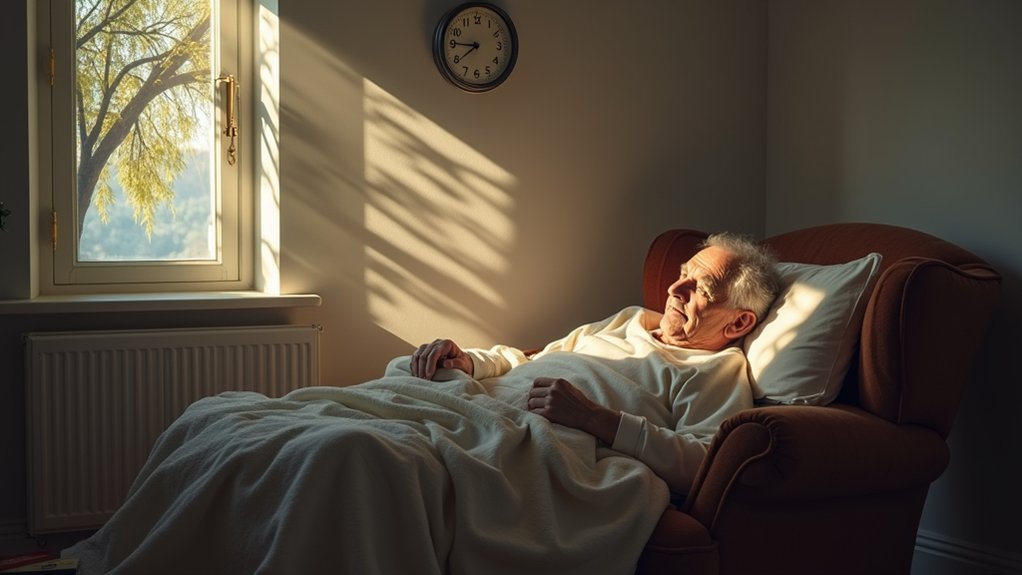
As you age, your sleep architecture undergoes profound transformations that fundamentally alter how you experience rest. Your brain’s ability to generate deep sleep becomes increasingly compromised, with studies showing that older adults experience significant reductions in restorative non-REM stages.
These changes don’t happen overnight—they’re gradual shifts that leave you with lighter, more fragmented sleep patterns.
You’ll likely notice more frequent nighttime awakenings and decreased total sleep time, directly impacting your sleep quality. The deep sleep stages that once provided complete restoration become elusive, leaving you feeling less refreshed despite spending adequate time in bed.
Sleep becomes increasingly fragmented with age, making those once-restorative deep sleep stages frustratingly difficult to achieve.
Understanding these architectural changes helps explain why achieving truly restorative rest becomes more challenging as you grow older, setting the foundation for addressing these sleep difficulties.
Hormonal Shifts That Disrupt Senior Sleep Patterns
While your sleep architecture naturally evolves with age, hormonal fluctuations create an additional layer of disruption that compounds your rest challenges. Declining testosterone in men and estrogen in women directly impact your sleep quality, triggering insomnia and frequent nighttime awakenings. Your body’s melatonin production also decreases, making it harder to fall asleep naturally.
| Hormone | Age-Related Change | Sleep Impact |
|---|---|---|
| Testosterone/Estrogen | Significant decrease | Lighter sleep, frequent awakenings |
| Melatonin | Reduced production | Difficulty falling asleep |
| Reproductive hormones | Sharp decline | Hot flashes, night sweats |
These hormonal changes affect up to 70% of older adults, altering your circadian rhythms and contributing to various sleep disorders. The combined effect creates a cascade of disruptions that fundamentally changes how you experience rest.
Medical Conditions Affecting Sleep Quality in Older Adults

Beyond hormonal disruptions, chronic medical conditions create their own barriers to restful sleep that can leave you tossing and turning throughout the night.
If you’re dealing with arthritis, cardiovascular disease, or neurodegenerative disorders, you’ll likely experience fragmented sleep patterns and persistent insomnia. Chronic pain becomes your unwelcome nighttime companion, preventing the deep, restorative sleep your body desperately needs.
Sleep disorders like sleep apnea are increasingly common as you age, causing interrupted breathing that fragments your sleep cycles and leaves you exhausted during the day.
Mental health conditions such as anxiety and depression frequently accompany these sleep disturbances, creating a vicious cycle that further deteriorates your sleep quality.
Even medications prescribed to treat your health issues can ironically worsen your sleep problems.
Medication Side Effects and Sleep Interference
Though your medications are meant to heal, they can become unexpected culprits in your sleep struggles. Medication side effects from common prescriptions like antihistamines, antidepressants, and benzodiazepines often interfere with your sleep quality.
These drugs can disrupt your natural sleep cycle, preventing you from achieving the deep sleep essential for restoration. Your aging body processes medications differently, leading to prolonged effects that fragment your rest.
Age-related changes in metabolism can extend medication effects, disrupting natural sleep patterns and preventing restorative deep sleep cycles.
Pain medications and cardiovascular drugs frequently contribute to insomnia through their side effects or dangerous interactions. When you’re taking multiple prescriptions, polypharmacy increases your risk of sleep disruption exponentially.
Don’t accept poor sleep as inevitable. Schedule a thorough medication review with your healthcare provider to identify which prescriptions might be stealing your rest.
Environmental Factors That Fragment Senior Sleep
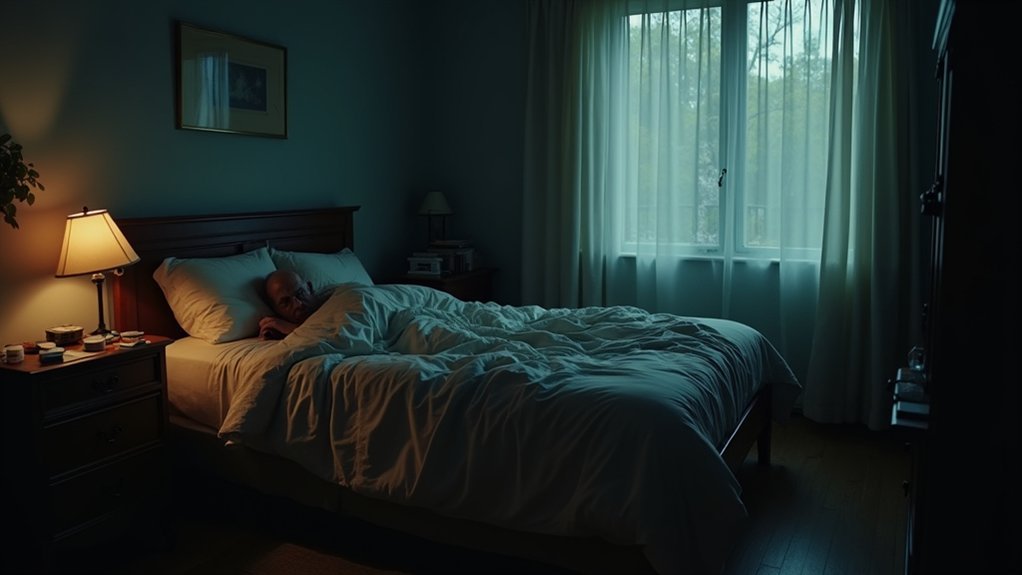
Even after addressing medication concerns, your sleep environment might be sabotaging your rest without you realizing it. Environmental factors create significant sleep disruption that fragments your quality of sleep throughout the night.
| Factor | Impact | Solution |
|---|---|---|
| Temperature | Overheating prevents deep sleep cycles | Keep room 65-68°F |
| Light | Disrupts natural melatonin production | Blackout curtains, eye masks |
| Noise | Causes frequent micro-awakenings | White noise machine, earplugs |
| Bathroom trips | Interrupts REM and deep sleep phases | Limit fluids before bedtime routine |
| Restless bedmates/pets | Creates movement-based disturbances | Separate sleeping arrangements |
Your sleep sanctuary should be cool, dark, and quiet. These environmental adjustments help minimize nighttime arousals and promote uninterrupted deep sleep essential for feeling refreshed.
Common Sleep Disorders in the Elderly Population
While optimizing your sleep environment addresses external disruptions, underlying sleep disorders create internal barriers that no amount of room temperature adjustment can fix.
Sleep disorders affect 40-70% of the elderly population, with three primary conditions dominating: insomnia, sleep apnea, and restless legs syndrome.
Sleep disorders plague nearly half of all elderly adults, with insomnia, sleep apnea, and restless legs syndrome leading the disruption.
If you’re experiencing insomnia, you’ll struggle with falling or staying asleep, often worsened by medications, pain, and cognitive changes.
Sleep apnea causes repeated brief arousals throughout the night, leading to excessive daytime sleepiness and cardiovascular complications.
Restless legs syndrome creates uncomfortable sensations and irresistible urges to move your legs, disrupting sleep organization.
These conditions don’t just fragment your sleep—they fundamentally alter your sleep architecture, preventing the restorative deep sleep your aging body desperately needs for ideal health and cognitive function.
Circadian Rhythm Disruptions and Aging
As you age, your internal biological clock naturally shifts, causing you to feel sleepy earlier in the evening and wake up before dawn.
Your body’s response to light becomes less sensitive, making it harder for natural daylight to properly regulate your sleep-wake cycle.
These changes in light exposure patterns can throw off your circadian rhythm, leaving you feeling tired during the day despite going to bed early.
Internal Clock Changes
When you reach your senior years, your body’s internal clock begins operating differently than it did in your youth. These internal clock changes cause your circadian rhythms to shift, making you feel sleepy earlier in the evening and wake up before dawn.
Your body produces less melatonin, the hormone that regulates sleep-wake cycles, which directly impacts your ability to maintain healthy sleep patterns.
You’ll likely experience more frequent nighttime arousals that fragment your rest and prevent you from achieving sufficient deep sleep phases. This creates a frustrating cycle where poor sleep quality becomes the norm.
Additionally, your tendency to nap during the day can further disrupt your already altered circadian rhythms, making it even harder to achieve restorative nighttime sleep.
Light Exposure Impact
Light exposure greatly influences these circadian rhythm disruptions you’re experiencing as you age. Your sensitivity to light diminishes over time, directly altering your sleep-wake cycle and making it harder to maintain regular sleep patterns.
You’ll likely notice yourself feeling sleepy earlier in the evening and waking up earlier in the morning—this is called phase advance.
Reduced light exposure fragments your sleep and decreases your ability to achieve deep sleep stages, which are essential for cognitive function and overall health.
However, you can restore your circadian rhythms through strategic light management. Increase natural light exposure during the day and reduce artificial light at night.
This simple approach will help realign your internal clock and greatly improve your sleep quality.
The Myth of Reduced Sleep Needs in Seniors
When you accept reduced sleep as inevitable, you’re less likely to seek treatment for legitimate sleep disorder issues.
You might compensate with daytime naps due to flexible schedules, but this creates a cycle of disrupted nighttime rest.
The resulting daytime sleepiness isn’t a natural consequence of aging—it’s a sign your sleep habits need attention.
Don’t let misconceptions prevent you from pursuing the quality rest you deserve.
Sleep Hygiene Strategies for Older Adults
Since quality sleep requires intentional effort rather than wishful thinking, creating the right environment becomes your first priority. Your sleep environment should be cool, dark, and quiet to minimize disrupted sleep throughout the night.
Establishing a consistent bedtime routine signals your body it’s time to wind down. You’ll want to limit screen exposure and blue light before bed, as these disrupt your natural circadian rhythms and compromise sleep quality.
| Environment | Routine | Avoid |
|---|---|---|
| Cool temperature | Reading | Heavy meals |
| Dark room | Gentle stretching | Caffeine |
| Quiet space | Consistent timing | Screen time |
Engaging in relaxing activities like reading or stretching helps calm your mind. Avoiding stimulants and large meals near bedtime prevents interference with your ability to fall asleep. These sleep hygiene practices work together to improve your overall rest.
Professional Treatment Options for Senior Sleep Issues
While sleep hygiene practices form the foundation of good rest, persistent sleep problems often require professional intervention to address underlying disorders effectively.
When good sleep habits aren’t enough, seeking professional help can identify and treat the underlying causes of your sleep troubles.
Several professional treatment options can greatly improve your sleep quality and overall well-being.
Healthcare providers may recommend thorough evaluations and targeted therapies:
- Sleep studies analyze your sleep patterns to identify specific disorders like sleep apnea
- Cognitive behavioral therapy for insomnia (CBT-I) modifies dysfunctional sleep habits and thoughts
- CPAP therapy maintains open airways for those with obstructive sleep apnea
- Medications like low-dose sedating antidepressants may be prescribed cautiously with careful monitoring
- Behavioral interventions establish consistent bedtime routines and minimize wakeful time in bed
These evidence-based approaches address root causes rather than just symptoms, providing lasting solutions for your sleep challenges.
Creating the Optimal Sleep Environment for Seniors
Although professional treatments address underlying sleep disorders, your bedroom environment plays an equally essential role in achieving restorative rest. Your sleep environment directly impacts your ability to reach deep sleep stages that become increasingly elusive with age.
| Environmental Factor | Ideal Setting |
|---|---|
| Temperature | Cool (65-68°F) |
| Lighting | Complete darkness |
| Noise Level | Quiet or white noise |
| Bedding | Comfortable, supportive |
| Evening Lighting | Soft, dim lighting |
You’ll improve sleep quality by eliminating blue light from devices at least one hour before bed. This protects your natural sleep-wake cycle from disruption. Establish a consistent bedtime routine that includes dimming lights and creating a calming atmosphere. Your bedroom should signal rest, not stimulation, helping your body shift naturally into deeper, more restorative sleep.
Frequently Asked Questions
How Does Bed Rest Affect the Elderly?
You’ll experience muscle weakness, disrupted sleep cycles, and cardiovascular decline during bed rest. Your anxiety may increase from isolation, while chronic pain worsens, making it harder to achieve restorative deep sleep stages.
How to Increase Deep Sleep in the Elderly?
You’ll increase deep sleep by establishing consistent bedtime routines, exercising early in the day, creating cool dark environments, limiting evening screen time, and consulting healthcare providers about pain management.
How Much Rest Does a 70 Year Old Need?
You need about 7 to 8 hours of sleep nightly at 70, just like younger adults. Don’t fall for the myth that you require less sleep as you age.
How Much Deep Sleep Should a 70 Year Old Get?
You should aim for about 1-2 hours of deep sleep nightly, roughly 15-20% of your total sleep time. However, you’ll likely experience less deep sleep than younger adults due to natural aging changes.
In Summary
You don’t have to accept poor sleep as an inevitable part of aging. While you’ll face unique challenges like hormonal changes and medical conditions, you can take control of your rest. Start by optimizing your sleep environment, reviewing medications with your doctor, and establishing consistent bedtime routines. Remember, you still need quality sleep to maintain your health and well-being—don’t let anyone tell you otherwise.


