

As you age, your body’s hormone production shifts dramatically, disrupting your sleep quality. Melatonin levels drop up to 80% by age 60, making it harder to fall asleep. Growth hormone declines affect your deep, restorative sleep phases, while estrogen drops cause night sweats and hot flashes. Testosterone reduction leads to frequent awakenings, and thyroid dysfunction fragments your sleep cycles. These hormonal changes compound each other, creating a cascade of sleep disturbances that worsen over time. Understanding these specific mechanisms can help you reclaim restful nights.
The Science Behind Hormonal Sleep Disruption in Older Adults

As you age, your body’s hormonal landscape shifts dramatically, creating a cascade of changes that directly impact your sleep quality and patterns.
The aging process triggers significant reductions in melatonin levels, making it harder for you to fall asleep and maintain restful sleep throughout the night. Your hormone production naturally declines, affecting estrogen and testosterone levels, which can cause disruptive symptoms like hot flashes and night sweats.
These hormonal changes also alter your circadian rhythms, leading to advanced sleep phase syndrome where you’ll feel tired earlier but wake up much earlier. Additionally, elevated cortisol from stress compounds these issues, while sleep disorders become increasingly common, affecting nearly half of all older adults.
Melatonin Decline and Its Impact on Sleep-Wake Cycles
You’ve likely heard of melatonin as the “sleep hormone,” but you mightn’t realize how dramatically your body’s production of this essential chemical messenger drops as you age.
Your pineal gland naturally releases less melatonin starting in middle age, with levels often plummeting by up to 80% by the time you reach your 60s.
This significant decline doesn’t just affect when you feel sleepy—it fundamentally disrupts your entire sleep-wake cycle and can leave you struggling with the quality rest you once took for granted.
What Is Melatonin
While you sleep peacefully through the night, a tiny gland deep within your brain works tirelessly to orchestrate your body’s natural rhythm. This pea-sized pineal gland produces melatonin, a powerful hormone that acts as your body’s internal clock. Melatonin signals when it’s time to sleep and when to wake up, maintaining your circadian rhythm.
Unfortunately, aging notably disrupts this delicate process. After age 30, your melatonin production drops 10-15% each decade. This decline creates a cascade of sleep problems that worsen over time.
You’ll likely experience difficulty falling asleep and staying asleep, leading to common sleep disorders like insomnia. Without adequate rest, you face increased risks of cognitive decline and mood disturbances, making proper sleep hygiene increasingly essential as you age.
Age-Related Melatonin Changes
When you reach your 50s, your pineal gland’s melatonin production begins its most dramatic decline, fundamentally altering your sleep architecture. This aging process creates cascading effects on your sleep patterns and overall well-being.
By age 70, you’ll produce up to 75% less melatonin, making restful sleep increasingly elusive. The consequences impact multiple aspects of your health:
- Fragmented sleep cycles – You’ll experience frequent nighttime awakenings and difficulty staying asleep.
- Advanced sleep phase syndrome – Your bedtime and wake times shift earlier than desired.
- Cognitive decline risks – Poor sleep quality affects memory consolidation and mental sharpness.
- Mood disorder susceptibility – Decreased melatonin correlates with depression and anxiety in aging adults.
This hormonal shift during aging makes daytime fatigue commonplace, undermining your quality of life.
Growth Hormone Reduction and Restorative Sleep Phases

After puberty, your growth hormone levels drop by 1-2% annually, directly affecting your body’s ability to achieve deep, restorative sleep.
This decline means you’ll spend less time in slow-wave sleep phases that are essential for tissue repair and muscle maintenance.
As your GH production decreases, you’re likely to notice reduced energy levels and overall sleep quality that continues to worsen with age.
GH Decline Timing
As you progress through your thirties, your growth hormone (GH) levels begin a steady decline of 1-2% each year, marking the start of significant changes in both your sleep quality and physical recovery.
This hormonal changes timeline affects your restorative sleep phases progressively.
Here’s how GH decline impacts you over time:
- Age 30-40: Initial 10-20% reduction begins affecting deep sleep quality
- Age 40-50: Noticeable decreases in slow-wave sleep and muscle recovery
- Age 50-60: Significant sleep architecture alterations become apparent
- Age 60+: Dramatic GH reduction leads to chronic sleep disturbances
Sleep Quality Impact
Growth hormone’s decline creates a domino effect that fundamentally alters your sleep architecture, particularly targeting the restorative phases your body depends on for overnight recovery.
As aging progresses, these hormonal changes greatly compromise your sleep quality by reducing time spent in deep sleep stages. You’ll experience less REM sleep, which directly impacts memory consolidation and emotional regulation.
This disruption means your body can’t effectively repair tissues or restore energy reserves overnight. Studies show adults over 60 face increased sleep disturbances and insomnia as growth hormone levels plummet.
Without adequate restorative sleep, you’re trapped in a cycle where poor sleep further reduces hormone production, creating additional sleep problems that compound aging’s effects on your overall rest quality.
Estrogen Fluctuations and Sleep Quality in Aging Women
When menopause arrives, estrogen levels plummet dramatically, triggering a cascade of sleep disruptions that affect nearly two-thirds of women during this change.
You’ll likely experience night sweats and hot flashes that jolt you awake, leaving you exhausted and frustrated.
These estrogen fluctuations don’t just cause uncomfortable symptoms—they alter your brain’s sleep architecture.
Here’s what happens:
- Your REM sleep decreases markedly
- Insomnia becomes more frequent and persistent
- Melatonin production drops due to declining estrogen levels
- Sleep disturbances worsen as hormonal changes intensify
Research shows 61% of menopausal women report sleep problems directly linked to estrogen withdrawal.
However, hormone replacement therapy can help restore sleep quality.
While HRT isn’t suitable for everyone, it’s worth discussing with your doctor to weigh potential benefits against risks.
Testosterone Changes and Sleep Patterns in Aging Men
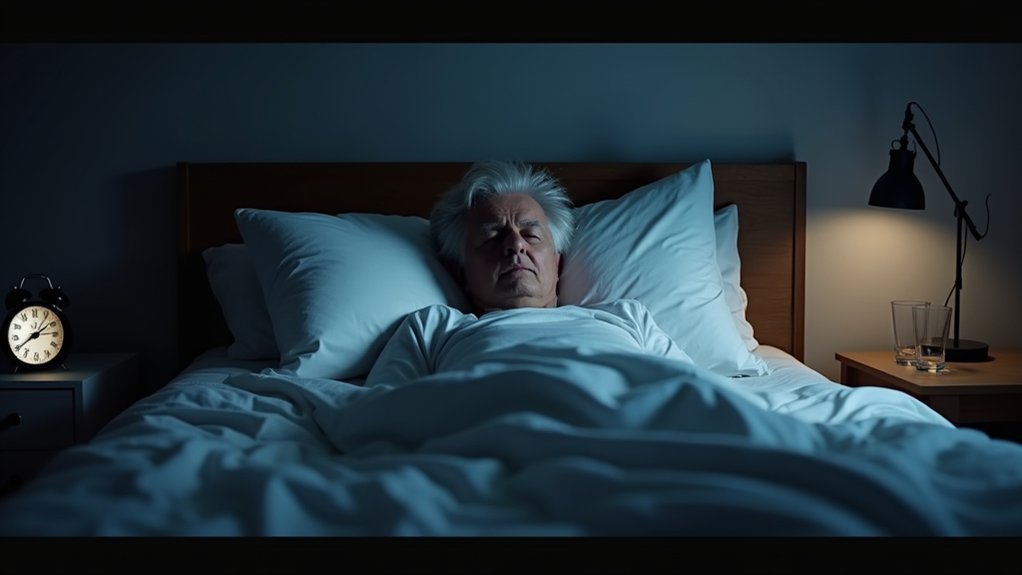
Unlike the dramatic hormonal shifts women experience during menopause, men face a more gradual but equally important decline in testosterone that begins around age 30 and steadily impacts their sleep quality.
You’ll likely notice more frequent nighttime awakenings as your testosterone levels drop, directly affecting your sleep patterns. These hormonal changes reduce REM sleep duration, the restorative stage essential for mental recovery.
If you’re an aging man experiencing disrupted sleep, low testosterone might be the culprit. Studies reveal that 40-50% of men over 80 have testosterone levels markedly below healthy young adults.
This decline doesn’t just affect sleep—it impacts your overall health. Fortunately, you can address these issues through lifestyle modifications or hormone replacement therapy, potentially restoring better sleep patterns.
Cortisol Imbalances and Nighttime Awakening
While testosterone decline represents one major hormonal challenge for aging men, cortisol imbalances create sleep disruption problems that affect both men and women as they age.
Your body’s cortisol naturally peaks in the morning and drops at night, but chronic stress can disrupt this rhythm, keeping levels elevated when you should be resting.
Chronic stress disrupts your natural cortisol rhythm, keeping stress hormones elevated precisely when your body needs to wind down for rest.
As you age, you become more sensitive to nighttime cortisol, leading to increased nighttime awakenings and poor sleep quality. This creates a harmful cycle affecting your overall health:
- Cognitive decline from sustained sleep disruption
- Increased anxiety due to cortisol-related stress responses
- Higher chronic disease risk in aging populations
- Worsening insomnia from persistent hormonal imbalances
Practicing mindfulness and relaxation techniques can help regulate your cortisol levels naturally.
Thyroid Hormone Shifts Affecting Sleep Duration
As your thyroid function naturally declines with age, your sleep duration often becomes shorter and more fragmented.
When thyroid hormone levels drop during aging, your body’s metabolism slows considerably, disrupting your natural circadian rhythm and creating persistent sleep disturbances.
You’re more likely to experience hypothyroidism as you get older, which directly impacts your ability to achieve deep, restorative sleep.
Low thyroid hormone production leads to insomnia and excessive daytime sleepiness, creating a cycle that affects your overall health and energy levels.
Your sleep quality depends heavily on maintaining ideal thyroid levels.
Without adequate thyroid function, you’ll struggle with irregular sleep patterns that leave you feeling exhausted.
Addressing thyroid imbalances becomes essential for restoring healthy sleep duration and improving your nighttime rest quality.
Insulin Resistance and Sleep Architecture Changes
As you age, insulin resistance doesn’t just affect your blood sugar—it fundamentally alters how you sleep.
Your body’s inability to properly process glucose creates a cascade of hormonal disruptions that fragment your sleep cycles and reduce the deep, restorative stages you need most.
When your blood sugar remains elevated throughout the night, it triggers stress responses that keep your brain from cycling through normal sleep architecture, leaving you tired despite spending hours in bed.
Insulin Disrupts Sleep Cycles
When insulin resistance develops with age, it doesn’t just affect your blood sugar—it fundamentally alters how you sleep. These hormonal changes create a domino effect that disrupts your natural rest cycles, leaving you feeling exhausted despite spending hours in bed.
Insulin resistance impacts your sleep quality through several mechanisms:
- Altered sleep architecture – Elevated insulin levels reduce time spent in deep, restorative sleep stages.
- Frequent night awakenings – You’ll experience more interruptions throughout the night.
- Blood glucose fluctuations – Nocturnal hypoglycemia triggers night sweats and anxiety that wake you up.
- Insomnia patterns – Difficulty falling asleep becomes increasingly common during aging.
The good news? Targeted lifestyle modifications including dietary changes and regular exercise can restore insulin sensitivity and dramatically improve your sleep cycles.
Blood Sugar Sleep Effects
Blood sugar fluctuations create a cascade of sleep disruptions that extend far beyond simple nighttime awakenings.
As you age, declining insulin sensitivity transforms your sleep architecture dramatically. When your blood sugar levels spike and crash throughout the night, you’ll experience fragmented sleep patterns with reduced deep sleep stages.
These hormonal changes don’t just affect duration—they compromise your overall sleep quality by increasing nighttime restlessness and frequent awakenings.
Your body’s struggle to maintain stable glucose levels creates energy fluctuations that make falling asleep difficult and staying asleep nearly impossible.
The aging process compounds these effects, making blood sugar management essential for restorative rest.
You’ll notice improved sleep satisfaction when you actively control glucose through targeted lifestyle interventions.
Hormonal Interactions That Compound Sleep Problems
While your body’s hormonal systems once worked in harmony to promote restful sleep, aging creates a cascade of disruptions that compound into significant sleep problems.
These age-related changes create a domino effect where one hormonal imbalance triggers another.
The interconnected nature of your hormonal fluctuations means multiple systems simultaneously fail:
- Declining melatonin makes falling asleep harder while elevated cortisol keeps you alert at night.
- Reduced growth hormone prevents deep, restorative sleep stages your body desperately needs.
- Estrogen drops during menopause trigger hot flashes that wake you repeatedly.
- Lower testosterone in men increases sleep apnea risk and reduces overall sleep quality.
Each disruption feeds into the next, creating a cycle where poor sleep quality becomes increasingly difficult to break through natural means alone.
Managing Hormone-Related Sleep Disruptions Through Targeted Approaches
Although hormone-related sleep disruptions seem overwhelming, you can regain control through strategic interventions that target your specific imbalances.
Regular exercise becomes your most powerful ally, helping stabilize hormone levels while improving sleep quality naturally. You’ll want to establish consistent sleep schedules that work with your body’s changing rhythms rather than against them.
Stress management techniques like meditation or deep breathing exercises directly counter elevated cortisol that’s keeping you awake. These practices help normalize your stress response and promote deeper rest.
You can also optimize your sleep environment by keeping rooms cool to combat hot flashes and night sweats.
Frequently Asked Questions
How Do Hormones Affect Aging?
As you age, your hormones greatly impact your body’s functions. You’ll experience decreased growth hormone affecting muscle mass, reduced sex hormones influencing bone density, and altered insulin sensitivity affecting metabolism and energy levels.
Can Hormone Imbalance Cause Fatigue?
You’ll experience fatigue when your hormones become imbalanced. Declining estrogen, testosterone, and growth hormone reduce your energy levels, while disrupted melatonin affects sleep quality and elevated cortisol impairs recovery.
Which Hormone Level Normally Decreases During Healthy Aging?
You’ll experience decreases in multiple hormone levels during healthy aging. Growth hormone drops 1-2% yearly after adulthood, while melatonin, testosterone, estrogen, and DHEA all naturally decline, affecting your energy and sleep quality.
How Does Aging Affect Cortisol Regulation in Older Adults?
As you age, your cortisol regulation becomes disrupted, causing persistently elevated stress hormone levels. You’ll experience blunted stress responses and altered daily rhythms, making it harder to fall asleep at night.
In Summary
You can’t escape the complex web of hormonal changes that disrupt your sleep as you age. Your declining melatonin, reduced growth hormone, and shifting sex hormones all conspire against restful nights. Don’t let these changes defeat you—work with healthcare providers to address hormonal imbalances through targeted therapies, lifestyle modifications, and sleep hygiene improvements. You’ll find that understanding these connections empowers you to reclaim better sleep quality.


