
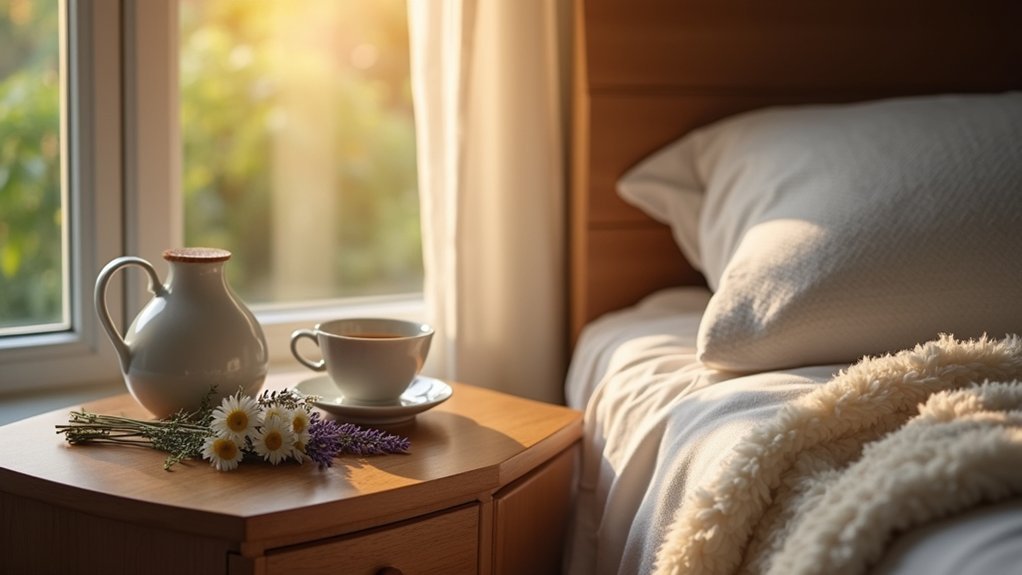
You can improve your sleep naturally by maintaining consistent bedtimes, creating a cool dark bedroom environment, and exercising gently for 30 minutes daily. Try melatonin (0.5-2mg) or magnesium (200-300mg) supplements before bed, along with herbal remedies like valerian root or chamomile tea. Practice mindfulness meditation for 15 minutes and use lavender aromatherapy to promote relaxation. These proven strategies work together to address age-related sleep changes and restore your natural rest patterns more effectively.
Establish a Consistent Sleep Schedule and Bedtime Routine

While sleep challenges become more common with age, establishing a consistent sleep schedule serves as one of the most effective natural remedies for senior rest disorders.
When you establish a consistent sleep schedule by going to bed and waking up at the same times daily, you’ll regulate your body’s sleep-wake cycle and improve sleep quality naturally.
Creating a relaxing bedtime routine signals your body it’s time to wind down and promote sleep. Seniors should aim for 7-8 hours nightly to reduce feelings of fatigue and minimize sleep disorders.
A consistent bedtime routine helps seniors achieve the recommended 7-8 hours of sleep while reducing fatigue and sleep disorders.
Limiting variability in sleep times, even on weekends, prevents disruptions that compromise healthy sleep patterns. This consistency enhances your overall health and helps counteract age-related sleep quality declines effectively.
Create an Optimal Sleep Environment With Temperature and Light Control
Creating an ideal sleep environment requires careful attention to temperature and light control, two fundamental factors that directly impact your sleep quality as a senior.
You’ll want to maintain your bedroom between 65-72 degrees Fahrenheit for maximum comfort, especially if you’re experiencing menopause or hot flashes. Light exposure disrupts melatonin production and interferes with natural sleep cycles, so keeping your room dark is essential for restful sleep.
- Use blackout curtains or sleep masks to block outside light sources effectively
- Adjust bedding layers seasonally to maintain comfortable temperature throughout the night
- Turn off electronic devices before bedtime to prevent light interference
A cool, dark sleep environment helps regulate body temperature, which seniors need for achieving deep, restorative sleep.
Incorporate Gentle Exercise and Physical Activity

Since physical activity directly influences your body’s sleep-wake cycle, incorporating gentle exercise into your daily routine can dramatically improve your rest quality as a senior.
Moderate aerobic exercise like walking or swimming for 30 minutes most days helps reduce insomnia and enhance sleep quality. Exercise boosts endorphin production, which alleviates anxiety and stress while helping improve sleep patterns.
Timing matters significantly—complete workouts at least two hours before bedtime to prevent increased alertness from disrupting your rest.
Regular physical activity increases slow-wave sleep, essential for restorative rest in older adults. Adding gentle strength training several times weekly promotes muscle relaxation and reduces nighttime restlessness.
This combination of aerobic and resistance exercises creates an effective natural remedy for better sleep.
Use Natural Sleep Supplements Like Melatonin and Magnesium
When sleep doesn’t come naturally despite your best efforts with exercise and lifestyle changes, targeted supplements can provide the gentle support your body needs.
Natural sleep aids like melatonin and magnesium offer effective solutions for seniors struggling with insomnia and sleep disorders.
Melatonin, your body’s natural sleep hormone, helps regulate sleep-wake cycles. Taking 0.5-2 milligrams about an hour before bedtime can greatly improve sleep quality and help you fall asleep faster.
- Melatonin works best at low doses – Start with 0.5mg and gradually increase if needed
- Magnesium deficiency affects half the population – 200-300mg nightly promotes muscle relaxation and better sleep
- Both supplements are generally safe short-term – Always consult your healthcare provider before starting any new supplements
Try Herbal Remedies Including Valerian and Chamomile

Beyond synthetic supplements, time-tested herbal remedies offer another gentle pathway to better sleep. Natural options like valerian root and chamomile have helped seniors manage insomnia for centuries without harsh side effects.
| Herb | Dosage | Benefits | Considerations |
|---|---|---|---|
| Valerian Root | 300-600 mg | Reduces sleep onset time, improves sleep quality | May cause mild headaches |
| Chamomile | Tea or tincture | Anti-inflammatory, calming properties | Limited scientific evidence for insomnia |
| Both | Varies | Natural approach to rest disorders | Consult healthcare professional first |
You can incorporate these herbal remedies into your bedtime routine safely. Valerian root shows stronger scientific support for sleep improvement, while chamomile offers gentle relaxation through tea. Always discuss new remedies with your doctor, especially if you’re taking other medications or sedatives.
Practice Relaxation Techniques and Stress Reduction Methods
While herbal remedies work from the inside out, relaxation techniques tackle sleep problems by directly calming your mind and releasing physical tension.
These stress reduction methods offer proven ways to improve sleep quality and combat insomnia naturally.
Mindfulness meditation practiced for just 15 minutes daily greatly improves sleep patterns. Repeating a positive affirmation or mantra calms racing thoughts that keep you awake. Deep breathing exercises and progressive muscle relaxation effectively prepare your body for rest.
Consider incorporating these powerful techniques:
- Restorative yoga sessions – Practice yin or gentle styles for 20 minutes daily to enhance relaxation
- Evening meditation routine – Use mindfulness techniques to signal your body it’s time to wind down
- Progressive muscle relaxation – Systematically release tension from head to toe before bed
Utilize Aromatherapy With Essential Oils for Better Sleep
Essential oils offer a gentle yet powerful pathway to better sleep, with lavender and chamomile leading the charge in promoting deep relaxation and reducing nighttime anxiety. These natural remedies can greatly improve sleep quality for seniors struggling with rest disorders.
| Application Method | Benefits |
|---|---|
| Bedroom diffusion | Creates calming sleep environment |
| Diluted topical application | Direct absorption through pulse points |
| Pillow sprays | Convenient nighttime aromatherapy |
| Inhalation before bed | Enhanced sleep duration and quality |
Lavender oil proves particularly effective for seniors with dementia, helping alleviate sleep disturbances. You’ll want to test for skin irritation before topical use and discontinue if adverse reactions occur. Aromatherapy provides a safe, accessible solution for senior rest disorders while promoting natural relaxation without harsh chemicals.
Frequently Asked Questions
Are There Any Natural Remedies for Sleeping Disorders?
You can try melatonin supplements, valerian root, chamomile tea, or magnesium before bedtime. Lavender aromatherapy and 5-HTP also help improve sleep quality naturally without prescription medications.
What Is the Best Natural Sleep Aid for Seniors?
You’ll find melatonin most effective as it’s specifically recommended for seniors at 0.5-2mg doses. It naturally promotes sleepiness and improves sleep quality when taken an hour before bedtime.
What Is the Best Medicine for Rest?
You’ll find melatonin most effective for sleep, starting with 0.5-2mg one hour before bed. It’s gentler than prescription medications and helps regulate your natural sleep-wake cycle without causing dependency.
What Is the Strongest Natural Herb for Sleep?
Valerian root’s considered the strongest natural herb for sleep since it enhances GABA production in your brain. You’ll likely fall asleep faster and experience better sleep quality without morning grogginess.
In Summary
You’ll find that combining several of these natural remedies creates the most effective approach to improving your sleep quality. Start with establishing a consistent routine and optimizing your environment, then gradually add supplements, herbal teas, or aromatherapy as needed. Don’t expect overnight results—give each remedy time to work. If you’re still struggling after trying these methods, consult your healthcare provider for additional guidance.


