

Night shift work disrupts your body’s natural circadian rhythm, causing your internal clock to conflict with your biological programming for sleep and wake cycles. Exposure to artificial light during shifts suppresses melatonin production while elevating cortisol levels, creating hormonal chaos that prevents adequate rest. Sleep debt accumulates with each insufficient sleep period, leading to cognitive impairment comparable to being legally intoxicated. Environmental challenges, poor nutrition, and social obligations further compound your fatigue, creating a cycle that affects your physical and mental health in ways you might not fully realize.
Understanding Circadian Rhythm Disruption in Night Shift Workers

When you work night shifts, your body’s natural circadian rhythm—the internal clock that regulates sleep and wake cycles—becomes severely disrupted.
Night shift work severely disrupts your body’s internal clock, throwing your natural sleep-wake cycle completely out of balance.
This circadian rhythm disruption occurs because your work schedule conflicts with your biological programming, which expects darkness for sleep and light for wakefulness.
As a night shift worker, you’re exposed to artificial light during hours when your body should produce melatonin, the sleep-regulating hormone. This exposure inhibits melatonin production, making quality sleep nearly impossible.
The resulting circadian misalignment leads to sleep disorders affecting 15% to 30% of shift work employees.
You’ll likely experience insomnia when trying to sleep during daylight hours and excessive daytime sleepiness during work.
These health impacts extend beyond fatigue, creating serious long-term consequences for your overall well-being.
Sleep Debt Accumulation and Its Impact on Fatigue Levels
When you work night shifts, you’re not just fighting your body’s natural sleep-wake cycle—you’re also accumulating sleep debt that compounds your fatigue.
Each night you fall short of the 7-9 hours your body needs, this deficit builds up and creates a cycle where you feel increasingly exhausted and mentally foggy.
The cumulative effects of this sleep loss go beyond simple tiredness, greatly impairing your cognitive function and putting your long-term health at risk.
Circadian Rhythm Disruption Effects
Working against your body’s natural clock creates a cascade of physiological disruptions that fundamentally alter how you experience fatigue.
Your circadian rhythm governs essential processes like hormone production, body temperature regulation, and alertness cycles. When night shift working hours force you to stay awake during your internal body clock’s designated sleep period, you’ll experience profound disruptions beyond simple tiredness.
Your cognitive performance deteriorates dramatically—research shows sleep debt from irregular schedules impairs you similarly to having a 0.10% blood alcohol concentration.
This circadian misalignment doesn’t just affect immediate fatigue levels; it triggers serious health consequences including metabolic disorders, cardiovascular disease, and obesity.
These long-term conditions create a vicious cycle, making your fatigue progressively worse over time.
Cumulative Sleep Loss Consequences
Each missed hour of sleep accumulates into a mounting debt that compounds your fatigue exponentially.
As cumulative sleep loss builds through consecutive night shifts, your cognitive function deteriorates dramatically. Research shows this sleep debt creates impairment comparable to legal intoxication, severely compromising your alertness and increasing workplace accidents risk.
Your body’s mounting sleep deficit triggers these critical consequences:
- Concentration difficulties – Your ability to focus sharply declines with each sleep-deprived shift.
- Mood disturbances – Irritability and emotional instability become increasingly pronounced.
- Error-prone performance – Mistake frequency rises substantially in high-stakes work environments.
- Chronic exhaustion – Persistent fatigue overwhelms your daily functioning capacity.
Recovery requires prioritizing uninterrupted sleep blocks after night shifts. Only sustained, quality sleep can effectively repay accumulated deficits and restore peak performance levels.
Light Exposure Effects on Sleep-Wake Cycles
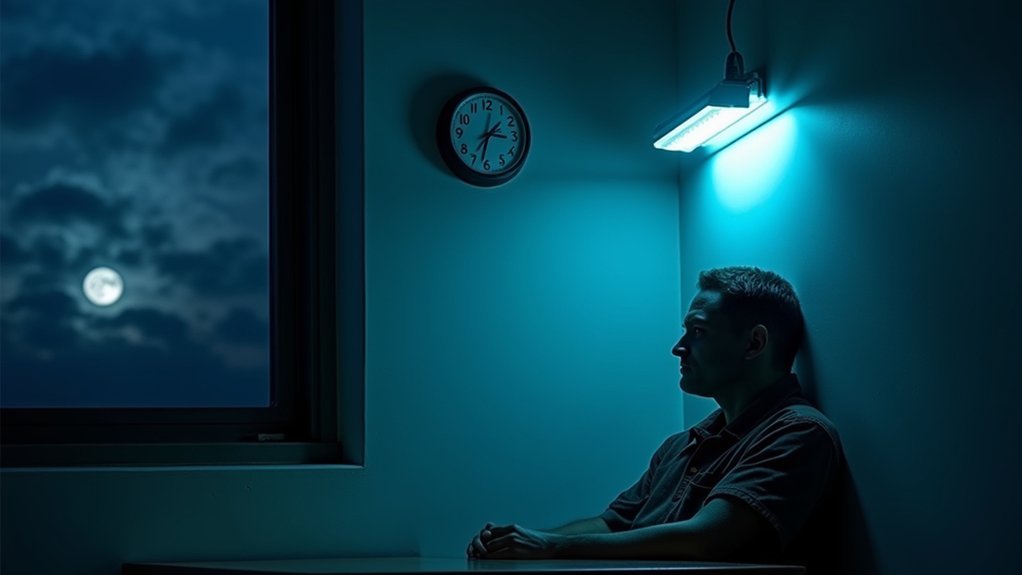
Light exposure during your night shifts creates a complex battle within your body’s natural timing system.
When you’re exposed to bright lights while working overnight, your circadian rhythm becomes confused and struggles to maintain its normal sleep-wake pattern.
The artificial lighting you encounter—especially blue light from computer screens and LED fixtures—suppresses your melatonin production and keeps you alert when your body expects to rest.
Circadian Rhythm Disruption
When you work night shifts, your body’s internal clock becomes misaligned with natural light-dark cycles, disrupting the circadian rhythms that regulate your sleep-wake patterns.
This circadian misalignment creates a cascade of problems that directly impact night shift workers’ well-being and performance.
Your disrupted circadian rhythm affects you in several ways:
- Melatonin suppression – Artificial light exposure during work hours blocks melatonin production, making it harder to fall asleep during daylight hours.
- Cortisol imbalance – Your body increases cortisol production at night when you need to stay alert, leading to persistent fatigue.
- Poor sleep quality – Attempting to sleep against your natural rhythm results in fragmented, unrefreshing rest.
- Increased health risks – Chronic circadian misalignment contributes to metabolic disorders and other serious health issues, while causing excessive daytime sleepiness.
Artificial Light Impact
Beyond your body’s natural circadian disruption, artificial light creates additional barriers to healthy sleep patterns for night shift workers. When you’re exposed to bright lights during your shift, your alertness increases but melatonin production becomes suppressed. This makes adapting to daytime sleep exceptionally difficult.
Electronic devices emitting blue light worsen this problem, further reducing melatonin levels when you use them before bedtime. Your artificial light exposure consistently disrupts circadian rhythms, leading to sleep disturbances and chronic fatigue.
Research shows night shift workers face higher risks of insomnia and excessive daytime sleepiness. However, you can minimize these effects by wearing blue light-blocking glasses during work and reducing light exposure before sleep. These strategies help realign your sleep-wake cycles despite challenging shift schedules.
Nutritional Factors Contributing to Night Shift Fatigue
Although many night shift workers focus primarily on sleep schedules and lighting, your dietary choices play an equally important role in determining fatigue levels throughout your shifts.
Poor nutritional factors can create metabolic imbalances that increase your obesity risk by 23% and worsen health issues.
Night shift workers face a 23% higher obesity risk due to poor nutrition choices that disrupt metabolic function and compound existing health problems.
Your irregular eating patterns directly impact energy levels:
- Heavy evening meals – Greasy or sugary foods consumed late cause discomfort and harm sleep quality.
- Increased nighttime snacking – This pattern disrupts your body’s natural rhythm and contributes to fatigue.
- Reduced healthy food consumption – Missing nutritious meals leaves you energy-depleted during night shift hours.
- Improper caffeine use – While caffeine enhances alertness, excessive amounts cause gastrointestinal issues and muscle shakes.
Managing these nutritional factors helps combat fatigue effectively.
Environmental Sleep Challenges for Day Sleeping
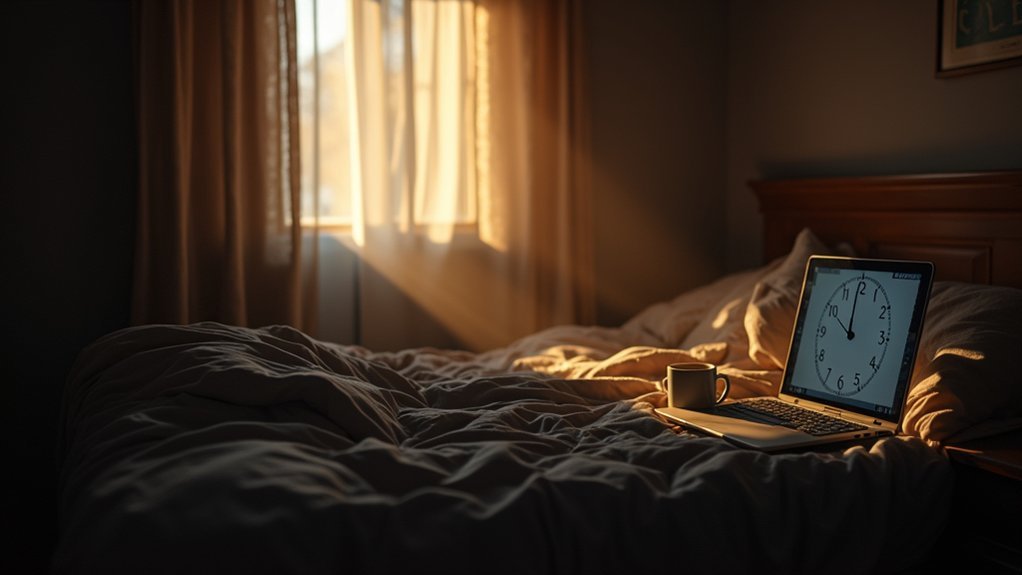
While proper nutrition sets the foundation for managing night shift fatigue, your sleep environment presents its own set of obstacles that can undermine even the best dietary habits.
Light exposure from bright daylight disrupts your circadian rhythm, making daytime sleep challenging. You’ll find yourself struggling to fall asleep when your body expects to be awake.
Your sleep environment faces constant threats from noise, including traffic and household activities, leading to fragmented sleep.
Temperature fluctuations throughout the day can also interfere with your rest quality. These environmental factors compound sleep deprivation, intensifying fatigue levels.
Installing blackout curtains helps create darkness that promotes better sleep quality.
You can also use sleep masks and white noise machines to minimize disruptions and optimize your daytime sleep experience.
Hormonal Imbalances Caused by Irregular Work Schedules
Your body’s internal clock controls a delicate orchestra of hormones that night shift work throws into chaos.
These hormonal imbalances wreak havoc on your circadian rhythm, creating a cascade of health problems that extend far beyond simple tiredness.
When you’re exposed to artificial light during night hours, your melatonin production plummets, making quality sleep nearly impossible.
Meanwhile, your cortisol levels remain elevated when they should drop, keeping you in a constant state of stress and fatigue.
Night shift workers face these specific hormonal disruptions:
- Suppressed melatonin from nighttime light exposure
- Elevated cortisol preventing proper rest and recovery
- Disrupted appetite-regulating hormones (ghrelin and leptin) causing weight gain
- Irregular sleep patterns increasing risks of metabolic syndrome and cardiovascular health conditions
Social and Family Obligations Affecting Sleep Recovery
Beyond these biological disruptions, the social world around you creates another layer of sleep interference that compounds your fatigue. Your family activities and social obligations typically occur during evenings and weekends—precisely when you need sleep recovery.
Night shift workers face constant pressure from social expectations to attend gatherings, creating stress that worsens sleep deprivation.
Your sleep schedule conflicts with household noise during daytime hours when family members are active. Without proper understanding from loved ones about your unique sleep needs, you’ll experience frequent disturbances that prevent restorative sleep.
Family members moving around during your daytime sleep hours create unavoidable noise disturbances that fragment your rest and worsen fatigue.
This lack of awareness leads to unintentional interruptions that increase your fatigue levels. Balancing these competing demands while maintaining consistent rest becomes nearly impossible, making quality sleep recovery elusive.
Physical and Mental Health Consequences of Chronic Sleep Disruption
As your body struggles with persistent sleep disruption, serious physical health consequences begin to emerge that extend far beyond simple tiredness.
Shift work creates a cascade of health issues that affect every system in your body.
The most significant consequences include:
- Increased obesity risk – You face a 23% higher chance of weight gain due to metabolic disturbances and poor eating habits.
- Cardiovascular diseases – Sleep disruption elevates your risk of heart problems, with the WHO recognizing shift work as a probable carcinogen.
- Mental health deterioration – You’re more likely to experience anxiety and depression as fatigue impairs your cognitive function and emotional stability.
- Workplace accidents – Your concentration becomes comparable to having a 0.10% blood alcohol level, dramatically increasing accident risk.
Frequently Asked Questions
Why Does Working Night Shift Make Me so Tired?
Night shifts disrupt your circadian rhythm, causing your internal clock to conflict with external light cues. You’ll lose sleep, experience suppressed melatonin production, and accumulate sleep debt, leaving you chronically fatigued.
How to Beat Night Shift Fatigue?
You’ll beat night shift fatigue by maintaining consistent 7-9 hour sleep schedules, managing light exposure with bright lights during work, eating small frequent meals, taking strategic 20-45 minute naps, and exercising regularly.
What Is the Most Frequent Health Problem for Night Shift Workers?
You’ll most likely experience shift work sleep disorder if you’re working nights, as it’s the most frequent health problem affecting 10% to 40% of nontraditional shift workers.
How Do You Manage Night Shift Fatigue?
You’ll manage night shift fatigue by maintaining consistent 7-9 hour sleep schedules, using blackout curtains, eating light meals, strategically timing caffeine, taking 20-45 minute naps, and incorporating regular exercise with relaxation techniques.
In Summary
You’re fighting multiple forces when working night shifts – your body’s natural clock, mounting sleep debt, poor light exposure timing, nutritional disruptions, difficult daytime sleeping conditions, hormonal chaos, social pressures, and mounting health consequences. Understanding these interconnected factors helps you recognize that your fatigue isn’t just tiredness – it’s your body’s response to working against its biological design. You’ll need targeted strategies addressing each cause.


