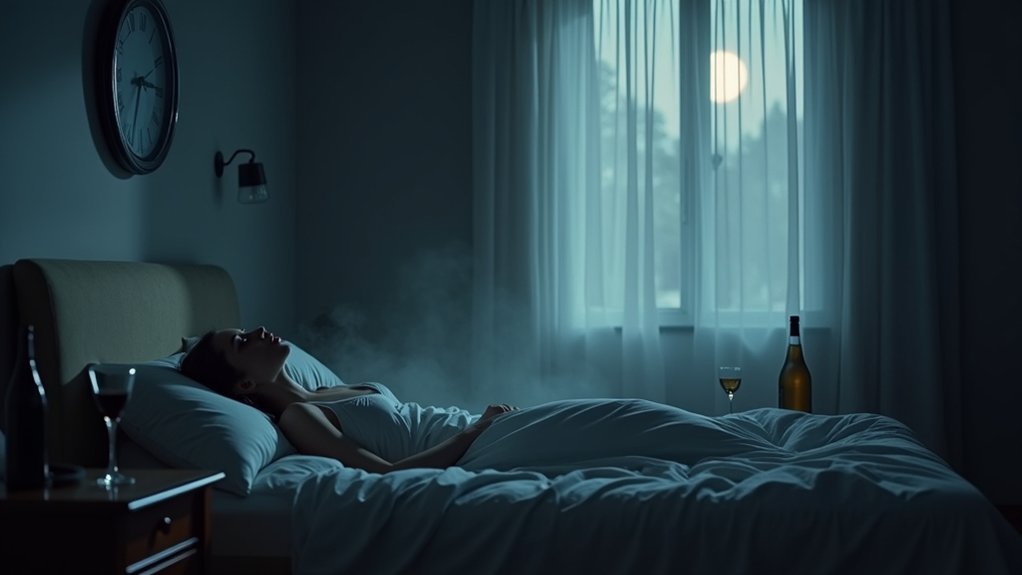
Alcohol disrupts your REM sleep in three major ways that’ll leave you feeling exhausted. First, it delays REM onset by up to 90 minutes and cuts total REM duration by 20-30%, robbing you of critical brain restoration. Second, it fragments your REM cycles with 8-15 micro-awakenings per night compared to just 2-3 without alcohol. Third, it triggers REM rebound effects, causing vivid nightmares and night sweats that’ll jolt you awake throughout the night.
Alcohol Delays REM Sleep Onset and Reduces Total REM Duration
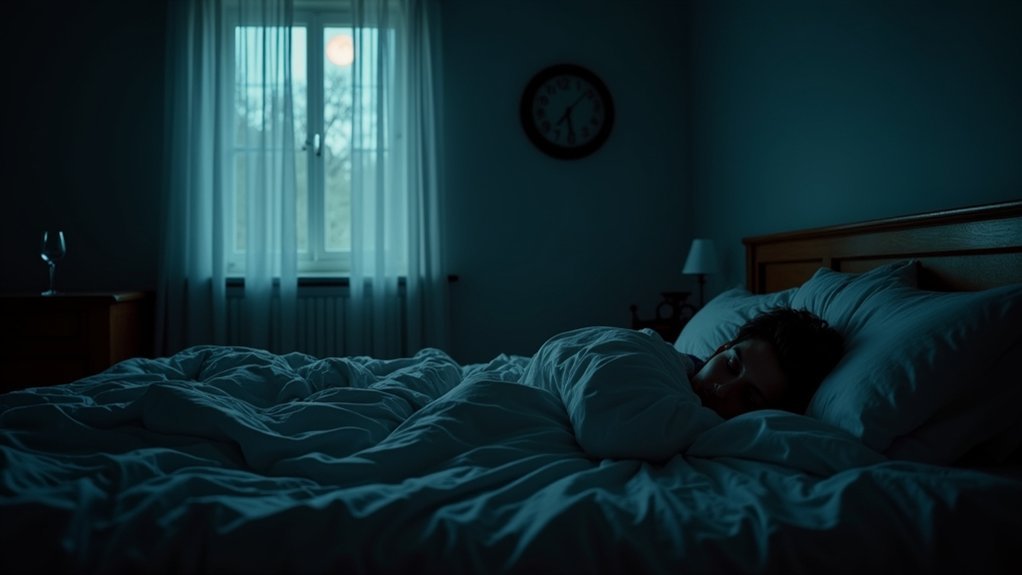
Although your body naturally enters REM sleep within 60-90 minutes of falling asleep, alcohol consumption can delay this critical sleep stage by up to 90 minutes, effectively pushing back one of your brain’s most restorative processes.
Alcohol delays your brain’s entry into REM sleep by up to 90 minutes, disrupting critical restorative processes.
This delay greatly impacts your total REM sleep duration, reducing it by 20-30% depending on how much you drink.
When alcohol disrupts your REM cycles, you’ll experience fragmented sleep patterns that compromise sleep continuity.
As your body metabolizes alcohol throughout the night, you’re more likely to wake during REM periods, leading to vivid dreams and nightmares.
This disruption directly affects your cognitive functions and emotional regulation the following day.
Chronic use compounds these effects, creating lasting deficits that impair your brain’s ability to consolidate memories and process emotions effectively.
Alcohol Fragments REM Sleep Causing Frequent Micro-Awakenings
As your body processes alcohol during the night, it triggers frequent micro-awakenings that severely fragment your REM sleep cycles. These interruptions occur as alcohol metabolizes, causing your brain to repeatedly shift between sleep stages. The fragments of REM sleep you experience become shallow and incomplete, dramatically reducing your overall sleep quality.
Alcohol also relaxes your throat muscles, worsening snoring and sleep apnea conditions. This creates additional micro-awakenings that further disrupt your sleep patterns. Studies show 70% of regular alcohol users develop insomnia and related sleep disturbances.
| Sleep Disruption | Without Alcohol | With Alcohol |
|---|---|---|
| REM Fragmentation | Minimal breaks | Frequent interruptions |
| Micro-awakenings | 2-3 per night | 8-15 per night |
| Sleep Continuity | Smooth shifts | Jarring disruptions |
Alcohol Creates REM Rebound Effects Leading to Vivid Dreams and Night Sweats
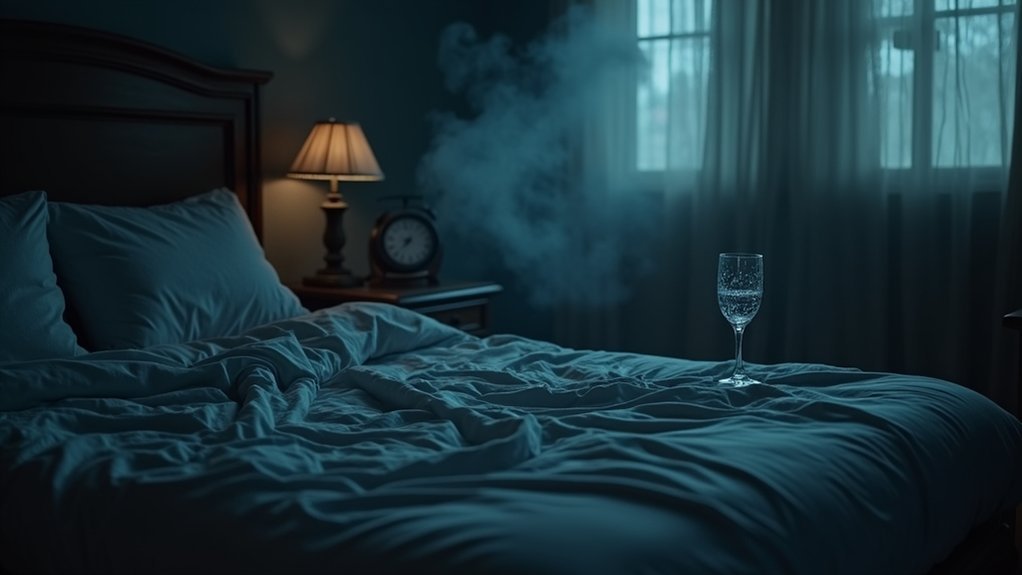
Beyond these immediate disruptions, your body’s attempt to compensate for alcohol’s effects creates an entirely different set of sleep problems.
After alcohol consumption suppresses your REM sleep, you’ll experience a rebound effect once alcohol levels decrease. This compensation triggers intensely vivid dreams and nightmares, creating a 25% increased risk of distressing sleep experiences.
REM rebound after drinking creates a 25% higher risk of nightmares and vivid dreams that disrupt your sleep.
You’ll likely encounter frequent awakenings as these intense dreams jolt you from sleep, leading to fragmented sleep patterns throughout the night. Night sweats often accompany this REM rebound, as your body reacts to the abrupt shift in sleep architecture.
This combination of vivid dreams and night sweats creates ongoing discomfort, perpetuating poor sleep quality and worsening insomnia symptoms with regular alcohol consumption.
Frequently Asked Questions
Can Alcohol Disrupt REM Sleep?
Yes, alcohol profoundly disrupts your REM sleep. You’ll experience delayed REM onset, reduced REM duration, and fragmented sleep patterns. As alcohol metabolizes overnight, you’ll have increased awakenings that particularly affect REM cycles.
What Is the 1/2/3 Rule for Alcohol?
The 1/2/3 rule limits alcohol to one drink for women, two for men, and requires you to stop drinking at least three hours before bedtime to protect your sleep quality.
How to Counteract Alcohol REM Sleep?
You’ll counteract alcohol’s REM disruption by stopping drinks three hours before bed, exercising regularly, maintaining consistent sleep schedules, staying hydrated throughout drinking, and seeking professional help for underlying disorders.
What Is the 20 Minute Rule for Alcohol?
You’ll wait at least 20 minutes between each alcoholic drink, allowing your body time to metabolize alcohol. This pacing reduces blood alcohol concentration spikes and minimizes sleep disruption, particularly protecting your REM sleep cycles.
In Summary
You’ve seen how alcohol sabotages your sleep in three major ways: it delays and shortens your vital REM phases, creates disruptive micro-awakenings that fragment your rest, and triggers intense rebound effects with vivid dreams and night sweats. These disruptions don’t just affect one night—they cascade into poor memory consolidation, emotional regulation issues, and daytime fatigue. Understanding alcohol’s impact on REM sleep helps you make informed decisions about your evening habits.


