
When you drink alcohol before bed, you’re sabotaging your sleep architecture despite falling asleep faster. Alcohol initially increases deep sleep but considerably reduces REM sleep by up to 20%, which is essential for memory consolidation and emotional regulation. As your body metabolizes alcohol, you’ll experience the rebound effect—waking around 3 AM with fragmented, lighter sleep stages. This creates a false sense of sleep aid while actually disrupting your circadian rhythms and potentially leading to dependency, where extensive strategies can help restore your natural rest patterns.
Understanding Sleep Architecture and Natural Cycles
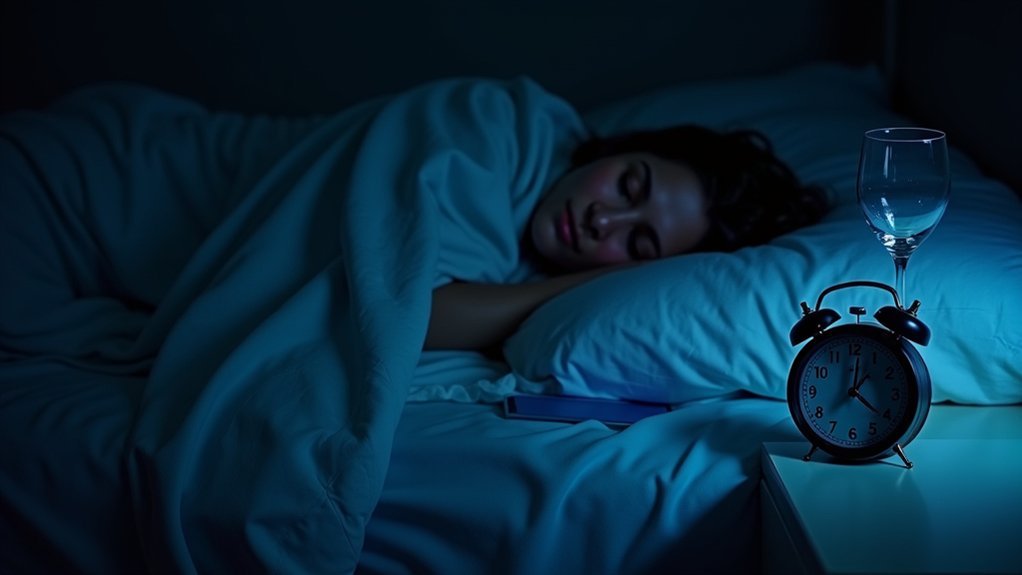
When you fall asleep each night, your brain cycles through four distinct stages that repeat approximately every 90 minutes until you wake up. This sleep architecture begins with N1 and N2 light sleep, progresses to N3 deep sleep, and culminates in REM sleep. Each stage serves essential functions for your physical and mental restoration.
Deep sleep repairs your body and strengthens your immune system, while REM sleep consolidates memories and processes emotions. Your circadian rhythm naturally orchestrates these sleep stages throughout the night.
However, alcohol consumption greatly interferes with this delicate process, leading to disrupted sleep patterns. When your natural sleep architecture becomes compromised, the quality of your sleep deteriorates, potentially contributing to insomnia and other sleep disorders that affect your daily functioning.
How Alcohol Affects Your Body’s Sleep Stages
Alcohol creates a deceptive initial effect that masks its true impact on your sleep stages. When alcohol consumption occurs, you’ll initially experience increased deep sleep, making you feel like you’re sleeping better.
However, alcohol affects your sleep by dramatically reducing REM sleep, which is essential for cognitive function and emotional regulation. As your body metabolizes alcohol throughout the night, your sleep cycles shift into lighter stages, creating fragmented sleep with frequent awakenings.
This disruption leads to grogginess and cognitive impairment when you wake up. Over time, chronic use worsens insomnia and creates dependency on alcohol for sleep initiation, severely damaging your natural sleep cycle and overall rest quality.
The Rebound Effect: Why You Wake Up at 3 AM
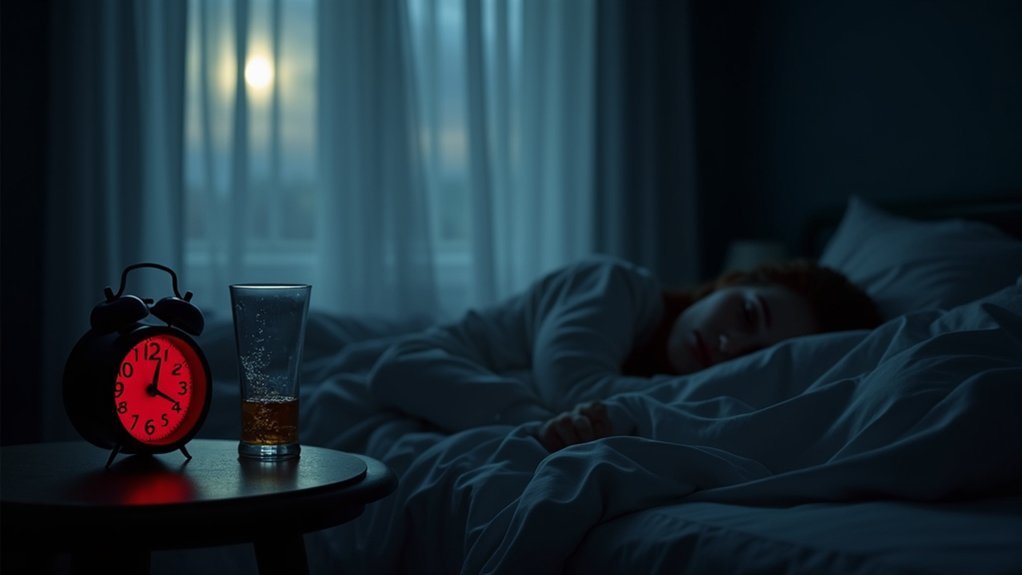
If you’ve ever found yourself wide awake at 3 AM after drinking, you’re experiencing the classic rebound effect that plagues nearly 90% of regular alcohol consumers. This occurs when your body metabolizes alcohol during the night, causing blood alcohol levels to drop and triggering increased awakenings during lighter sleep stages.
| Early Night (With Alcohol) | Later Night (Rebound Effect) |
|---|---|
| Quick sleep onset from sedative effects | Frequent awakenings around 3 AM |
| Reduced REM sleep quality | Fragmented sleep patterns |
| False sense of effective sleep aid | Increased restlessness and insomnia |
While alcohol initially helps you fall asleep faster, this disrupts your natural rest cycles. As the sedative effects wear off, you’ll experience fragmented sleep that ultimately worsens sleep quality and creates reliance on alcohol as a sleep aid.
REM Sleep Disruption and Cognitive Impact
Beyond the 3 AM awakenings, alcohol delivers its most devastating blow to your brain’s most critical sleep phase: REM sleep. When you consume alcohol before bed, you’re robbing yourself of up to 20% of this essential sleep stage that’s crucial for memory consolidation and emotional regulation.
This dramatic reduction in quality of sleep creates a cascade of cognitive impact that extends far beyond feeling groggy.
The disruption doesn’t end with one night. Chronic sleep deprivation from alcohol use compounds over time, leading to:
- Impaired decision-making and cognitive fog that affects daily productivity
- Weakened memory formation and recall abilities
- Increased risk of neurodegenerative diseases like Alzheimer’s
Your brain pays the price long after the alcohol metabolizes.
Breathing Problems and Sleep Apnea Risk
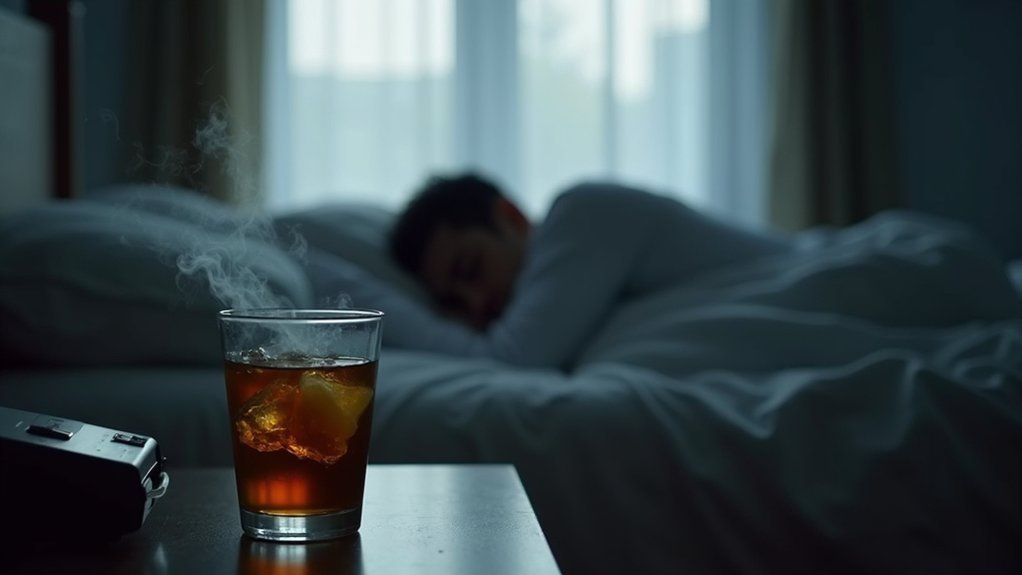
While your brain struggles with fragmented REM cycles, your body faces an equally serious threat from alcohol’s impact on breathing during sleep.
Alcohol use can contribute to breathing problems by causing relaxation of throat tissues, which blocks airways and leads to obstructive sleep apnea (OSA). This creates an increased risk of fragmented sleep and dangerous decreased oxygen levels throughout the night.
Central sleep apnea also worsens with alcohol consumption, as it disrupts your brain’s respiratory signals.
Regular drinkers face a 25% higher likelihood of developing these health conditions compared to non-drinkers. The combination of airway obstruction and impaired breathing control seriously compromises your sleep quality, creating a cycle where poor rest affects your overall health and recovery.
Circadian Rhythm Disruption From Regular Drinking
Regular alcohol consumption throws your body’s internal clock off balance, weakening the natural circadian rhythms that keep you alert during the day and sleepy at night.
You’ll find yourself struggling with alertness when you’re trying to sleep and feeling drowsy when you need to be awake.
This happens because alcohol disrupts your body’s melatonin production, the hormone that signals it’s time to rest.
Alcohol Weakens Natural Rhythms
Although your body operates on a precise internal clock, alcohol consumption gradually dismantles this delicate timing system. Regular drinking weakens your circadian rhythms, creating chaos in your natural biological clock.
You’ll find yourself alert when you want to sleep and drowsy during daytime hours, as disrupted sleep-wake cycles become your new reality.
Chronic alcohol use diminishes your body’s melatonin production, the hormone essential for quality rest. Your temperature regulation also suffers, making it harder to fall asleep and stay asleep effectively.
- Your internal clock loses sensitivity to light and darkness cues
- Misaligned sleep-wake cycles increase your risk of chronic sleep disorders
- Decreased melatonin secretion prevents restorative sleep phases
This disrupted sleep pattern often leads to persistent insomnia, trapping you in a cycle where sleep quality continues deteriorating.
Melatonin Production Gets Disrupted
Your body’s melatonin factory takes a direct hit when alcohol enters your system. This vital hormone regulates your circadian rhythms and signals when it’s time to sleep.
When you drink, especially during nighttime hours, alcohol blocks melatonin production, leaving you with disrupted sleep cycles and poor sleep quality.
You’ll find yourself struggling with insomnia as your body loses its natural ability to shift into deeper sleep stages. Without adequate melatonin, your recovery processes suffer considerably.
The disruption doesn’t stop after one drink – regular alcohol consumption creates chronic interference with this essential hormone.
Over time, you’ll develop a destructive pattern where disrupted melatonin leads to sleep problems, potentially making you reach for more alcohol as a misguided sleep aid.
The Insomnia-Alcohol Dependency Cycle
When you can’t sleep, reaching for alcohol might seem like a quick fix, but you’re actually setting yourself up for a destructive cycle that worsens your insomnia over time.
You’ll find that while alcohol initially makes you drowsy, it disrupts your sleep quality so severely that you wake up more tired, creating an even stronger urge to drink the following night.
Breaking free from this self-medication trap requires recognizing that alcohol isn’t solving your sleep problems—it’s the primary cause of them.
Self-Medication Sleep Trap
If you’ve been reaching for a nightcap to help you fall asleep, you’re not alone—many people struggling with insomnia turn to alcohol as a quick fix, believing it’s an effective sleep aid.
This self-medication approach creates a dangerous trap where you’ll experience increasingly disrupted sleep cycles and fragmented sleep throughout the night.
Your reliance on alcohol for sleep leads to:
- REM sleep interference – Chronic alcohol use blocks essential restorative sleep phases
- Cognitive function decline – Poor sleep quality impairs focus and emotional regulation during waking hours
- Dependency escalation – Up to 75% of individuals with alcohol dependence experience persistent sleep problems
When you attempt withdrawal or reduce consumption, underlying insomnia symptoms resurface, revealing how alcohol perpetuates rather than solves your sleep issues, trapping you in an endless cycle of dependency.
Breaking Dependency Patterns
Breaking free from the insomnia-alcohol dependency cycle requires understanding how these two conditions reinforce each other in a relentless loop.
When you use alcohol to manage insomnia symptoms, you’re creating fragmented sleep that worsens your sleep disturbances. Chronic consumption damages your sleep architecture, particularly disrupting REM sleep that’s essential for cognitive function and emotional balance.
The cycle intensifies when you attempt to quit. Withdrawal-induced insomnia drives you back to alcohol, perpetuating alcohol dependence. This pattern becomes increasingly difficult to break without intervention.
Success requires addressing underlying mental health conditions that fuel both issues.
Professional help provides the tools and support you need to break this destructive cycle, offering evidence-based treatments that restore healthy sleep patterns without relying on alcohol’s false promises.
Short-Term vs. Long-Term Sleep Consequences
Although alcohol might help you fall asleep faster initially, it creates a deceptive trade-off that becomes increasingly costly over time. Short-term alcohol consumption delivers quick sleep onset but fragments your sleep patterns throughout the night.
Alcohol’s promise of faster sleep onset masks a dangerous reality of disrupted rest and deteriorating sleep quality.
As your body metabolizes alcohol, you’ll experience frequent awakenings and reduced REM sleep, compromising memory consolidation and cognitive function.
Long-term consequences prove far more severe. Chronic alcohol consumption weakens your circadian rhythms, making healthy sleep-wake cycles nearly impossible to maintain.
You’ll face persistent insomnia, with up to 75% of alcohol-dependent individuals experiencing these symptoms.
- Sleep quality deteriorates progressively – Initial deep sleep gives way to fragmented sleep patterns
- Existing sleep disorders worsen – Conditions like sleep apnea become more severe
- Serious health issues emerge – Poor sleep quality compounds, creating cascading health problems
Evidence-Based Strategies for Alcohol-Free Sleep
When you’re ready to reclaim restful sleep without alcohol’s interference, science-backed strategies can restore your natural sleep patterns more effectively than any nightcap ever could.
| Strategy | Sleep Benefit |
|---|---|
| Consistent sleep schedule | Regulates circadian rhythms |
| Relaxation techniques (yoga/meditation) | Reduces stress, promotes better sleep |
| Non-alcoholic options (herbal teas) | Provides relaxation without sleep disruptions |
| Limited screen time before bed | Enhances natural sleep signals |
| Professional guidance | Addresses underlying insomnia |
These evidence-based approaches target the root causes of poor sleep quality rather than masking them with alcohol. You’ll find that establishing regular bedtimes, practicing mindfulness, and choosing calming beverages create lasting improvements. If persistent sleep issues continue affecting your rest, seeking professional guidance guarantees you’re addressing any underlying conditions contributing to your sleep challenges.
Frequently Asked Questions
Does Alcohol Disrupt Sleep Cycles?
Yes, alcohol disrupts your sleep cycles by reducing REM sleep and increasing light sleep stages. You’ll experience frequent awakenings and fragmented rest as your body metabolizes alcohol throughout the night.
Can Alcohol Disrupt My Cycle?
Yes, alcohol can disrupt your sleep cycle by reducing REM sleep, increasing light sleep phases, and causing frequent awakenings. You’ll experience poor sleep quality even if you fall asleep faster initially.
What Is the 1/2/3 Rule for Alcohol?
The 1/2/3 rule means you should limit yourself to one drink, stop drinking two hours before bed, and avoid alcohol completely three hours before sleep to protect your rest quality.
Can Alcohol Mess With Your Circadian Rhythm?
Yes, alcohol can greatly disrupt your circadian rhythm. It reduces your sensitivity to light-dark cues, interferes with melatonin production, and alters your natural sleep-wake cycle timing, causing fragmented sleep patterns.
In Summary
You’ve seen how alcohol wreaks havoc on every aspect of your sleep—from fragmenting your natural cycles to disrupting REM sleep and triggering those frustrating 3 AM wake-ups. While that nightcap might seem like it’s helping you unwind, it’s actually sabotaging your rest and creating a vicious cycle of dependency. Your body knows how to sleep naturally when you give it the chance. Break free from alcohol’s grip, and you’ll release the restorative sleep you deserve.


Leave a Reply