
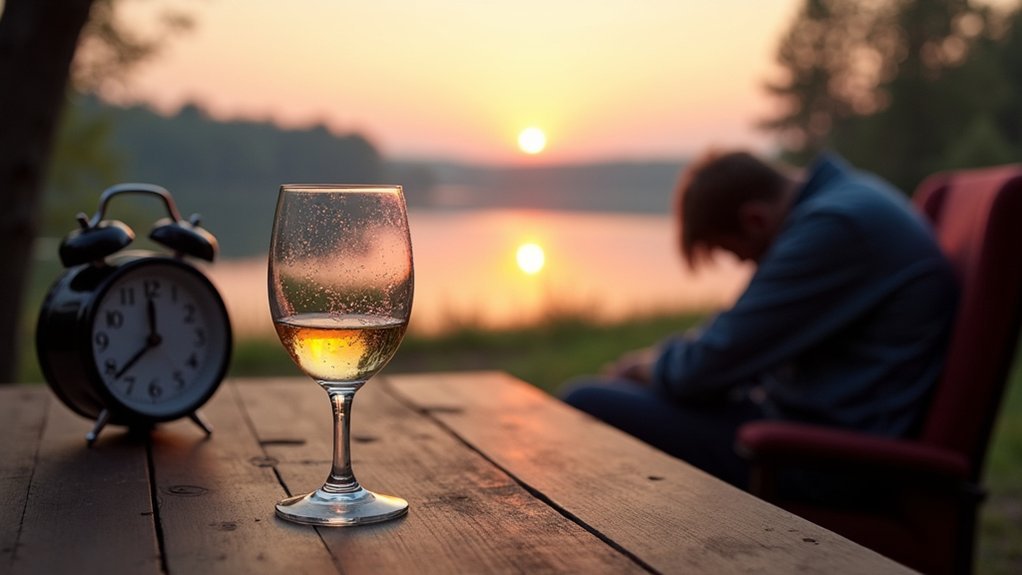
Alcohol disrupts your dawn rest through seven key mechanisms: it fragments your sleep cycles by reducing REM sleep and increasing light sleep stages, triggers compensatory awakenings as your brain rebounds from suppressed REM, forces dehydration-related bathroom trips that break sleep continuity, creates blood sugar crashes that spike cortisol and cause early alertness, produces withdrawal effects peaking between 3-5 AM, relaxes throat muscles worsening sleep apnea, and disrupts circadian rhythms by impairing melatonin production. Understanding these processes reveals why your nightcap backfires.
Alcohol Fragments Your Sleep Cycles Throughout the Night

While alcohol might initially make you feel drowsy and help you fall asleep faster, it wreaks havoc on your sleep cycles throughout the night.
Alcohol disrupts your natural sleep architecture by initially boosting deep sleep but dramatically reducing REM sleep, creating fragmented sleep patterns. As your body begins to metabolize alcohol, you’ll experience a shift toward light sleep stages, causing frequent awakenings that destroy sleep continuity.
This disruption explains why nearly 90% of regular drinkers report sleep-related problems. The alcohol’s effects become more pronounced as the night progresses, leaving you with severely compromised sleep quality.
Chronic consumption can lead to persistent sleep disorders, affecting your cognitive function and emotional well-being long-term.
REM Sleep Deprivation Triggers Compensatory Awakenings
As alcohol suppresses your REM sleep during the first half of the night, your brain launches a powerful rebound effect that triggers frequent awakenings later.
This compensatory mechanism disrupts your natural sleep patterns as your system attempts to recover lost REM time. You’ll experience more vivid, intense dreams that can jolt you awake, fragmenting your rest quality considerably.
The alcohol consumption creates a cascade of sleep disturbances throughout dawn hours.
Your brain shifts from deep sleep stages to lighter phases as alcohol metabolizes, making you vulnerable to repeated awakening episodes.
These compensatory arousals prevent restorative sleep, leaving you feeling unrefreshed despite spending adequate time in bed.
The REM rebound effect fundamentally hijacks your natural sleep architecture.
Dehydration Forces Your Body to Wake for Relief

Alcohol’s diuretic effects force your kidneys to work overtime, stripping your body of essential fluids and minerals throughout the night.
You’ll find yourself making multiple trips to the bathroom, each interruption fragmenting your sleep cycles and preventing deep, restorative rest.
As dehydration sets in, your parched throat and mounting thirst create additional wake-up calls that keep you tossing and turning until dawn.
Frequent Bathroom Trips Disrupt
When alcohol enters your system, it triggers a cascade of physiological changes that’ll have you stumbling to the bathroom multiple times throughout the night.
Alcohol’s diuretic effect increases urine production considerably, forcing frequent bathroom trips that disrupt sleep continuity. These nighttime awakenings fragment your rest cycles, dramatically reducing sleep quality.
Dehydration from alcohol consumption compounds the problem, creating dry mouth and headaches that wake you seeking relief. As your body metabolizes alcohol, the urge to void intensifies, causing multiple interruptions throughout your sleep period.
Nearly 90% of regular drinkers experience sleep-related problems, with bathroom trips being a primary complaint.
These constant disruptions leave you feeling groggy and fatigued the next day, impairing your alertness and daily functioning when you need it most.
Thirst Interrupts Sleep Cycles
Beyond these disruptive bathroom visits, your body faces another sleep-sabotaging consequence: relentless thirst that jolts you awake throughout the night. Alcohol’s diuretic effects cause severe dehydration, triggering frequent awakenings as your parched mouth and headaches demand relief. This constant interruption fragments your sleep cycles, preventing restorative rest your body desperately needs.
| Dehydration Effects | Sleep Disruptions |
|---|---|
| Dry mouth symptoms | Multiple night wakings |
| Throbbing headaches | Fragmented sleep cycles |
| Intense thirst sensations | Reduced sleep quality |
| Body’s hydration signals | Lost restorative rest |
As alcohol’s sedative effects fade, your body enters hyperarousal, intensifying thirst and creating additional sleep disruptions. You’ll find yourself reaching for water repeatedly, further breaking your natural sleep patterns and diminishing overall sleep quality throughout the night.
Blood Sugar Crashes Create Dawn Alertness Spikes
Although your nightcap might initially help you drift off, alcohol consumption sets off a chain reaction that’ll jolt you awake in the early morning hours through dramatic blood sugar fluctuations.
That evening drink promising peaceful slumber becomes your body’s alarm clock, triggering early morning awakenings through chaotic blood sugar swings.
As your body metabolizes alcohol, your insulin sensitivity decreases, causing blood sugar levels to plummet during the night. These crashes trigger your stress response, flooding your system with cortisol and other alertness hormones that counteract sleep.
The result? You’ll experience morning blood sugar spikes that create unwanted dawn wakefulness.
This metabolic chaos generates disrupted sleep patterns, leaving you caught between artificial alertness and natural exhaustion. Your sleep cycles become fragmented, and you’ll wake feeling grogginess and fatigue despite the early morning energy surge, ultimately compromising your overall well-being.
Withdrawal Effects Peak During Early Morning Hours

Your body’s withdrawal from alcohol creates a perfect storm of sleep disruption that intensifies in the early morning hours.
You’ll find yourself jolting awake around 3-5 AM as hyperarousal floods your nervous system, making it nearly impossible to drift back to sleep.
This isn’t just restlessness—it’s your brain rebounding from alcohol’s suppressive effects, triggering intense anxiety and chaotic REM sleep that leaves you exhausted despite being in bed for hours.
Hyperarousal State Awakens You
When alcohol’s sedative effects wear off during the early morning hours, your central nervous system rebounds into a hyperarousal state that jolts you awake. This physiological rebound creates a stark contrast to alcohol’s initial calming properties, triggering early awakenings that disrupt sleep patterns considerably.
Your body’s withdrawal response generates intense restlessness, sweating, irritability, and anxiety that make returning to sleep nearly impossible. The hyperarousal state keeps your mind racing and your body tense, creating fragmented rest throughout dawn hours.
These physiological effects compound the problem, as each awakening becomes increasingly difficult to overcome. The cycle perpetuates itself as alcohol withdrawal intensifies during these vulnerable morning periods, systematically destroying sleep quality and leaving you exhausted despite spending hours in bed.
Anxiety Peaks at Dawn
As alcohol withdrawal intensifies during dawn hours, anxiety reaches its most severe peak, creating a perfect storm of psychological distress that compounds your sleep disruption.
Your brain’s neurotransmitter balance becomes severely disrupted as excitatory chemicals rebound, triggering overwhelming agitation and restlessness. These morning hours become particularly brutal because your body’s withdrawal symptoms align with naturally occurring cortisol spikes.
You’ll experience accelerated heart rate and excessive sweating, amplifying feelings of discomfort and panic. This withdrawal-induced anxiety cycle devastates your sleep quality, making recovery exponentially more challenging.
Your mental health suffers as these dawn anxiety peaks create lasting psychological trauma. Recognizing these patterns becomes essential for developing effective coping strategies.
Understanding that morning anxiety represents your brain’s chemical rebalancing process helps normalize these intense experiences during alcohol withdrawal recovery.
REM Rebound Disturbs Sleep
Beyond the psychological torment of dawn anxiety, alcohol cessation triggers a powerful neurological phenomenon that wreaks havoc on your sleep architecture.
REM rebound floods your brain with intense, vivid dreams during early morning hours when neurotransmitter recalibration peaks.
This disrupted sleep pattern creates a cascade of withdrawal symptoms:
- Fragmented sleep cycles – Your brain’s heightened activity interrupts natural sleep progression
- Intense emotional processing – Surge in dream activity leads to frequent awakenings and restlessness
- Amplified anxiety levels – REM disturbances exacerbate morning agitation and psychological distress
The cumulative effects devastate your sleep quality, leaving you trapped in a cycle where brain activity spikes precisely when you need rest most.
This neurological chaos results in significant fatigue that compounds other withdrawal challenges.
Relaxed Airways Worsen Sleep Apnea and Snoring
While you might think that alcohol’s sedating effects would improve your sleep, it actually creates a dangerous paradox for your breathing during the night. Alcohol consumption relaxes your throat muscles and airway muscles, making them collapse more easily while you sleep. This relaxation considerably worsens snoring and increases sleep apnea episodes, where your breathing repeatedly stops and starts.
When your airways become overly relaxed, you’ll experience reduced airflow and fragmented sleep from frequent awakenings. If you already have sleep apnea, alcohol makes your symptoms worse by increasing episode frequency.
Additionally, alcohol diminishes your brain’s respiratory drive, potentially triggering central sleep apnea. These disrupted breathing patterns create poor health outcomes, including cardiovascular problems from chronic disrupted sleep cycles.
Disrupted Circadian Rhythms Shift Your Natural Wake Time
When alcohol enters your system, it doesn’t just affect your breathing—it fundamentally disrupts your body’s internal clock. Alcohol consumption decreases your sensitivity to environmental cues like daylight and darkness, throwing off your natural circadian rhythms and creating irregular wake times.
Chronic alcohol use particularly damages your sleep-wake cycles by:
- Impairing melatonin secretion, the hormone vital for regulating when you fall asleep and wake up
- Weakening your circadian rhythms, causing alertness when you want sleep and drowsiness during waking hours
- Creating fragmented sleep as alcohol wears off, shifting you into lighter sleep stages throughout the night
This disrupted sleep often leads to early awakenings, leaving you with insufficient rest that greatly affects your daily functioning and overall well-being.
Frequently Asked Questions
Can Alcohol Cause the Dawn Phenomenon?
Yes, alcohol can cause the dawn phenomenon. You’ll experience disrupted sleep patterns, dehydration, and altered glucose metabolism when drinking. These effects interfere with your body’s natural blood sugar regulation during early morning hours.
What Stage of Sleep Is Most Disrupted by Alcohol?
REM sleep’s most notably disrupted by alcohol consumption. You’ll experience reduced REM stages essential for emotional processing and memory consolidation, leading to fragmented, less restorative sleep and potential rebound effects during recovery periods.
What Is the 1/2/3 Rule for Alcohol?
The 1/2/3 rule suggests you’ll limit alcohol to one drink per hour, allowing your body time to metabolize it effectively and preventing sleep disruption from consuming too much too quickly.
Why Does Alcohol Disrupt Sleep Patterns?
Alcohol disrupts your sleep by reducing essential REM sleep, increasing light sleep phases, relaxing throat muscles that worsen snoring, interfering with neurotransmitters, and weakening your body’s natural circadian rhythms throughout the night.
In Summary
You’ll find that cutting back on evening drinks dramatically improves your sleep quality. Even moderate alcohol consumption sets off a cascade of sleep disruptions that’ll leave you groggy and unrested. Your body needs uninterrupted sleep cycles to repair and recharge overnight. If you’re struggling with dawn awakenings, examine your drinking habits first. You’ll likely discover that reducing alcohol intake is the simplest path to better, more restorative sleep.


