

REM supplements work because they target your brain’s specific neurochemical pathways that control sleep architecture. Melatonin synchronizes your circadian rhythms and signals your pineal gland to prepare for deeper sleep stages. Valerian root interacts with GABA receptors to enhance relaxation, while magnesium regulates the neurotransmitters that facilitate your shift into REM cycles. L-theanine reduces stress hormones and promotes calming alpha brain waves, and glycine triggers the temperature drop you need for quality sleep onset. Understanding these mechanisms reveals why your individual brain chemistry responds differently to each compound.
Understanding REM Sleep and Its Critical Role in Recovery
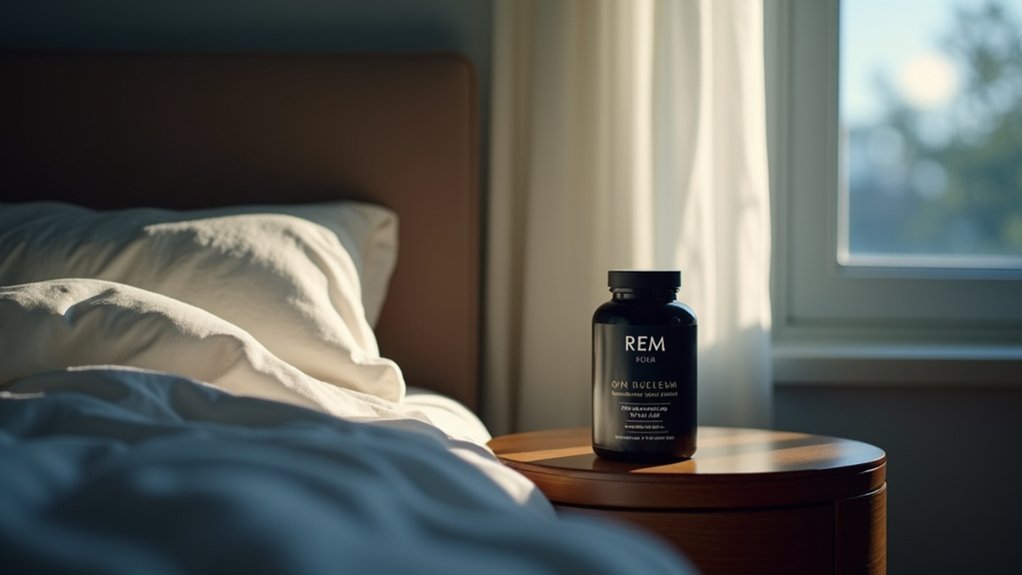
When your head hits the pillow each night, your brain begins a remarkable journey through various sleep stages, with REM sleep standing as one of the most crucial phases for your recovery and cognitive health.
This stage accounts for 20-25% of your total sleep time and releases intense brain activity that mirrors wakefulness patterns. During REM sleep, your brain consolidates memories, processes emotions, and enhances problem-solving abilities—all essential cognitive functions for peak performance.
Related guide: Best L-Theanine Supplements for Calm and Restful Sleep, According to Sleep Experts
Your physical recovery also depends heavily on this stage, as it repairs brain tissues and releases essential neurotransmitters.
You’ll cycle through REM multiple times nightly, starting about 90 minutes after sleep onset. Adequate REM sleep directly improves your mood, reduces stress, and supports overall mental health recovery.
How Melatonin Regulates Circadian Rhythms for Better REM Sleep
As darkness falls each evening, your brain’s pineal gland releases melatonin—a powerful hormone that acts as your body’s internal timekeeper, orchestrating the precise timing of your sleep-wake cycle.
Related guide: Best GABA Supplements for Relaxation and Sleep Support, According to Experts
This melatonin release synchronizes your circadian rhythms with natural light patterns, creating ideal conditions for restorative sleep. When you supplement with melatonin, you’re directly enhancing your body’s ability to shift into deeper sleep stages, particularly REM sleep where memory consolidation and emotional processing occur.
Research shows melatonin supplementation doesn’t just help you fall asleep faster—it preserves your sleep architecture throughout the night.
This means you’ll experience more complete sleep cycles and spend adequate time in REM phases. By normalizing your melatonin levels, you’re fundamentally fine-tuning your internal clock, resulting in dramatically improved sleep quality and more efficient recovery.
Related guide: Best Magnesium Supplements for Sleep That Actually Work
The Science Behind Valerian Root’s Impact on Sleep Architecture

When you take valerian root, its active compounds like valerenic acid directly interact with your brain’s GABA receptors, creating a natural relaxation response that helps you shift into deeper sleep stages.
You’ll experience significant improvements in your overall sleep architecture, particularly with enhanced REM cycles that become more restorative over time.
Research shows that valerian’s ability to activate your natural GABA system doesn’t just help you fall asleep faster—it restructures your entire sleep pattern for better quality rest.
Valerian’s REM Enhancement Mechanisms
While researchers have long recognized valerian root’s sleep-promoting properties, the specific mechanisms by which this herb enhances REM sleep architecture reveal a sophisticated interaction with your brain’s neurotransmitter systems.
The key lies in valerenic acid, valerian root’s primary active compound, which directly targets GABA receptors in your central nervous system. When you take valerian root, these compounds bind to GABA receptors, amplifying your brain’s natural calming signals and promoting deep relaxation.
This GABA enhancement doesn’t just help you fall asleep—it specifically optimizes your sleep architecture by extending REM sleep duration and improving sleep quality.
The result is fewer nighttime awakenings and more restorative sleep cycles, making valerian root particularly effective for addressing insomnia and sleep disorders naturally.
Sleep Architecture Improvement Studies
Multiple clinical trials have documented valerian root’s measurable effects on sleep architecture, providing concrete evidence for what sleep researchers observe in laboratory settings.
Studies show you’ll experience significant increases in REM sleep duration and fewer nighttime awakenings when taking 450 mg of valerian root. This sleep architecture improvement becomes particularly pronounced after two weeks of consistent use, with researchers documenting enhanced deep sleep stages alongside REM enhancement.
Clinical trials demonstrate that valerian root performs comparably to prescription medications for treating sleep disorders, establishing it as a legitimate natural alternative.
The research reveals you’ll benefit from restored sleep patterns through valerian’s influence on neurotransmitter regulation. These laboratory findings provide measurable proof that valerian root genuinely improves sleep quality rather than producing placebo effects.
Natural GABA System Activation
As valerian root enters your system, it triggers a cascade of neurochemical changes that directly enhance your brain’s natural relaxation mechanisms.
This powerful herb works by increasing GABA levels, a vital neurotransmitter that reduces brain excitability and promotes deep relaxation. Through natural GABA system activation, valerian root creates the ideal neurochemical environment for quality sleep.
When you take 450 mg of valerian root, you’re fundamentally giving your brain’s relaxation system a significant boost. The herb interacts directly with GABA receptors, mimicking your body’s natural sleep-promoting processes without synthetic interference.
This targeted approach explains why valerian root effectively treats insomnia while improving REM sleep phases. The result is fewer nighttime awakenings and enhanced overall sleep quality through your brain’s own biochemical pathways.
Magnesium’s Essential Function in Deep Sleep Cycles

When you’re struggling to achieve restorative sleep, magnesium deficiency might be the hidden culprit disrupting your deep sleep cycles. This essential mineral regulates neurotransmitters that promote sleep, specifically facilitating your shift into deeper sleep stages.
Research shows that magnesium supplementation before bed greatly improves sleep efficiency and extends deep sleep duration in individuals with insomnia.
You’ll experience enhanced sleep quality when you maintain adequate magnesium levels, as studies demonstrate reduced nighttime awakenings and improved sleep architecture.
Magnesium deficiencies directly correlate with increased sleep disturbances and insomnia, highlighting its critical role in healthy sleep patterns.
When you support your body’s natural sleep cycles with proper magnesium intake, you’re actively reducing symptoms associated with various sleep disorders while optimizing your overall restorative sleep experience.
L-Theanine’s Calming Effects on Nighttime Brain Activity
When you’re lying awake with racing thoughts, L-theanine works to calm your nighttime brain activity by reducing stress hormones like cortisol that keep you alert.
This amino acid promotes alpha brain waves, which create the relaxed mental state you experience during meditation and help guide your mind toward sleep.
You’ll also benefit from L-theanine’s ability to enhance GABA activity, as this neurotransmitter acts as your brain’s natural brake system to slow down overstimulating thoughts.
Reduces Stress Hormones
While you’re tossing and turning at night, elevated stress hormones like cortisol can sabotage your sleep quality and prevent you from reaching restorative REM stages.
L-Theanine effectively reduces stress hormones by directly lowering cortisol levels in your system. When cortisol remains high during nighttime hours, it keeps your body in an alert state that’s incompatible with deep sleep.
L-Theanine counters this by promoting relaxation through increased production of calming neurotransmitters like GABA, serotonin, and dopamine.
Research demonstrates that L-Theanine’s hormone-balancing effects create favorable conditions for sleep quality improvement. By suppressing cortisol production, you’ll experience fewer nighttime awakenings and enhanced sleep efficiency.
This amino acid’s ability to normalize your stress response makes it particularly valuable for those whose racing minds prevent restful sleep.
Promotes Alpha Brain Waves
Your brain’s electrical activity shifts dramatically during the alteration to sleep, and L-Theanine plays an essential role in promoting the alpha brain waves that signal deep relaxation.
This amino acid from tea leaves creates the perfect neurological environment for quality rest:
- Enhanced alpha wave production – L-Theanine directly stimulates these calming brain frequencies
- Elevated neurotransmitter levels – Increases GABA, serotonin, and dopamine for better mood regulation
- Reduced nighttime awakenings – Studies show 200mg doses considerably improve sleep continuity
- Faster sleep onset – Facilitates smoother changes from wakefulness to deep sleep
- Stress counteraction – Neutralizes anxiety that typically disrupts natural sleep architecture
L-Theanine’s ability to promote alpha brain waves creates a state of relaxed alertness that naturally progresses into restorative sleep, making it invaluable for optimizing your sleep quality.
Enhances GABA Activity
As nighttime approaches, L-Theanine begins its most vital work by enhancing GABA activity throughout your brain’s neural networks. This significant neurotransmitter acts as your brain’s natural brake system, inhibiting excessive neuronal firing that leads to racing thoughts and restlessness. When you enhance GABA activity through L-Theanine supplementation, you’re directly supporting your body’s ability to improve sleep quality and maintain a healthy sleep cycle.
| GABA Function | Impact on Sleep |
|---|---|
| Reduces neural excitability | Faster sleep onset |
| Calms overactive thoughts | Deeper sleep stages |
| Promotes relaxation | Prevents sleep deprivation |
This enhanced GABA function doesn’t just help you fall asleep—it guarantees restful sleep by reducing nighttime awakenings and supporting ideal REM cycles without morning grogginess.
Glycine’s Temperature-Lowering Mechanism for Sleep Onset
Because your body’s internal thermostat needs to drop several degrees to initiate quality sleep, glycine acts as a natural temperature regulator that can greatly enhance your sleep onset.
This amino acid works by triggering peripheral vasodilation, which allows heat to escape through your extremities and lowers your core body temperature. Research demonstrates that just 3 grams of glycine can considerably improve sleep quality while reducing the time you spend tossing and turning.
Here’s how glycine’s temperature-lowering mechanism benefits your sleep:
- Facilitates faster shift into deeper sleep stages
- Enhances overall sleep efficiency throughout the night
- Reduces daytime sleepiness and grogginess
- Supports natural progression into REM sleep cycles
- Improves subjective sleep quality ratings
This temperature regulation aligns perfectly with your body’s natural sleep processes.
Why Your Brain Chemistry Responds to Natural Sleep Compounds
Your brain’s naturally wired to recognize and respond to compounds that mirror its own sleep-regulating chemicals.
When you take natural sleep supplements, they work directly with your existing neurotransmitter pathways rather than forcing artificial changes to your brain chemistry.
This compatibility means your sleep architecture can actually improve as these compounds enhance the biological processes your body already uses to cycle through different sleep stages.
Natural Neurotransmitter Pathways
When you take natural sleep compounds like melatonin, GABA, or L-theanine, they don’t simply mask sleep problems—they work directly with your brain’s existing natural neurotransmitter pathways to restore natural sleep patterns.
Your brain’s chemistry responds because these compounds integrate seamlessly with systems already in place:
- Melatonin binds to specific brain receptors, signaling your circadian rhythm to prepare for sleep and extending REM duration.
- GABA reduces neuronal excitability as an inhibitory neurotransmitter, promoting deep relaxation.
- L-theanine boosts GABA, serotonin, and dopamine levels, creating calming effects that support REM architecture.
- Magnesium supports neurotransmitter function, with deficiencies directly linked to sleep disturbances.
Together, they enhance your body’s ability to enter and maintain restorative sleep stages.
This targeted approach improves sleep quality by working with—not against—your brain’s natural processes.
Sleep Architecture Enhancement
Natural sleep compounds don’t just trigger isolated neurotransmitter responses—they orchestrate extensive changes to your sleep architecture, the structured pattern of sleep stages that cycle throughout the night.
Sleep architecture enhancement occurs when melatonin regulates your circadian rhythms, ensuring proper REM initiation and reducing nighttime awakenings.
Valerian root extends REM duration while working with your body’s natural neurotransmitters to strengthen overall sleep structure.
Magnesium contributes by regulating neurotransmitter activity and promoting muscle relaxation, particularly benefiting those with deficiencies.
Together, these compounds create balanced sleep cycles that support restorative processes.
You’ll experience improved sleep quality as these natural substances foster ideal conditions for memory consolidation and emotional regulation during REM phases, demonstrating why targeted supplementation produces measurable improvements in sleep architecture.
The Difference Between Synthetic and Natural Sleep Support
While both synthetic and natural sleep aids can improve your rest, they work through fundamentally different mechanisms and offer distinct advantages depending on your specific sleep challenges.
Understanding your unique sleep patterns and underlying causes helps determine whether synthetic or natural aids will deliver the most effective results for your situation.
Synthetic sleep aids like melatonin primarily reset your circadian rhythms, making them effective for jet lag but potentially less suitable for chronic insomnia.
Natural sleep support takes a broader approach, addressing underlying issues like anxiety and stress.
Key differences include:
- Mechanism: Synthetic options target specific pathways, while natural supplements like valerian root promote overall relaxation.
- Composition: Natural formulas often blend multiple ingredients for thorough sleep architecture support.
- Duration: Valerian root shows sustained effectiveness with consistent use, unlike some synthetic alternatives.
- Regulation: Both categories lack strict oversight, requiring third-party certifications.
- Approach: Natural options enhance sleep quality holistically rather than targeting single functions.
Timing and Dosage Factors That Maximize REM Enhancement
Getting the most from your REM supplements isn’t just about what you take—it’s about when and how much you take. Timing plays an essential role in maximizing REM sleep enhancement.
Take melatonin 30-60 minutes before bedtime to optimize your circadian rhythm regulation. L-Theanine works best when consumed 30 minutes before sleep, promoting relaxation that leads to better sleep quality.
For valerian root, a single 450 mg dosage effectively increases REM sleep while reducing nighttime awakenings. Glycine requires just 3 grams before bedtime to facilitate the temperature drop necessary for deeper sleep phases.
Magnesium supplementation at bedtime helps restore normal sleep architecture. Proper timing and precise dosage guarantee these supplements work synergistically with your body’s natural sleep processes.
Individual Variations in Sleep Supplement Effectiveness
Because each person’s biology is unique, your response to REM supplements won’t match your neighbor’s experience. Individual variations in how sleep supplements affect you depend on multiple factors that make effectiveness highly personal.
Your body’s reaction to these supplements depends on:
- Age and hormones – Perimenopausal women may find melatonin less effective, while older adults often benefit more from magnesium.
- Genetics – Your genetic makeup influences how you metabolize and respond to different compounds.
- Sleep architecture – Your natural circadian rhythms and REM patterns affect supplement outcomes.
- Health conditions – Existing sleep disorders or medical issues can alter supplement effectiveness.
- Lifestyle factors – Diet, stress, and daily habits impact how well supplements work.
This complexity explains why personalized approaches to sleep supplementation are essential for ideal results.
Frequently Asked Questions
Does REM Really Work?
REM supplements do work for improving your sleep quality. You’ll experience longer REM sleep duration, fewer nighttime awakenings, and better sleep efficiency when you use evidence-based supplements like melatonin, valerian root, and magnesium consistently.
Do Sleep Supplements Actually Work?
Yes, sleep supplements can work for you. Clinical studies show valerian root, melatonin, and magnesium greatly improve sleep quality and reduce time to fall asleep, though you’ll experience varying individual results.
Do Any Supplements Increase REM Sleep?
Yes, you’ll find melatonin, valerian root, magnesium, L-theanine, and glycine can boost your REM sleep. They work by regulating sleep cycles, reducing awakenings, and optimizing body temperature for deeper, more restorative sleep phases.
What Does REM Do for Your Body?
REM sleep consolidates your memories, regulates your emotions, and boosts your creativity. It repairs your muscles, strengthens your immune system, balances your hormones, and improves your mood while reducing anxiety and depression.
In Summary
You’ll find REM supplements work because they target your brain’s natural sleep chemistry. When you take melatonin, valerian root, magnesium, or L-theanine, you’re supporting your body’s existing mechanisms rather than forcing artificial changes. Your individual response depends on timing, dosage, and your unique biochemistry. These natural compounds help regulate your circadian rhythms and calm neural activity, creating ideal conditions for deeper, more restorative REM sleep cycles.


