
You’ll want to track your REM cycles with apps because this vital sleep phase, comprising 20-25% of your total sleep time, directly impacts your memory consolidation, emotional regulation, and cognitive function. Apps use accelerometers and gyroscopes to monitor movement patterns and identify when you’re in REM sleep, helping you optimize your sleep schedule and recognize disruptive factors. This data reveals how lifestyle changes affect your sleep quality and can enhance your energy levels, problem-solving skills, and memory retention. Understanding these patterns reveals deeper insights into your overall sleep health.
Understanding REM Sleep and Its Critical Role in Health
While you cycle through different sleep stages each night, REM sleep stands out as perhaps the most fascinating and crucial phase for your mental well-being. This critical sleep stage occurs every 90 to 110 minutes, with cycles becoming progressively longer throughout the night, reaching up to 30 minutes in final cycles.
During REM sleep, your brain becomes highly active, processing emotions, consolidating memories, and enhancing learning capabilities. You’ll experience rapid eye movements and temporary muscle paralysis while your mind works overtime.
Without adequate REM sleep, you’re at risk for cognitive impairments, emotional disturbances, and mood disorders like depression and anxiety.
Sleep tracking apps can monitor these essential cycles, providing insights into your sleep quality and identifying potential disruptions that may indicate underlying sleep disorders.
How Sleep Tracking Apps Monitor REM Cycles
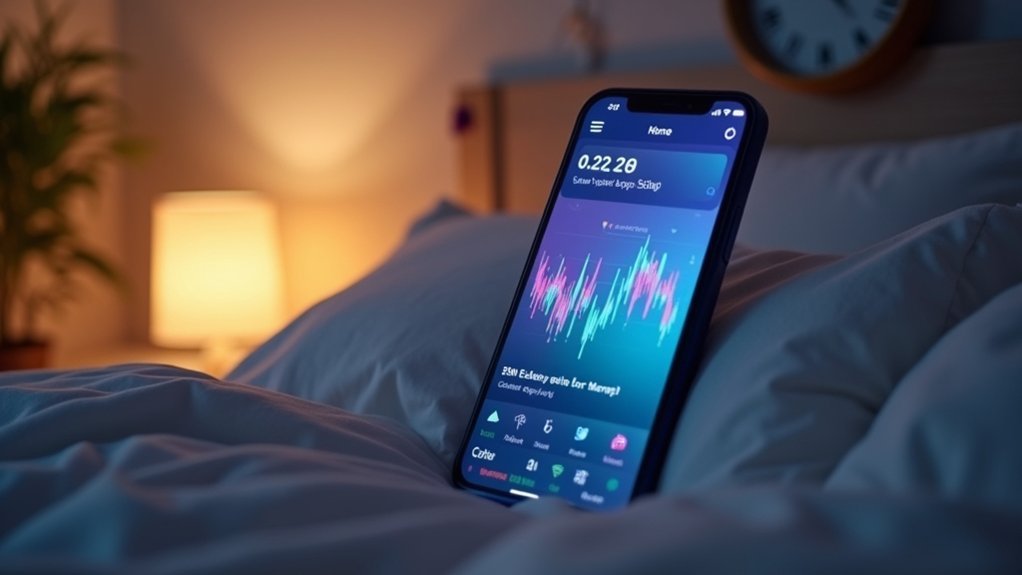
Sleep tracking apps use sophisticated technology built into your smartphone or wearable device to monitor your REM cycles throughout the night. These sleep tracking devices rely on accelerometers and gyroscopes to detect your body movements, helping estimate when you’re experiencing different sleep phases.
Your app analyzes movement patterns to categorize your sleep into distinct stages throughout the night:
| Sleep Stage | Characteristics | Movement Level | REM Cycle Phase | Duration |
|---|---|---|---|---|
| Light Sleep | Easy awakening | Moderate movement | Pre-REM shift | 50-60% of night |
| Deep Sleep | Restorative phase | Minimal movement | Non-REM | 15-20% of night |
| REM Sleep | Dream activity | Limited movement | Active REM | 20-25% of night |
| Awake | Conscious state | High movement | Between cycles | 5% of night |
| Change | Phase changes | Variable movement | Cycle boundaries | Varies |
Advanced apps can wake you during lighter phases, often coinciding with REM cycles, promoting refreshed mornings.
Key Features That Make REM Tracking Effective
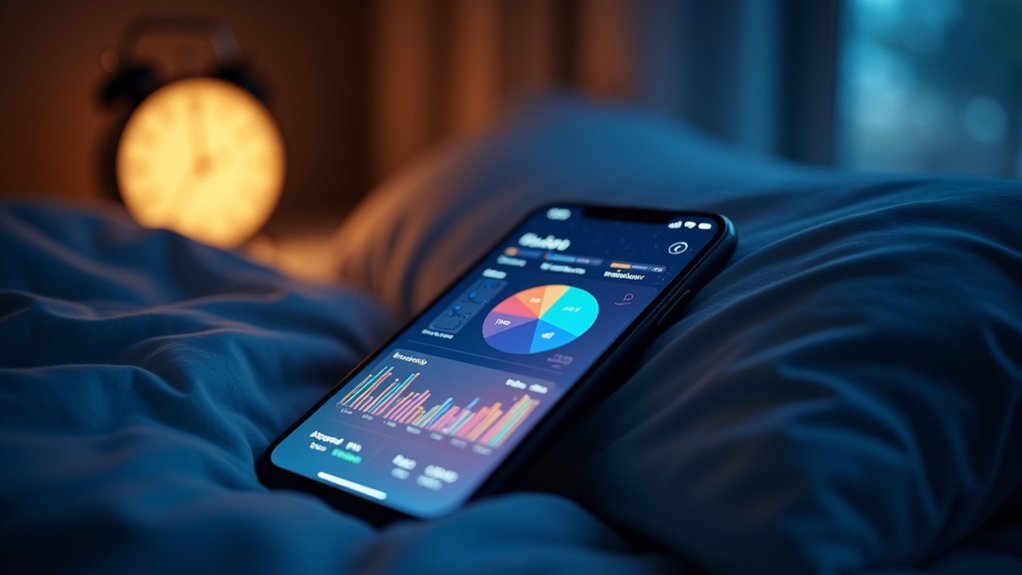
Accuracy in REM tracking depends on several essential features that transform raw sensor data into meaningful sleep insights. When you’re choosing sleep trackers, you’ll want apps that can distinguish between sleep phases and recognize the 90-110 minute REM intervals.
The most effective systems analyze your movement patterns to identify when you’re experiencing reduced movement and heightened brain activity.
Key features that enhance REM tracking effectiveness include:
- Smart alarm algorithms that wake you during lighter sleep stages for more invigorating mornings
- Disturbance detection that captures REM interruptions affecting your cognitive function
- Pattern analysis tools that correlate sleep patterns over time with lifestyle factors like stress and caffeine intake
These capabilities help you understand how external factors impact your sleep quality and develop better sleep hygiene practices.
Accuracy and Limitations of App-Based Sleep Monitoring
Although sleep tracking apps offer convenient insights into your nightly rest patterns, their accuracy in detecting REM cycles faces significant technological constraints. Your smartphone’s accelerometer can’t measure brain activity like clinical sleep studies do, leading to estimations rather than precise measurements. This creates potential discrepancies between app data and actual REM sleep duration.
The accuracy of these apps typically falls short compared to professional sleep monitoring equipment that tracks brain waves. You might find yourself experiencing anxiety or over-relying on potentially inaccurate data, which can misrepresent your actual sleep quality.
While apps can help identify trends in your sleep habits and note disruptions, you should use them cautiously. Consider supplementing app data with professional evaluations for accurate insights into potential sleep disorders.
Identifying Sleep Patterns Through REM Data Analysis
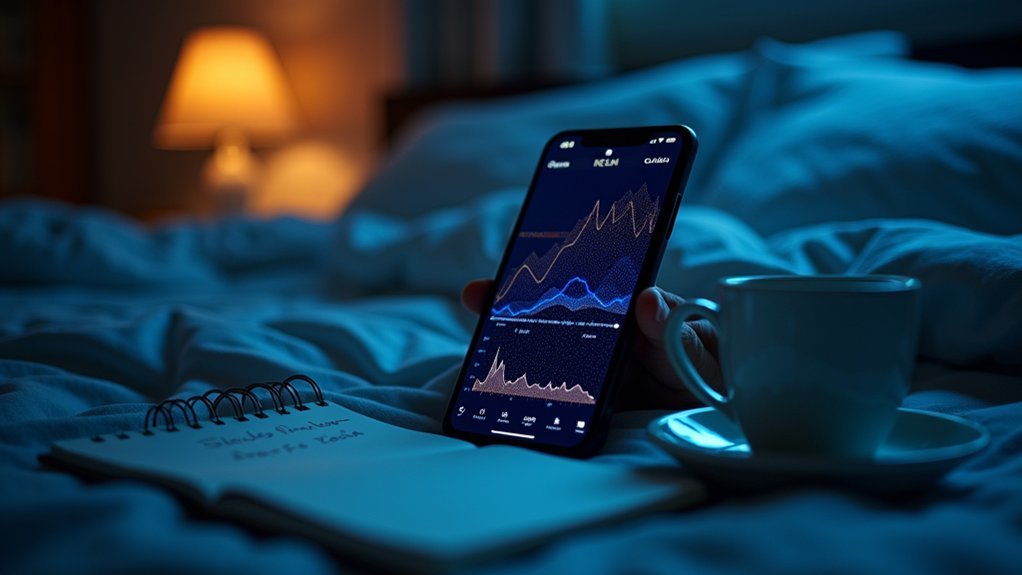
You’ll discover that tracking your REM cycles reveals valuable insights into your sleep architecture and overall rest quality.
The data patterns you collect can help you identify correlations between your REM duration and factors like stress levels, exercise timing, or caffeine consumption.
REM Cycle Tracking Benefits
When you consistently track your REM cycles, you’ll uncover valuable patterns that reveal how external factors influence your sleep quality.
Sleep tracking apps analyze your REM data to identify correlations between your lifestyle choices and sleep performance, giving you actionable insights for improvement.
Here are three key benefits of monitoring your REM cycles:
- Optimize your sleep schedule – Understanding REM length and frequency helps you time your bedtime for better energy levels and cognitive function.
- Enhance your sleep environment – Data guides adjustments to bedroom temperature and lighting during critical REM stages.
- Measure intervention effectiveness – Track how lifestyle changes impact your sleep, directing you toward healthier habits that support memory consolidation and emotional regulation.
Pattern Recognition Through Data
As sleep tracking apps collect REM sleep data over weeks and months, they’ll reveal distinctive patterns that emerge from your nightly sleep architecture. You’ll discover how your REM phases naturally increase throughout the night, cycling every 90 to 110 minutes. This tracking enables you to spot correlations between daily activities and sleep quality that you’d never notice otherwise.
| Daily Factor | REM Impact |
|---|---|
| Late caffeine | Reduced cycles |
| Evening exercise | Delayed onset |
| Screen time | Fragmented sleep |
| Stress levels | Shortened duration |
| Alcohol consumption | Disrupted quality |
Pattern recognition through REM sleep tracking reveals how lifestyle choices directly influence your cognitive restoration. You’ll identify which environmental factors consistently disrupt your cycles, empowering you to make targeted adjustments for ideal sleep health.
Benefits of Tracking REM Cycles for Better Sleep Quality
You’ll discover that tracking your REM cycles enables targeted optimization of this critical sleep stage, leading to more restorative nights.
Your brain’s memory consolidation processes become considerably more efficient when you understand and improve your REM sleep patterns.
REM Sleep Optimization
Since REM sleep plays an important role in memory consolidation and cognitive enhancement, tracking these cycles can dramatically improve your overall sleep quality.
Apps help you track different sleep stages and identify patterns that affect your restorative rest.
Enhance your REM sleep through these strategies:
- Time your wake-up – Align alarms with lighter sleep phases occurring after REM periods for more refreshed mornings.
- Analyze lifestyle impacts – Monitor how caffeine intake and exercise timing influence your REM distribution throughout the night.
- Assess sleep adequacy – Use duration and frequency data to confirm you’re getting sufficient restorative sleep for emotional and mental well-being.
Understanding when REM occurs during your sleep cycle allows you to make targeted adjustments to your schedule, maximizing the cognitive and memory benefits essential for peak daily performance.
Memory Consolidation Enhancement
While you sleep, your brain transforms daily experiences into lasting memories through carefully orchestrated REM cycles that serve as nature’s filing system. During this vital stage, your mind processes and stores information, converting short-term memories into permanent knowledge. REM sleep accounts for 20-25% of your total sleep time, with cycles intensifying throughout the night to maximize memory consolidation.
| Without REM Tracking | With REM Tracking |
|---|---|
| Forgotten study sessions | Enhanced recall ability |
| Lost creative insights | Improved problem-solving |
| Fragmented memories | Solid knowledge retention |
| Learning struggles | Accelerated skill acquisition |
Apps that monitor your REM patterns reveal when memory consolidation peaks, helping you identify sleep disturbances that sabotage learning. By optimizing these cycles, you’ll access your brain’s full potential for retaining information and boosting cognitive performance.
Choosing the Right Sleep Tracking App for REM Monitoring
How can you guarantee the sleep tracking app you choose actually delivers reliable REM cycle data? You’ll need to focus on specific features that separate quality apps from basic sleep trackers.
Look for apps that utilize advanced algorithms combined with multiple sensors like accelerometers and heart rate monitors. These technologies provide more precise REM monitoring compared to simple motion detection.
Here’s what you should prioritize:
- Wearable device integration – These offer enhanced accuracy over smartphone-only solutions.
- Visual sleep stage reports – Clear graphs showing REM versus other sleep stages help identify patterns.
- Strong user reviews – High ratings specifically for REM cycle tracking indicate reliable performance.
Consider expert recommendations alongside user feedback when making your decision. The right app will provide detailed insights into your REM sleep duration, interruptions, and trends over time.
When to Consult Healthcare Professionals About Your Sleep Data
Sleep tracking apps can provide valuable insights, but they can’t replace professional medical expertise when serious sleep issues arise. You should seek medical evaluation if your tracker consistently shows poor sleep quality or insufficient duration despite adequate sleep time.
Excessive daytime sleepiness warrants consulting a healthcare professional to explore underlying conditions. Pay attention to significant disruptions like frequent awakenings or irregular sleep stage changes.
If you have known sleep disorders such as sleep apnea or insomnia, remember that consumer trackers may lack diagnostic accuracy. When consulting a healthcare professional, bring detailed sleep diary data including your tracker information.
This thorough overview helps medical providers better understand your sleep patterns and identify potential issues requiring professional treatment.
Frequently Asked Questions
How Do Apps Detect REM Sleep?
Apps detect your REM sleep by monitoring movement patterns through accelerometers, since you’re temporarily paralyzed during REM. They’ll also analyze sound data and use algorithms estimating typical 90-110 minute sleep cycles.
What Is the Benefit of the Sleep Cycle App?
You’ll get personalized sleep insights, optimized wake-up times during lighter sleep phases, detailed REM tracking for better memory consolidation, visual sleep trend reports, and environmental factor analysis to improve your overall sleep quality.
Does the Apple Watch Accurately Track REM Sleep?
Your Apple Watch doesn’t accurately track REM sleep since it lacks built-in sleep tracking and relies on third-party apps using movement and heart rate data rather than measuring actual brain wave activity.
What Does REM Mean on My Sleep App?
REM on your sleep app means Rapid Eye Movement, the sleep stage when you’re dreaming and your brain processes memories. It’s essential for cognitive function and emotional well-being throughout your day.
In Summary
You’ll find that tracking your REM cycles with apps gives you valuable insights into your sleep quality and patterns. While these tools aren’t perfect, they’re useful for identifying trends and making adjustments to improve your rest. Don’t rely solely on app data for serious sleep concerns—combine it with healthy sleep habits and consult healthcare professionals when needed. You’ll sleep better when you understand what’s happening during your nights.


