

For ideal circadian health, you’ll want to use warm, dim lighting (2700K-3500K) in your bedroom during evening hours, with red light being the best choice 1-2 hours before sleep since it preserves natural melatonin production. Avoid blue light from screens and cool-colored bulbs, as they suppress melatonin and trick your brain into thinking it’s daytime. Consider circadian smart bulbs that automatically adjust throughout the day, and guarantee complete darkness during sleep with blackout curtains to maximize your body’s natural sleep hormone production and create deeper, more restorative sleep cycles.
How Light Influences Your Body’s Internal Clock
While you mightn’t realize it, the lighting in your bedroom acts as a powerful conductor orchestrating your body’s internal symphony. Your hypothalamus serves as the control center, responding to light exposure signals that dramatically impact your circadian rhythms.
When darkness falls, this brain region triggers increased melatonin production, naturally making you drowsy and ready for sleep.
However, artificial light disrupts this delicate process. Blue light from screens particularly interferes with melatonin production, leaving you wide awake when you should be winding down.
Your body evolved to follow natural light patterns – bright daylight energizes you, while warm, dim sunset hues signal rest time. Understanding this biological programming helps you optimize your bedroom lighting to support healthy sleep-wake cycles and improve overall well-being.
Understanding Circadian Rhythms and Sleep Cycles
Your body operates on a built-in 24-hour clock called your circadian rhythm, which controls when you feel alert or sleepy throughout the day.
Light exposure directly impacts this internal timing system—bright light signals your brain to stay awake, while darkness triggers the release of melatonin, your body’s natural sleep hormone.
Understanding how your circadian rhythm responds to different lighting conditions will help you create the ideal bedroom environment for better sleep quality.
Internal Body Clock Basics
Although most people think of sleep as simply “turning off” for the night, your body operates on a sophisticated biological timer called the circadian rhythm that orchestrates when you feel alert or drowsy throughout each 24-hour cycle.
This internal clock primarily responds to natural light patterns, with your hypothalamus serving as the control center.
Your circadian rhythm regulates four key processes:
- Melatonin production – Released during darkness to promote sleepiness
- Hormone cycles – Controls cortisol, growth hormone, and other essential chemicals
- Body temperature fluctuations – Drops before sleep, rises upon waking
- Digestive timing – Influences hunger patterns and metabolism
Light exposure, especially blue light, directly impacts this system by suppressing melatonin and keeping you alert when you should be winding down.
Light’s Rhythm Impact
Light exposure doesn’t just influence your circadian rhythm—it can completely override your body’s natural sleep signals. When you’re exposed to bright or blue light during evening hours, your brain interprets this as daytime, suppressing melatonin production and keeping you alert when you should be winding down.
This disruption can shift your entire sleep-wake cycle, making it harder to fall asleep and reducing sleep quality.
Your melatonin levels naturally rise in darkness, signaling it’s time for rest. However, screens and harsh overhead lighting trick your internal clock into thinking it’s still day.
Implementing proper circadian lighting means using warm, dim light in the evening to support your body’s natural rhythm. This simple adjustment helps restore healthy melatonin production and improves your overall sleep cycle.
Melatonin Production Cycles
When darkness falls, your pineal gland begins releasing melatonin—a powerful hormone that acts like your body’s internal sleep switch. This natural process follows your circadian rhythm’s 24-hour cycle, peaking during nighttime hours to promote sleepiness.
Your melatonin production operates on predictable patterns:
- Evening surge – Levels rise dramatically around 9 PM when light diminishes.
- Peak production – Maximum release occurs between 2-4 AM during deep sleep.
- Morning decline – Levels drop sharply with sunrise exposure.
- Daytime suppression – Minimal production continues throughout daylight hours.
Blue light exposure disrupts this delicate cycle, causing melatonin suppression that delays sleep onset.
However, warm light preserves your natural rhythm by minimizing interference with hormone production. Understanding these cycles helps you optimize bedroom lighting to support your body’s sleep-wake patterns.
The Science Behind Melatonin Production and Light Exposure
As darkness falls each evening, your pineal gland responds by ramping up melatonin production—a natural hormone that signals your body it’s time to wind down for sleep.
However, light exposure dramatically impacts this process. Blue light can slash melatonin production by 50% or more, while evening exposure delays secretion by up to three hours, disrupting your circadian rhythm and sleep quality.
Blue light exposure can cut melatonin production in half and delay sleep onset by three hours.
Your body’s peak melatonin occurs between 2 AM and 4 AM, making bedroom darkness essential during these hours.
Bright morning light promotes alertness, but you’ll want to avoid cool, bright lights at night. Instead, choose warm red-hued lighting, which minimally affects melatonin levels and supports your natural sleep-wake cycle for ideal rest.
Red Light: The Optimal Choice for Evening Hours
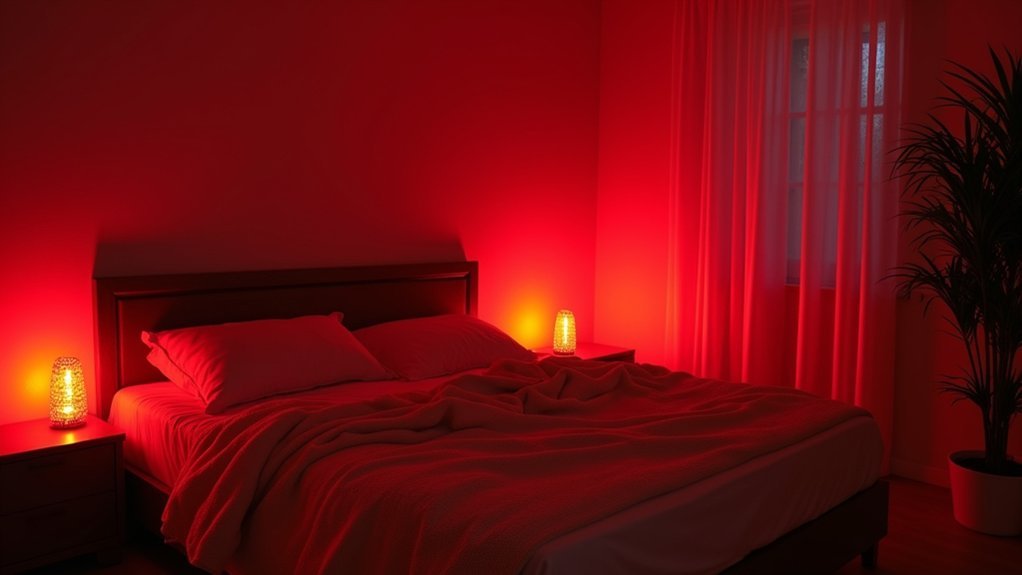
You’ll find that red light offers unique advantages for your evening routine by preserving your body’s natural melatonin production while other light sources actively suppress it.
This wavelength protects your circadian rhythm from disruption, allowing your internal clock to maintain its natural alignment with nighttime hours.
As you incorporate red lighting into your bedroom, you’ll experience enhanced sleep quality through reduced alertness and a more restful shift to sleep.
Melatonin Production Benefits
Red light stands out as your best evening illumination choice because it supports your body’s natural melatonin production without disrupting your sleep-wake cycle.
Unlike blue light that suppresses melatonin levels, red light allows this essential sleep hormone to flow naturally through your system.
Here’s how red light enhances your melatonin production:
- Preserves natural secretion – Red light doesn’t interfere with your pineal gland’s melatonin release, maintaining healthy hormone levels.
- Supports circadian rhythm alignment – Signals your body it’s time to wind down without causing timing disruptions.
- Promotes deeper sleep cycles – Enhanced melatonin leads to more restorative rest and improved sleep quality.
- Creates ideal transition environment – Dim red lighting helps you prepare for sleep while maintaining hormone balance.
Circadian Rhythm Protection
While melatonin production forms the foundation of quality sleep, protecting your entire circadian rhythm requires careful attention to your evening light exposure. Unlike blue light that disrupts your natural sleep-wake cycle, red light preserves your body’s internal clock through its longer wavelengths that don’t interfere with circadian processes.
| Light Type | Circadian Impact | Sleep Quality Effect | Timing Recommendation |
|---|---|---|---|
| Red Light | Minimal disruption | Enhanced | Evening/bedtime |
| Blue Light | Significant suppression | Reduced | Daytime only |
| White Light | Moderate interference | Impaired | Avoid after sunset |
| Dim Red | Ideal protection | Maximized | 1-2 hours before sleep |
Red light’s non-stimulating properties signal your brain to wind down, creating the perfect environment for maintaining healthy circadian rhythm while improving your overall sleep quality.
Sleep Quality Enhancement
When evening arrives, switching to red light becomes your most powerful tool for enhancing sleep quality naturally.
Unlike harsh blue wavelengths that disrupt your body’s natural wind-down process, red light works harmoniously with your circadian system to prepare you for restful sleep.
Red light offers these specific benefits for better sleep:
- Boosts melatonin production – Enhances your body’s natural sleep hormone instead of suppressing it
- Reduces evening alertness – Helps your mind shift from active daytime mode to relaxation
- Creates calming atmosphere – Transforms your bedroom into a peaceful sanctuary that promotes tranquility
- Minimizes sleep disturbances – Protects your circadian rhythms from evening light interference
Warm Colors That Promote Relaxation and Sleep
| Light Color | Sleep Impact | Best Use |
|---|---|---|
| Red | No disruption to sleep signals | Late evening/night |
| Orange | Promotes relaxation | Pre-bedtime routine |
| Yellow | Calming, improves sleep onset | General bedroom ambiance |
This approach supports your circadian health naturally.
Blue Light: Why It Disrupts Your Sleep Quality
Blue light from your devices and certain LED bulbs wreaks havoc on your body’s natural melatonin production, making it nearly impossible to feel sleepy when you should.
When you’re scrolling through your phone or watching TV before bed, you’re fundamentally telling your brain it’s still daytime, which keeps you wired and alert.
This disruption doesn’t just affect when you fall asleep—it compromises the quality of rest you’ll get throughout the night.
Blue Light’s Melatonin Impact
As darkness falls each evening, your body naturally begins producing melatonin, the hormone that signals it’s time to wind down for sleep.
However, blue light at night from electronic devices disrupts this natural process by suppressing melatonin production and confusing your circadian rhythm.
Blue light wavelengths between 450-480 nanometers are particularly problematic because they:
- Block melatonin release – Tricking your brain into thinking it’s still daytime
- Delay sleep onset – Making it harder to fall asleep when you want to
- Reduce sleep duration – Cutting short your total rest time
- Disrupt sleep quality – Leading to less restorative sleep cycles
Even brief exposure to blue light before bedtime can throw off your body’s natural sleepiness cues, making quality rest elusive.
Evening Screen Exposure Effects
Your smartphone’s glowing screen delivers a concentrated dose of blue light directly into your eyes during those late-night scrolling sessions. This evening exposure tricks your brain into believing it’s still daytime, disrupting your natural sleep-wake cycle. Research shows that blue light can slash melatonin production by half, making it considerably harder to fall asleep.
| Device Type | Blue Light Intensity | Sleep Impact |
|---|---|---|
| Smartphones | High | Severe disruption |
| Tablets | Moderate-High | Notable delay |
| Laptops | Moderate | Noticeable effects |
When you use electronic devices before bed, you’re fundamentally telling your circadian rhythm to stay alert. This leads to increased sleep latency and poor sleep quality throughout the night. The World Health Organization warns that prolonged exposure contributes to sleep disorders and overall health decline.
Green and Cool Colors to Avoid Before Bedtime
When you’re winding down for the night, green and cool-colored lighting can sabotage your body’s natural preparation for sleep.
These wavelengths actively signal your brain to stay alert, disrupting the delicate balance of your circadian rhythms.
Here’s what happens when you expose yourself to problematic lighting:
- Green light suppresses melatonin production, making it considerably harder to fall asleep naturally.
- Blue light from screens promotes heightened alertness, keeping your mind active when it should be calming down.
- Cool colors like violet trigger wakefulness signals, telling your body it’s time to be awake rather than rest.
- Bright cool-toned lights inhibit your natural sleep drive, fighting against your body’s evening wind-down process.
You’ll sleep better by switching to warm lighting options instead.
Circadian Smart Bulbs and Their Health Benefits
Since traditional lighting works against your body’s natural rhythms, circadian smart bulbs offer a revolutionary solution that actively supports your sleep-wake cycle.
These innovative bulbs mimic natural light patterns by automatically adjusting color temperature and brightness throughout the day, promoting healthier circadian rhythms.
You’ll benefit from patented UV-free technology that delivers ideal light for different times, enhancing your mood and energy levels.
The customized schedules let you wake up gradually with simulated sunrise effects and wind down with calming sunset lighting.
Research shows that proper light exposure from circadian smart bulbs leads to improved sleep quality and increased daytime alertness.
User-friendly apps make it easy to control lighting schedules and adjust settings based on your individual preferences for enhanced well-being.
Intensity Tuning for Natural Light Patterns
While circadian smart bulbs provide extensive lighting solutions, intensity tuning offers a focused approach that specifically targets brightness levels to match your body’s natural rhythms.
This method creates natural light patterns that support your circadian health throughout the day.
Intensity tuning works by adjusting brightness while maintaining consistent color temperature, helping your body respond appropriately to light cues.
By maintaining steady color temperature while adjusting brightness, intensity tuning helps synchronize your body’s natural response to light signals.
Here’s how it benefits your bedroom lighting:
- Morning gradual increase – Slowly brightens to promote natural awakening
- Consistent CCT maintenance – Preserves color temperature for ideal melatonin production
- Evening dimming – Reduces intensity to encourage relaxation and sleep preparation
- Enhanced sleep quality – Reinforces your biological clock for better rest
You’ll experience improved mood, cognitive function, and overall well-being through this targeted lighting approach.
Color Temperature Guidelines Throughout the Day
Beyond intensity adjustments, color temperature creates the foundation for healthy circadian lighting in your bedroom.
During daytime hours, you’ll want cooler temperatures between 4000K-10,000K to enhance alertness and productivity while mimicking natural daylight. This bright morning exposure resets your circadian rhythm by suppressing melatonin and boosting alertness.
As evening approaches, shift to warmer temperatures of 2700K-3500K. These promote relaxation and signal your body it’s time to wind down for sleep.
For nighttime activities, red light becomes your best choice since it minimally impacts your circadian rhythm and doesn’t greatly disrupt melatonin production.
Consistently following these color temperature guidelines aligns your lighting with your body’s natural biological clock, ultimately enhancing your overall circadian health and improving your sleep quality.
Creating the Perfect Sleep Environment With Proper Lighting
Although you’ve established the right color temperatures throughout your day, transforming your bedroom into an ideal sleep sanctuary requires strategic lighting choices that work in harmony with your body’s natural rhythms.
To create a circadian healthy sleep environment, implement these essential lighting strategies:
- Eliminate blue light exposure after sunset by switching to warm-colored bulbs in red, orange, or yellow tones that won’t suppress melatonin production.
- Dim all overhead lights considerably during evening hours to signal your body it’s time to prepare for rest.
- Install circadian smart bulbs that automatically adjust color temperature and intensity throughout the day, mimicking natural daylight patterns.
- Achieve complete darkness at night using blackout curtains or eye masks to maximize melatonin secretion and enhance sleep quality.
Bedroom Lighting Solutions for Children and Adults
When designing bedroom lighting for your family, you’ll discover that children and adults share remarkably similar needs for sleep-promoting illumination, though their specific preferences and sensitivities can vary considerably.
You’ll want to prioritize warm-colored lights like red, orange, or yellow, which support your natural sleep-wake cycles by promoting melatonin production.
Avoid blue and white light colors that suppress melatonin levels, particularly harmful for children’s developing circadian rhythms.
You should dim lights during evening hours to signal your body it’s time to wind down.
Consider installing color-tuning systems that shift to warmer temperatures at night, mimicking natural light patterns.
Remember to personalize solutions based on individual preferences, as research shows light color choices directly impact sleep onset times for better sleep quality.
Practical Tips for Implementing Circadian Lighting Systems
Since you’ve established the importance of warm lighting for sleep, you’ll need to implement a thorough circadian lighting system that automatically adjusts throughout your day.
This lighting design supports your circadian rhythm while providing therapeutic benefits.
Here’s how to create an effective light therapy system:
- Install smart bulbs that automatically shift from cool daylight (4000K-10,000K) during morning hours to warm tones (2700K-3500K) at night.
- Program intensity schedules starting with dim morning light, increasing brightness during peak daytime, then dimming gradually toward evening.
- Add red-hued fixtures for nighttime use, as they won’t suppress melatonin production like blue light.
- Follow WELL Building Standards ensuring your regularly occupied spaces receive at least 120 EML for ideal circadian support.
Frequently Asked Questions
What Is the Best Lighting for Circadian Rhythm?
You’ll want bright, cool light (4000K-10,000K) during daytime hours to stay alert, then switch to dim, warm lighting (2700K-3500K) in the evening to promote melatonin production and prepare for sleep.
Which Light Is Best for a Bedroom at Night?
You’ll want warm-colored lights like red, orange, or yellow for your bedroom at night. They won’t disrupt your melatonin production or circadian rhythm, helping you fall asleep easier and sleep better overall.
What Color of Light Affects Circadian Rhythm?
Blue light in the 450-480 nm range most greatly affects your circadian rhythm by suppressing melatonin production. Green and violet light also disrupt sleep, while warm colors like red, orange, and yellow don’t interfere.
What Color Light Is Best for Bedside Clock?
You’ll want red or amber light for your bedside clock since these colors won’t disrupt your melatonin production. Avoid blue or white light that’ll interfere with your sleep-wake cycle.
In Summary
You’ll transform your sleep quality by implementing these circadian lighting principles in your bedroom. Start with bright, cool light during the day, shift to warm amber tones in the evening, and use red light before bedtime. Don’t forget to minimize blue light exposure after sunset and create consistent lighting routines. Your body’s natural rhythms will thank you, leading to deeper sleep, better energy levels, and improved overall health.


