

You’ll dramatically improve your sleep by installing blackout curtains to block external light sources and positioning your bed away from windows against an interior wall. Use warm-toned lighting below 3000K in the evening and install dimmer switches to gradually reduce intensity 60 minutes before bedtime. Maximize natural morning light with east-facing windows and light-filtering curtains to trigger serotonin production. Remove blue-light electronics and consider smart lighting systems that automatically adjust throughout the day to support your body’s natural rhythms and create the ideal sleep environment you’ve been missing.
Block External Light Sources With Blackout Window Treatments
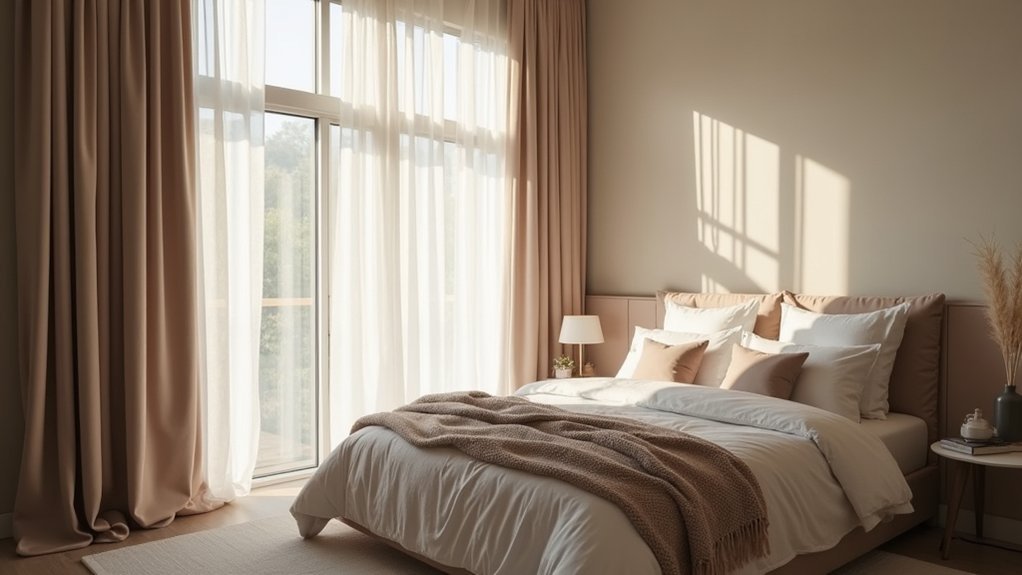
While your body naturally responds to light and darkness cues, artificial lighting from streetlights, car headlights, and neighboring buildings can severely disrupt your circadian rhythm by tricking your brain into thinking it’s still daytime.
Blackout curtains effectively eliminate these external light sources, creating the complete darkness your body needs for optimal melatonin production.
These window treatments don’t just block light—they also reduce outside noise and help maintain cooler room temperatures by preventing heat from entering through windows. This creates an ideal sleep environment that supports your natural sleep-wake cycle.
Studies consistently show that rooms with blackout curtains lead to longer periods of uninterrupted sleep, helping you fall asleep faster and stay asleep throughout the night, ultimately helping you improve sleep quality considerably.
Position Your Bed Away From Direct Light Pollution
You’ll want to map out all light sources in your bedroom before determining where to place your bed for ideal sleep quality.
Start by identifying streetlights, neighboring windows, and any indoor fixtures that might cast light directly onto your sleeping area.
Position your bed as far from windows as possible, ideally against an interior wall where you can minimize exposure to external light pollution throughout the night.
Strategic Bed Placement
Since your bed’s location directly impacts how much light reaches you during sleep, positioning it strategically can make the difference between restful nights and restless tossing.
Strategic bed placement means facing your bed away from windows and keeping it several feet from any light sources. This reduces light exposure from streetlights and early morning sunlight that can disrupt your circadian rhythm.
You’ll want to position your headboard against an interior wall rather than one with windows. This creates the darkest possible environment for sleep.
Combine this smart positioning with blackout curtains for maximum light blocking. When you minimize artificial and natural light pollution through thoughtful bed placement, you’re creating a calming atmosphere that supports better sleep quality and maintains your body’s natural sleep-wake cycle.
Light Source Identification
Before you can effectively position your bed for ideal sleep, you need to identify every light source that could disrupt your rest. Walk through your bedroom at night and note streetlights, neighboring windows, electronic devices, and hallway lighting that penetrate your space. These sources can interfere with your circadian rhythm and suppress melatonin production.
| Light Source Type | Impact on Sleep |
|---|---|
| Blue-toned screens | Signals wakefulness to brain |
| Streetlights | Disrupts natural sleep cycles |
| Electronic displays | Interferes with melatonin release |
Once you’ve mapped these sources, you’ll understand which areas offer the most protection from light pollution. This knowledge helps you choose the best bed placement that shields you from disruptive illumination, creating a calming environment that supports your sleep quality naturally.
Window Distance Considerations
While understanding your room’s light sources provides the foundation, positioning your bed at the best distance from windows becomes your next strategic move for protecting your circadian rhythm.
You’ll want to place your bed at least 2-3 feet away from windows to minimize light exposure that can disrupt your sleep quality. This window distance prevents external light from signaling your body to wake up prematurely, especially during early morning hours.
Strategic positioning also reduces drafts and noise, creating a more tranquil environment.
However, if your room’s layout doesn’t allow for the best placement, you can use blackout shades or heavy drapes to block unwanted light. This combination approach guarantees your circadian rhythms remain stable regardless of your bedroom’s configuration.
Install Warm-Toned Lighting for Evening Wind-Down
One simple lighting swap can transform your bedroom into a sleep-friendly sanctuary. Installing warm-toned lighting with color temperatures below 3000K helps promote melatonin production, signaling your body it’s time to wind down. This creates a calming atmosphere that supports your natural circadian rhythm, unlike harsh blue or white lights that disrupt sleep patterns.
Warm lighting below 3000K promotes melatonin production and supports your natural circadian rhythm for better sleep quality.
Here’s how to optimize your evening lighting:
- Replace overhead bulbs with warm-toned alternatives for gentle ambient lighting.
- Install dimmer switches to gradually reduce brightness as bedtime approaches.
- Add table lamps or wall sconces for soft, localized illumination.
- Avoid bright white lighting two hours before sleep to maintain proper sleep hygiene.
These adjustments reduce stimulation and encourage relaxation, creating the perfect environment for quality rest.
Maximize Natural Morning Light Exposure

Since your evening lighting sets the stage for quality sleep, your morning light exposure serves as the crucial counterpart that jumpstarts your day and reinforces healthy circadian rhythms.
Position your bed near a window to optimize natural light exposure each morning. This strategic bedroom design choice helps reset your internal clock while boosting daily alertness.
Install sheer or light-filtering curtains that allow soft morning light to filter through while maintaining privacy. This creates a gradual wake-up experience that feels natural rather than jarring.
Morning exposure to light triggers serotonin production, which regulates mood and maintains your sleep-wake cycle.
Confirm your bedroom layout provides unobstructed window access to maximize natural light intake, enhancing your space’s energy and improving overall sleep quality.
Remove Electronics That Emit Blue Light Before Bedtime
Just as morning light energizes your body’s natural rhythms, the wrong type of light in the evening can completely derail your sleep preparation.
Electronics like smartphones and tablets emit blue light that suppresses melatonin production, making it harder to achieve restful sleep. This exposure delays your circadian rhythms, affecting both sleep quality and morning alertness.
Blue light from screens disrupts your body’s natural melatonin production, sabotaging your ability to fall asleep and stay asleep.
Transform your bedroom into a sleep sanctuary with these strategies:
- Remove all blue light-emitting devices at least one hour before bedtime
- Install blue-light-filtering apps on devices you must use in the evening
- Replace standard bulbs with blue-light-free alternatives in your bedroom
- Create a device charging station outside your sleeping area to eliminate temptation
These simple changes greatly improve sleep onset and duration while enhancing your overall well-being.
Create Layered Lighting Options for Different Times of Day
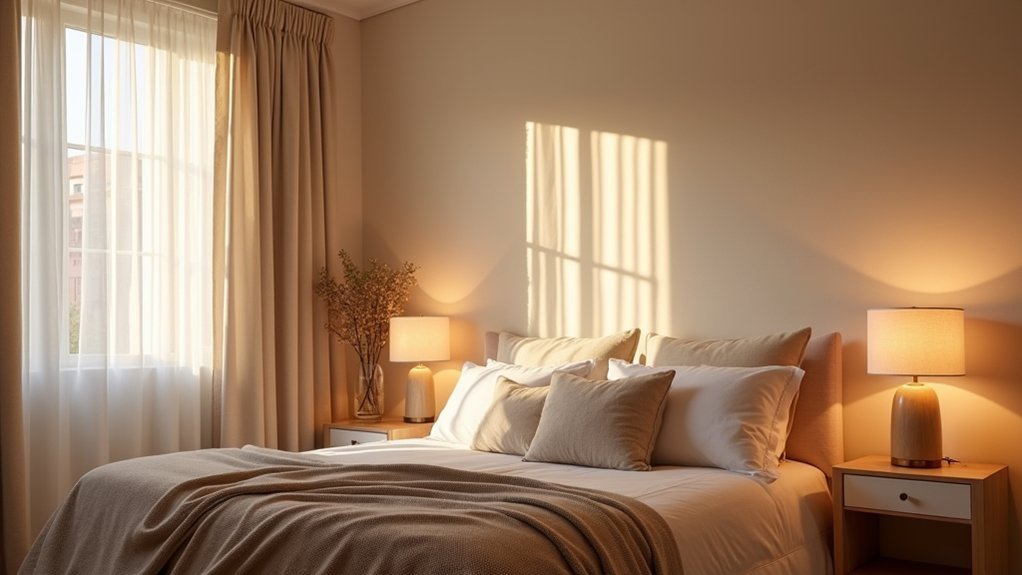
You’ll want to establish three distinct lighting zones that align with your body’s natural rhythms throughout each 24-hour cycle.
Start with bright light sources for morning hours, install dimmer switch controls for evening changes, and incorporate soft accent lighting for nighttime navigation.
This layered approach lets you gradually shift from energizing illumination to sleep-promoting darkness as your day progresses.
Morning Bright Light Sources
How can you transform your bedroom into a circadian rhythm powerhouse that naturally energizes you each morning?
Strategic morning bright light sources are essential for resetting your natural sleep-wake cycle and boosting alertness throughout the day.
Position your bed near a window to maximize exposure to natural morning light, which helps reset your internal circadian clock. Use bright, cool-toned bulbs that signal wakefulness when natural light isn’t sufficient.
Here are four effective morning light strategies:
- Window placement – Position your bed to catch early sunlight streaming through east-facing windows
- Cool-toned LED bulbs – Install 5000K-6500K temperature lights for morning invigoration
- Light therapy lamps – Use 10,000 lux devices for consistent morning light exposure
- Automated curtains – Program them to open gradually with sunrise
Evening Dimmer Switch Controls
While morning light energizes your start to each day, your evening lighting strategy plays an equally important role in preparing your body for restorative sleep.
Evening dimmer switches provide the perfect solution for creating adjustable lighting that supports your natural circadian rhythms.
Install dimmer controls throughout your bedroom to create layered lighting options. Combine table lamps, wall sconces, and floor lamps with dimmer capabilities to eliminate harsh overhead lighting.
Begin dimming your lights 60 minutes before bedtime to enhance melatonin production and signal your body to prepare for sleep.
Choose warm, low-intensity bulbs that mimic sunset light, creating a calming atmosphere that promotes relaxation.
This flexibility allows you to maintain bright lighting during active evening hours while shifting smoothly to softer illumination as bedtime approaches.
Nighttime Soft Accent Lighting
As bedtime approaches, strategic accent lighting transforms your bedroom into a tranquil sanctuary that works with your body’s natural sleep signals.
Nighttime soft accent lighting creates the perfect environment for winding down while supporting your circadian rhythm’s natural progression toward sleep.
Implementing effective accent lighting involves these key strategies:
- Install warm-toned bulbs in your accent fixtures to reduce blue light exposure and boost melatonin production.
- Position adjustable light sources at various heights throughout your space for dynamic, inviting atmospheres.
- Choose calming colors like soft yellows and warm whites to enhance your bedroom’s soothing ambiance.
- Consider smart lighting systems that automatically adjust intensity and color temperature as evening progresses.
This thoughtful approach to lighting design promotes deep relaxation and sets the stage for better rest.
Use Dimmer Switches to Gradually Reduce Light Intensity
Since your body relies on light cues to regulate its internal clock, installing dimmer switches gives you precise control over your bedroom’s lighting intensity throughout the evening. This design choice allows you to gradually reduce brightness as bedtime approaches, signaling your body to wind down naturally.
Begin dimming lights 60 minutes before sleep to enhance melatonin production. The softer lighting creates a calming atmosphere that reduces stress levels and promotes relaxation.
You’ll find this gradual adjustment mimics the natural progression of daylight, supporting your circadian rhythm and improving overall sleep quality.
Dimmer switches eliminate harsh lighting shifts that can disrupt your body’s natural rhythms. By controlling light intensity precisely, you’ll create a smoother pathway to restful sleep while maintaining your bedroom’s functionality throughout the evening hours.
Choose Light-Reflecting Colors for Daytime Brightness
You’ll want to select paint colors that bounce natural light throughout your bedroom to maximize daytime brightness and support healthy circadian rhythms.
Soft whites, pale yellows, and light pastels work exceptionally well for creating an energizing atmosphere that keeps you alert during daylight hours.
Strategic mirror placement amplifies these effects by reflecting both natural light and your chosen light-colored walls throughout the space.
Optimal Light-Reflecting Paint Colors
When you’re selecting paint colors for your bedroom, light-reflecting hues like soft whites, light pastels, and pale yellows can transform your space into a naturally bright sanctuary that supports healthy sleep patterns.
These light-reflecting paint colors maximize natural daylight exposure, which helps regulate your circadian rhythm and promotes better rest quality.
Here are four key benefits of ideal light-reflecting paint colors:
- Enhanced spaciousness – Lighter colors make your sleep space feel more airy and open.
- Reduced artificial lighting – You’ll need fewer daytime lights, supporting natural rhythms.
- Temperature control – Light-reflecting surfaces help keep your room cooler for comfort.
- Improved mood – These calming hues promote feelings of calm while boosting your overall health and well-being throughout the day.
Strategic Mirror Placement
While paint colors form the foundation of your light-reflecting bedroom design, strategically placed mirrors can amplify that natural brightness and create an even more effective circadian rhythm support system.
Strategic mirror placement opposite windows bounces sunlight throughout your room, helping regulate your internal clock and boost daytime alertness. Choose mirrors with light-reflecting frames in soft whites or pale pastels to maximize light distribution and create the illusion of expanded space.
Position mirrors to reflect calming views or soothing colors, contributing to a calming atmosphere that supports restful sleep.
Incorporate Smart Lighting Systems That Mimic Natural Cycles
Because your body’s internal clock responds directly to light cues, installing smart lighting systems that replicate natural daylight patterns can dramatically improve your sleep quality.
These systems automatically adjust brightness and color temperature throughout the day, supporting your circadian rhythm naturally.
Program your smart lighting to:
- Gradually brighten in the morning – Simulating sunrise helps your body wake naturally and reduces grogginess.
- Maintain bright white light during daytime – Keeps you alert and reinforces your wake cycle.
- Transition to warm, low-intensity bulbs evening – Promotes melatonin production and signals wind-down time.
- Sync with your personal schedule – Maintains consistent sleep-wake patterns even with varying routines.
Establish a Consistent Light-Dark Schedule in Your Space
Smart lighting technology provides the foundation, but you’ll maximize its benefits by establishing a rock-solid light-dark schedule that works with your bedroom’s natural characteristics.
Create your consistent light-dark schedule by flooding your space with bright natural light each morning, particularly within the first hour of waking. This exposure resets your circadian rhythm and boosts daytime alertness.
Flood your bedroom with bright natural light within the first hour of waking to reset your circadian rhythm and boost alertness.
During evening hours, systematically dim all lights and eliminate blue light sources at least 60 minutes before bedtime to enhance melatonin production.
Install blackout curtains or heavy shades to guarantee complete darkness throughout the night.
Maintain this routine seven days a week, even on weekends, to achieve peak sleep quality and support your body’s natural sleep-wake cycle.
Frequently Asked Questions
What Room Temperature Is Best for Supporting Healthy Circadian Rhythms?
You’ll sleep best when your bedroom temperature stays between 65-68°F (18-20°C). Your body naturally drops its core temperature to initiate sleep, so cooler rooms support this biological process and help maintain quality rest.
How Do Essential Oils Help Improve Sleep Quality and Circadian Function?
Essential oils like lavender and chamomile trigger your parasympathetic nervous system, reducing cortisol levels and promoting melatonin production. You’ll experience deeper sleep phases and more consistent sleep-wake cycles when you diffuse them before bedtime.
What Colors Should I Avoid in Bedroom Design for Better Sleep?
You should avoid bright, stimulating colors like red, orange, and vibrant yellow in your bedroom. These colors can trigger alertness and disrupt melatonin production, making it harder to fall asleep naturally.
How Does Bedroom Clutter Affect My Natural Sleep-Wake Cycle?
Bedroom clutter disrupts your sleep-wake cycle by creating visual stimulation that keeps your brain alert when it should wind down. You’ll struggle falling asleep because clutter triggers stress responses that interfere with melatonin production.
What Pre-Sleep Routines Best Support Circadian Rhythm Regulation?
You’ll regulate your circadian rhythm best by dimming lights two hours before bed, avoiding screens, keeping consistent sleep times, taking warm baths, practicing gentle stretches, and maintaining cool bedroom temperatures around sixty-five degrees.
In Summary
You’ll transform your sleep quality by implementing these circadian rhythm design strategies. Start with blackout curtains and smart lighting, then gradually add other elements like removing blue light sources and positioning your bed strategically. Don’t try to change everything overnight—pick two or three tips that resonate most with your current setup. Your body’s natural clock will thank you as you create a bedroom that works with, not against, your biology.


