

Warm bulbs boost your bedroom rest quality by producing light below 3000K that increases melatonin production and supports your natural circadian rhythm. Unlike cool blue light that suppresses melatonin by up to 50% and delays sleep onset by 90 minutes, warm LED bulbs emit relaxing orange and yellow tones that signal your body it’s time to wind down. This biological response reduces stress and enhances deep sleep stages for truly restorative rest. Discover how proper timing amplifies these benefits.
The Science Behind Warm Light and Sleep Cycles
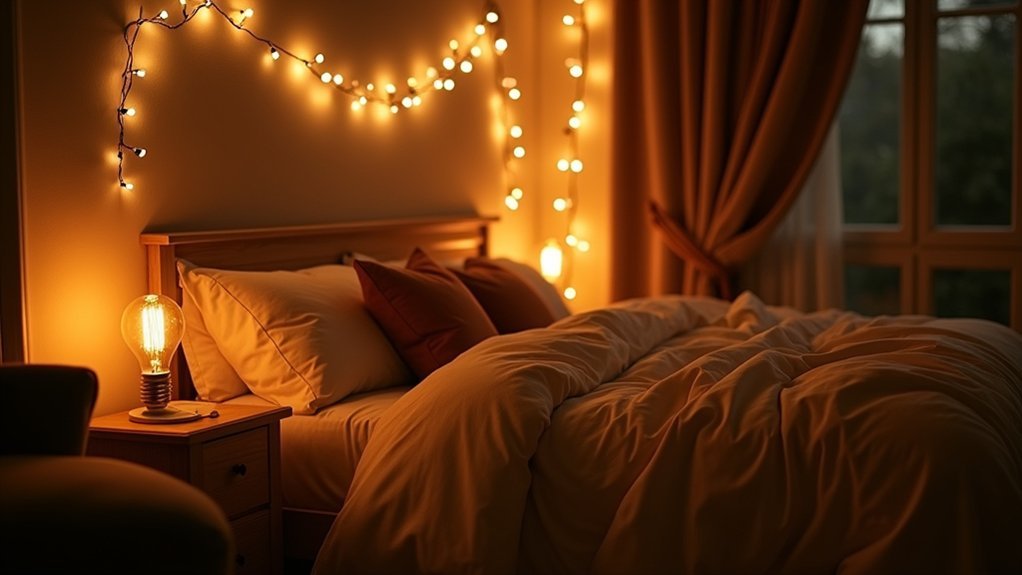
While you mightn’t think much about your bedroom lighting choices, the science reveals that warm light bulbs can dramatically transform your sleep quality.
When you’re exposed to warm light below 3000K, your brain increases melatonin production, the hormone that regulates sleep. This creates a natural progression that signals your body to wind down, supporting your circadian rhythm just like the sun’s change from day to night.
Research shows warm light appreciably improves sleep onset compared to cooler blue light, which can delay sleep by 90 minutes.
You’ll experience better sleep duration and easier shifts into deep sleep stages. The calming atmosphere created by warm lighting reduces stress and anxiety, helping your body prepare for truly restorative rest.
How Blue Light Disrupts Your Natural Sleep Patterns
Although warm light encourages restful sleep, blue light creates the opposite effect by actively sabotaging your body’s natural preparation for rest.
When you’re exposed to blue light from screens during evening hours, it suppresses melatonin production by up to 50%, directly compromising your sleep quality. This disruption confuses your internal clock, misaligning your circadian rhythms and causing daytime fatigue.
Blue light can delay your sleep onset by 90 minutes, forcing your natural sleep patterns completely off schedule. Your body interprets this artificial illumination as daylight, keeping you alert when you should be winding down.
Understanding Color Temperature for Better Rest
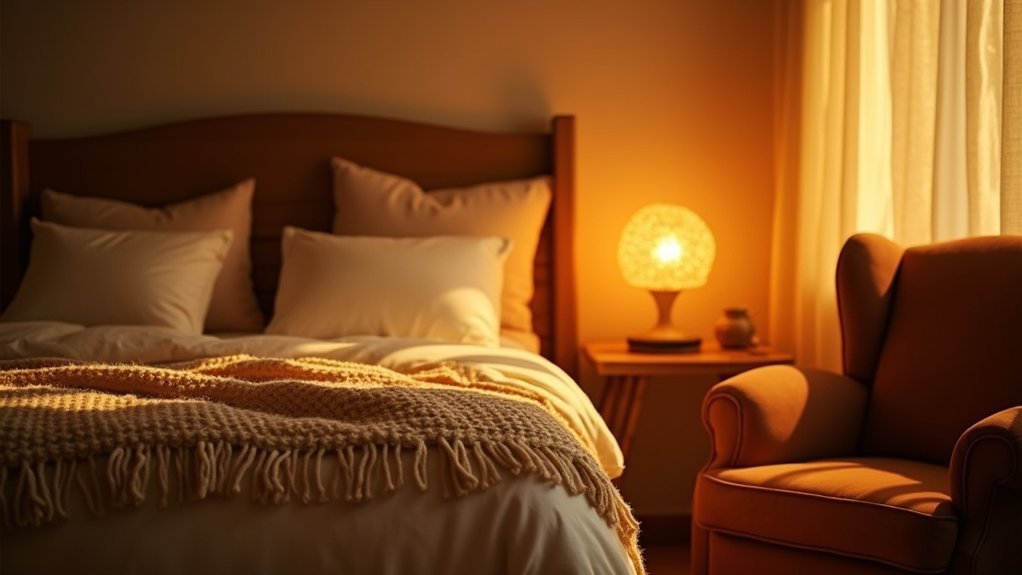
You’ve learned how blue light sabotages your sleep, but understanding color temperature will help you choose the right bulbs for your bedroom.
Color temperature, measured in Kelvin (K), determines whether light appears warm or cool, with warm light below 3000 K producing the red, orange, and yellow tones your body craves for rest.
When you switch to warm light in the evening, you’re working with your natural circadian rhythm instead of against it.
Color Temperature Basics
When you’re selecting bulbs for your bedroom, understanding color temperature becomes essential for achieving quality rest. Color temperature is measured in Kelvin (K) and determines the hue your bulbs emit.
Warm light falls below 3000 K, producing cozy orange and yellow tones that naturally encourage relaxation. This type of bedroom lighting stimulates melatonin production, the hormone responsible for regulating your circadian rhythms and promoting restful sleep.
In contrast, cool light exceeds 4000 K and emits blue-white hues that can disrupt your body’s natural sleep patterns. Cool light suppresses melatonin levels, making it harder to wind down at night.
Warm Light Benefits
As evening settles in, warm light creates a biological cascade that prepares your body for restorative sleep. When you choose LED bulbs below 3000K, you’re triggering melatonin production—the hormone that signals bedtime to your brain. This supports your natural circadian rhythm, unlike harsh cool lighting that disrupts sleep patterns.
| Light Type | Melatonin Impact | Sleep Effect |
|---|---|---|
| Warm Light | Promotes Production | Enhances Quality |
| Cool Light | Suppresses Hormone | Disrupts Patterns |
| Natural Sunset | Triggers Release | Prepares Body |
| LED Warm Bulbs | Mimics Sunset | Creates Tranquility |
Warm light’s soothing red, orange, and yellow hues reduce eye strain while creating a restful environment. You’ll experience deeper sleep phases as your bedroom transforms into a tranquil sanctuary that naturally encourages relaxation and quality rest.
Melatonin Production and Warm Lighting Connection
Your body’s natural sleep hormone, melatonin, responds directly to the type of light you’re exposed to in the hours before bedtime.
When you choose warm lighting below 3000K, you’re supporting your brain’s ability to produce melatonin, while cooler blue light actively suppresses this essential hormone.
Creating an ideal evening lighting schedule with warm bulbs helps align your circadian rhythm with your body’s natural inclination to wind down as darkness approaches.
How Warm Light Works
Understanding the science behind warm lighting reveals why it’s so effective for bedroom environments. When you expose yourself to warm light below 3000K, your body naturally increases melatonin production, the hormone that regulates your sleep-wake cycle. This lighting mimics the natural shift from daylight to dusk, signaling your brain to prepare for rest.
Warm LED bulbs emit less blue light than traditional options, reducing alertness while encouraging relaxation. You’ll find it easier to wind down and fall asleep faster in this cozy atmosphere.
| Light Type | Effect on Sleep |
|---|---|
| Warm Light (<3000K) | Promotes melatonin, enhances sleep quality |
| Cool Light (>5000K) | Suppresses melatonin, increases alertness |
| Blue Light | Disrupts circadian rhythm, delays sleep onset |
This improved sleep quality translates to better mood and energy levels throughout your day.
Blue Light Suppression Effects
When blue light floods your bedroom during evening hours, it acts like a biological alarm clock that keeps your brain wide awake. This harmful exposure suppresses melatonin production for up to 90 minutes, derailing your natural sleep cycle and destroying sleep quality.
Your body can’t distinguish between afternoon sunlight and evening screen time, so it remains alert when you need rest.
Warm bulbs create the opposite effect by eliminating blue wavelengths below 3000K. They support your body’s natural melatonin rhythm, allowing hormone levels to rise properly as bedtime approaches.
This creates a relaxing atmosphere that signals your brain to prepare for sleep. By switching to warm lighting, you’re fundamentally giving your circadian system permission to function normally, resulting in faster sleep onset and deeper rest.
Optimal Evening Lighting Schedule
Since melatonin production begins naturally around 9 PM for most adults, you’ll want to start dimming your lights at least 2-3 hours before your target bedtime.
Switch to warm LED bulbs with 2700K-3000K color temperatures during evening hours to support this natural process.
Create a consistent lighting schedule that gradually reduces brightness as bedtime approaches.
Use amber-toned fixtures in bedrooms and living spaces after sunset to minimize blue light interference.
This systematic approach to evening illumination helps your body recognize when it’s time to wind down.
By maintaining this warm lighting routine nightly, you’ll enhance your sleep quality considerably.
The key is consistency—your circadian rhythm thrives on predictable environmental cues that signal rest time.
Creating the Perfect Evening Light Schedule
After you’ve selected the right warm bulbs for your bedroom, you’ll need to create a lighting schedule that works with your body’s natural rhythms.
Your evening light routine should begin 2-3 hours before bedtime, gradually shifting from bright to dim warm tones. This schedule supports healthy sleep hygiene by encouraging natural melatonin production while protecting your circadian rhythm from disruptive blue light exposure.
Here’s your ideal evening lighting timeline:
- 3 hours before bed: Switch to warm white LEDs (2700K-3000K) throughout your home.
- 2 hours before bed: Dim all lights to 50% brightness and turn off overhead fixtures.
- 1 hour before bed: Use only bedside lamps with soft, amber lighting solutions.
- 30 minutes before bed: Rely on minimal lighting like candles or salt lamps.
- Bedtime: Complete darkness for maximum rest.
Best Warm Bulb Types for Bedroom Use

When choosing warm bulbs for your bedroom, you’ll need to decide between LED and incandescent options based on your priorities for energy efficiency and longevity.
LED bulbs offer the same cozy warmth as traditional incandescent bulbs while consuming considerably less energy and lasting much longer.
The key factor you’ll want to focus on is selecting bulbs with the right color temperature specification, typically between 2700K-3000K, to create that perfect sleep-inducing ambiance.
LED Vs Incandescent Options
While both LED and incandescent bulbs can provide the warm light your bedroom needs, they differ considerably in efficiency and functionality.
LED bulbs emerge as the superior choice for enhancing sleep quality through optimized melatonin production and energy-efficient performance.
Consider these compelling differences:
- Lifespan: You’ll replace incandescent bulbs 25 times before one LED burns out
- Energy savings: LED bulbs slash your electricity costs by up to 90%
- Heat reduction: No more overheated bedrooms disrupting your comfort
- Smart features: Adjust brightness and warmth to match your sleep schedule
- Color accuracy: Superior CRI ensures your bedroom’s true colors shine through
You’ll appreciate LED’s advanced technology that creates the perfect sleep environment while incandescent bulbs waste energy and generate unnecessary heat that can interfere with restful nights.
Color Temperature Specifications
Understanding color temperature specifications helps you select the ideal warm bulbs that transform your bedroom into a sleep-optimized sanctuary. You’ll want bulbs ranging from 2700K to 3000K, which emit soft amber light mimicking natural sunsets. This color temperature supports melatonin production while creating a calming atmosphere conducive to restful sleep.
| Color Temperature | Light Quality | Sleep Benefits |
|---|---|---|
| 2700K | Soft amber | Maximum melatonin support |
| 2850K | Warm white | Balanced relaxation |
| 3000K | Cozy white | Gentle sleep preparation |
| 90+ CRI | Enhanced warmth | Superior comfort |
| Dimming capabilities | Variable intensity | Gradual wind-down |
Choose LED bulbs with 90+ CRI ratings for peak warmth and comfort. Dimming capabilities allow you to gradually reduce intensity, signaling your body to prepare for sleep naturally.
Optimal Light Intensity Levels Before Bedtime
As evening approaches, you’ll want to reduce your bedroom’s light intensity to around 20-30 lumens to support your body’s natural sleep preparation. This ideal light intensity creates the perfect environment for melatonin production while maintaining your circadian rhythm.
Start dimming your lights 2-3 hours before bedtime to signal your body it’s time to wind down. Warm light between 2700K-3000K reduces alertness and creates a calming atmosphere.
Consider these emotional benefits:
- Feel genuinely relaxed as stress melts away
- Experience deeper, more restorative sleep naturally
- Wake up refreshed and energized every morning
- Create peaceful bedtime rituals you’ll cherish
- Enjoy improved overall sleep quality consistently
Installing dimmer switches or smart bulbs gives you personalized control, helping establish consistent pre-sleep routines that enhance rest.
Reducing Eye Strain With Proper Warm Lighting
Beyond creating the perfect sleep environment, warm lighting offers another significant advantage for your evening routine: protecting your eyes from unnecessary strain.
When you choose bulbs with color temperatures below 3000K, you’ll create a soothing environment that reduces glare and minimizes the harsh effects of cool, blue-tinted lights. This gentle illumination helps your eyes relax naturally, eliminating the need to squint or rub them throughout the evening.
Warm lighting below 3000K creates a soothing environment that helps your eyes relax naturally without strain or discomfort.
You’ll find that adjustable brightness lamps enhance this comfort further, allowing you to gradually dim the lights as bedtime approaches.
This thoughtful approach not only prevents eye strain but also supports melatonin production, ultimately promoting restful sleep and smoother shifts from wakefulness to slumber.
Smart Bulb Features for Sleep Enhancement
How can technology transform your bedroom lighting into a personalized sleep sanctuary? Smart bulbs revolutionize your sleep environment by automatically adjusting to support your circadian rhythm.
These intelligent devices shift from cool to warm light as bedtime approaches, mimicking natural sunset patterns that trigger melatonin production for enhanced sleep quality.
Key smart bulb features that’ll alter your nights:
- Programmable color temperature – Automatically adapts to sleep-promoting warm tones (2700K-3000K)
- Advanced dimming capabilities – Gradually reduces brightness to prepare your body for rest
- Sleep app integration – Syncs with your personal sleep patterns for customized lighting
- Automated scheduling – Turns off lights consistently to maintain healthy sleep routines
- Gradual sunset simulation – Naturally signals your brain it’s time to wind down
You’ll experience deeper, more restorative sleep with technology working seamlessly behind the scenes.
Blackout Strategies and Light Management
You’ll need to block every source of light in your bedroom to maximize the sleep benefits of your warm bulbs.
Start by installing blackout curtains or blinds that completely seal your windows, preventing streetlights and moonlight from disrupting your circadian rhythm.
Don’t forget to eliminate the glow from electronic devices, chargers, and any other light sources that can confuse your internal clock and delay sleep onset.
Complete Darkness Techniques
While warm lighting plays a crucial role in preparing your body for sleep, achieving complete darkness becomes equally important once you’re ready to drift off.
Complete darkness triggers ideal melatonin production, ensuring your body’s natural sleep-wake cycle functions properly. Your sleep environment directly impacts how restorative your rest becomes.
Effective light management techniques transform your bedroom into a sanctuary:
- Install blackout curtains to eliminate streetlight intrusions that fragment your sleep
- Cover electronic device displays with tape or cloth to prevent circadian rhythm disruption
- Use warm lighting options with dimmer switches for gradual evening changes
- Remove or relocate glowing alarm clocks and charging stations from your immediate sleep area
- Apply weatherstripping around door frames to block hallway light seepage
These strategies create the darkness your body craves for deep, uninterrupted rest.
Managing Light Intrusion
Even seemingly minor light sources can sabotage your sleep quality by disrupting melatonin production and fragmenting your rest cycles.
Light intrusion from streetlamps, electronics, and moonlight tricks your brain into staying alert when you should be winding down.
Install blackout curtains to eliminate external light sources effectively.
These create the darkness your body needs to trigger proper melatonin production and maintain your natural sleep-wake cycle.
Cover or remove electronic devices that emit even faint glows throughout the night.
Start dimming lights an hour before bedtime to signal your body it’s time to prepare for sleep.
For nighttime use, choose amber or red nightlights that provide gentle illumination without interfering with your circadian rhythm, ensuring you maintain deep, restorative sleep.
Blocking External Sources
Because external light sources can penetrate even thick curtains, you’ll need strategic blocking external sources methods that create an impenetrable barrier around your sleep space.
Establishing a dark environment isn’t just about comfort—it’s essential for healthy melatonin production that governs your sleep cycles.
Your bedroom deserves these protective measures:
- Blackout curtains that seal completely against window frames, eliminating every crack of intrusive light
- Light-blocking films applied directly to glass surfaces for double protection
- Heavy-duty window shades that overlap edges, preventing streetlamp glare from sneaking through
- Door draft stoppers that block hallway lighting from creeping under bedroom doors
- Eye masks as your final defense against any remaining light sources
These light management strategies transform your space into a sleep-friendly atmosphere where external disruptions can’t sabotage your rest.
Morning Light Exposure for Circadian Rhythm Balance
Since your body’s internal clock operates on a roughly 24-hour cycle, morning light exposure acts as the primary reset button that keeps your circadian rhythm synchronized with the external world.
When you get natural sunlight within the first hour of waking, you’re suppressing melatonin production and triggering cortisol release, which boosts alertness and energy levels.
Just 30 minutes of morning light exposure greatly improves your mood and maintains ideal energy throughout the day.
A simple half-hour of morning sunlight can transform your entire day’s mood and energy levels.
This timing is essential because it helps your internal clock align with the natural day-night cycle, directly improving sleep quality at night.
Studies consistently show that people who receive adequate morning light experience fewer sleep disorders and fall asleep more easily when bedtime arrives.
Energy Efficient Warm LED Options
While traditional incandescent bulbs consume excessive energy and generate unwanted heat, energy-efficient warm LED options provide the perfect solution for creating a sleep-friendly bedroom environment.
These innovative bulbs deliver exceptional benefits that’ll transform your nightly routine:
- 90% less energy consumption – You’ll slash electricity bills while enjoying superior performance
- 15,000-25,000 hour lifespan – You won’t worry about frequent replacements disrupting your sanctuary
- 2700K-3000K color temperature – You’ll experience sunset-like warmth that naturally promotes relaxation
- Minimal blue light emission – Your melatonin production stays protected for deeper sleep quality
- Dimming capabilities – You’ll control light intensity to create the perfect calming environment
With 90+ CRI ratings, warm LED bulbs guarantee colors appear vibrant while supporting your natural sleep-wake cycle effortlessly.
Setting Up Dimmer Controls for Sleep Success
As darkness naturally falls each evening, your bedroom lighting should follow suit through strategic dimmer control installation that transforms harsh illumination into gentle, sleep-inducing ambiance.
Installing dimmer controls allows you to gradually reduce light intensity, signaling your body to begin melatonin production for enhanced sleep quality.
Start dimming lights 2-3 hours before bedtime to mimic the sun’s natural setting, creating a calming atmosphere that promotes relaxation.
Begin dimming your bedroom lights 2-3 hours before sleep to create a naturally calming environment that encourages relaxation.
Smart LED bulbs with adjustable lighting capabilities can shift color temperature throughout the day, ensuring warm, low-intensity evening illumination.
This minimizes eye strain while supporting ideal sleep hygiene.
Studies confirm that personalized brightness control through adjustable lighting systems considerably improves sleep patterns by accommodating individual preferences and needs.
Long-term Health Benefits of Consistent Lighting Habits
When you maintain consistent warm lighting habits in your bedroom, you’re investing in profound long-term health benefits that extend far beyond immediate sleep improvements.
This commitment to ideal lighting environment strengthens your circadian rhythm and enhances melatonin production naturally.
Your dedication to warm lighting creates lasting positive changes:
- Enhanced sleep quality that deepens with each restful night
- Reduced chronic disease risk through better sleep regulation
- Improved cognitive function and mental clarity during daily activities
- Decreased stress levels that compound over months and years
- Sustained energy levels that keep you vibrant throughout life
Frequently Asked Questions
Is Warm Light Better for a Bedroom?
You’ll sleep better with warm light in your bedroom. It promotes melatonin production, creates a calming atmosphere, reduces sleep disturbances, and mimics natural sunset hues that signal your body it’s time to rest.
Does Warm Light Help You Sleep Better?
Yes, warm light helps you sleep better by boosting melatonin production and reducing blue light exposure. It signals your body to wind down, creating a calming atmosphere that prepares you for restful sleep.
What Are the Benefits of Warm Light Bulbs?
You’ll experience reduced eye strain and improved mood with warm light bulbs. They stimulate melatonin production, helping you relax and unwind. You’ll find they create a cozy atmosphere that naturally prepares your body for restful sleep.
Is Warm or Cool Light Bulbs Better for Bedrooms?
You’ll find warm light bulbs better for bedrooms since they promote melatonin production and don’t disrupt your circadian rhythm, while cool bulbs suppress sleep hormones and keep you awake longer.
In Summary
You’ll transform your sleep quality by switching to warm bulbs in your evening routine. Your body’s natural melatonin production increases when you’re exposed to warmer light temperatures, helping you fall asleep faster and sleep more deeply. You’re fundamentally working with your circadian rhythm instead of against it. By dimming warm lights as bedtime approaches and maintaining consistent lighting habits, you’ll notice improved rest within just a few nights of making these simple changes.


