

You can protect your sleep by installing red light bulbs that block 100% of blue and green wavelengths, preventing melatonin suppression. Blue-free night lamps and amber-tinted fixtures emit warm light without triggering alertness, while specialized bedside lamps eliminate sleep-disrupting wavelengths entirely. Smart lighting systems automatically adjust color temperature throughout the day, dimming at sunset to reduce blue light exposure. Motion sensor night lights with red or amber LEDs provide safe navigation without compromising your circadian rhythms and natural wind-down process.
Understanding Blue Light’s Impact on Bedroom Sleep Quality
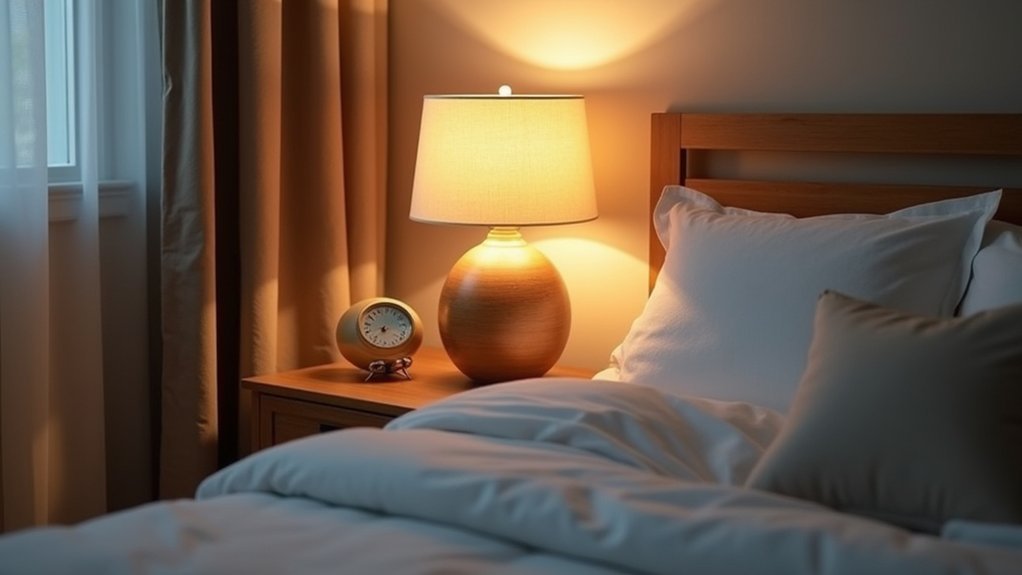
While you’re winding down for the night, that soft glow from your phone or tablet is working against your body’s natural sleep preparation.
Blue light exposure from digital devices suppresses melatonin production, the hormone essential for quality sleep. Your circadian rhythms, running on approximately 24.25-hour cycles, become disrupted when exposed to blue light before bedtime.
Blue light from screens disrupts your natural melatonin production, throwing off your body’s 24-hour sleep-wake cycle.
Even dim blue light interferes with your body’s wind-down process, causing misalignments between your internal clock and environmental cues.
This disruption leads to poorer sleep quality and reduced sleep duration. You’ll find yourself tossing and turning, struggling to achieve the restful sleep your body craves.
Understanding this impact is vital for creating a bedroom environment that supports natural sleep patterns and promotes better overall sleep health.
Circadian-Friendly Lighting Solutions for Your Sleep Space
You can transform your bedroom into a sleep-optimized sanctuary by choosing lighting fixtures that work with your body’s natural rhythms rather than against them.
Red light bulbs offer the most circadian-friendly option since they block 100% of blue and green light, allowing your melatonin production to remain undisturbed during evening hours.
Blue-free night lamps provide another excellent solution, emitting warm light that promotes relaxation without triggering the alertness response caused by traditional lighting.
Red Light Bulbs
Since traditional bedroom lighting can disrupt your circadian rhythm with harsh blue wavelengths, red light bulbs offer a science-backed solution that transforms your sleep space into a melatonin-friendly environment.
These specialized bulbs emit minimal blue light wavelengths, supporting natural melatonin production and enhancing sleep quality.
You’ll create a circadian-friendly atmosphere that reduces sleep disturbances typically caused by standard LED lighting.
Red light maintains natural nighttime ambiance while promoting relaxation and preparing your body for rest.
Research shows red light therapy provides calming effects without impacting your circadian rhythms.
Blue-Free Night Lamps
Although traditional lighting floods your bedroom with sleep-disrupting blue wavelengths, blue-free night lamps provide targeted circadian support through carefully engineered amber and red light spectrums.
These specialized fixtures emit minimal blue light, allowing your body to naturally boost melatonin levels without interference from harsh illumination.
You’ll find blue-free night lamps utilize red or amber wavelengths that won’t disrupt your circadian rhythms like standard bulbs. They’re designed flicker-free with low EMF radiation, creating a safer nighttime environment.
When you use these circadian-friendly lighting solutions, you’re reducing eye strain while establishing a calming sleep space. The amber and red light patterns mimic natural evening conditions, supporting improved mood and overall well-being by encouraging your body’s natural sleep preparation processes.
Red Light Therapy Fixtures for Evening Relaxation
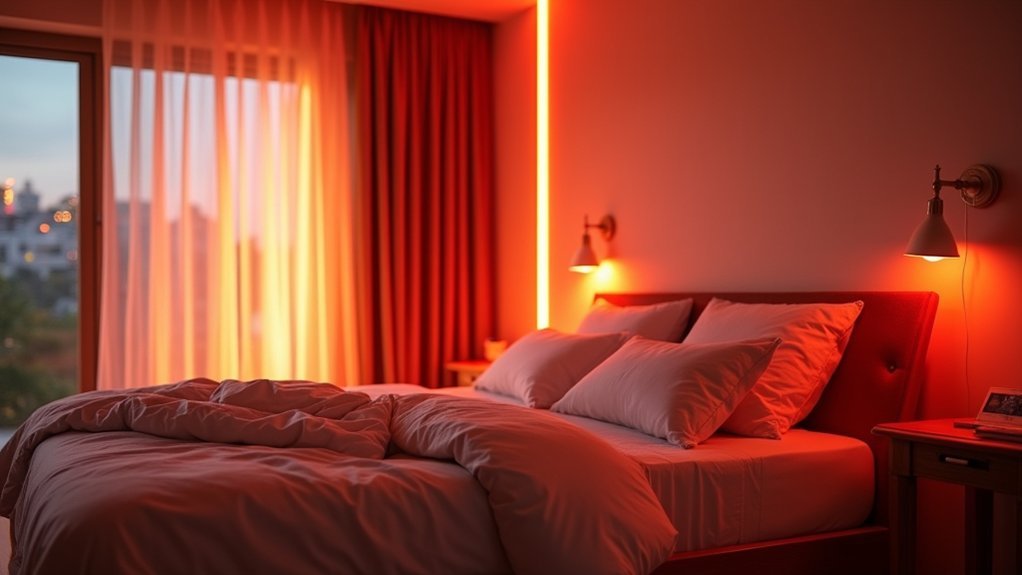
When evening arrives and you’re ready to unwind, red light therapy fixtures offer a science-backed solution that works with your body’s natural rhythms rather than against them.
Red light therapy fixtures provide a science-backed evening solution that naturally aligns with your body’s circadian rhythms for better sleep.
These specialized fixtures emit low wavelengths that don’t disrupt melatonin production, unlike harsh blue light from screens and standard bulbs. By supporting your body’s natural melatonin secretion, red light therapy helps regulate your circadian rhythms effectively.
You’ll notice reduced eye strain and fatigue when you switch to red light fixtures during your evening routine. They create a calming atmosphere that enhances your body’s natural wind-down processes, making them perfect for bedtime preparation.
This simple change to your lighting setup contributes considerably to improved sleep hygiene and overall well-being.
Blue Light-Free Bulbs and Their Bedroom Applications
Blue light-free bulbs take evening lighting enhancement a step further by completely eliminating the wavelengths that interfere with your sleep cycle.
These specialized bulbs emit minimal blue wavelengths, directly supporting your circadian rhythm’s natural progression toward sleep. You’ll notice improved relaxation as these bulbs create a warm, calming atmosphere that encourages melatonin production.
For maximum effectiveness, install blue light-free bulbs in your bedside lamps and overhead fixtures.
They’re particularly valuable during your pre-sleep routine, reducing eye strain while you read or unwind. Unlike standard bulbs that can keep you alert, these fixtures actively promote better sleep by maintaining ideal lighting conditions.
You can also choose full spectrum options for daytime use, then switch to blue light-free alternatives as evening approaches, creating a seamless shift toward restful sleep.
Smart Lighting Controls for Automated Blue Light Management
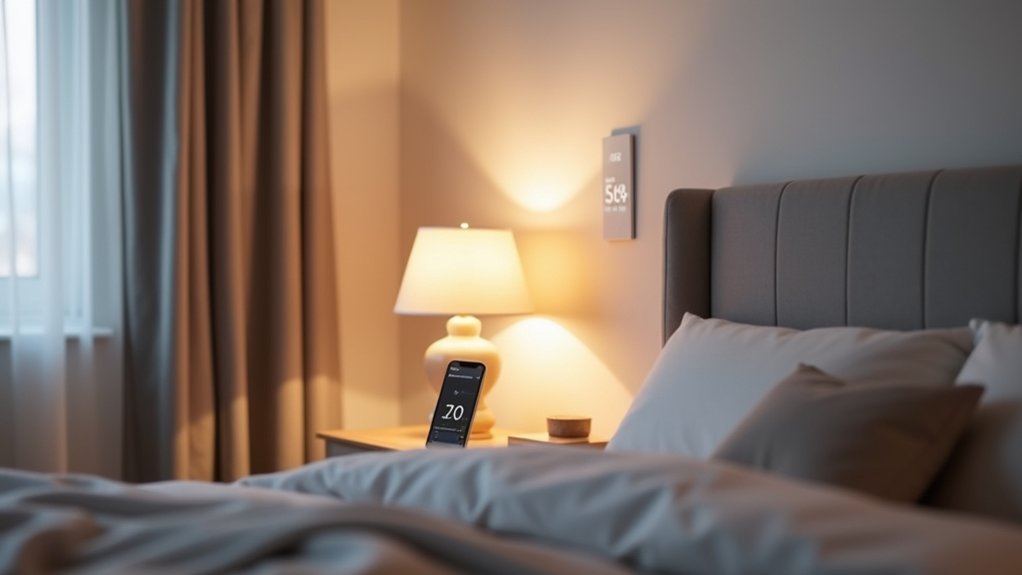
Smart lighting controls transform your bedroom into an automatically enhanced sleep environment by managing blue light exposure without any manual intervention. These systems program themselves to adjust color temperature and intensity throughout the day, supporting your natural circadian rhythms. You’ll benefit from scheduled dimming that begins at sunset, gradually reducing blue light as your body prepares for rest.
| Feature | Daytime Function | Evening Function |
|---|---|---|
| Color Temperature | Bright, energizing white light | Warm, amber tones |
| Intensity Control | Full brightness for alertness | Gradual dimming sequences |
| Health Integration | Syncs with wellness apps | Tracks sleep preparation |
| Sensor Technology | Detects ambient light levels | Adjusts for ideal darkness |
| Blue Light Filtering | Minimal filtering needed | Maximum blue light reduction |
Advanced systems integrate seamlessly with health apps, ensuring you maintain perfect lighting conditions for well-being.
Motion Sensor Night Lights That Preserve Melatonin Production
You’ll want to choose motion sensors with adjustable sensitivity settings that detect movement without triggering from minor disturbances like pets or shifting curtains.
Red light wavelengths between 620-700 nanometers won’t suppress your melatonin production, making them ideal for nighttime navigation while maintaining your body’s natural sleep hormone levels.
Strategic placement near doorways, hallways, and bathroom entrances guarantees you’ll have adequate illumination exactly where you need it without flooding your entire bedroom with disruptive light.
Sensor Technology Selection
When selecting motion sensor night lights for your bedroom, you’ll want to prioritize fixtures that emit red or amber light instead of traditional white or blue illumination.
These specialized sensors automatically detect low-light conditions and activate warm-toned LEDs that won’t interfere with your natural sleep cycle. By minimizing blue light exposure during nighttime hours, these devices help maintain healthy melatonin production.
Key features to look for when choosing sensor technology:
- Color temperature below 3000K – Guarantees minimal disruption to circadian rhythms
- Adjustable sensitivity settings – Prevents unnecessary activation from minor movements
- Timer functions – Automatically shuts off after preset intervals to conserve battery
Research confirms that even dim blue light can suppress melatonin secretion, making motion sensor night lights with red or amber technology essential for preserving your body’s natural wind-down process.
Red Light Benefits
Red light motion sensor night lights offer superior melatonin preservation compared to other warm-toned alternatives.
You’ll maintain healthy sleep hormone levels since red light doesn’t disrupt your circadian rhythms like blue light does. When you need nighttime navigation, these fixtures provide safe illumination without affecting melatonin secretion.
Your brain receives proper wind-down signals from red light exposure, promoting relaxation and enhanced sleep quality.
Research confirms that red light helps maintain essential melatonin levels, improving your overall sleep duration and cycles.
Unlike traditional LED night lights emitting harmful blue light, you’re protecting your sleep health with red light fixtures.
You’ll experience reduced eye strain and create a more restful bedroom environment that’s genuinely conducive to better sleep.
Optimal Placement Strategies
Strategic placement of motion sensor night lights maximizes their melatonin-preserving benefits while ensuring safe navigation throughout your bedroom.
You’ll want to position these fixtures near pathways and entry points where movement typically occurs. Installing them at low heights reduces glare while maintaining the dark environment your body needs for ideal sleep.
Key placement strategies include:
- Pathway positioning – Mount lights along routes to the bathroom or bedroom door to guide movement without flooding the space.
- Low-height installation – Place fixtures closer to floor level to minimize upward light distribution and eye exposure.
- Entry point coverage – Focus on doorways and changeover areas where you’ll need brief illumination.
Choose red light options over blue light fixtures, and select models with adjustable brightness settings to fine-tune your sleep environment.
Frequently Asked Questions
What Material Can Block Blue Light?
You can use specialized glass, acrylic, or polycarbonate materials to block blue light effectively. These materials often feature coatings that filter harmful wavelengths, making them ideal for protecting your eyes from screen exposure.
Do LED Room Lights Emit Blue Light?
Yes, your LED room lights emit blue light in the 400-490 nanometer range. They produce higher blue light intensity than incandescent bulbs, which can disrupt your circadian rhythms and suppress melatonin production during evening hours.
What Blocks Out Blue Light?
You can block blue light using red or amber-tinted glasses, blue light filtering bulbs, blackout curtains, smart lighting systems with adjustable color temperatures, and dim red nightlights for evening illumination.
What Light Bulbs Don’t Emit Blue Light?
You’ll find red light bulbs, low-blue light LEDs, and “blue light-free” bulbs don’t emit harmful blue wavelengths. Smart bulbs with adjustable color temperatures also let you switch to warmer tones that minimize blue light exposure.
In Summary
You can transform your bedroom into a sleep-optimized sanctuary by installing circadian-friendly fixtures that filter harmful blue light. Choose red light therapy lamps, amber-tinted bulbs, and smart lighting systems that automatically adjust color temperature throughout the evening. Don’t forget motion sensor night lights with warm tones to preserve your melatonin production during nighttime movements. These targeted lighting solutions will help you maintain your natural sleep-wake cycle and improve your overall sleep quality.


Leave a Reply