

Smart bedroom systems enhance your circadian rhythm by automatically adjusting light and temperature throughout the day. These systems use smart lighting that mimics natural sunrise and sunset patterns, gradually brightening in the morning to boost alertness and dimming at night to trigger melatonin production. They maintain ideal sleep temperatures between 60-67°F and include sleep tracking sensors that monitor your patterns to provide personalized insights. Discover how these technologies can transform your sleep quality and daily energy levels.
Understanding Your Body’s Natural Clock and Sleep-Wake Cycles
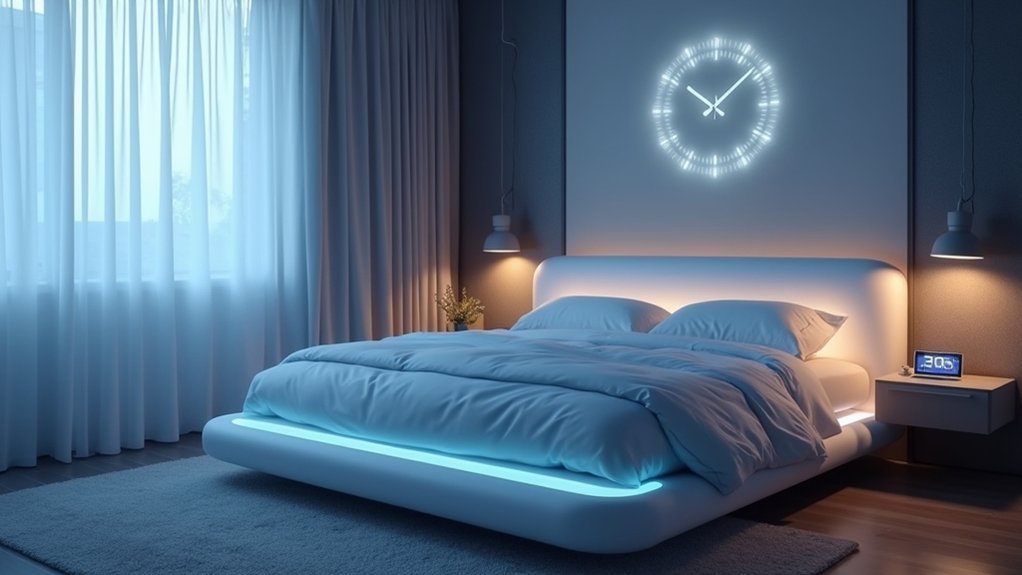
While you sleep and wake at roughly the same times each day, your body operates on a sophisticated 24-hour internal clock called the circadian rhythm that orchestrates far more than just when you feel tired.
This biological timekeeper regulates your sleep-wake cycles by responding to external light cues that signal when you should feel alert or drowsy.
Your alertness peaks naturally 2-3 hours and 9-10 hours after waking, while energy typically dips around 3 PM.
Morning sunlight activates vital photoreceptors that boost daytime alertness, but blue light exposure near bedtime disrupts sleep onset by confusing your internal clock.
When circadian rhythms become misaligned through irregular schedules or artificial lighting, you’ll experience more than poor sleep—metabolic disorders and mental health issues can develop.
The Science Behind Light Exposure and Melatonin Production
Your body’s sophisticated response to light begins deep within your brain, where specialized cells in your eyes detect brightness levels and send signals directly to your master biological clock.
This triggers your pineal gland to release melatonin when darkness falls, naturally peaking at night to regulate your sleep-wake cycle.
Blue light from screens disrupts this delicate process by suppressing melatonin production, making it harder for you to fall asleep and throwing off your circadian rhythm.
Screen exposure before bedtime hijacks your brain’s natural melatonin signals, disrupting the sleep-wake cycle your body desperately needs.
Natural sunlight exposure during the day keeps your internal clock properly synchronized, promoting daytime alertness while preparing your body for nighttime melatonin release.
You can support this natural process by gradually dimming lights in the evening, mimicking sunset conditions that encourage melatonin production and improve your sleep quality.
How Blue Light Disrupts Your Natural Sleep Patterns
Although your body naturally winds down as evening approaches, blue light from screens and artificial lighting acts like a biological alarm clock, tricking your brain into thinking it’s still daytime. This exposure suppresses melatonin production, the hormone that signals it’s time to sleep, delaying your sleep onset by approximately 10 minutes per exposure.
When you consistently expose yourself to blue light at night, you’re disrupting your circadian rhythms, which can lead to serious health consequences including obesity, diabetes, cardiovascular disease, and mental health disorders.
The blue light also raises your body temperature and heart rate, making it even harder to fall asleep. Since most Americans use devices within an hour of bedtime, this widespread habit greatly compromises sleep quality across the population.
Smart Lighting Technology That Mimics Natural Sunrise and Sunset
Since your body craves natural light cues that traditional indoor lighting can’t provide, smart lighting technology steps in to recreate the sun’s daily rhythm right in your bedroom.
These systems gradually increase brightness over thirty minutes each morning, simulating natural sunrise to align your circadian rhythm and boost wakefulness. In the evening, they dim slowly while shifting to warmer tones, mimicking sunset to trigger melatonin release and ease your shift to sleep.
Research shows that adjusting brightness and color temperature throughout the day considerably improves sleep quality and reduces daytime fatigue.
You can customize lighting schedules through smart home integration to match your individual sleep-wake cycle, with studies confirming that gradual light manipulation delivers better outcomes than traditional lighting.
Automated Temperature Control for Optimal Sleep Environments
While light regulates your sleep-wake cycle, temperature control plays an equally essential role in creating the ideal sleep sanctuary.
Automated temperature control systems maintain your bedroom between 60-67°F, the scientifically-proven range for deeper sleep and enhanced comfort. These smart systems gradually lower temperatures in the evening, mimicking your body’s natural cooling process that signals sleep readiness.
You’ll experience faster sleep onset and fewer nighttime awakenings when your environment stays consistently cool. This temperature consistency reinforces your circadian rhythms by preventing disruptions from overheating or excessive cold.
When integrated with smart lighting and sound systems, automated temperature control creates ideal sleep environments that work synergistically to maximize your rest and recovery throughout the night.
Sound Management Systems for Better Sleep Quality
Beyond temperature regulation, sound management systems create another layer of sleep optimization through carefully controlled acoustic environments. These systems improve your sleep quality by masking disruptive noises and providing consistent, calming audio that helps maintain deeper sleep cycles throughout the night.
| Sound Type | Sleep Benefit | Circadian Impact |
|---|---|---|
| White Noise | Masks interruptions | Maintains consistency |
| Nature Sounds | Reduces stress levels | Promotes relaxation |
| Gradual Wake Sounds | Natural arousal | Aligns with rhythm |
You can personalize soundscapes to match your preferences while programming wake-up sequences that gradually increase volume. This mimics natural waking processes and supports your circadian rhythm. Research shows consistent exposure to soothing sounds lowers heart rates, enabling quicker sleep onset and enhanced rejuvenation.
Sleep Tracking Sensors and Personalized Data Insights
Sleep tracking sensors transform your bedroom into a thorough monitoring hub that captures detailed physiological data while you rest.
These advanced devices monitor heart rate, movement patterns, and sleep stages, delivering extensive insights into your nightly recovery cycles. Through sleep tracking technology like the SleepSpace Smart Bed integrated with Apple Watch, you’ll receive detailed recovery scores based on quality metrics.
Advanced sleep tracking devices capture comprehensive physiological data throughout your rest cycles, providing detailed recovery scores and actionable insights for optimized sleep quality.
Personalized data insights reveal your ideal sleep duration and perfect bedtime, enhancing awareness of your natural circadian rhythm.
You’ll receive tailored recommendations for adjusting lifestyle habits, sleep environment, and daily routines. Regular analysis helps identify disruptive factors like late-night blue light exposure or inconsistent schedules, enabling informed changes that improve your sleep health and circadian alignment.
Creating Custom Schedules for Your Individual Chronotype
Once you’ve gathered extensive sleep data, smart bedroom systems can create personalized schedules that align with your unique chronotype—whether you’re naturally a morning lark or night owl.
These custom schedules enhance your energy levels by recognizing that peak alertness occurs 2-3 hours and 9-10 hours after waking. Your smart bedroom automatically adjusts programmable lighting to simulate natural patterns, promoting morning wakefulness and evening relaxation.
Consistent wake-up and bedtime routines strengthen your circadian rhythm regularity, preventing those dreaded 3 PM fatigue crashes. The system learns your preferences and automates temperature adjustments alongside light exposure, reinforcing your body’s natural cues.
When integrated with tools like SleepSpace technology, you’ll receive tailored recommendations that synchronize your daily activities with your biological clock for improved well-being.
Measuring and Monitoring Your Sleep Improvement Results
After establishing your personalized sleep schedule, tracking the effectiveness of these changes becomes paramount to optimizing your smart bedroom setup.
Your smart bedroom system provides multiple avenues for measuring sleep quality improvements and circadian rhythm alignment.
Modern technology offers thorough monitoring through:
- Sleep tracking devices – SleepSpace Smart Beds and Apple Watches deliver real-time data on your sleep patterns and cycles
- Digital sleep diaries – Daily logs help you track subjective sleep quality changes over time
- Validated surveys – PROMIS assessments provide standardized measurements of sleep improvement
- Smart lighting feedback – Systems monitor how gradual dimming and brightening affect your sleep perception
Studies show participants using smart lighting report significant improvements in perceived sleep quality compared to control groups.
You’ll notice enhanced circadian rhythm alignment as your system continuously measures and adjusts to your individual sleep responses.
Frequently Asked Questions
How Do You Optimize Your Circadian Rhythm?
You’ll optimize your circadian rhythm by maintaining consistent sleep-wake times, getting morning sunlight exposure, reducing evening blue light, eating meals regularly, and exercising daily to reinforce your body’s natural clock.
What Is the Fastest Way to Reset a Circadian Rhythm?
You’ll reset your circadian rhythm fastest by getting bright morning light exposure, maintaining consistent sleep-wake times, limiting evening blue light, exercising during daytime, and using gradual lighting shifts throughout your day.
Why Is Blue Light Bad for Sleep?
Blue light tricks your brain into thinking it’s daytime, suppressing melatonin production and keeping you alert. This disrupts your natural sleep cycle, making it harder to fall asleep and potentially causing long-term health issues.
What Is the Best Routine for Circadian Rhythm?
You’ll optimize your circadian rhythm by maintaining consistent sleep-wake times, getting morning sunlight exposure, eating regular meals, limiting evening blue light, and taking short afternoon naps when needed.
In Summary
You’re now equipped with the knowledge to transform your bedroom into a circadian rhythm optimization center. By implementing smart lighting that follows natural patterns, automating temperature controls, managing sound environments, and tracking your sleep data, you’ll create a personalized system that works with your body’s natural clock. Start with one or two technologies and gradually build your smart sleep ecosystem for lasting results.


Leave a Reply