

Transform your bedroom into a natural sleep sanctuary by choosing organic cotton or bamboo bedding for temperature regulation, positioning your bed near windows for natural light exposure, and installing light-blocking curtains for complete darkness. Use warm 2700K lighting that supports melatonin production, incorporate air-purifying plants like lavender and snake plants, maintain a clutter-free environment to reduce stress, and add calming essential oils. These evidence-based strategies work with your body’s circadian rhythms to promote deeper, more restorative sleep naturally without expensive gadgets or sleep aids, and there’s much more to discover about optimizing each element.
Choose Organic Bedding Materials for Temperature Regulation
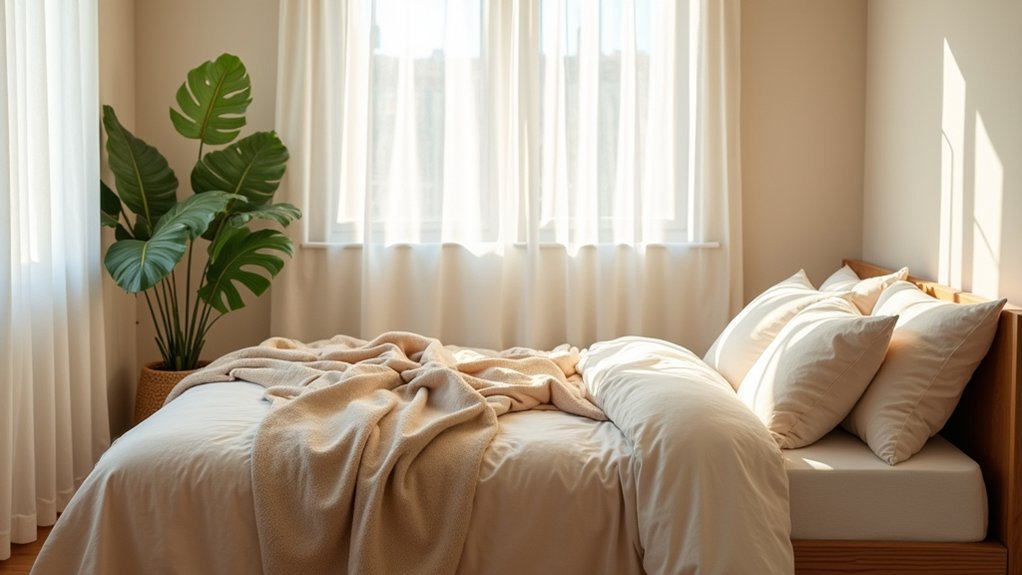
When you’re struggling with restless nights due to temperature fluctuations, organic bedding materials offer a natural solution that’ll transform your sleep quality.
Bamboo and organic cotton provide breathable, moisture-wicking properties that regulate your body temperature throughout the night. These natural fibers create an ideal sleep climate by preventing overheating and maintaining comfort.
Related guide: Best Natural Beeswax Ear Candles for Ear Cleaning & Pre‑Sleep Relaxation
Natural bamboo and cotton fibers work together to maintain optimal body temperature for consistently comfortable, uninterrupted sleep throughout the night.
Hypoallergenic materials like eucalyptus silk reduce allergens and irritants, promoting healthier, more restful sleep. High thread count organic sheets enhance thermal regulation while organic wool effectively wicks away moisture.
You’ll experience better quality of sleep as these materials create a cozy sleeping environment.
Investing in organic bedding supports sustainable practices that benefit the environment while contributing to your personal well-being and transforming your sleep space naturally.
Position Your Bed to Maximize Natural Light Exposure
Strategic bed placement near windows creates a powerful foundation for healthy sleep patterns and enhanced daily energy.
You’ll maximize natural light benefits by positioning your bed where you can see the window while lying down, boosting mood and alertness throughout the day.
Consider these essential positioning guidelines:
- Avoid direct window alignment – Prevents disruptive nighttime glare while maintaining your cozy sleep environment.
- Install sheer curtains – Allows diffused natural light while preserving privacy.
- Ensure window visibility – Maximizes sunlight exposure benefits from your good mattress.
- Create darkness flexibility – Maintains ideal conditions for restful sleep when needed.
Natural light exposure during daytime hours promotes melatonin production, directly improving your sleep quality at night.
Smart bed placement transforms your sleep environment into a natural rhythm regulator.
Install Light-Blocking Window Treatments for Complete Darkness
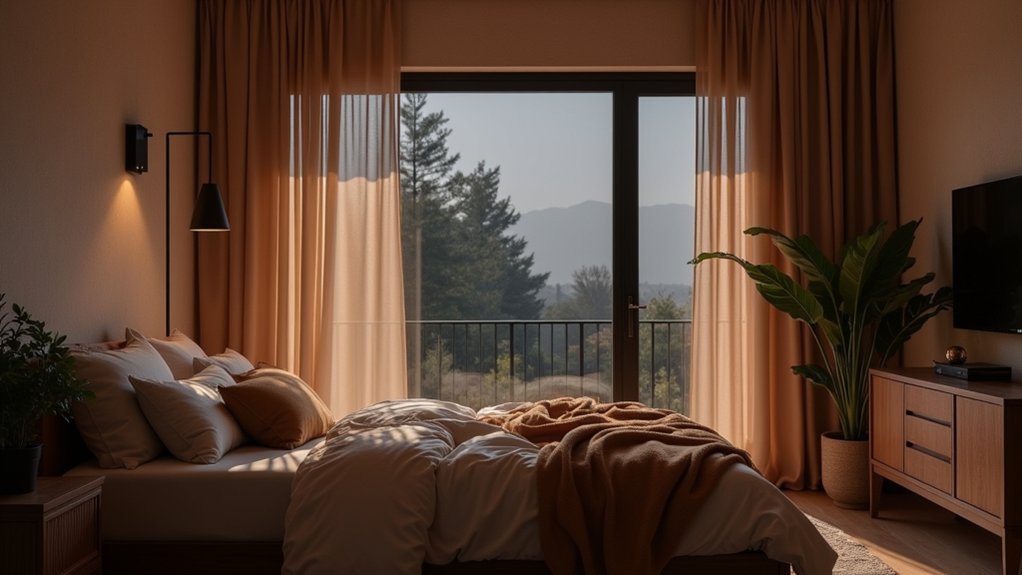
While natural light exposure during the day supports healthy sleep patterns, you’ll need complete darkness when it’s time to rest. Light-blocking window treatments like blackout curtains can eliminate up to 99% of external light, creating the dark environment your body needs for ideal sleep quality.
Bright light exposure, particularly blue-toned light, disrupts melatonin production and interferes with your natural sleep cycle.
Choose window treatments with thermal insulating properties to enhance sleep comfort by regulating bedroom temperature. For maximum effectiveness in your bedroom design, make sure treatments fit tightly against window frames and extend fully to prevent light leakage.
This simple addition maintains consistent sleep schedules by blocking early morning light that might wake you prematurely.
Select Warm Lighting That Supports Melatonin Production
The type of lighting you choose dramatically impacts your body’s ability to produce melatonin and shift into restful sleep.
Warm lighting in the 2700K to 3000K range mimics natural sunset, supporting your circadian rhythm and creating a calming atmosphere that promotes melatonin production.
Here’s how to optimize your sleep environment with proper lighting:
- Replace bright bulbs with warm-toned alternatives that create soothing ambiance
- Dim overhead lights at least 60 minutes before bedtime to signal sleep preparation
- Use soft lighting sources like table lamps or candles for evening relaxation
- Install light-blocking curtains to maintain complete darkness throughout the night
Avoid blue-toned or bright white light during evening hours, as they disrupt melatonin synthesis and interfere with restful sleep patterns.
Incorporate Air-Purifying Plants for Better Sleep Quality
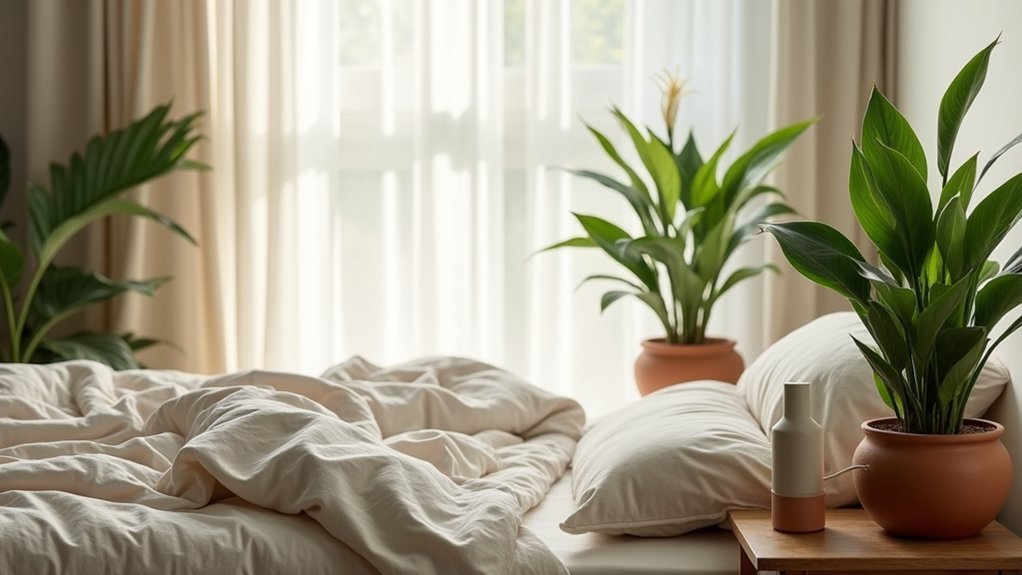
Since proper air circulation works hand-in-hand with ideal lighting, adding the right plants to your bedroom creates a natural air filtration system that enhances sleep quality.
Air-purifying plants like Sansevieria, Aloe Vera, and Peace Lilies remove up to 87% of toxins within 24 hours, creating a healthier sleep environment.
These indoor plants don’t just improve air quality—they reduce stress and establish a calming atmosphere essential for rest.
Lavender’s aromatic properties lower your heart rate and promote relaxation. This biophilic design approach incorporating nature improves your mood and overall wellbeing, supporting better sleep patterns.
Your bedroom plants also increase humidity and reduce respiratory issues, making sleep more comfortable while delivering the better sleep quality you’re seeking.
Create a Clutter-Free Environment to Reduce Nighttime Stress
Beyond improving air quality with plants, your physical environment plays an equally important role in sleep preparation. Clutter creates anxiety and increases cortisol levels, directly sabotaging your sleep quality. A calming, organized bedroom environment promotes tranquility and reduces nighttime stress.
Effective decluttering transforms your space into a restful sanctuary:
- Remove misplaced items that don’t belong in the bedroom
- Clear horizontal surfaces like nightstands and dressers completely
- Implement smart storage solutions to maintain organization
- Designate the room solely for sleep and intimate connection
You’ll notice improved sleep when your environment supports relaxation rather than creating visual distractions.
Regular decluttering isn’t just about aesthetics—it’s about fostering a distraction-free space that signals your brain it’s time to wind down and rest.
Use Natural Scents and Essential Oils for Relaxation
While decluttering creates visual calm, aromatic elements can transform your bedroom into a deeply relaxing sanctuary that actively promotes better sleep.
Natural scents like lavender and chamomile help improve sleep quality by triggering your brain to release feel-good hormones. You can diffuse essential oils directly into the air or apply them topically with carrier oils to reduce stress and anxiety for more restful sleep.
Consider lighting natural candles made from beeswax or soy, which emit fewer toxins while creating a calming atmosphere.
Room sprays with essential oils offer another quick way to establish a tranquil space. These pleasant scents work immediately to enhance relaxation, making it easier to fall asleep and maintain deeper, more restorative rest throughout the night.
Frequently Asked Questions
How to Make a Bedroom More Restful?
You’ll sleep better by choosing calming colors, investing in organic bedding, installing blackout curtains, decluttering surfaces, and adding air-purifying plants like lavender to create a peaceful, organized sanctuary.
How to Improve Your Bedroom for Better Sleep?
You’ll sleep better by investing in organic bedding, choosing calming colors like soft blues, soundproofing with thick curtains, decluttering your space, and using warm lighting with blackout curtains to block disruptive light.
How to Turn Your Bedroom Into a Sleep Sanctuary?
Create your sleep sanctuary by choosing calming colors, investing in an organic mattress, adding lavender scents, decluttering completely, and installing dimmable lights with blackout curtains for ideal rest.
What Should Your Bedroom Environment Be Like for Better Sleep?
You should maintain a cool, dark, quiet environment with minimal clutter. Use blackout curtains, keep temperatures between 65-68°F, eliminate distracting noises, and guarantee your mattress supports comfortable sleep positioning.
In Summary
You’ll sleep better when you combine these natural design elements in your bedroom. Start with one or two changes that feel most manageable, like switching to organic bedding or adding blackout curtains. Don’t feel pressured to implement everything at once. Pay attention to how each adjustment affects your sleep quality, and gradually build your ideal natural sleep environment. Your body will thank you for creating this restful sanctuary.


