
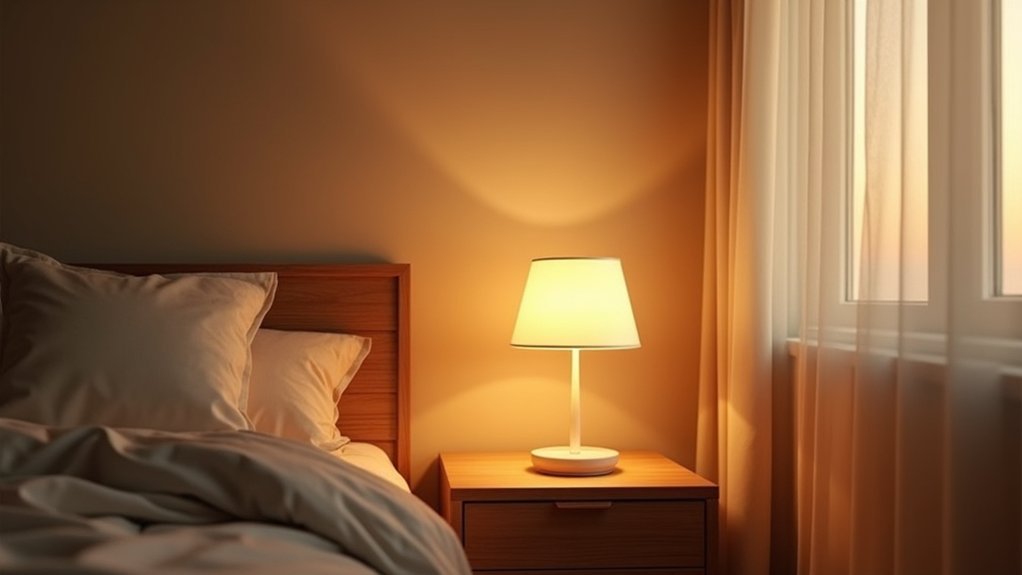
You’ll want bedroom lamps with color temperatures between 2700K and 3000K for ideal circadian health. These warm light tones enhance natural melatonin production through red, orange, and yellow hues, helping your brain shift into sleep mode. Cool blue light above 4000K suppresses melatonin and keeps you alert, disrupting your body’s 24-hour internal clock. Choose dimmable LED bulbs in the warm range to support your natural sleep-wake cycle. The timing and types of lighting you select throughout your day can transform your sleep quality entirely.
Understanding Circadian Rhythms and Light Exposure
When you’re exposed to light throughout the day, your body’s circadian rhythm—an internal 24-hour clock—responds by regulating hormone production and sleep-wake cycles. Natural sunlight promotes daytime alertness, while darkness triggers melatonin production for sleep preparation.
However, artificial light exposure disrupts this natural process. Blue light from screens and cool-colored bulbs signals your brain to stay awake, inhibiting melatonin release and delaying sleep onset. This interference greatly impacts your sleep quality and overall health.
The color temperature of your bedroom lighting plays an essential role in supporting circadian health. Research shows that warm light below 3000K helps facilitate your body’s shift to sleep.
How Different Color Temperatures Affect Sleep Quality
Your choice of bedroom lamp color temperature directly impacts how quickly you fall asleep and how well you rest throughout the night.
Warm light between 2700K-3000K helps your body produce melatonin naturally, making it easier to drift off to sleep.
In contrast, blue light wavelengths from cooler temperatures suppress melatonin production and keep your brain alert when you’re trying to wind down.
Warm Light Sleep Benefits
As evening approaches, warm light with color temperatures between 2700K and 3000K becomes your bedroom’s most valuable sleep ally.
This gentle illumination naturally enhances your melatonin levels by exposing you to red, orange, and yellow hues that signal your body it’s time to prepare for rest. Unlike cooler temperatures that promote alertness, warm light supports your circadian rhythm without disruption.
When you dim these warm sources as bedtime nears, you’re actively helping your body shift into sleep mode.
The calming atmosphere created by warm lighting makes falling asleep easier and helps you maintain quality sleep throughout the night.
Research consistently shows that this lighting choice reduces sleep onset time while improving overall sleep quality, making warm light an essential component of your evening routine.
Blue Light Sleep Disruption
While warm light prepares your body for sleep, blue light creates the opposite effect by actively disrupting your natural sleep patterns. Blue light wavelengths (450-480 nm) suppress melatonin production, tricking your brain into thinking it’s still daytime. This disruption greatly affects your circadian rhythms and makes inducing sleep much harder.
| Light Type | Effect on Melatonin | Sleep Impact |
|---|---|---|
| Blue Light (450-480nm) | Suppresses production | Delayed sleep onset |
| Bright Evening Light | Blocks secretion | Reduced sleep duration |
| Warm Colors (<3000K) | Maintains natural levels | Improved sleep quality |
You’ll experience shorter sleep duration and poorer quality when exposed to blue light before bedtime. Your sleep cycle becomes disrupted as your body can’t properly shift into nighttime mode, making it essential to avoid blue light at least two hours before bed.
The Science Behind Melatonin Production and Light
Understanding how light affects your body’s natural sleep mechanisms starts with melatonin, a hormone that serves as your internal sleep signal. Your circadian rhythm depends on this delicate balance between light and darkness. When evening arrives, reduced light exposure triggers melatonin production, preparing your body for rest.
However, blue light exposure can slash melatonin levels by 50%, convincing your brain it’s still daytime. This disrupts your sleep health and throws off your natural rhythm.
Conversely, red light and warm hues below 3000K won’t interfere with melatonin release. These warmer tones create an environment that supports your body’s shift to sleep mode, making them ideal for bedroom lighting when you’re winding down for the night.
Optimal Color Temperature Range for Bedroom Lamps
When choosing the perfect bedroom lamp, you’ll want to target a color temperature between 2700K and 3000K for ideal sleep preparation.
This ideal color temperature delivers warm white light that naturally supports melatonin production and aligns with your circadian rhythms as evening approaches.
Staying within this color temperature range creates the perfect environment for winding down.
Maintaining proper color temperature in your bedroom lighting establishes an optimal atmosphere that naturally encourages relaxation and prepares your mind for restful sleep.
You’ll find that warmer temperatures below 3000K actively enhance your body’s natural sleep signals, while anything above 4000K can disrupt your shift to rest by promoting alertness.
Consider investing in dimmable lamps that operate within this ideal range.
They’ll give you flexibility to adjust brightness while maintaining the warm tones your body needs for quality sleep preparation.
Benefits of Warm Light (2700K-3000K) for Evening Use
When you use warm light between 2700K-3000K in your bedroom during evening hours, you’ll naturally boost your body’s melatonin production.
This enhanced melatonin release directly supports your circadian rhythm, helping your internal clock recognize it’s time to wind down.
You’re fundamentally working with your body’s natural processes rather than against them, creating an environment that promotes better sleep quality.
Melatonin Production Enhancement
As evening approaches, your body naturally begins preparing for sleep, and the right lighting can greatly enhance this process.
Warm light from your bedroom lamps directly supports melatonin production, the hormone responsible for regulating your sleep-wake cycle. When you expose yourself to 2700K-3000K lighting, you’re mimicking the natural hues of sunset, which signals your brain to increase melatonin synthesis. This biological response helps synchronize your circadian rhythm with your environment.
Unlike harsh blue or cool lighting that suppresses melatonin release, warm light preserves your body’s natural hormone production.
Research shows this enhancement in melatonin levels translates to measurably improved sleep quality. You’ll find it easier to fall asleep and experience deeper, more restorative rest throughout the night when you choose appropriate lighting temperatures.
Circadian Rhythm Support
Beyond simply boosting melatonin levels, warm bedroom lighting provides extensive circadian rhythm support that optimizes your body’s internal clock.
When you use warm light with 2700K-3000K color temperature during evening hours, you’re mimicking natural sunset conditions that signal your body to prepare for rest.
This warm light minimizes disruption to your circadian rhythms, allowing for more natural sleep-wake cycles. Research shows that warm-hued lighting effectively reduces alertness while promoting drowsiness, making your shift to sleep smoother.
By dimming lights to warmer temperatures before bedtime, you’ll create a calming atmosphere that enhances relaxation.
The result is considerably improved sleep quality and more restorative rest. Your circadian rhythms stay aligned with natural patterns, supporting healthier sleep habits long-term.
Why Cool Blue Light Disrupts Your Sleep Cycle
Although your bedroom lamp might seem like a simple lighting choice, the color temperature you select can dramatically impact your ability to fall asleep and stay asleep throughout the night. Cool blue light in the 450-480 nm wavelength range severely disrupts your circadian rhythm by suppressing melatonin production when you need it most.
| Light Type | Effect on Sleep | Recommended Time |
|---|---|---|
| Cool Blue Light | Suppresses melatonin | Avoid after sunset |
| Electronic Devices | Prolongs sleep onset | Stop 2 hours before bed |
| Warm Colors (2700K-3000K) | Promotes natural sleep | Evening hours |
| Natural Darkness | Maximizes melatonin | Bedtime |
Exposure to blue light tricks your body into believing it’s daytime, making your sleep cycle fight against your evening routine and creating lasting insomnia patterns.
Red Light Therapy for Better Sleep and Recovery
While blue light sabotages your sleep, red light therapy offers the opposite effect by naturally boosting melatonin production and supporting your body’s circadian rhythm.
Unlike disruptive blue wavelengths, red light won’t interfere with your natural sleep-wake cycle, making it perfect for nighttime use.
When you expose yourself to red light before bedtime, you’ll experience enhanced relaxation and decreased alertness, creating a smoother shift to sleep. This therapy proves especially beneficial if you’re struggling with sleep disturbances or insomnia.
Red light therapy delivers additional recovery benefits beyond better sleep. The wavelengths help reduce inflammation and promote muscle recovery while you rest.
Yellow and Orange Light Options for Nighttime Relaxation
When you’re seeking a gentler alternative to red light therapy, yellow and orange lighting creates an ideal middle ground for nighttime relaxation.
These warm hues provide minimal disruption to your circadian rhythms while actively supporting melatonin production. Unlike harsh white or blue light that suppresses sleep hormones, yellow light and orange light signal your body to wind down naturally.
Yellow and orange lighting work harmoniously with your body’s natural rhythms, promoting melatonin release while avoiding the sleep-disrupting effects of cooler light.
You’ll want fixtures with color temperatures below 3000K to establish a sleep-friendly atmosphere. This warm lighting helps you fall asleep faster and improves overall sleep satisfaction.
The dim, cozy glow creates the perfect environment for reading, gentle stretching, or meditation before bed. By choosing these warmer tones, you’re actively working with your body’s natural sleep-wake cycles rather than against them.
Choosing the Right LED Bulbs for Sleep Optimization
Since LED technology offers unprecedented control over color temperature and brightness, you can fine-tune your bedroom lighting to match your body’s sleep needs perfectly.
For sleep optimization, choose LED bulbs below 3000K, favoring warm white or amber options that support your circadian rhythms. Red and amber LED bulbs work best for nighttime use since they don’t interfere with melatonin production like blue light does.
Consider investing in blue light blocking LED bulbs specifically designed to filter harmful wavelengths.
Dimmable options let you gradually reduce light intensity throughout the evening, helping your body recognize it’s time to wind down.
You’ll want to reassess your LED bulb choices periodically, as your preferences and bedroom usage patterns may change over time.
Timing Your Light Exposure Throughout the Day
Beyond selecting the right bulbs, you’ll need to coordinate your light exposure with your circadian rhythm for maximum sleep benefits.
Timing your light exposure correctly starts with bright white or blue light during morning hours to signal wakefulness and align your body’s internal clock. As afternoon shifts to evening, shift toward warmer light colors between 2700K-3000K to promote relaxation.
You should eliminate blue light from screens and bright artificial lighting at least two hours before bedtime. This restriction supports the production of melatonin, your body’s natural sleep hormone.
Use dimmable lamps to gradually reduce light intensity, mimicking natural daylight’s fade. Consistent daily timing reinforces healthy circadian rhythms, directly improving the quality of your sleep and daytime alertness.
Creating a Sleep-Friendly Lighting Environment
You’ll transform your bedroom into a sleep sanctuary by selecting the right color temperature range and strategically eliminating disruptive light sources.
Your evening routine should focus on removing blue light exposure while implementing a layered lighting approach that gradually prepares your body for rest.
This targeted lighting strategy works with your natural circadian rhythms rather than against them, setting the foundation for better sleep quality.
Optimal Color Temperature Range
A warm, amber glow transforms your bedroom into a sanctuary that naturally prepares your body for rest. The ideal color temperature range falls between 2700K and 3000K, creating the perfect foundation for healthy sleep.
These warm colors work harmoniously with your circadian rhythms, avoiding the blue light that disrupts your body’s natural sleep-wake cycle. When you choose lighting below 3000K, you’re supporting natural melatonin release, which directly improves sleep quality.
Red, orange, and yellow tones naturally induce drowsiness, making your shift to sleep smoother and more comfortable. Dimmable LED lamps offer exceptional control within this ideal range, allowing you to gradually reduce brightness as bedtime approaches.
Layer multiple light sources throughout your bedroom to maintain functionality during active hours while preserving that essential calming atmosphere for rest.
Eliminating Blue Light Sources
While artificial lighting revolutionized modern life, blue light exposure in your bedroom sabotages your sleep before you even realize it. Eliminating blue light sources becomes essential when wavelengths between 450-480 nm suppress melatonin production and disrupt your natural sleep-wake cycle.
| Light Source | Temperature/Action |
|---|---|
| Cool White LEDs | Replace with warmer color temperatures |
| Bright Overhead Fixtures | Switch to blue light blocking bulbs |
| Electronic Screens | Install filters or avoid before bed |
Transform your bedroom by choosing warmer color temperatures below 3000K instead of harsh, alertness-inducing lights. Installing dimmable lighting options allows you to gradually reduce intensity as bedtime approaches, signaling your brain to prepare for rest and promoting healthy melatonin release.
Layered Evening Lighting Strategy
Creating the perfect sleep-friendly environment requires a thoughtfully designed layered lighting strategy that combines general, task, and accent lighting to transform your bedroom into a calming sanctuary.
You’ll want to incorporate warm light sources with color temperatures between 2700K and 3000K during evening hours to support melatonin production and maintain healthy circadian rhythms.
Install dimmable lamps that offer adjustable brightness levels, allowing you to gradually reduce light intensity as bedtime approaches.
Position these warm, low-intensity fixtures strategically on bedside tables and throughout your space to create localized illumination.
Avoid bright, cool-colored lights in the evening, as they disrupt your body’s natural sleep signals.
This strategic approach establishes a soothing atmosphere that naturally prepares your mind and body for restorative sleep.
Common Lighting Mistakes That Harm Circadian Health
Though you mightn’t realize it, several common lighting mistakes in your bedroom can sabotage your body’s natural sleep-wake cycle.
Using cool-colored lights above 4000K signals alertness to your brain, preventing the shift to sleep mode. Blue light from bright screens tricks your mind into thinking it’s daytime, severely disrupting melatonin production and your circadian rhythms.
Cool-colored bedroom lighting above 4000K confuses your brain into staying alert when it should be preparing for sleep.
Many people make the mistake of keeping overhead lights blazing right until bedtime instead of switching to warm colors like 2700K-3000K after sunset.
Additionally, failing to block external light sources such as streetlights or bright alarm clocks creates an environment that continuously interferes with your natural sleep patterns, making quality rest nearly impossible to achieve.
Frequently Asked Questions
What Color Light Is Best for Sleep in Bedroom?
You’ll sleep best with warm-colored lights like red, orange, or yellow in your bedroom. These hues don’t suppress melatonin production like blue light does, helping you fall asleep easier and maintain healthy circadian rhythms.
What Color Light Is Best for Bedside Clock?
You’ll want red or warm amber light for your bedside clock. These colors won’t disrupt your melatonin production like blue light does, helping you maintain healthy sleep patterns while still seeing the time clearly.
What Is the Color Temperature of the Circadian Rhythm?
Your circadian rhythm doesn’t have a single color temperature but responds to varying temperatures throughout the day. You’ll experience ideal alignment with cooler 5000K-6500K light during daytime and warmer 2700K-3000K evening light.
Which Color Light Is Best for Waking Up?
You’ll want bright, cool-colored light between 5000K to 6500K for waking up. This blue-rich light suppresses melatonin, boosts alertness, and mimics natural daylight to effectively signal your body it’s time to wake.
In Summary
You’ll dramatically improve your sleep quality by choosing warm light bulbs between 2700K-3000K for your bedroom lamps. Don’t expose yourself to blue light in the evening—it’ll disrupt your melatonin production and throw off your circadian rhythm. Start dimming lights at least two hours before bedtime, and you’ll notice you’re falling asleep easier. Your body’s natural sleep-wake cycle depends on getting the lighting right.


Leave a Reply