

Set bedroom timers to gradually dim lights one hour before bedtime, using warm 2700K color temperature bulbs to boost melatonin production. Program smart bulbs or plug-in timers to create consistent wind-down routines that signal your body it’s time for sleep. Schedule morning lights to turn on 30 minutes before wake-up time with gradual brightness increases. Keep your bedroom between 60-67°F and use blackout curtains for ideal darkness. These strategic timing techniques will transform your sleep sanctuary into a circadian rhythm powerhouse.
Understanding How Light Affects Your Sleep-Wake Cycle
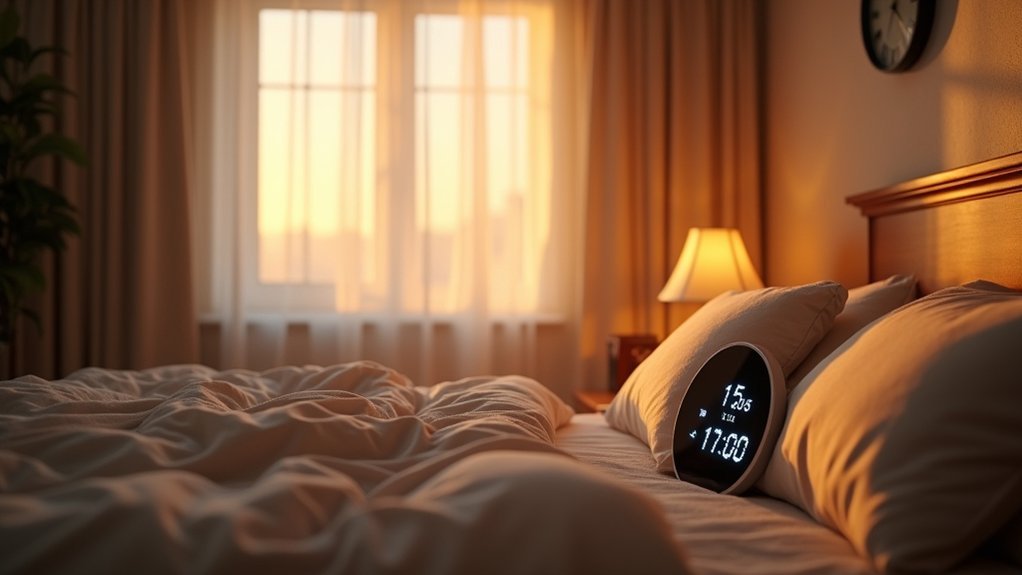
While you mightn’t realize it, your bedroom lighting plays an important role in determining how well you’ll sleep tonight. Light exposure directly influences your circadian rhythm, the internal clock that regulates your sleep-wake cycles.
When you’re exposed to bright evening light levels, your body suppresses melatonin production, making it harder to fall asleep naturally.
To enhance your sleep environment, you’ll want to dim lights at least one hour before bedtime. This signals your body to increase melatonin and prepare for rest.
Dimming lights an hour before bed triggers natural melatonin production and signals your body to prepare for restorative sleep.
Creating darkness is vital for ideal sleep quality, so consider installing blackout curtains or using sleep masks to block external light sources.
These simple adjustments help maintain your natural sleep-wake cycles and promote deeper, more restorative sleep.
Choosing the Right Timer-Controlled Lighting for Your Bedroom
When selecting timer-controlled lighting for your bedroom, you’ll want to focus on smart bulbs that offer programmable dimming schedules and warm color temperature settings around 2700 Kelvin.
Look for options that provide flexible timer settings, allowing you to customize gradual fade-out periods that match your natural wind-down routine.
Consider whether you prefer app-controlled smart bulbs or simple plug-in timers, depending on your budget and how much automation you want in your sleep environment.
Smart Bulb Features
Since traditional bedroom lighting offers limited control over your sleep environment, smart bulbs provide the programmable features you need to optimize your nighttime routine.
You can schedule specific on and off times to establish a consistent lighting routine that signals when it’s time to sleep. With adjustable color temperatures, you’ll select warmer tones that boost melatonin production during evening hours.
Smartphone app control lets you modify brightness settings without leaving bed, preventing sleep disruptions. Your smart bulbs can gradually dim over set periods, mimicking natural sunsets that support circadian rhythms.
Sleep mode and ambient light settings reduce blue light exposure, greatly improving sleep quality while creating the perfect relaxing atmosphere.
Timer Setting Options
Although smart bulbs offer advanced features, you’ll need to select the right timer-controlled lighting options that match your specific bedroom setup and sleep preferences.
Different sleep timer configurations can transform your bedroom into an ideal rest environment while supporting melatonin production.
Consider these essential timer-controlled lighting options:
- Gradual dimming timers that slowly reduce brightness over 30-60 minutes before bedtime
- Scheduling capabilities that automatically adjust color temperature from cool to warm tones
- Sleep timer functions for bedside lamps that turn off after you’ve fallen asleep
- Smart home devices integration that syncs all bedroom lighting with your sleep schedule
These timer settings help establish a consistent sleep routine while creating a calming atmosphere that naturally prepares your body for rest.
Programming Light Timers to Support Natural Circadian Rhythms
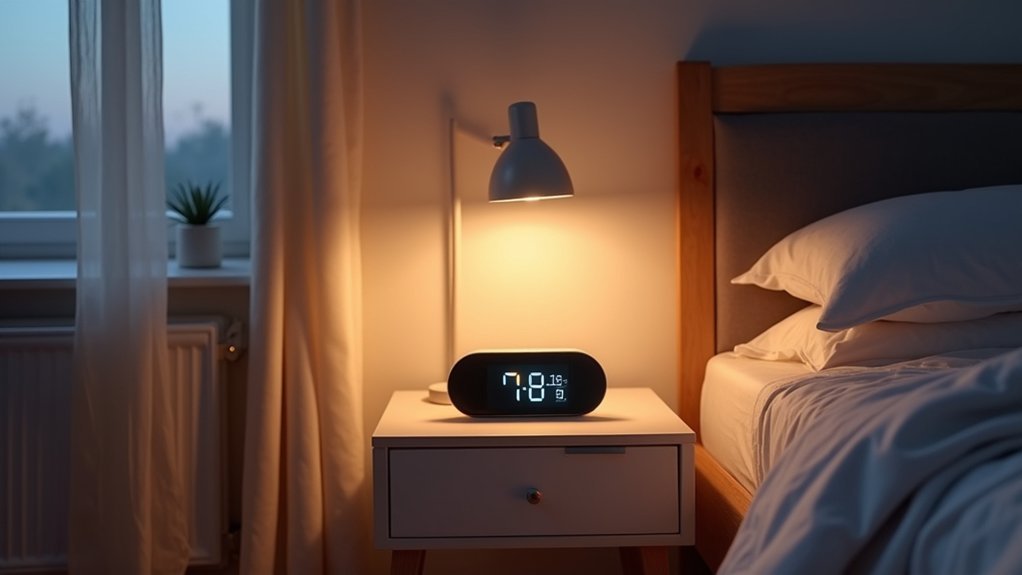
Because your body’s internal clock relies heavily on light cues, programming light timers for your bedroom lighting can dramatically improve your sleep quality and overall well-being.
Start by setting timers to gradually dim lights one hour before bedtime, which promotes melatonin production and helps regulate your circadian rhythms. Replace bright overhead lighting with softer ambient lighting to create a calming environment where you can relax and unwind.
Additionally, program timers to limit blue light exposure from electronic devices during evening hours, as this further supports healthy melatonin release.
For mornings, set timers to mimic natural sunrise by gradually increasing light exposure, helping you wake more gently while reinforcing your body’s internal clock for consistent, restorative sleep.
Setting Up Automated Dimming Schedules for Evening Wind-Down
When you establish automated dimming schedules, you create a powerful tool that works behind the scenes to prepare your body for restful sleep.
These bedroom lights should gradually reduce brightness starting an hour before bedtime, signaling your body’s natural wind-down period.
For best results, follow these dimming guidelines:
- Set lights to 10-30% brightness as bedtime approaches to boost melatonin production
- Use smart bulbs or home automation systems for consistent programming
- Pair dimming with calming activities like reading or journaling to prepare your mind for sleep
- Regularly assess and adjust schedules based on seasonal changes and personal needs
This automated approach guarantees your nighttime routine remains consistent, eliminating guesswork while supporting your body’s natural sleep preparation process.
Using Smart Bulbs and Apps for Customized Sleep Timer Settings
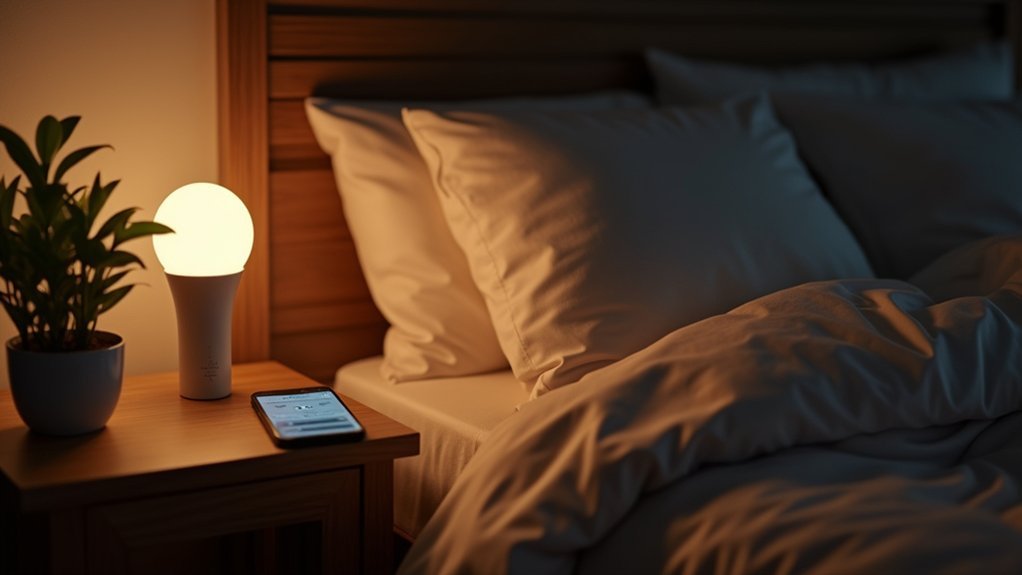
Smart bulbs and dedicated apps take your automated dimming to the next level by offering precise control over every aspect of your bedroom lighting.
Smart bulbs provide unprecedented precision in bedroom lighting control, transforming how you manage your sleep environment through intuitive automation.
You can program these devices to create customized sleep schedules that automatically shift from bright, cool tones during the day to warm, soft lighting that promotes melatonin production in the evening.
Smart home apps like Philips Hue and Google Home let you set specific sleep timer intervals that turn off lights at your designated bedtime, greatly enhancing your sleep hygiene.
You’ll also benefit from integrating these systems with white noise machines or smart speakers to establish a calming bedtime environment.
Remote management through mobile apps guarantees you can adjust your lighting schedule from anywhere, maintaining consistent routines that support better rest.
Creating Morning Light Exposure Timers for Better Wake-Up
While evening routines help you wind down, your morning wake-up experience is equally essential for maintaining healthy sleep cycles.
Morning light exposure helps regulate your sleep-wake cycle by stimulating serotonin production and controlling melatonin levels. Setting up automated lighting timers creates the foundation for better rest.
Here’s how to optimize your morning light timers:
- Program lights to turn on 30 minutes before your regular wake-up time with gradual brightness increases.
- Use sunrise alarm clock features that mimic natural light patterns over 20-30 minutes.
- Synchronize smart bulbs to automatically brighten your bedroom at consistent times daily.
- Aim for 20-30 minutes of light exposure immediately after waking to boost alertness.
Consistency reinforces your body’s natural rhythms, making mornings easier and improving overall sleep quality.
Coordinating Multiple Light Sources With Timer Systems
Managing several light fixtures through coordinated timer systems transforms your bedroom into a sleep-optimized environment that works automatically. You can synchronize bedside lamps, overhead fixtures, and accent lighting to create consistent light patterns that support your natural melatonin production.
Set your timers to gradually dim all bedroom sources an hour before sleep, signaling your brain it’s time to wind down for better sleep quality.
Smart home systems let you control multiple fixtures simultaneously, ensuring no bright spots disrupt your evening routine. Program timers to automatically turn off electronic devices, reducing blue light exposure that interferes with the quality of your sleep.
This coordinated approach eliminates guesswork and creates a reliable environment that consistently promotes restorative rest.
Troubleshooting Common Timer Setup Issues and Solutions
Why do bedroom timers sometimes fail to work properly despite careful setup? Timer settings can malfunction due to various technical issues that disrupt your sleep routine. When problems arise, systematic troubleshooting steps will help restore functionality.
Start with these essential checks:
- Verify volume levels – Confirm your device’s volume is appropriate before programming, as low settings may prevent you from hearing alerts.
- Install software updates – Check your timer app for updates, since outdated versions often contain bugs affecting performance.
- Restart your device – Refresh the system to resolve temporary glitches impacting timer functionality.
- Review timer settings – Validate duration and content type to prevent inconvenient shutoffs.
If you’re using a third-party app, consult the help section or user reviews for app-specific solutions when standard troubleshooting doesn’t resolve setup issues.
Optimizing Timer Settings Based on Your Personal Sleep Schedule
Since everyone’s natural sleep patterns differ, you’ll need to customize your timer settings to match your unique circadian rhythm and lifestyle demands.
Start by analyzing your current sleep habits to determine when you naturally feel tired. Set your bedroom timer to transform your bedroom into a sleep sanctuary by gradually dimming lights and adjusting to the ideal temperature of 60-67°F about an hour before bed.
Transform your bedroom into a sleep sanctuary by gradually dimming lights and adjusting temperature one hour before your natural bedtime.
Configure screen time limits that align with your evening schedule, ensuring devices shut off at least one hour before sleep. Schedule calming pre-sleep activities like reading for 20-30 minutes using dedicated timers.
Establish a consistent bedtime routine by setting wind-down alerts 30 minutes to 2 hours before sleep. Monitor your wake-up time and adjust alarm settings gradually to optimize your natural rhythm.
Frequently Asked Questions
What Is the 10 5 3 2 1 Rule for Sleep?
The 10 5 3 2 1 rule means you’ll stop caffeine 10 hours before bed, alcohol 5 hours prior, heavy meals 3 hours earlier, screens 2 hours beforehand, and start winding down 1 hour ahead.
How Do You Set a Consistent Bedtime for Better Sleep?
Choose a bedtime allowing 7-9 hours of sleep, then stick to it daily, including weekends. Set a reminder alarm 30 minutes before to start your wind-down routine, reinforcing your body’s natural circadian rhythm.
How to Set up Your Bed for Better Sleep?
Choose a supportive mattress and comfortable pillows that align your spine properly. Use breathable bedding materials like cotton or bamboo. Keep your bed clean and decluttered, making it exclusively for sleep to strengthen your brain’s sleep associations.
How to Improve Your Bedroom for Better Sleep?
You’ll improve your bedroom by maintaining consistent sleep schedules, creating darkness with blackout curtains, keeping temperatures between 60-67°F, decluttering spaces, and incorporating white noise to mask disruptive sounds.
In Summary
You’ve now got all the tools to transform your bedroom into a sleep-optimized sanctuary. Start by programming your timers gradually, adjusting settings based on how your body responds. Remember, consistency is key—stick to your schedule even on weekends. Don’t get discouraged if it takes a few weeks to see results. Your circadian rhythm needs time to adapt. With patience and proper timer management, you’ll soon experience deeper, more restorative sleep naturally.


