
Your wearable tracks stress during rest because sleep reveals your body’s most authentic stress signals without conscious interference. During sleep, your heart rate variability and sleep stage patterns provide honest measurements that reflect true stress levels. Research shows a 1 BPM increase in resting heart rate correlates with 3.6% higher stress odds, while additional sleep hours reduce stress by 38%. This continuous monitoring enables early detection before you’re consciously aware, creating opportunities for proactive interventions that enhance your long-term wellness.
The Science Behind Sleep-Based Stress Detection
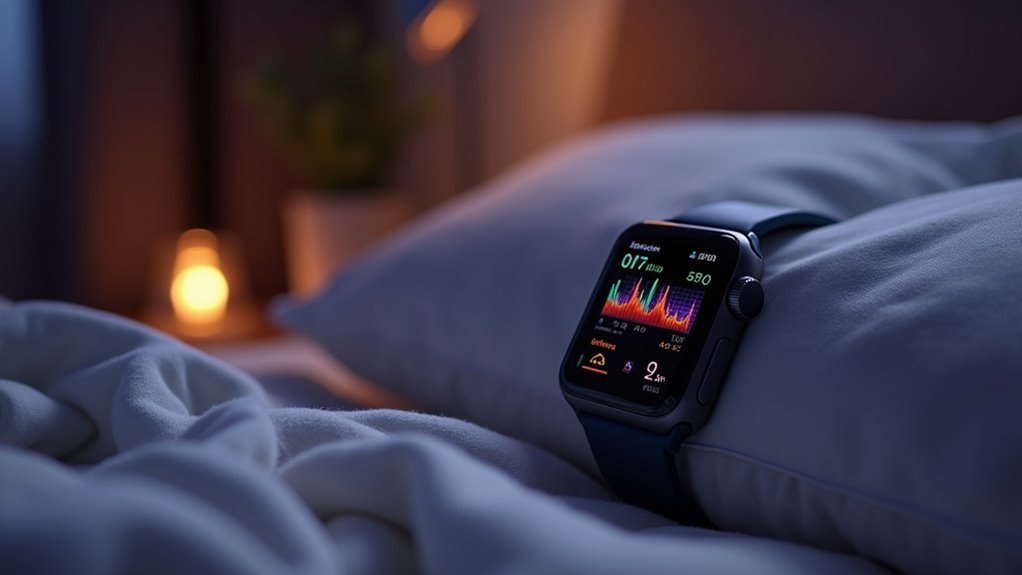
While you sleep, your wearable device actively monitors multiple physiological signals that reveal how stress impacts your body’s recovery processes. Your device tracks sleep stages—light, deep, and REM—identifying disruptions that indicate elevated stress levels.
Heart rate variability becomes a vital indicator, as stress greatly alters this metric during rest periods.
Research demonstrates that biometric data collected during sleep provides exceptional insights into your stress patterns. When your resting heart rate increases by just one beat per minute, your stress odds rise by 3.6%.
This continuous monitoring enables early detection of stress-related changes before you’re consciously aware of them.
Wearable devices analyze this health data to identify concerning patterns, facilitating timely interventions that can prevent chronic stress development and improve your overall well-being.
How Wearables Monitor Physiological Signals During Rest
Your wearable device continuously captures three critical physiological signals while you’re at rest to assess your stress levels.
It measures heart rate variability to detect subtle changes in the time between heartbeats, tracks which sleep stages you’re experiencing throughout the night, and establishes your personal resting baseline measurements for comparison.
These combined signals create a thorough picture of how stress affects your body during periods when you should be recovering.
Heart Rate Variability
Heart rate variability serves as your body’s telltale sign of stress, revealing how well your nervous system responds to challenges even while you’re at rest. HRV measures the time intervals between your heartbeats, with higher variability indicating better stress resilience and lower stress levels.
Your wearable technology continuously monitors this vital biometric data during sleep, detecting fluctuations that signal stress responses or disturbances affecting your mental health.
Research demonstrates that even a one beat per minute increase in resting heart rate correlates with a 3.6% increase in stress odds, making HRV monitoring essential for accurate stress assessment.
Your device provides real-time feedback on these patterns, enabling you to identify specific stress triggers and implement proactive management strategies before stress overwhelms your system.
Sleep Stage Detection
As you sleep, your wearable device continuously monitors multiple physiological signals to identify distinct sleep stages that reveal your body’s stress responses during rest. Your device tracks heart rate, skin temperature, and movement patterns to distinguish between light, deep, and REM sleep phases.
Each stage provides unique insights into your stress levels and recovery processes. Advanced algorithms analyze heart rate variability fluctuations across different sleep stages, detecting when your autonomic nervous system shows signs of stress or relaxation.
Your wearable correlates sleep duration and efficiency with stress patterns, identifying disruptions that indicate elevated tension. This thorough monitoring enables real-time feedback about how your sleep quality affects mental health, helping you develop personalized stress management strategies based on your individual sleep stage responses and physiological data.
Resting Baseline Measurements
While you’re at rest, wearable devices establish critical baseline measurements by continuously tracking heart rate, skin temperature, and breathing patterns. This resting baseline serves as your personal reference point for detecting when stress levels deviate from normal ranges.
| Physiological Signal | Resting Measurement | Stress Indicator |
|---|---|---|
| Heart Rate | 60-100 BPM | 3.6% increase per additional BPM |
| Heart Rate Variability | Individual baseline | Decreased variation |
| Skin Temperature | Personal average | Notable fluctuations |
| Breathing Rate | 12-20 breaths/min | Irregular patterns |
Continuous monitoring during sleep stages allows your device to capture extensive physiological responses without daily activity interference. Your wearable analyzes these measurements across light, deep, and REM sleep phases, creating a detailed profile of your autonomic nervous system’s behavior during rest periods.
Heart Rate Variability as a Key Stress Indicator
When your wearable device measures the subtle variations between heartbeats, it’s capturing one of the most reliable indicators of your body’s stress response.
Heart rate variability reflects your autonomic nervous system’s balance between stress and relaxation. Higher HRV typically indicates lower stress levels and better health, while decreased variability suggests heightened stress and fatigue.
Your autonomic nervous system’s delicate balance between stress and recovery reveals itself through the rhythmic variations captured in your heartbeat patterns.
Your wearable devices excel at continuous monitoring during rest because they can establish baseline measurements without external interference.
Poor sleep quality directly impacts HRV, creating measurable stress patterns your device detects. This real-time assessment enables immediate recognition of stress triggers throughout your recovery periods.
Machine learning algorithms analyze your HRV data, identifying personal stress patterns and developing personalized strategies for effective stress management tailored specifically to your physiological responses.
Sleep Stage Disruptions Reveal Stress Patterns
Sleep disruptions captured by your wearable reveal stress patterns through detailed monitoring of light, deep, and REM sleep stages. When stress levels increase, your device detects irregularities in these natural sleep cycles, providing essential biometric data about your mental health status.
Wearable technology tracks variations in your heart rate during sleep, identifying disturbances that reflect stress responses. Each disruption in sleep quality correlates with heightened stress, while additional sleep hours reduce stress odds by 38%.
Your device’s continuous monitoring enables real-time interventions by detecting personal stress triggers. This detailed analysis of sleep stage patterns helps create personalized wellness strategies, giving you actionable insights to manage stress effectively before it impacts your overall well-being.
Why Sleep Duration Correlates With Stress Levels
Beyond identifying when sleep stages become disrupted, wearables reveal that the total amount of sleep you’re getting plays an equally important role in stress management.
Research shows each additional hour of sleep duration reduces your odds of experiencing moderate-to-high stress by 38%. When wearable technologies track your total sleep time below the recommended 8-10 hours, you’ll notice corresponding increases in perceived stress scores.
These devices also monitor how insufficient sleep affects your heart rate variability, creating additional stress responses in your body. By tracking these sleep metrics continuously, wearables help you understand the direct connection between adequate rest and your well-being, enabling you to mitigate stress through improved sleep habits.
Real-Time Data Collection During Nighttime Hours
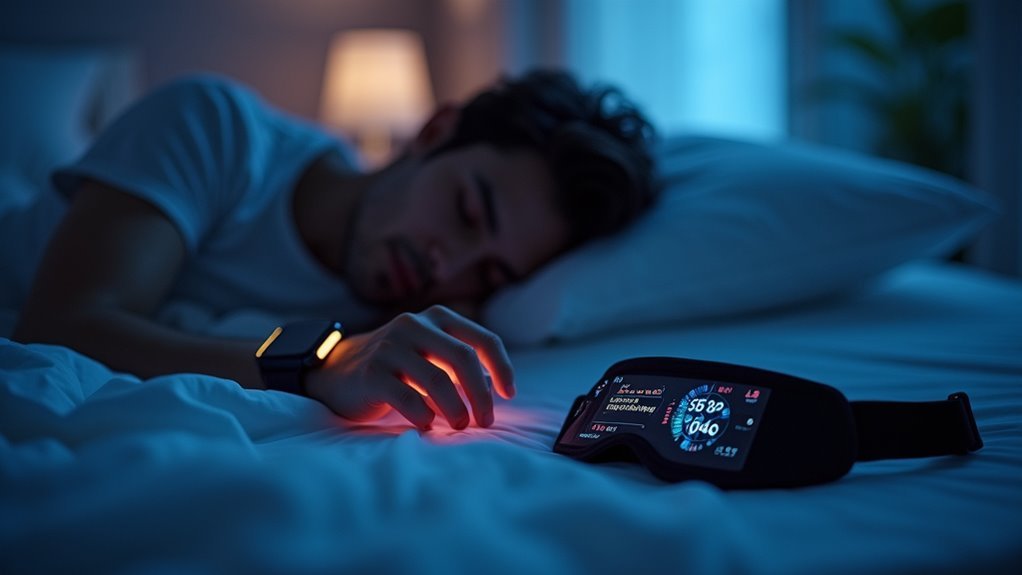
While you sleep, devices like Oura rings capture a continuous stream of physiological data that reveals how stress manifests in your body during rest.
This real-time data collection transforms your nighttime hours into valuable monitoring sessions, tracking heart rate variations and other physiological signals that indicate stress responses. Your wearable doesn’t pause when you do—it works overtime to identify sleep stage disruptions that signal underlying stress patterns.
Real-time monitoring during sleep enables several key benefits:
- Pattern Recognition: Continuous data helps you identify stress triggers and their physiological impact on your sleep quality
- Timely Interventions: Immediate feedback allows for quick adjustments to your sleep environment and stress management strategies
- Personalized Insights: Your unique physiological responses guide customized recommendations for better rest and reduced stress levels
Machine Learning Algorithms Analyze Rest Behaviors
You’ll find that machine learning algorithms transform your raw sleep data into actionable insights by recognizing complex patterns in your rest behaviors.
These systems analyze your heart rate variability throughout the night, detecting subtle fluctuations that indicate stress even when you’re unconscious.
The algorithms then build predictive stress models specific to your physiology, allowing your wearable to forecast potential stress episodes before they fully manifest.
Sleep Pattern Recognition
As you sleep, machine learning algorithms continuously analyze the biometric data streaming from your wearable device, examining subtle variations in heart rate, sleep stage changes, and overall rest duration.
These sophisticated systems recognize patterns that indicate stress-related disturbances, processing biometric signals from devices like Oura rings to assess heart rate variability and sleep efficiency metrics.
Through continuous monitoring, the algorithms identify your unique stress triggers and predict stress levels before they escalate.
This sleep pattern recognition enables real-time interventions and personalized wellness strategies tailored to your physiological responses.
- Pattern Detection: Algorithms identify recurring stress indicators in your sleep data
- Predictive Analysis: Machine learning anticipates stress episodes before symptoms manifest
- Personalized Insights: Your unique sleep patterns create customized wellness recommendations
Heart Rate Variability
Heart rate variability emerges as the most telling physiological indicator your wearable captures during rest, revealing how your autonomic nervous system responds to stress and recovery cycles.
Machine learning algorithms continuously analyze this HRV data from your sleep and rest periods, identifying patterns that correlate with your stress levels. When your HRV increases, it typically signals lower stress, while decreased variability indicates heightened stress responses.
Your device provides real-time feedback based on these physiological measurements, empowering you to adjust your stress management strategies immediately.
Wearables use sophisticated machine learning techniques to understand your individual stress responses, creating personalized intervention recommendations. This continuous monitoring enables you to make informed lifestyle changes that improve your overall health outcomes through data-driven insights.
Predictive Stress Modeling
Advanced predictive models transform your wearable’s raw biometric data into sophisticated stress forecasting systems that anticipate your body’s responses before symptoms emerge.
These algorithms continuously monitor your heart rate variability and sleep patterns, comparing real-time data against your personal baseline to detect subtle deviations. Your wearable technologies analyze sleep duration, stage distribution, and resting heart rate to calculate stress probabilities—with research showing each additional hour of sleep reduces stress odds by 38%.
This predictive modeling enables personalized interventions before stress escalates.
- Real-time deviation detection: Your device identifies physiological changes that precede conscious stress awareness, allowing proactive response strategies.
- Personalized probability calculations: Algorithms learn your unique stress signatures, improving prediction accuracy over time through continuous tracking.
- Behavioral pattern recognition: Models connect specific rest behaviors to stress levels, creating actionable insights for long-term wellness optimization.
Traditional Stress Measurement Limitations vs. Continuous Monitoring
While traditional stress measurement methods have dominated healthcare for decades, they’re fundamentally flawed in capturing the true complexity of your stress response. Questionnaires and cortisol tests rely on subjective responses, delivering only snapshot assessments that miss stress’s dynamic fluctuations throughout your day.
These labor-intensive approaches can’t track how your stress levels change in real-time.
Wearable technologies revolutionize stress measurement through continuous monitoring of physiological indicators like heart rate variability and sleep patterns. Unlike traditional methods, real-time tracking captures data during rest periods when your body’s stress responses are most revealing.
University Research Shows Sleep-Stress Connection
When researchers at the University of Vermont analyzed sleep and stress patterns among college students, they discovered a powerful connection that validates what wearable technology has been revealing.
The LEMURS study used Oura ring biosensors to collect biometric data from first- and second-year college students, tracking sleep duration, quality, and heart rate patterns.
Oura ring biosensors tracked sleep duration, quality, and heart rate patterns among first- and second-year college students in the LEMURS study.
You’ll find their results compelling: each additional hour of sleep decreased moderate-to-high stress odds by 38%. Conversely, every extra heartbeat per minute increased stress likelihood by 3.6%.
These findings demonstrate how wearable devices can objectively measure the sleep-stress relationship that affects your mental health.
- Sleep quality directly impacts your body’s stress response mechanisms
- Continuous biometric monitoring reveals patterns invisible to traditional assessment methods
- Wearable technology provides real-time insights into your perceived stress levels
Personalized Health Insights Through Rest Tracking
Your wearable doesn’t just collect sleep data—it learns your unique stress patterns and identifies what triggers your body’s responses during rest.
This personalized insight allows you to recognize when poor sleep quality correlates with elevated stress levels, giving you concrete data about your individual sleep-stress connection.
Armed with this information, you can develop tailored wellness strategies that address your specific stress triggers and optimize your sleep environment for better recovery.
Sleep-Stress Pattern Recognition
Sleep patterns serve as a window into your stress levels, with wearable devices like Oura rings now capable of detecting subtle changes that reveal your body’s response to daily pressures.
These devices continuously monitor your sleep stages—light, deep, and REM—while tracking heart rate and other biometric data throughout the night. This thorough monitoring reveals how stress disrupts your natural sleep architecture, providing valuable insights into your individual stress responses.
Your wearable correlates sleep duration and quality with perceived stress scores, creating a clear picture of how mental health impacts your rest. These patterns help you understand when stress strikes hardest during nighttime hours.
- Real-time detection: Identifies stress triggers as they occur during sleep cycles
- Personalized analysis: Creates individual stress-sleep profiles based on your unique biometric responses
- Predictive insights: Anticipates stress levels based on emerging sleep pattern changes
Tailored Wellness Strategies
Beyond recognizing sleep-stress patterns, wearable devices transform this data into actionable wellness strategies that fit your specific lifestyle and stress triggers. Your heart rate variations and biometric data during rest create a personalized blueprint for stress detection and management.
These personalized health insights enable you to customize your sleep environment, adjust bedtime routines, and implement targeted relaxation techniques based on your unique physiological responses.
Wearable devices don’t just collect data—they translate it into tailored wellness strategies that address your individual needs. By understanding when and how stress affects your rest, you can develop proactive stress management approaches that prevent escalation.
This data-driven methodology enhances both your mental health and physical well-being, creating sustainable habits that support long-term wellness goals.
Early Intervention Opportunities During Sleep
When stress disrupts your sleep, wearable devices can detect these disturbances in real-time and alert you to intervene before the problem worsens. Your device continuously analyzes biometric data throughout the night, monitoring heart rate variability and sleep stage changes to identify early signs of stress. This constant surveillance enables proactive intervention rather than reactive responses.
By tracking your stress levels during rest, wearables create opportunities for immediate adjustments. You can modify your sleep environment, practice relaxation techniques, or implement breathing exercises the moment your device signals elevated stress markers. This early detection system transforms how you manage stress by providing actionable insights when intervention is most effective.
- Real-time alerts enable immediate stress management responses during sleep cycles
- Continuous biometric monitoring identifies stress patterns before they escalate into chronic issues
- Early intervention opportunities improve long-term mental health outcomes through preventive care
Benefits of Passive Stress Monitoring for Mental Health
Since wearable devices continuously collect physiological data without requiring conscious effort, they’re revolutionizing how you understand and manage your mental health. This passive monitoring captures your stress levels throughout rest periods, revealing patterns you’d otherwise miss.
When you analyze your sleep patterns alongside biometric data like heart rate variability, you gain unprecedented self-awareness about your body’s stress responses.
This continuous tracking enables you to identify specific triggers that elevate your stress levels during sleep, empowering you to develop targeted wellness strategies.
You’ll discover correlations between your daily activities and nighttime stress, allowing for proactive interventions.
The seamless nature of passive monitoring means you’re building a thorough mental health profile without disrupting your routines, ultimately leading to more personalized and effective stress management approaches.
Frequently Asked Questions
How Does a Smartwatch Know When You’re Stressed?
Your smartwatch detects stress by monitoring your heart rate variability, resting heart rate, and skin conductance. It uses machine learning algorithms to analyze these physiological signals and identify patterns that indicate your body’s stress response in real-time.
How Do Wearable Devices Measure Stress?
Your wearable measures stress by monitoring physiological indicators like heart rate variability, skin conductance, and breathing patterns. Advanced algorithms analyze this biometric data, detecting deviations from your baseline to identify stress responses.
How Does Garmin Detect Stress While Sleeping?
Your Garmin monitors heart rate variability and resting heart rate during sleep to detect stress. It analyzes sleep stages, duration, and disruptions while using advanced algorithms to interpret your biometric data in real-time.
How Does Garmin Measure Stress Vs Rest?
Your Garmin measures stress by analyzing heart rate variability during active periods, detecting sympathetic nervous system activation. During rest, it monitors parasympathetic dominance through slower heart rates and improved HRV patterns.


