
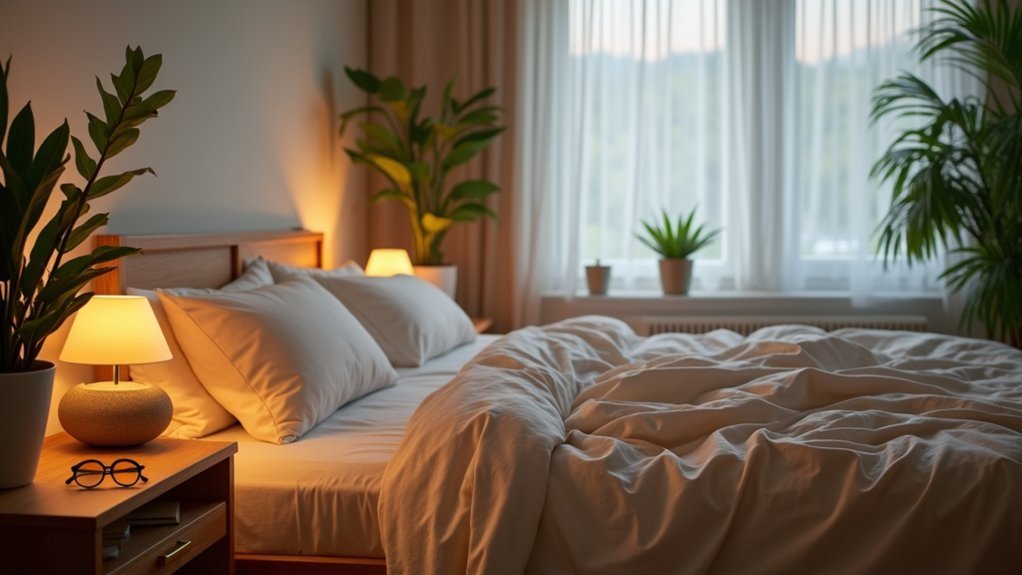
You can create an effective bedroom therapy environment for circadian rhythm disorders by controlling three key factors: light exposure, temperature, and sound. Install dimmable warm lighting (2700K) and blackout curtains to manage evening darkness, while using bright light therapy devices producing 10,000 lux for 20-30 minutes each morning. Maintain temperatures between 60-67°F with proper air circulation, and reduce noise levels up to 70% using acoustic panels or white noise machines. These strategic modifications will transform your sleep space into a powerful therapeutic tool.
Understanding Circadian Rhythm Disorders and Bedroom Environment
When your internal clock falls out of sync with the natural light-dark cycle, you’re experiencing a circadian rhythm disorder that disrupts your body’s fundamental sleep-wake patterns.
Circadian rhythm disorders occur when your body’s internal clock becomes misaligned with natural day-night cycles, disrupting essential sleep patterns.
These conditions cause insomnia, daytime sleepiness, and mood disturbances that greatly impact your daily functioning.
Related guide: Best Sunrise Therapy Lamps with UV‑Free Bulbs for Seasonal Sleep Disruption
Your bedroom environment becomes essential in managing these disorders effectively.
You’ll need to create ideal bedroom conditions that support natural rhythms through strategic light exposure management.
Install blackout curtains to eliminate nighttime light interference and promote melatonin production.
Incorporate a light therapy box for morning bright light sessions that reset your internal clock.
Maintain dim evening lighting to signal sleep preparation.
Establishing a consistent sleep schedule alongside proper bedroom conditions enhances sleep quality.
Keep your space cool and quiet while controlling light exposure patterns to realign your sleep-wake cycle with environmental cues.
Essential Lighting Design Principles for Sleep Optimization
You’ll need to master three critical lighting principles to transform your bedroom into a sleep-optimizing sanctuary.
First, you must strategically time your morning light exposure to kickstart your circadian rhythm and signal wakefulness to your body.
Then, you’ll implement evening darkness enhancement strategies and carefully control your bedroom’s light temperature to prepare your system for restorative sleep.
Morning Light Exposure Timing
Since your circadian rhythm operates on a precise 24-hour cycle, timing your morning light exposure correctly becomes the cornerstone of effective sleep improvement.
You’ll achieve maximum effectiveness by exposing yourself to bright light within the first hour of waking for 20-30 minutes. This strategic timing helps delay melatonin production, enhancing your mood and energy levels throughout the day.
For best results, you should utilize light therapy boxes producing 10,000 lux, which mimics natural sunlight intensity.
If you’re dealing with delayed sleep phase syndrome, consistent morning light exposure becomes even more critical for correcting your sleep patterns.
Consider incorporating adjustable lighting systems into your bedroom design that gradually increase brightness, simulating natural sunrise to support healthy circadian rhythms.
Evening Darkness Enhancement Strategies
As evening approaches, your bedroom’s lighting strategy becomes essential for triggering the body’s natural melatonin production and preparing your mind for restorative sleep. You’ll want to minimize blue light exposure by implementing dimmable fixtures and warm-colored bulbs around 2700K. These create a calming environment that supports your circadian rhythm’s natural progression toward sleep.
| Strategy | Implementation |
|---|---|
| Dimmable lighting | Install adjustable fixtures to reduce evening light exposure |
| Warm bulbs (2700K) | Replace cool bulbs with warm-colored alternatives |
| Blackout curtains | Block external light sources completely |
| Strategic lamp placement | Direct light away from eyes during relaxation time |
| Smart lighting systems | Program gradual dimming to simulate natural sunset |
Blackout curtains effectively eliminate outside light interference, while smart systems can automatically dim throughout the evening, signaling your body to wind down.
Bedroom Light Temperature Control
When selecting the ideal color temperature for your bedroom lighting, understanding the science behind how different light spectrums affect your sleep becomes essential for creating an environment that naturally supports your body’s rhythms.
Warmer light around 2700K to 3000K promotes relaxation and encourages melatonin production, while cooler temperatures above 4000K can disrupt your circadian rhythms and inhibit natural sleep hormones.
You’ll want to avoid bright evening exposure above 5000K, which delays your body’s sleep preparation.
Install dimmable lighting and smart bulbs that adjust throughout the day, mimicking natural light patterns.
Incorporate blue light filters on devices and prioritize warm bedroom lighting to improve sleep onset latency and overall sleep quality.
Light Therapy Equipment and Bedroom Placement Strategies
Light therapy equipment transforms your bedroom into a powerful tool for regulating sleep patterns and combating circadian rhythm disorders.
Position your bright light therapy device 16 to 24 inches from your face, emitting 10,000 lux for ideal circadian rhythm regulation. You’ll achieve the best therapy effectiveness by placing equipment at your bedside table or desk, allowing indirect light exposure while minimizing eye strain.
For delayed sleep phase disorder, use morning sessions lasting 20-40 minutes to realign your sleep-wake cycle with natural patterns. Consistency in timing proves vital for resetting your internal clock.
Strategic bedroom placement enables seamless integration into your daily routine. During evening hours, dim your sleep environment to signal bedtime preparation. This dual approach maximizes therapeutic benefits while maintaining your bedroom’s primary function as a restful sanctuary.
Creating Darkness Zones With Blackout Solutions
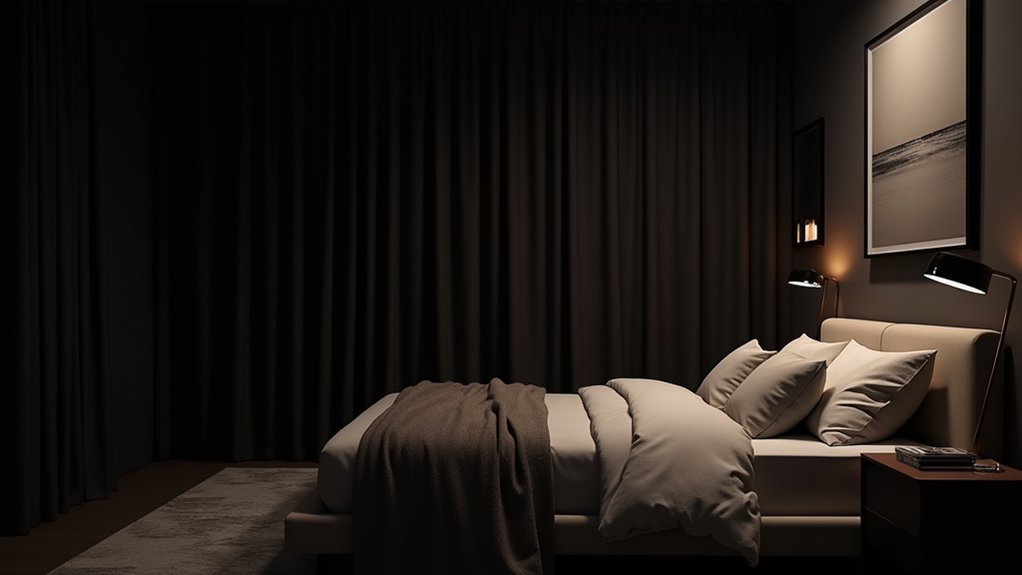
Complete darkness serves as your bedroom’s most powerful ally in triggering natural melatonin production and maintaining healthy sleep cycles. Blackout curtains block up to 99% of outside light, creating an essential darkness zone that combats light pollution from streetlights and early morning sun. This proves particularly vital for those with circadian rhythm disorders or shift workers needing quality sleep regardless of timing.
| Blackout Solution | Primary Benefit |
|---|---|
| Standard Blackout Curtains | Blocks 99% light for melatonin production |
| Acoustic Blackout Curtains | Reduces noise disturbances while blocking light |
| Gap Sealing Methods | Eliminates light leaks around windows/doors |
Your sleep environment dramatically improves when you seal all gaps around windows and doors, as minimal light can compromise effectiveness. Acoustic blackout curtains provide dual benefits by reducing noise disturbances alongside light control, ensuring restful sleep.
Temperature and Air Quality Controls for Better Sleep
You’ll sleep better when you maintain your bedroom temperature between 60°F and 67°F, as this cooler environment helps lower your body temperature and supports natural circadian rhythms.
Your air circulation system should include an air purifier to reduce allergens and pollutants that can disrupt your sleep throughout the night.
You’ll want to keep humidity levels between 30% and 50% since air that’s too dry or too humid creates discomfort that interferes with quality rest.
Optimal Sleep Temperature Range
While many people focus on mattresses and pillows when enhancing their sleep environment, temperature control often proves to be the most vital factor for achieving restorative rest.
Your ideal sleep temperature should range between 60°F to 67°F, supporting your body’s natural core temperature drop during sleep cycles. This cooler bedroom environment directly improves sleep quality by promoting deeper sleep stages and reducing sleep onset latency, helping you fall asleep faster.
For those managing circadian rhythm disorders, maintaining proper temperature becomes even more essential.
You’ll want to combine strategic air quality management with humidity control to create the best sleep hygiene conditions. Consider investing in temperature-regulating bedding materials like breathable sheets and comforters to enhance comfort and support your body’s natural sleep-wake cycle.
Air Circulation Systems
Effective air circulation systems work hand-in-hand with temperature control to create an ideal sleep environment that supports your circadian rhythms.
These systems maintain optimal bedroom temperatures between 60°F and 67°F while ensuring proper ventilation that prevents stuffiness and sleep disturbances.
You’ll benefit from improved air quality through filtration systems that remove pollutants and allergens, reducing respiratory irritation that causes nighttime awakenings.
Smart thermostats and air purifiers automate your temperature control and air quality management, creating consistent conditions for circadian rhythm regulation.
When you eliminate stuffy, poorly ventilated spaces, you’ll experience fewer sleep disruptions and enhanced sleep efficiency.
This controlled environment helps stabilize your circadian rhythms by maintaining the best, fresh air your body needs for restorative sleep cycles.
Humidity Level Management
Beyond temperature control, proper humidity management creates the foundation for restorative sleep by maintaining moisture levels between 30% and 50% in your bedroom environment.
When humidity levels exceed this range, you’ll experience increased heat retention that disrupts your comfortable sleeping temperature of 60-67°F. High moisture can also trigger respiratory issues that compromise sleep quality.
You can use a dehumidifier to control excess moisture and prevent mold growth in humid climates.
Conversely, dry seasons require a humidifier to maintain adequate moisture levels, preventing throat irritation and dry skin that fragment sleep cycles.
Combine humidity control with proper ventilation and air quality management to reduce allergens and pollutants, creating an ideal sleep environment that supports your circadian rhythms.
Sound Management and Acoustic Bedroom Modifications
When external noises consistently disrupt your sleep, strategic sound management becomes essential for creating the restorative environment your body needs.
Effective noise reduction through acoustic modifications can dramatically improve your sleep quality and help regulate circadian rhythm disorders.
Consider these proven strategies for ideal sound management:
- Install acoustic panels or heavy curtains to reduce external noise levels by up to 70%
- Use white noise machines to mask disruptive sounds and improve sleep onset
- Focus on low-frequency sounds that promote relaxation and support your sleep-wake cycle
- Maintain consistent quiet conditions during sleep hours to enhance melatonin production
Creating a serene sleep environment through proper acoustic modifications supports mood regulation and complements morning light exposure therapy, establishing the foundation for healthy circadian rhythms.
Establishing Consistent Sleep Routines in Your Optimized Space
Once you’ve optimized your bedroom’s acoustic environment, transforming that space into a sleep sanctuary requires establishing consistent routines that work with your body’s natural rhythms. Establishing consistent sleep schedule means going to bed and waking up at identical times daily, even weekends, to strengthen your circadian rhythm and sleep-wake cycle.
Your bedtime routine should include relaxing activities that signal wind-down time. To optimize bedroom environment and enhance sleep quality, maintain darkness, quiet, and cool temperatures between 60-67°F.
| Time | Activity | Purpose |
|---|---|---|
| Evening | Limit blue light exposure | Preserve melatonin production |
| Bedtime | Reading/warm bath | Signal sleep preparation |
| Morning | Light therapy (10,000 lux) | Align circadian rhythm |
These strategies effectively address sleep disorders by creating predictable patterns your body recognizes.
Frequently Asked Questions
How to Fix Circadian Rhythm Sleep Disorder?
You’ll fix your circadian rhythm disorder by gradually shifting sleep times, using morning bright light therapy, maintaining consistent routines, exercising regularly, and reducing evening screen exposure to recalibrate your internal clock.
What Are Four Diseases Linked to Circadian Rhythm Disruptions?
You’ll encounter four main diseases: insomnia from persistent sleep difficulties, Seasonal Affective Disorder during winter months, Shift Work Sleep Disorder from irregular schedules, and Delayed Sleep Phase Disorder causing delayed sleep timing.
What Mood Disorder Is Associated With Circadian Rhythm?
You’ll find that Seasonal Affective Disorder (SAD) is the primary mood disorder linked to circadian rhythm disruptions. You can also develop non-seasonal depression when your sleep-wake cycles become chronically misaligned.
What Is a Practical Approach to Circadian Rhythm Sleep Disorders?
You’ll manage circadian rhythm sleep disorders by using bright light therapy for 30-60 minutes, maintaining consistent sleep schedules, getting morning sunlight exposure, reducing evening artificial light, and aligning exercise with desired sleep patterns.
In Summary
You’ve now got the tools to transform your bedroom into a circadian rhythm reset center. Start by implementing one change at a time—begin with blackout curtains, then add light therapy equipment, and gradually incorporate temperature and sound controls. Your body’s internal clock will respond to these environmental cues within days. Stick to your new sleep routine consistently, and you’ll see significant improvements in your sleep quality and daytime energy levels.


