
Red wine before bed isn’t the sleep aid you’ve been told it is. While red wine contains trace amounts of melatonin, you’d need impractical quantities to match supplement doses. Alcohol disrupts your REM sleep cycles, elevates your heart rate during sleep, and causes nighttime awakenings that prevent restorative rest. The resveratrol claims require over 100 glasses to reach therapeutic levels, making health benefits unrealistic. Natural alternatives like chamomile tea and proper sleep hygiene deliver better results without the downsides that thorough analysis reveals.
The Science Behind Alcohol and Sleep Disruption

While that glass of red wine might make you feel drowsy initially, alcohol actually sabotages your sleep quality in several significant ways.
Alcohol consumption disrupts your REM sleep cycles, preventing truly restorative rest. Though you’ll fall asleep faster, you’re setting yourself up for frequent nighttime awakenings as your brain becomes more active during alcohol withdrawal.
Research shows that drinking before bed elevates your heart rate during sleep, making rest less effective. The initial sedative effects quickly transform into “anxiety rebound,” increasing nervousness and stress that further impairs sleep quality.
Your best strategy? Stop drinking at least four hours before bedtime to minimize sleep disruption and maximize the restorative benefits your body needs.
Why Red Wine Doesn’t Contain Enough Melatonin to Matter
Beyond alcohol’s disruptive effects, many people mistakenly believe red wine can improve sleep because it contains melatonin, the hormone that regulates sleep-wake cycles.
However, this is one of the most persistent myths debunked by science. Red wine contains only trace amounts of melatonin—typically 0.1 to 0.3 micrograms per milliliter. You’d need to drink impractical quantities to match a standard supplement dose of 1-10 milligrams.
Red wine’s melatonin levels are negligible—you’d need to consume dangerous amounts to get any meaningful sleep benefit.
The melatonin content varies wildly based on grape variety and production methods, making red wine an unreliable source.
While alcohol might make you drowsy initially, it actually disrupts your sleep cycles and reduces sleep quality throughout the night.
You’re better off using proven supplements or sleep hygiene methods.
How Alcohol Reduces REM Sleep Quality
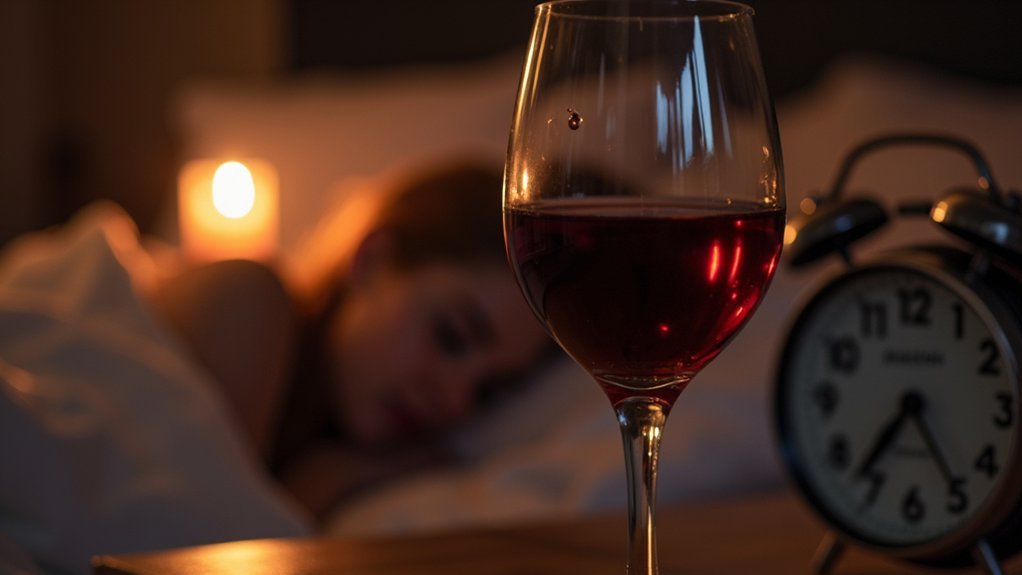
When you drink alcohol before bed, your brain experiences a two-stage disruption that systematically destroys your REM sleep cycles.
Initially, alcohol acts as a sedative, making you feel drowsy. However, as your body metabolizes the alcohol, your brain activity increases dramatically, fragmenting your sleep patterns.
This metabolic process reduces your REM sleep considerably, which is vital for cognitive function and emotional regulation. You’ll experience more frequent awakenings throughout the night, preventing restorative slow-wave sleep from occurring naturally.
Additionally, alcohol consumption elevates your heart rate during sleep, creating physical restlessness that further compromises sleep quality.
Research shows that stopping alcohol intake at least four hours before bedtime helps restore normal sleep patterns and improves overall restfulness.
The Resveratrol Dosage Reality Check
You’d need to drink over 100 glasses of red wine to get the resveratrol amounts used in research studies that show potential health benefits.
Most red wine contains only 1-3 mg of resveratrol per bottle, while therapeutic studies use 100 mg or more.
The scientific evidence supporting red wine’s health claims crumbles when you realize you can’t practically consume enough resveratrol through wine to make any meaningful difference.
Therapeutic Amounts Require Excess
Although resveratrol has garnered attention as red wine’s supposed miracle compound, the reality of dosage requirements reveals a sobering truth: you’d need to consume over 100 glasses of wine to reach therapeutic levels.
The belief that red wine helps deliver meaningful health benefits through resveratrol simply doesn’t hold up to scientific scrutiny. Each glass contains only 1-3 mg of this antioxidant, far below what studies show is necessary for therapeutic effects.
Consuming excessive amounts to boost resveratrol intake creates dangerous health risks that completely overshadow any potential benefits. The alcohol’s negative effects on your liver, heart, and brain far outweigh the minimal antioxidant gains.
You’re better off obtaining resveratrol from grapes, berries, or peanuts, which offer higher concentrations without alcohol’s harmful consequences.
Weak Scientific Evidence
Beyond the dosage problem lies an even more fundamental issue: the scientific evidence supporting red wine’s health benefits is remarkably weak. You’ll find that studies promoting wine’s advantages often used flawed methodologies, comparing moderate drinkers to unhealthy former drinkers rather than lifetime abstainers.
| Study Quality | Health Claims | Actual Evidence |
|---|---|---|
| High-quality studies | No cardiovascular benefits | Consistent findings |
| Low-quality studies | Significant heart protection | Inconsistent results |
| Meta-analyses | Mixed outcomes | No clear advantage |
| Longevity research | Increased lifespan | No reliable connection |
| Resveratrol trials | Anti-aging effects | Minimal impact |
The science behind moderate drinking reveals these myths crumble under scrutiny. Major health organizations haven’t established safe alcohol consumption levels, emphasizing that any potential benefits come more effectively from fruits and vegetables—without alcohol’s risks.
Sleep Architecture Changes From Evening Wine Consumption

You’ve probably heard that a glass of red wine before bed helps you sleep better, but the science tells a different story.
Evening wine consumption actually disrupts your brain’s natural sleep architecture by greatly reducing REM sleep—the stage essential for memory consolidation and emotional processing.
You’ll also experience less slow-wave sleep, which your body needs for physical restoration and immune system recovery.
REM Sleep Disruption
While that evening glass of red wine might seem like the perfect nightcap to ease you into slumber, it’s actually sabotaging your sleep quality in ways you probably don’t realize.
Alcohol specifically targets your REM sleep, the essential stage responsible for cognitive function and emotional regulation. When you drink wine before bed, you’re suppressing this important sleep phase, leaving you mentally foggy and emotionally unstable the next day.
The disruption doesn’t stop there. Alcohol metabolism creates fragmented sleep patterns, causing you to wake multiple times throughout the night.
Your heart rate also elevates during sleep, adding cardiovascular stress when your body should be recovering. This combination transforms what should be restorative rest into a cycle of poor-quality, interrupted sleep that leaves you feeling unrested despite spending adequate time in bed.
Slow-Wave Sleep Reduction
If you think REM disruption is concerning, the damage wine inflicts on your slow-wave sleep is equally alarming.
When you consume wine in the evening, you’re directly reducing the amount of this vital deep sleep phase that your body needs for restorative rest. Alcohol use fundamentally alters your sleep architecture, stealing precious slow-wave sleep that’s essential for physical recovery and memory consolidation.
Your compromised sleep quality manifests through:
- Increased nighttime awakenings as your body metabolizes the alcohol
- Elevated heart rate during sleep, preventing proper recovery processes
- Fragmented sleep patterns that leave you feeling unrefreshed
While wine’s sedative effects might fool you into thinking you’re sleeping well, you’re actually experiencing markedly impaired restorative sleep that undermines your body’s natural healing mechanisms.
Debunking the French Paradox Connection to Better Rest
Although the French paradox has long suggested that red wine consumption contributes to better heart health and improved sleep, this connection rests on fundamentally flawed research.
You’ll find that France’s heart attack rates mirror other European countries, debunking claims about red wine’s protective effects.
Scientific evidence reveals alcohol consumption disrupts REM sleep cycles, causing frequent nighttime awakenings rather than promoting restful sleep. Even moderate drinkers experience elevated heart rates during sleep, directly contradicting the notion that wine improves sleep quality.
Health organizations consistently emphasize there’s no safe or beneficial level of alcohol consumption.
Instead of relying on red wine for better rest, you should explore proven alternatives that genuinely support both heart health and quality sleep.
Heart Rate Elevation During Alcohol-Influenced Sleep
Beyond the disrupted REM cycles, red wine creates another considerable barrier to quality rest through its direct impact on your cardiovascular system.
When you consume alcohol before bed, your heart rate elevates during sleep, forcing your body to work harder when it should be recovering. This cardiovascular stress prevents the deep, restorative sleep your body needs.
The health effects extend beyond just feeling tired:
- Your brain experiences increased activity from alcohol withdrawal, disrupting natural sleep patterns
- You’ll likely wake up more frequently throughout the night due to elevated heart rate
- The initial relaxing sensation masks your body’s actual physiological stress response
Red wine’s impact on sleep quality varies greatly between individuals, but alcohol consumption consistently interferes with your heart’s ability to slow down during rest.
Healthier Alternatives for Natural Sleep Enhancement
While red wine disrupts your body’s natural sleep mechanisms, several proven alternatives can genuinely improve your rest without the cardiovascular stress.
Herbal teas like chamomile and valerian root promote relaxation naturally, delivering better sleep quality than alcohol ever could. You’ll also benefit from consuming magnesium-rich foods such as almonds and spinach, which regulate neurotransmitters for deeper rest.
Natural sleep aids like chamomile tea and magnesium-rich almonds outperform alcohol by supporting your body’s rest mechanisms instead of disrupting them.
Melatonin supplements taken thirty minutes before bed signal your brain to prepare for sleep more effectively than wine.
Light physical activities like yoga reduce stress levels without alcohol’s disruptive effects.
Establishing a calming bedtime routine with reading or meditation helps your body recognize it’s time to wind down, creating genuinely restorative sleep outcomes.
Frequently Asked Questions
Can Red Wine Remove Plaque From Arteries?
You can’t remove arterial plaque with red wine. Despite containing antioxidants like resveratrol, you’d need impractical amounts for any benefit. You’ll get better cardiovascular results from proper diet and exercise instead.
Why Does Red Wine Keep You up at Night?
Red wine keeps you awake because alcohol disrupts your sleep cycles, causing frequent awakenings. It reduces REM sleep, elevates your heart rate, and can trigger dehydration, preventing restorative rest.
Is It Unhealthy to Drink Red Wine Every Night?
Yes, you’re putting your health at risk drinking red wine nightly. You’ll increase cancer risks, disrupt sleep quality, and potentially develop alcohol dependency. No safe alcohol consumption level exists according to major health organizations.
Why Does Red Wine Make Me Wake up at 3am?
Red wine disrupts your sleep cycles as your body metabolizes the alcohol, triggering increased brain activity and elevated heart rate during the night, which commonly causes you to wake around 3am.
In Summary
You’ve learned that red wine’s sleep benefits are largely mythical. While you might feel drowsy initially, you’re actually disrupting your REM cycles and sleep architecture. The melatonin and resveratrol levels aren’t high enough to provide real benefits, and you’ll experience elevated heart rate throughout the night. Instead of reaching for that evening glass, you’ll sleep better by choosing proven alternatives like herbal teas or proper sleep hygiene practices.


