
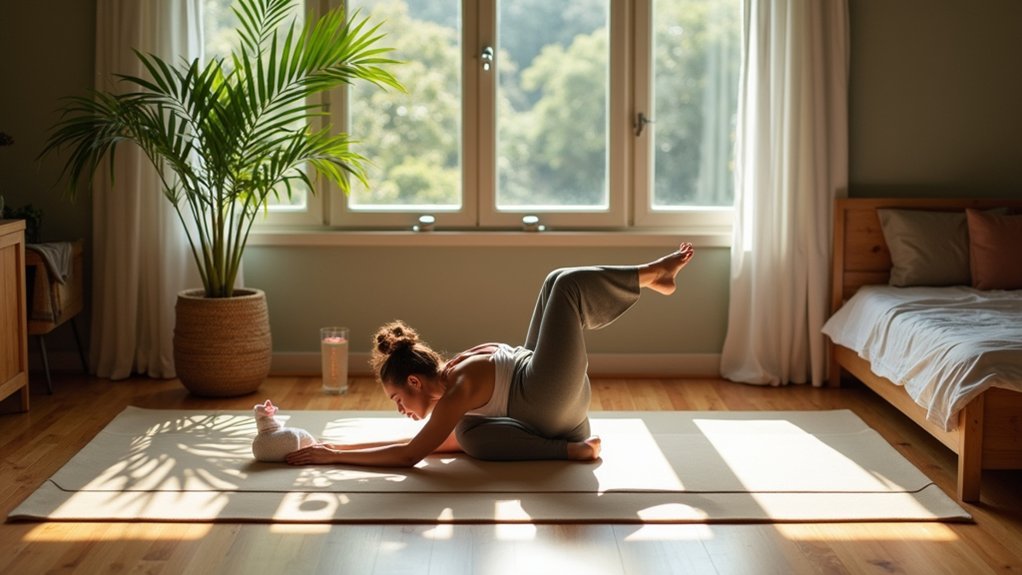
Start your morning with these five yoga stretches to improve tonight’s sleep: Child’s Pose activates your parasympathetic nervous system while stretching your spine and hips. Cat-Cow releases spinal tension and increases circulation. Downward-Facing Dog boosts blood flow and mental clarity. Standing Forward Bend calms your nervous system through deep breathing. Mountain Pose builds mindful body awareness and promotes better posture. These gentle movements regulate your stress response and reduce physical tension that interferes with rest, and there’s specific techniques that maximize each pose’s sleep-enhancing benefits.
Child’s Pose for Deep Relaxation and Stress Relief

When you settle into Child’s Pose first thing in the morning, you’re giving your body a gentle wake-up call that stretches your hips, pelvis, thighs, and spine while immediately calming your mind.
This restorative position offers powerful stress relief by activating your parasympathetic nervous system as you take slow, deep breaths.
Cat-Cow Stretch to Release Spinal Tension
After grounding yourself in Child’s Pose, you’ll want to gently mobilize your spine with the Cat-Cow stretch. This accessible stretch combines Marjaryasana and Bitilasana, alternating between arching and rounding your back to promote flexibility and release tension.
Start on hands and knees, then arch your back while lifting your head for Cow pose. Take a deep breath, then round your spine toward the ceiling for Cat pose. This dynamic movement increases spinal fluid circulation, lubricating your spine to reduce discomfort from overnight stiffness.
The Cat-Cow stretch stimulates abdominal organs, supporting digestive health while addressing spinal tension.
Regular practice in your morning routine helps improve posture and reduce back pain, making it perfect for all fitness levels seeking spinal relief.
Downward-Facing Dog for Energy and Circulation
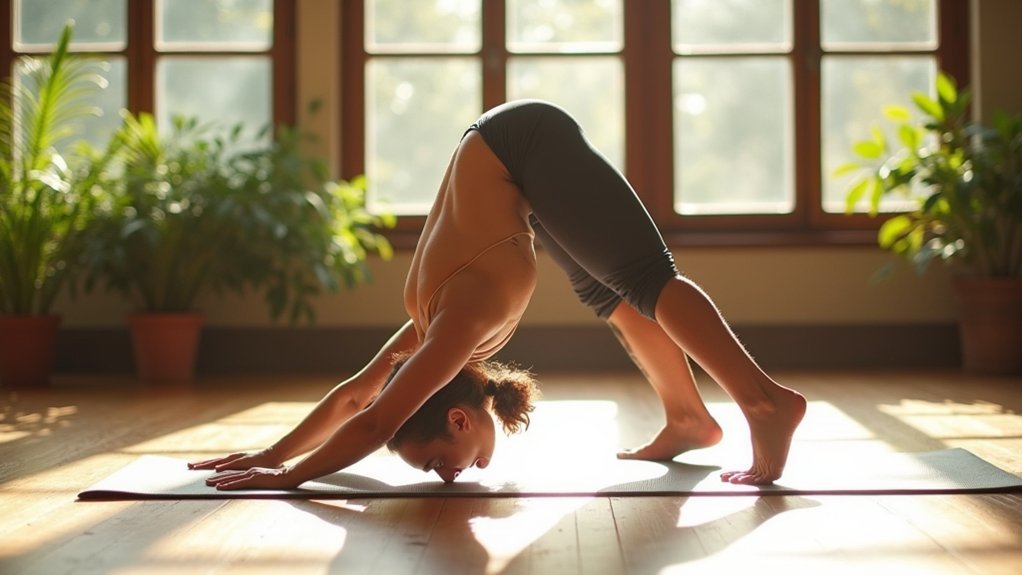
Following your Cat-Cow sequence, shift into Downward-Facing Dog to invigorate your body and boost circulation for the day ahead. This mild inversion promotes blood flow to your brain and essential organs, naturally increasing energy levels.
You’ll stretch and strengthen your arms, shoulders, spine, and hamstrings simultaneously, enhancing overall flexibility.
Focus on deep breathing as you hold the pose for several breaths. This mindfulness practice helps release tension throughout your body while calming your nervous system. The combination of physical stretch and mental clarity reduces stress, setting a peaceful tone for better rest later.
Downward-Facing Dog’s therapeutic benefits extend to alleviating fatigue and sciatica symptoms, making it an excellent addition to your morning routine for improved circulation and sustained energy.
Standing Forward Bend to Calm Your Nervous System
As you shift from Downward-Facing Dog, the Standing Forward Bend (Uttanasana) offers a gentle way to calm your nervous system while maintaining the flow of your morning routine. This pose stretches your hamstrings and lower back, promoting flexibility while encouraging deep breathing that reduces stress and promotes relaxation.
| Physical Benefits | Mental Benefits |
|---|---|
| Enhanced flexibility in hamstrings | Reduced stress and anxiety |
| Improved posture alignment | Increased mindfulness focus |
| Tension relief in lower back | Clearer mental state |
| Better blood flow to head | Activated parasympathetic response |
Hold this standing forward bend for several breaths, allowing the pose to activate your parasympathetic nervous system. The increased blood flow to your head enhances focus while the mindfulness aspect sets a positive tone for your day ahead.
Mountain Pose for Mindful Body Awareness
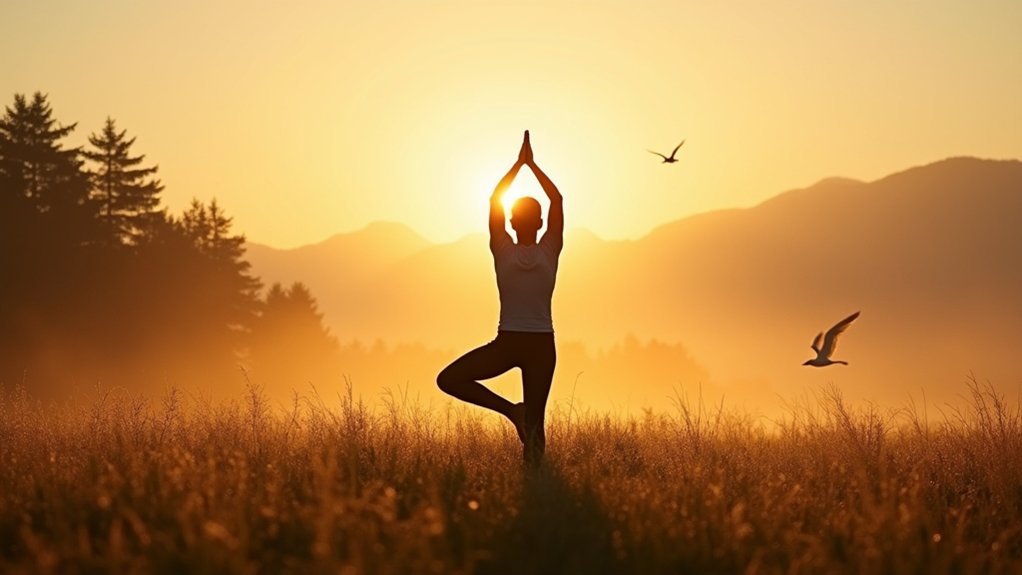
The foundation of all standing poses, Mountain Pose (Tadasana) transforms seemingly simple stillness into profound body awareness that prepares you for deeper rest later.
This grounding posture creates stability through your entire body while promoting mindfulness and better posture.
To practice Mountain Pose effectively:
- Stand tall with feet hip-width apart, distributing weight evenly
- Engage your core while lengthening your spine toward the ceiling
- Relax your shoulders away from your ears to relieve tension
- Focus on your breath for 30-60 seconds, maintaining steady rhythm
This pose enhances flexibility while creating an energized body that’s simultaneously calm.
The grounding effect helps you connect with the present moment, building body awareness that carries throughout your day and supports restful sleep tonight.
Frequently Asked Questions
Is It Good to Stretch as Soon as You Wake Up?
Yes, you’ll benefit from stretching immediately after waking up. It’ll reduce stiffness, boost circulation, and energize your body. You’ll also relieve tension and establish a healthy routine that promotes better physical and mental wellness.
What Stretch Should You Do Every Morning?
You should do the Cat-Cow stretch every morning because it enhances spinal flexibility and warms up your back effectively. It’s perfect for easing into movement and reducing tension you’ve accumulated overnight.
How to Loosen up a Stiff Back in the Morning?
You’ll want to start with Cat-Cow stretches to promote spinal flexibility, then move into Child’s Pose and Downward-Facing Dog. Add Cobra Stretch and Standing Forward Bend to elongate your spine and increase blood flow effectively.
How Long Should Morning Stretches Take?
You should spend 5-15 minutes on morning stretches, allowing 30-60 seconds per stretch with deep breathing. Even a quick 5-minute session targeting key tension areas like your back and neck provides significant benefits.
In Summary
You’ll find these five stretches transform your mornings and set you up for restful nights ahead. They don’t require special equipment or extensive time—just a few minutes of mindful movement. As you practice these poses regularly, you’ll notice improved flexibility, reduced stress, and better sleep quality. Start with what feels comfortable and gradually build your routine. Your body will thank you for this gentle investment in your overall well-being and recovery.


