

You can enhance your sleep naturally by using herbs like valerian root and chamomile, which work by increasing GABA levels and binding to brain receptors that promote relaxation. Take herbal tinctures 30-60 minutes before bedtime, or brew calming teas by steeping dried herbs for 5-10 minutes. Essential oils like lavender can be diffused or added to baths for muscle relaxation. Always consult a healthcare provider before starting any herbal protocol to discover the complete approach to restful nights.
Understanding the Science Behind Herbal Sleep Aids

While you might assume herbal sleep aids work through placebo effects alone, these natural remedies actually contain powerful compounds that directly influence your brain’s sleep-wake mechanisms.
Chamomile’s active ingredient apigenin binds directly to benzodiazepine receptors, triggering drowsiness and reducing anxiety naturally. Valerian root works differently by increasing GABA availability, a vital neurotransmitter that regulates your sleep cycles and calms restlessness.
These herbs don’t work in isolation. When you combine valerian root with hops and passionflower, their synergistic effects amplify sleep-promoting benefits.
Adaptogenic herbs like ashwagandha target your stress response systems, indirectly supporting restful sleep through relaxation. Understanding how these natural compounds interact with your neurotransmitter systems helps you make informed choices about incorporating herbal sleep aids into your nightly routine.
Essential Herbs That Promote Deep, Restorative Sleep
You’ll find valerian root and chamomile stand out as two powerhouse herbs for achieving deep, restorative sleep.
Valerian’s compounds interact with GABA receptors to regulate your sleep patterns, while chamomile’s flavonoids bind to benzodiazepine receptors in your brain to promote profound relaxation.
Understanding proper dosages and preparation methods for these herbs will help you maximize their sleep-enhancing benefits safely and effectively.
Valerian and Chamomile Benefits
When you’re searching for natural sleep aids that deliver genuine results, valerian root and chamomile stand out as two of the most scientifically-backed herbs available.
Valerian root works by enhancing GABA levels in your brain, promoting relaxation and helping you fall asleep faster without next-day drowsiness. This powerful natural remedy markedly improves sleep quality for those struggling with insomnia.
Chamomile, often called “sleepy tea,” contains apigenin—a flavonoid that binds to benzodiazepine receptors in your brain, naturally inducing drowsiness.
Beyond better sleep, chamomile reduces anxiety and supports overall wellness. You can enjoy both herbs in various forms, including teas, tinctures, and capsules, giving you flexible options to achieve restful sleep through these proven natural remedies.
Dosage and Preparation Methods
Since proper dosage and preparation methods directly impact the effectiveness of sleep-promoting herbs, you’ll need to understand the ideal ways to use these natural remedies.
For tinctures like valerian root or passionflower, take 30-60 drops thirty minutes before bedtime, adjusting based on your response.
Create calming tea by steeping 1-2 teaspoons of dried chamomile or lemon balm in 8-16 oz hot water for 5-10 minutes.
Herbal supplements typically require 300-600 mg taken 30 minutes to two hours before sleep.
Essential oils work effectively with 3-5 drops in a diffuser or mixed with carrier oil for topical application.
You can also add 1-2 cups of dried lavender to your bath for muscle relaxation.
Safe Dosages and Timing for Maximum Sleep Benefits

You’ll need precise dosages and proper timing to maximize these herbs’ sleep-promoting benefits while avoiding potential side effects.
Taking the right amount at the ideal time before bed guarantees your body can fully absorb and utilize each herb’s calming properties.
Following established safety guidelines protects you from adverse reactions and helps you build an effective, sustainable bedtime routine.
Proper Herbal Dosages
Although herbal sleep aids offer gentle relief from restlessness, finding the right dosage and timing makes all the difference between a peaceful night and continued tossing and turning. Understanding proper herbal dosages guarantees you’ll maximize these natural herbs for restful sleep without unwanted side effects.
For chamomile tea, steep 1-2 teaspoons of dried flowers for 5-10 minutes, drinking it 30-60 minutes before bed.
Valerian root works best at 300-600 mg taken 30 minutes to 2 hours before sleep.
Passionflower requires 0.5-2 grams of dried herb or 20-40 drops of tincture 30 minutes before bedtime.
Ashwagandha extract should be taken at 300-500 mg doses, while lemon balm works effectively at 300-600 mg or 1-2 tablespoons as tea.
Optimal Timing Guidelines
When you’re establishing your herbal sleep routine, timing becomes just as essential as the dosage itself for achieving peak benefits.
Strategic ideal timing will help your body prepare for rest and support your natural sleep cycle.
Here’s how to maximize your herbs for sleep effectiveness:
- Take tinctures 30-60 minutes before bed – Valerian root and passionflower need time to produce their relaxing effect in your system.
- Steep herbal teas 30 minutes prior to sleep – Chamomile and lavender teas should be enjoyed with enough lead time for absorption.
- Avoid stimulating herbs near bedtime – Skip peppermint and similar energizing varieties in your evening routine.
- Maintain consistent timing daily – Your daily routine should include herbs at the same time nightly for ideal results.
Safety Precautions Matter
Perfect timing means nothing without proper safety measures in place. You must consult with your healthcare provider before using any herbs to help with sleep, especially if you’re taking medications or have existing health conditions. These safety precautions guarantee your natural and effective approach doesn’t create unexpected complications.
| Herb | Dosage | Safety Notes |
|---|---|---|
| Valerian Root | 300-600 mg | Start low, monitor effects |
| Chamomile Tea | 1-2 tsp/cup | Generally safe for most |
| Lemon Balm | Begin with minimal doses | Gradual increase only |
| Passionflower | Start conservatively | Watch for interactions |
Always begin with lower dosages and gradually increase while monitoring for adverse effects. This methodical approach helps you identify what works best for your body without overwhelming your system or causing unwanted reactions.
Brewing the Perfect Bedtime Herbal Tea Blend
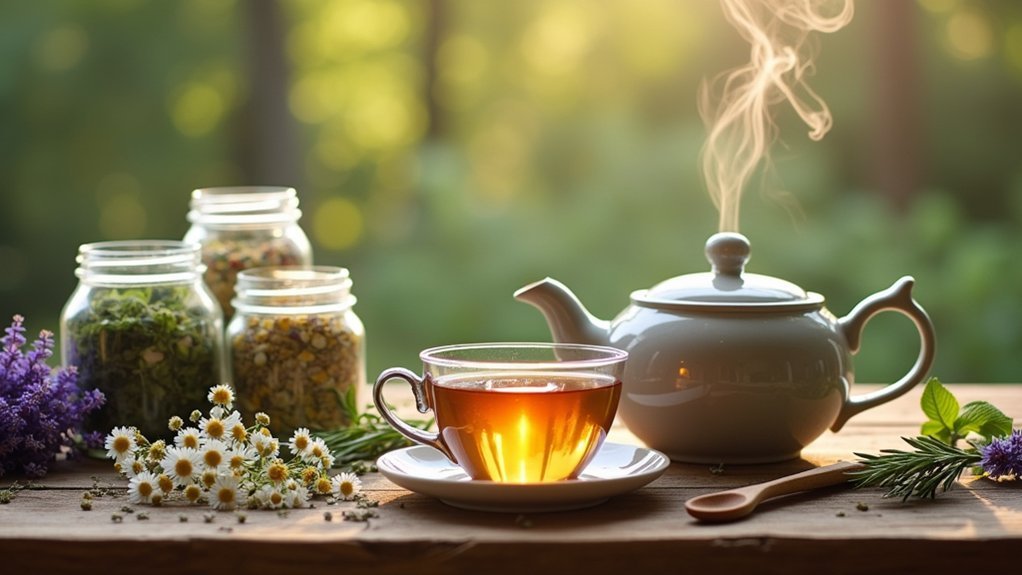
How can you transform a simple cup of tea into a powerful sleep aid? Brewing the perfect bedtime herbal tea blend requires selecting calming herbs like chamomile, lemon balm, and valerian root for their proven sleep-promoting properties.
These herbs work together to create an effective relaxation remedy for your bedtime routine.
- Measure your herbs – Use 1-2 teaspoons of selected herbs per 8-16 ounces of hot water for ideal potency.
- Steep properly – Allow your herbal tea to steep for 5-10 minutes to extract beneficial compounds effectively.
- Add flavor enhancers – Include peppermint or fresh ginger to boost relaxing effects and improve taste.
- Time it right – Strain and drink 30 minutes before bed for maximum sleep support and relaxation benefits.
Creating Calming Aromatherapy Routines With Sleep Herbs
As you discover the power of herbal aromatherapy, you’ll find that creating a calming bedtime routine extends far beyond drinking tea. Incorporate essential oils from calming herbs like chamomile and lavender into your diffuser, as their soothing scents interact with brain neurotransmitter systems to promote relaxation and improve sleep quality.
Transform your bath into a spa-like sanctuary by adding lavender oil drops to warm water, reducing tension before bed.
Create a DIY sleep pillow spray by mixing distilled water with lavender and chamomile oils, then lightly mist your bedding for enhanced aromatherapy benefits.
Consider using herbal-scented sleep masks to block light while delivering calming aromas.
Combine these aromatherapy techniques with chamomile tea for a thorough approach to restful sleep.
Combining Herbs With Lifestyle Changes for Better Sleep
While herbs provide natural sleep support, combining them with intentional lifestyle adjustments creates a powerful synergy that’ll transform your nights.
Herbal medicine works best when paired with consistent habits that promote relaxation and support your physical health.
Here’s how to create a thorough approach for healthy sleep:
- Exercise earlier in the day – Moderate aerobic activity improves sleep quality, especially when you follow up with calming herbal teas that help calm your mind.
- Stick to consistent bedtimes – Regular sleep schedules regulate your internal clock, while herbs like chamomile and valerian root enhance this natural rhythm.
- Design a peaceful environment – Soft lighting combined with herbal-infused teas signals your body to unwind.
- Practice mindfulness with herbs – Meditation or deep breathing alongside your nightly routine amplifies relaxation benefits and helps improve sleep naturally.
Avoiding Interactions Between Herbs and Medications
Though herbs offer gentle sleep support, certain combinations with prescription medications can create serious health risks that you need to understand before adding any herbal remedies to your routine.
Always consult your healthcare provider before starting any herbal supplements, especially if you’re taking prescription drugs. Some herbs can greatly interact with medications and alter their effectiveness.
St. John’s Wort reduces the potency of antidepressants, birth control pills, and blood thinners by affecting liver enzymes.
Valerian root enhances sedatives and alcohol effects, potentially causing dangerous drowsiness or breathing problems.
Ginkgo biloba increases bleeding risk when combined with blood-thinning medications.
Disclose all herbal supplements to your healthcare provider to guarantee safe treatment management.
Establishing Your Personalized Herbal Sleep Protocol
Creating an effective herbal sleep protocol requires understanding your specific sleep challenges and selecting remedies that address your unique needs.
Successful herbal sleep remedies begin with identifying your specific sleep patterns and matching them to targeted botanical solutions.
Whether you experience insomnia or stress-related sleep issues, choosing the right herbs work better when matched to your body’s specific requirements.
Here’s how to establish your personalized herbal sleep protocol:
- Identify your sleep challenges – Determine if you have trouble falling asleep, staying asleep, or both to select appropriate herbs like chamomile or valerian root.
- Choose suitable preparations – Consider drinking chamomile tea before bed, using tinctures for faster absorption, or enjoying lavender-infused baths.
- Monitor your body’s response – Start with recommended doses and adjust combinations based on effectiveness.
- Consult with a healthcare provider – Verify safety, especially with existing conditions or medications, to help support your sleep naturally.
Monitoring Progress and Adjusting Your Natural Sleep Routine
Once you’ve established your personalized herbal sleep protocol, you’ll need to track how well it’s working and make adjustments as needed. Monitoring progress requires keeping a detailed sleep journal or using tracking apps to record your sleep quality, duration, and any episodes of restless sleep.
Document which herbs you’re taking and their dosages to identify patterns. Adjust dosage gradually based on your results, starting conservatively and increasing slowly. Watch for side effects like morning grogginess or digestive issues.
If you’re still experiencing poor natural sleep routine outcomes, experiment with different herb combinations like pairing chamomile with valerian.
Regularly reassess your herbal sleep approach since lifestyle changes, stress levels, and environmental factors can impact effectiveness. Consult healthcare professionals if adverse reactions occur during your monitoring process.
Frequently Asked Questions
What Herb Promotes Restful Sleep?
You’ll find chamomile particularly effective for promoting restful sleep since it contains apigenin, which binds to brain receptors that encourage relaxation and drowsiness, making it perfect for bedtime.
What Is the Best Natural Thing to Help You Sleep at Night?
You’ll find chamomile tea works exceptionally well since it contains apigenin that binds to brain receptors, promoting relaxation and drowsiness naturally for better sleep quality nightly.
What Do Native Americans Use for Sleep Remedies?
You’ll find Native Americans traditionally use passion flower and chamomile for their calming effects, white sage for cleansing rituals, hops for sedative properties, and cedar in smudging ceremonies to create peaceful sleep environments.
What Is the Best Herb to Drink at Night?
You’ll find chamomile tea’s your best nighttime choice. It contains apigenin, a flavonoid that binds to brain receptors, naturally promoting drowsiness and relaxation. Drink it thirty minutes before bedtime for ideal sleep-inducing effects.
In Summary
You’ve now got the tools to transform your nights naturally. Start with one herb, monitor how you respond, and gradually build your personalized routine. Don’t rush the process—your body needs time to adjust to herbal sleep aids. Keep a sleep journal to track what’s working and what isn’t. Remember, consistency beats perfection. Stick with your chosen herbs and lifestyle changes for at least two weeks before making adjustments to see real results.


