

You’ll experience noticeably better sleep when you use lavender oil because its active compounds—linalool and linalyl acetate—directly interact with your brain’s neurotransmitter systems to reduce nervous system agitation and promote deep relaxation. These compounds enhance GABA activity while reducing cortisol levels, leading to measurable physiological changes like lower heart rate and blood pressure. Clinical studies across diverse populations consistently show improved sleep quality, reduced insomnia symptoms, and enhanced sleep duration when using lavender aromatherapy consistently before bedtime, and there’s much more to discover about optimizing your sleep routine.
The Science Behind Lavender’s Sleep-Promoting Properties
While countless sleep aids flood the market with promises of better rest, lavender oil stands out because its effectiveness stems from genuine scientific mechanisms.
When you inhale lavender through aromatherapy, you’re exposing yourself to linalool and linalyl acetate—compounds that directly interact with your brain’s neurotransmitter systems. These chemicals don’t just mask sleep problems; they actively promote relaxation by reducing nervous system agitation.
Research demonstrates that lavender oil’s calming effects improve sleep quality across diverse populations, from healthy students to cardiac patients.
Lavender oil’s sleep-enhancing properties have been scientifically validated across multiple studies involving both healthy individuals and patients with medical conditions.
You’ll experience reduced insomnia symptoms and enhanced sleep duration because lavender fundamentally alters your sleep architecture. This natural approach supports your overall health and well-being without pharmaceutical side effects, making it an evidence-based solution for better rest.
Clinical Research on Lavender Oil and Sleep Quality
Although lavender’s sleep benefits seem almost too good to be true, clinical research validates what aromatherapy practitioners have long observed. A systematic review of eight randomized controlled trials demonstrates that lavender oil aroma inhalation produces small to moderate improvements in sleep quality across diverse populations.
These clinical studies tested both healthy individuals and those suffering from insomnia, positioning lavender as an effective non-pharmacological intervention for sleep disturbances.
Related guide: Best Castor Oil Packs for Liver Support & Deeper Sleep
You’ll find particularly encouraging results among specific demographics, with midlife women experiencing notable relief from insomnia symptoms.
However, researchers acknowledge methodological limitations in current studies. While existing evidence supports lavender oil’s sleep-enhancing properties, inconsistencies in study designs and participant criteria mean you should expect more rigorous trials before definitive conclusions emerge about lavender’s full therapeutic potential.
How Lavender Oil Affects the Nervous System
The mechanisms behind lavender oil’s sleep-enhancing effects stem from its intricate interaction with your nervous system. When you’re inhaling essential oils like lavender, compounds such as linalool and linalyl acetate act as natural anxiety relievers, directly influencing your brain’s relaxation pathways.
| Component | Action | Benefit |
|---|---|---|
| Linalool | GABA enhancement | Reduces agitation |
| Linalyl acetate | Cortisol reduction | Lowers stress |
| Combined compounds | Heart rate decrease | Calming effects |
These chemical interactions create measurable changes in your body. Your heart rate and blood pressure drop, while cortisol levels decrease notably. Lavender oil enhances GABA activity in your brain, the neurotransmitter responsible for quieting mental chatter and promoting calmness. This extensive nervous system support translates directly into improved sleep quality, offering you a natural alternative to pharmaceutical sleep aids.
Aromatherapy Methods for Better Sleep With Lavender
Since you understand how lavender oil calms your nervous system, you can now harness these benefits through specific aromatherapy techniques that directly enhance your sleep experience.
Direct inhalation provides immediate results – simply breathe in lavender oil from the bottle to reduce insomnia symptoms.
Use a diffuser thirty minutes before bedtime to fill your room with calming scent that promotes relaxation.
Create pillow mist by mixing lavender oil with water and spraying your bedding for improved sleep quality.
Place several drops on a tissue inside your pillowcase for subtle, continuous aromatherapy throughout the night.
Keep dried lavender sachets in your linens for gentle fragrance that reduces anxiety.
Inhaling lavender consistently helps you wake feeling refreshed and well-rested.
Topical Application Techniques for Nighttime Use
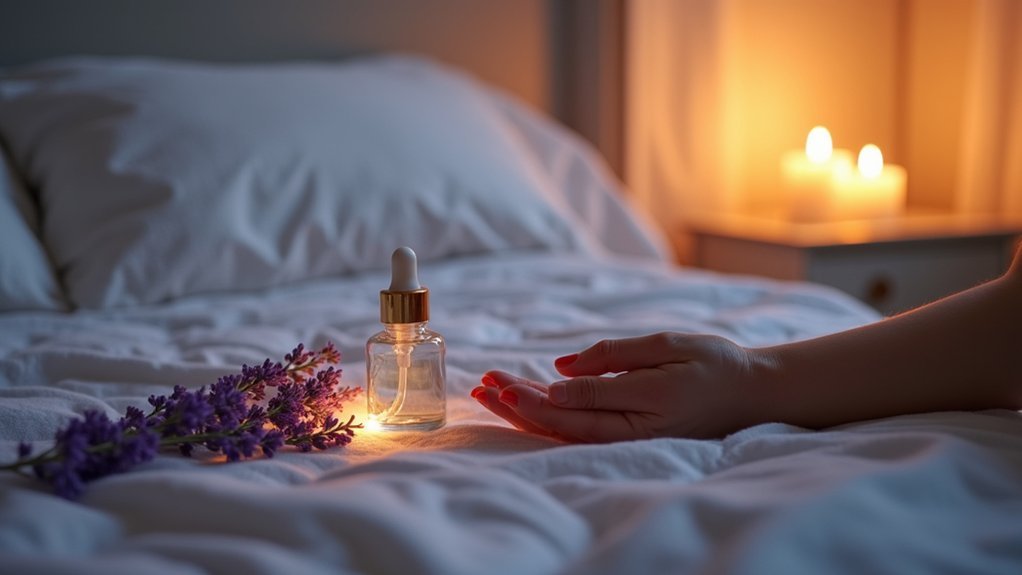
Why limit lavender’s sleep benefits to aromatherapy when topical application offers direct, targeted relief? You can harness lavender oil’s power through strategic skin application for your nighttime routine.
Before first use, conduct a patch test to check for sensitivities. Dilute lavender oil with carrier oil at 0.5% to 2% concentration—that’s 3 to 12 drops per ounce—to prevent irritation.
Effective topical application techniques include:
- Apply 2-3 drops on temples or feet soles before bedtime
- Combine with massage therapy to enhance relaxation
- Use lavender-infused lotions for added skin nourishment
These methods deliver lavender’s compounds directly through your skin, promoting deeper relaxation than inhalation alone.
Topical application creates sustained contact, allowing gradual absorption that can improve sleep quality throughout the night.
Choosing the Right Type of Lavender Oil for Sleep
When you’re shopping for lavender oil to improve your sleep, you’ll want to focus on Lavandula angustifolia, which offers the most proven calming benefits for nighttime use.
You should prioritize 100% pure, organic oils that are free from synthetic additives, pesticides, and herbicides to guarantee maximum therapeutic effectiveness.
Look for products stored in dark glass bottles, as proper packaging preserves the oil’s potency and helps maintain its sleep-enhancing properties over time.
Lavandula Angustifolia Benefits
The potency of lavender oil depends heavily on the specific variety you choose, with Lavandula angustifolia standing out as the gold standard for sleep enhancement.
This essential oil delivers proven benefits through its unique chemical composition, making it your most reliable choice for improving rest quality.
When you use Lavandula angustifolia for aromatherapy, you’ll experience:
- Natural sedation from linalool and linalyl acetate compounds that calm your nervous system
- Improved sleep architecture with measurable increases in both quality and duration
- Safe, gentle effects without the side effects associated with conventional sleep medications
Clinical trials consistently show that inhaling this specific lavender variety produces small to moderate sleep improvements, particularly for those struggling with insomnia.
You can apply it through diffusers or pillow mists to reduce restlessness effectively.
Quality and Purity Standards
Five critical factors determine whether your lavender oil will actually improve your sleep or waste your money.
First, verify you’re buying 100% pure lavandula angustifolia without synthetic additives, pesticides, or herbicides that compromise therapeutic benefits.
Second, examine the storage container – quality lavender oil comes in dark glass bottles that protect against light degradation and preserve potency.
Third, demand purity certifications or testing results from reputable sources that verify concentration levels and confirm authenticity.
Fourth, check dilution guidelines for safe topical application: use 0.5% to 2% concentration, which equals 3 to 12 drops per ounce of carrier oil.
These standards guarantee you’ll experience lavender oil’s full sleep-enhancing potential rather than purchasing an ineffective product.
Optimal Dosage and Timing for Maximum Effectiveness
Getting the right amount of lavender oil at the proper time makes all the difference in how well you’ll sleep.
You’ll need to evaluate both the application method you’re using and when you apply it relative to your bedtime.
The timing and dosage work together to maximize lavender’s natural sleep-promoting properties.
Recommended Daily Amounts
Most sleep experts recommend using 2-3 drops of lavender oil for ideal rest enhancement, whether you’re applying it directly to your temples and feet or diffusing it in your bedroom.
For topical applications, you’ll want to maintain a dilution of lavender oil between 0.5% to 2%, which translates to 3-12 drops per ounce of carrier oil.
Here’s your daily lavender routine for better sleep:
- Direct application: Apply 2-3 drops to temples or soles of feet 30-60 minutes before bed
- Pillow mists: Lightly spray diluted lavender on your pillow 30 minutes prior to sleep
- Aromatherapy: Diffuse or begin inhaling lavender aroma 30 minutes to one hour before bedtime
This timing allows the compounds to improve sleep quality through best absorption and inhalation benefits.
Best Application Times
While knowing the right amounts matters, timing your lavender oil application correctly can make the difference between tossing and turning versus enjoying deep, restorative sleep.
For ideal results, apply lavender oil approximately 30 minutes before bedtime. This timing allows the calming effects to take hold as you prepare for sleep. Whether you’re using direct application on temples or feet, or running a diffuser with a few drops mixed with water, this 30-minute window maximizes effectiveness.
If you’re using a diffuser, let it run for at least 30 minutes before sleep to enhance the room’s aroma and promote relaxation. Dried lavender sachets placed with bed linens work well too.
Consistency is essential—incorporating lavender oil into your nightly routine reinforces its sleep quality benefits over time.
Comparing Lavender Oil to Traditional Sleep Medications
When you’re weighing your sleep improvement options, lavender oil offers distinct advantages over traditional sleep medications. This non-pharmacological intervention provides clinically validated benefits for sleep quality without the harsh side effects that plague conventional treatments.
Unlike traditional sleep medications, lavender oil delivers:
Lavender oil provides proven sleep benefits without the dependency, grogginess, or side effects of traditional pharmaceutical sleep aids.
- No dependency risk – You can use it long-term without withdrawal symptoms or addiction concerns.
- Zero daytime drowsiness – You’ll wake refreshed instead of groggy and impaired.
- Dual-action benefits – It reduces anxiety while improving sleep, comparable to lorazepam’s effectiveness.
The calming effects on your nervous system make lavender oil a gentler yet effective alternative.
Studies show it provides small to moderate sleep improvements, positioning it as a viable option for sustainable rest enhancement without pharmaceutical complications.
Safety Considerations and Potential Side Effects
While lavender oil offers promising sleep benefits, you’ll need to understand proper safety protocols before incorporating it into your bedtime routine.
You should always perform a patch test when using lavender topically for the first time, and if you’re pregnant or breastfeeding, consult your healthcare provider before use.
Taking these precautions helps you avoid potential allergic reactions and guarantees lavender oil enhances rather than compromises your well-being.
Proper Application Methods
The effectiveness of lavender oil for improving rest quality depends heavily on proper application methods and awareness of safety considerations.
When you apply lavender oil topically, always dilute this essential oil in a carrier oil using a 0.5% to 2% ratio (3-12 drops per ounce). For direct application, place 2-3 drops on your temples or soles of feet.
For aromatherapy benefits, consider these safe methods:
- Use a diffuser with a timer to control exposure duration
- Inhale lavender directly but limit exposure time
- Perform patch tests before first-time use to check for allergic reactions
Be aware of potential side effects including skin irritation, headaches, or gastrointestinal discomfort.
If you’re pregnant or breastfeeding, consult your doctor before using lavender oil, as it may affect hormonal balance.
Pregnancy and Breastfeeding
Although lavender oil offers promising benefits for rest quality, you’ll need extra caution if you’re pregnant or breastfeeding. You should consult a healthcare professional before using lavender oil due to potential hormonal effects. While some studies suggest lavender’s calming effects could help with pregnancy-related anxiety, the evidence isn’t conclusive.
| Safety Consideration | Recommendation |
|---|---|
| Topical Application | Avoid open wounds or irritated skin |
| Ingestion | Not recommended – may cause gastrointestinal discomfort |
| Skin Testing | Always perform patch test first |
| Professional Guidance | Consult healthcare provider before use |
You’re at higher risk for allergic reactions and skin sensitivity during pregnancy and breastfeeding. Always perform a patch test before topical application, and never ingest lavender essential oil as it could lead to adverse effects.
Allergic Reaction Prevention
Before applying lavender oil to your skin, you must take preventive steps to avoid allergic reactions that could disrupt your sleep routine. Some individuals experience sensitivity to lavender oil, making prevention essential for safe use.
Essential steps to prevent allergic reactions include:
- Conduct a patch test – Apply diluted lavender oil to a small skin area and wait 24 hours to monitor for redness, burning, or itching.
- Choose high-quality oils – Select pure lavender oil without synthetic fragrances or additives that increase reaction risk.
- Dilute properly – Mix lavender oil with carrier oil at 0.5% to 2% concentration to minimize skin irritation.
You should consult a doctor before using lavender oil if you’re pregnant, breastfeeding, or have hormone-sensitive cancers, as lavender may affect hormone levels.
Creating a Lavender-Enhanced Sleep Environment
When you’re ready to transform your bedroom into a lavender sanctuary, several simple methods can help you harness this herb’s sleep-promoting benefits.
You can use a diffuser to release lavender aroma throughout your room, creating a restful atmosphere that promotes relaxation naturally.
Spray lavender pillow mist on your bedding to enhance the scent and reduce insomnia symptoms effectively.
Place dried lavender sachets in your pillowcase for continuous, subtle fragrance that also repels moths.
Apply 2-3 drops of lavender oil to your temples or feet before bedtime to alleviate restlessness.
This lavender-enhanced sleep environment utilizes the herb’s soothing properties to improve sleep quality while avoiding conventional sleep medication side effects.
Combining Lavender Oil With Other Natural Sleep Aids
While lavender oil provides excellent sleep benefits on its own, you’ll discover even greater results by pairing it with complementary natural sleep aids.
These combinations create a synergistic effect that enhances relaxation and helps improve sleep quality more effectively than using single remedies alone.
Consider these powerful combinations:
- Lavender oil + Valerian root: This pairing maximizes calming effects while addressing sleep duration and quality.
- Lavender oil + Chamomile tea: The mild sedative properties of chamomile complement lavender’s soothing aromatherapy benefits.
- Lavender oil + Magnesium supplements: Magnesium regulates sleep-promoting neurotransmitters while lavender provides aromatic relaxation.
You can also blend lavender with other essential oils like bergamot or cedarwood to create a thorough sleep environment that promotes deeper, more restorative rest.
Long-Term Benefits of Regular Lavender Oil Use for Sleep
As you establish a consistent lavender oil routine, you’ll experience profound changes that extend far beyond the occasional restful night.
Clinical validation demonstrates that regular lavender oil aromatherapy creates lasting improvements in sleep architecture across diverse populations, from healthy individuals to those with chronic conditions.
Research confirms that consistent lavender aromatherapy produces enduring sleep improvements across all populations, from healthy adults to chronic condition sufferers.
Your long-term benefits include enhanced sleep duration, reduced restlessness, and markedly improved sleep quality.
This holistic approach transforms your sleep hygiene while helping you reduce anxiety naturally. You’ll find yourself less dependent on pharmaceutical sleep aids, avoiding their associated side effects and dependency risks.
Beyond better sleep, you’ll notice sustained mood improvements and decreased aggression.
Lavender oil aromatherapy becomes a cornerstone of extensive wellness, creating positive changes that compound over time through consistent bedtime use.
Frequently Asked Questions
Does Lavender Improve Sleep Quality?
Yes, you’ll experience improved sleep quality with lavender. Its sedative compounds, linalool and linalyl acetate, help you relax and fall asleep easier while enhancing sleep duration and reducing insomnia symptoms effectively.
Why Does Lavender Oil Relax You?
Lavender oil relaxes you because its compounds linalool and linalyl acetate act as natural sedatives, interacting with your brain’s GABA neurotransmitters to reduce anxiety while lowering your heart rate and blood pressure.
How Does Lavender Oil Affect Sleep Quality and Vital Signs in Palliative Care?
Lavender oil greatly improves your sleep quality by reducing nighttime awakenings and extending total sleep duration. It also lowers your heart rate and blood pressure while decreasing anxiety levels during end-of-life care.
What Does Lavender Oil Do for Healing?
You’ll experience faster wound healing when using lavender oil because it promotes skin regeneration, reduces inflammation, and prevents infections. It also improves your sleep quality, creating ideal conditions for recovery.
In Summary
You’ve discovered how lavender oil can transform your sleep quality through its scientifically-proven calming properties. Whether you’re using aromatherapy, topical application, or creating a lavender-enhanced bedroom environment, you’re taking a natural approach to better rest. Remember to follow safety guidelines and consider combining lavender with other sleep aids for maximum effectiveness. By incorporating lavender oil into your nightly routine, you’ll enjoy deeper, more restorative sleep and wake up feeling genuinely refreshed.


