

The best pillow fill material depends on your sleep position and preferences. Down offers luxury softness and lasts 5-10 years, while memory foam provides contouring support for spinal alignment. Buckwheat hulls excel in breathability and durability, lasting 10-20 years. Latex stays cooler than memory foam and maintains support over time. Synthetic options like polyester fiberfill cost less initially but require more frequent replacement. Consider your sleeping style, allergies, and budget when choosing your ideal fill material for maximum comfort.
Natural Vs Synthetic Fill Materials: Understanding Your Options
When choosing a pillow, you’ll face a fundamental decision between natural and synthetic fill materials, each offering distinct advantages that cater to different sleep preferences and budgets.
The pillow filling you choose will significantly impact your sleep quality, comfort level, and long-term investment in better rest.
Natural pillow filling like down provides exceptional softness and adjustability, lasting 5-10 years with proper care. Feathers offer similar benefits but typically last only 1-2 years. Buckwheat hulls excel in support and breathability, potentially lasting 10-20 years.
Synthetic pillows, including memory foam and polyester fiberfill, deliver hypoallergenic properties at lower price points. However, they often lose shape quickly and trap heat during sleep.
While pillow fillings vary greatly in performance, synthetic options generally require more frequent replacement despite their initial affordability, making long-term value an important consideration.
Down and Feather Fills: Luxury Comfort With Traditional Appeal
Among natural fill materials, down and feather pillows represent the gold standard of sleep luxury, combining centuries-old craftsmanship with unmatched comfort.
You’ll find down and feather fills offer distinct benefits: down provides lightweight softness while feathers add support and structure. Hungarian goose down delivers the highest quality with larger clusters that enhance insulation and last 10-15 years with proper care.
Down pillows mold perfectly to your head and neck, making them ideal for back sleepers, though feather options need regular fluffing.
When shopping, you should prioritize ethical sourcing by choosing pillows certified by the Responsible Down Standard.
While down can retain heat, its excellent breathability and moisture-wicking properties ultimately deliver luxury comfort and superior sleep quality.
Memory Foam and Latex: Modern Support for Better Sleep Alignment
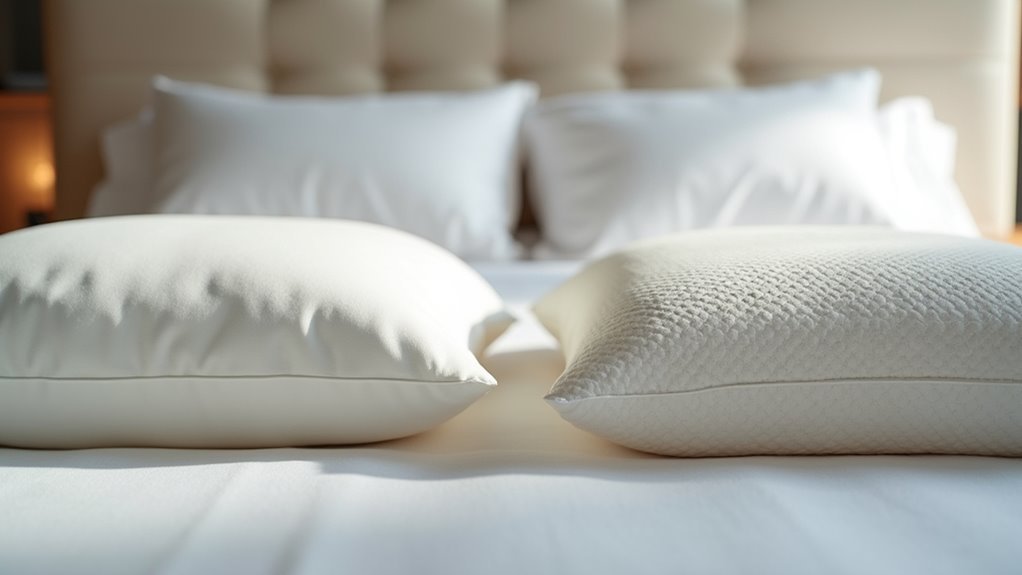
While traditional down pillows offer luxury comfort, memory foam and latex represent the modern evolution of sleep technology, delivering precise support that adapts to your unique sleep needs.
A memory foam pillow contours perfectly to your head and neck’s shape, eliminating pressure points and maintaining proper spinal alignment throughout the night. This personalized support reduces pain from poor positioning during sleep.
A latex pillow combines buoyant support with lasting durability, maintaining its shape for over 10 years with proper care. You’ll enjoy consistent comfort that doesn’t deteriorate over time.
Both materials offer temperature regulation benefits. Gel-infused memory foam dissipates heat, while latex’s open cell structure provides natural breathability.
If you’re a hot sleeper, latex typically stays cooler than traditional memory foam options.
Buckwheat Hulls and Organic Cotton: Eco-Friendly Natural Alternatives
For sleepers seeking sustainable comfort without compromising support, buckwheat hulls and organic cotton offer compelling natural alternatives that align with both environmental values and quality rest.
Buckwheat hulls provide exceptional support by conforming to your head and neck’s unique shape, promoting proper spinal alignment while maintaining cooler temperatures through their natural breathability. You’ll appreciate their adjustable firmness and impressive 10-20 year lifespan with proper care.
Organic cotton delivers hypoallergenic benefits that’re perfect if you have allergies or sensitive skin. This eco-friendly option feels soft and cozy while remaining completely free from harmful chemicals.
Organic cotton provides chemical-free comfort that’s gentle on sensitive skin while delivering the cozy softness you need for restful sleep.
Both materials withstand frequent washing and offer biodegradable properties, making them environmentally responsible choices that don’t sacrifice comfort or durability for sustainability.
Polyester Fiberfill and Microbeads: Affordable Synthetic Solutions
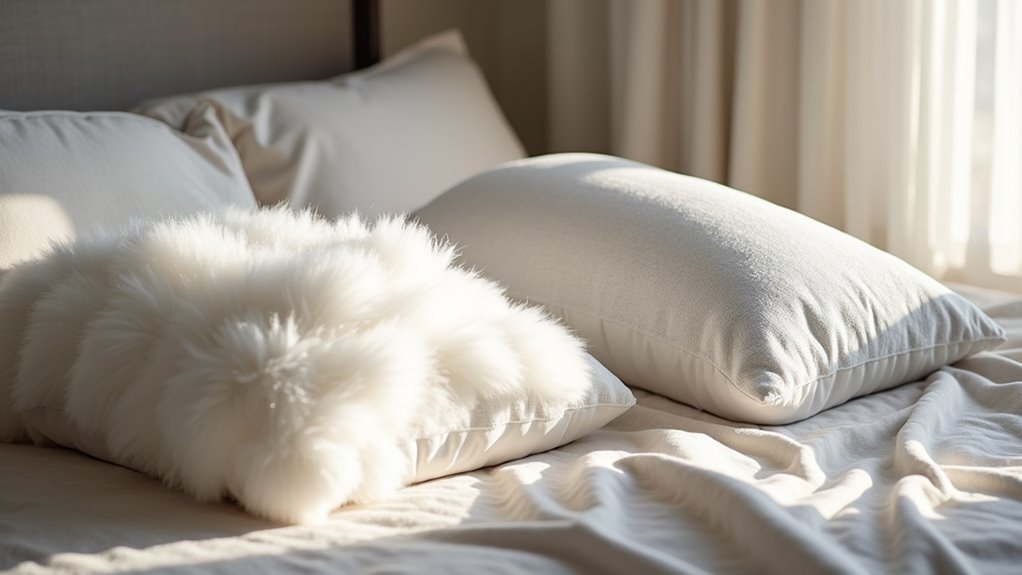
You’ll find polyester fiberfill offers an excellent entry point into synthetic pillow fillings, delivering lightweight comfort and easy maintenance at budget-friendly prices.
If you’re seeking something more unique, microbead pillows provide a distinctive moldable texture that conforms to your head and neck’s specific contours.
Both options give you affordable alternatives to pricier natural materials, though each comes with its own set of performance characteristics you should consider.
Polyester Fiberfill Benefits
Budget-friendly comfort becomes achievable with polyester fiberfill, a synthetic filling that delivers lightweight support without straining your wallet.
This polyester fiberfill pillow represents a good option for budget-conscious sleepers who prioritize affordability without sacrificing basic comfort features.
You’ll appreciate these key advantages:
- Easy maintenance – Machine washable design simplifies your cleaning routine and reduces long-term care costs.
- Lightweight portability – Effortless handling makes bed-making and pillow repositioning simple tasks.
- Accessible pricing – Low upfront costs allow you to purchase multiple pillows or replace them frequently.
While you’ll need to re-fluff regularly to maintain shape, the combination of convenience and cost-effectiveness makes polyester fiberfill an attractive choice for guest rooms, children’s bedding, or anyone seeking practical sleeping solutions.
Microbead Pillow Properties
While polyester fiberfill offers basic comfort, microbead pillows take moldability to another level with thousands of tiny polystyrene beads that shift and conform precisely to your head and neck contours.
This synthetic filling creates a lightweight sleeping surface that adapts to your movements throughout the night. You’ll appreciate how breathable these pillows are compared to heat-trapping alternatives, helping maintain a cooler sleep environment.
However, you should consider some drawbacks before purchasing. The microbeads can flatten over time, reducing the pillow’s lifespan considerably.
You might notice a chemical odor when first opening the package. Additionally, the plastic composition raises environmental concerns that eco-conscious consumers should weigh against the comfort benefits these pillows provide.
Matching Fill Materials to Your Sleep Position
Your sleeping position directly determines which pillow fill materials will provide the best support and comfort throughout the night.
Side sleepers need higher loft options like memory foam or latex to bridge the gap between your shoulder and head, while back sleepers benefit from medium-thickness fills such as down or shredded memory foam.
Stomach sleepers require the softest, lowest-profile fills like down or cotton to prevent neck strain and maintain proper spinal alignment.
Side Sleeper Requirements
Since side sleeping places your head significantly higher off the mattress than other sleep positions, you’ll need a pillow with medium to high loft to bridge the gap between your shoulder and head.
As side sleepers, maintaining proper spinal alignment is essential for preventing neck strain and ensuring restful sleep.
The best pillow filling types for support for your neck include:
- Memory foam – Contours precisely to your head and neck shape while maintaining consistent support throughout the night.
- Latex – Provides firm, responsive support that won’t compress excessively under weight.
- Buckwheat hulls – Conform to your body while offering excellent breathability and adjustable support.
Down and feather pillows can work if they’re plush enough, though they require frequent fluffing.
Avoid low-loft options that cause misalignment.
Back Sleeper Preferences
Back sleepers need a different approach to pillow selection than their side-sleeping counterparts.
You’ll want medium-thick pillows that maintain your spine’s natural alignment without pushing your head forward. A shredded memory foam pillow works exceptionally well for back sleepers because it contours to your head and neck while providing consistent support.
Latex offers similar benefits, adapting to your unique shape while maintaining structural integrity.
Down and down-alternative fills can also provide excellent support for your head, delivering softness without excessive elevation.
Avoid overly firm or high-loft options that create neck strain. If you choose down or feather fills, you’ll need to fluff and adjust them regularly to maintain proper loft and support throughout the night.
Stomach Sleeper Needs
While back sleepers need medium support, stomach sleepers face unique challenges that require the lowest-loft pillows available.
You’ll want pillows around 3 inches thick to prevent your neck from straining at uncomfortable angles.
The best fill materials for stomach sleepers combine softness with a medium-firm feel:
- Down – Provides exceptional softness while remaining breathable to keep you cool
- Feather – Offers moldable support that conforms without excessive elevation
- Organic cotton – Delivers consistent medium-firm support with excellent temperature regulation
Avoid high-loft pillows that’ll force your head too high, causing spinal misalignment.
These breathable materials prevent heat retention that commonly affects stomach sleepers.
Remember to fluff your pillow regularly to maintain proper support levels and comfort throughout the night.
Durability and Longevity of Different Pillow Fills
Longevity varies dramatically across pillow fill materials, making your choice essential for long-term comfort and value.
Your pillow fill choice directly impacts how many years of quality sleep you’ll enjoy before needing a replacement.
Buckwheat hull pillows offer exceptional durability, lasting 10-20 years since the hulls don’t compress over time. High-quality latex pillows also provide outstanding longevity, often exceeding 10 years due to their resistance to wear.
Down pillows can serve you well for 5-10 years with proper care, while memory foam typically lasts 2-4 years depending on quality.
Unfortunately, feather and polyester fiberfill options disappoint in the durability department, requiring replacement within 1-3 years as they quickly lose shape and support.
Regular fluffing and appropriate cleaning greatly extend your pillow’s lifespan, especially for natural pillow filling materials like down and latex.
Hypoallergenic Properties and Health Considerations
Since allergies can turn peaceful sleep into a nightly struggle, choosing the right pillow fill becomes essential for your health and comfort. Understanding hypoallergenic properties helps you make informed decisions that protect your sleep quality.
Different materials offer varying levels of allergen resistance:
- Synthetic fillings like polyester fiberfill and memory foam resist dust mites, mold, and pet dander while remaining easy to clean.
- Natural latex and cotton provide excellent hypoallergenic properties without compromising comfort.
- Down alternatives offer the softness of traditional feathers without triggering sensitivities.
Traditional down and feather pillows can harbor allergens, making them problematic for allergy sufferers. However, RDS-certified down undergoes thorough cleaning processes that reduce allergen presence.
Regardless of your chosen fill, regular cleaning and maintenance greatly minimize allergen accumulation, ensuring healthier sleep.
Care and Maintenance Requirements for Each Fill Type
Each pillow fill material demands specific care routines that directly impact its performance and lifespan.
Down and feather pillows need regular fluffing to maintain loft and require dry cleaning or spot cleaning to prevent damage.
Memory foam pillow filling shouldn’t be machine washed, as this compromises structure—stick to spot cleaning and occasional airing to reduce chemical odors.
Polyester fiberfill pillows offer easy care through machine washing, but you’ll need thorough drying to prevent clumping.
Buckwheat hull pillows require spot cleaning only, and you can air out the hulls for freshness without water submersion.
Latex pillows need simple maintenance—just wipe with a damp cloth and keep dry to resist dust mites and extend lifespan.
Frequently Asked Questions
What Is the Best Fill Material for a Pillow?
You’ll find the best pillow fill depends on your sleeping style and preferences. Down offers softness, memory foam provides support, while natural latex and buckwheat deliver durability and hypoallergenic benefits for ideal comfort.
What Filling Makes the Best Pillow?
You’ll find latex filling offers the best overall value, providing excellent support, hypoallergenic properties, and lasting over ten years. It balances comfort with durability better than down, memory foam, or synthetic alternatives.
What Is the Healthiest Filling for Pillows?
Natural fills like down, latex, and organic cotton offer you the healthiest options. You’ll avoid synthetic chemicals while getting hypoallergenic properties. Buckwheat hulls and kapok provide excellent breathability, keeping you cool and reducing moisture buildup.
What Type of Pillow Material Is Best?
You’ll find latex and buckwheat hull pillows offer the best combination of support, durability, and health benefits. They’re hypoallergenic, maintain shape longest, and provide excellent breathability for comfortable sleep.


Leave a Reply