

You’ll achieve better spinal alignment and reduce neck pain by choosing a cervical pillow that supports your neck’s natural curve while maintaining proper head positioning throughout the night. Memory foam contoured designs work best, offering 3-5 inches of loft for most sleepers. Back sleepers need medium firmness with 4-6 inches of height, while side sleepers require firmer support at 5-7 inches. Look for breathable materials like gel-infused foam to prevent overheating, and you’ll discover additional factors that optimize your sleep quality.
Understanding Cervical Spine Anatomy and Sleep Support

Seven vertebrae form your cervical spine, creating the natural curve that supports your head’s weight while you move freely throughout the day.
During sleep, maintaining this curve becomes critical for preventing discomfort and promoting recovery. Without proper support, your neck muscles and ligaments work overtime, leading to morning stiffness and chronic tension.
Your cervical spine requires specific positioning to achieve neutral spine alignment while you sleep. Standard pillows often fail to provide adequate contouring, causing your head to tilt unnaturally.
This misalignment places excessive pressure on cervical discs and surrounding tissues. Cervical pillows address this issue by maintaining spinal alignment throughout the night, delivering effective neck pain relief and reducing strain on your musculoskeletal system.
Key Features of Effective Cervical Pillows
Understanding how cervical pillows support your spine leads directly to recognizing what makes these specialized pillows truly effective.
You’ll find the most beneficial cervical pillows feature a curved design that maintains your neck’s natural alignment, particularly when you’re sleeping on your back. The ideal loft ranges from 3 to 5 inches, keeping your head and neck in a neutral position that prevents strain.
Cervical pillows with curved designs and 3-5 inch loft maintain natural neck alignment and prevent strain during sleep.
Memory foam construction stands out as a key feature, conforming to your unique head and neck shape while providing personalized support. This material greatly reduces neck pain and stiffness, with studies showing 80% of users experience improved comfort.
Look for adjustable height options and dual firmness settings, which enhance spine alignment effectiveness across different sleep positions and personal preferences.
Memory Foam Vs Latex Vs Down Alternative Materials
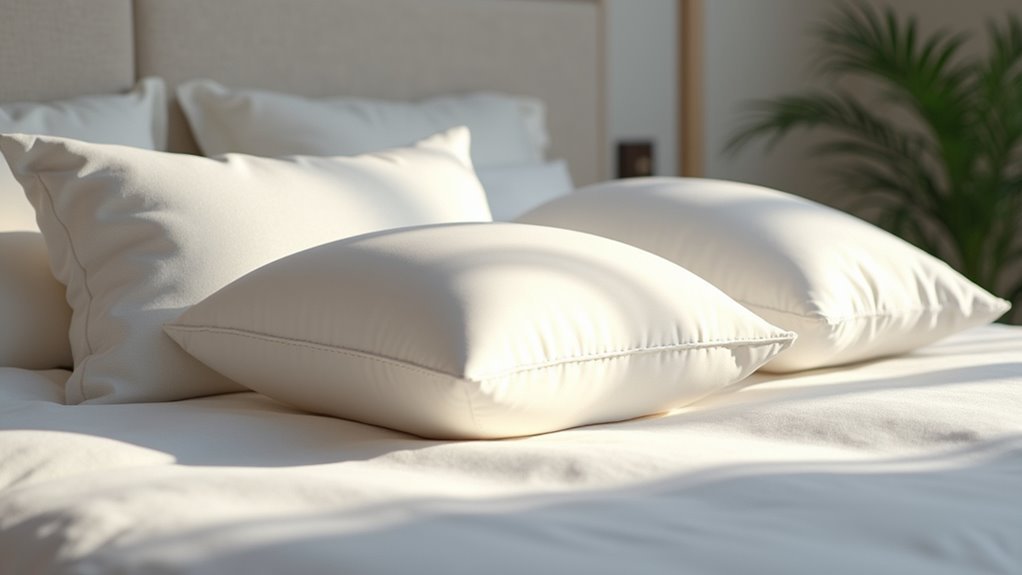
Three primary materials dominate the cervical pillow market, each offering distinct advantages for spine alignment and sleep comfort.
Memory foam conforms perfectly to your head and neck shape, providing personalized support that maintains proper spinal alignment across different sleeping positions. Research demonstrates memory foam considerably reduces pressure points and neck pain while improving sleep quality.
Latex offers firm, durable support with natural hypoallergenic properties and superior airflow. It maintains its shape over time, unlike softer materials that lose structure. You’ll get consistent support that promotes spinal alignment.
Down alternative provides a softer, plush feel using synthetic materials. However, it lacks the necessary support for ideal spinal alignment compared to memory foam and latex options, making it less ideal for addressing neck pain.
Proper Pillow Height and Loft for Different Sleep Positions
How does pillow height affect your spine’s natural alignment during sleep?
Your pillow’s loft directly impacts your neck’s position and can either promote healthy spinal alignment or cause neck pain. Choosing the wrong pillow height for your sleep position disrupts your spine’s natural curve, leading to discomfort and poor sleep quality.
The wrong pillow height disrupts your spine’s natural curve, causing neck pain and restless nights.
Here’s the best pillow height for each sleep position:
- Back sleepers – 4 to 6 inches to maintain proper neck curvature and prevent strain
- Side sleepers – 5 to 7 inches with firmer support to accommodate shoulder width and keep your spine aligned
- Stomach sleepers – 2 to 4 inches using softer, flatter pillows to avoid excessive neck strain
Contoured Vs Traditional Pillow Shapes for Neck Support
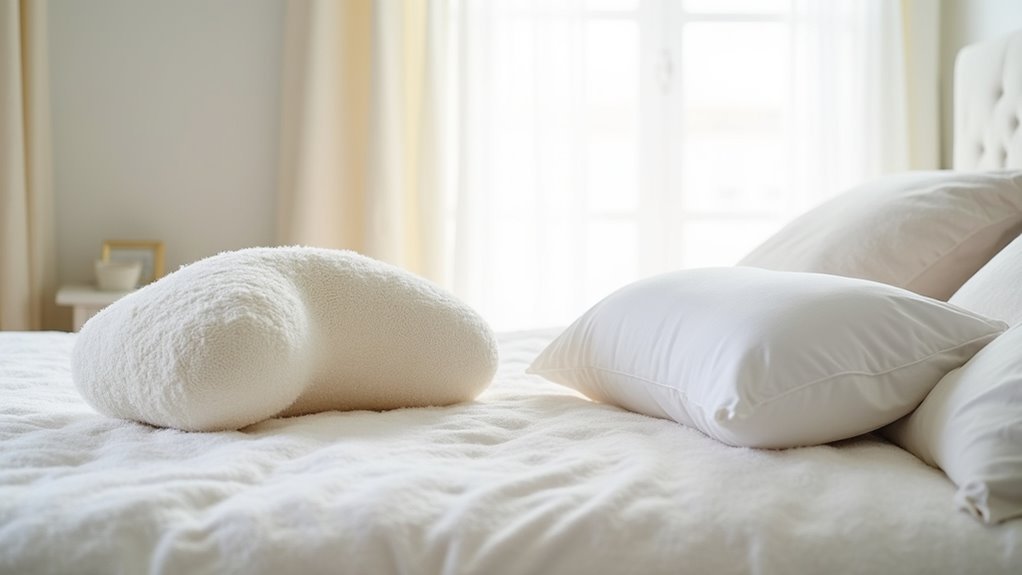
Beyond selecting the right pillow height, the shape of your pillow plays an equally important role in supporting your neck and maintaining spinal alignment throughout the night.
Contoured pillows outperform traditional flat designs by conforming to your neck’s natural curve, providing targeted support where you need it most. Unlike traditional pillows that often cause misalignment, contoured options accommodate both side sleepers and back sleepers with varying lofts that match your sleeping position.
Research confirms that contoured pillows reduce neck pain and stiffness more effectively than conventional shapes. You’ll likely experience less tossing and turning, leading to improved sleep quality.
The specialized design guarantees proper spine alignment, making contoured pillows the superior choice for cervical support.
Best Cervical Pillows for Side Sleepers
Since side sleepers require greater support to bridge the gap between their shoulder and head, cervical pillows designed specifically for this position feature higher lofts and specialized contours that maintain proper spinal alignment.
These pillows provide essential neck alignment while delivering targeted pressure relief throughout the night.
Research demonstrates that cervical pillows considerably improve sleep quality for side sleepers by promoting neutral spine support. The key is selecting pillows with firm construction that won’t collapse under weight.
Top features to take into account:
- Contoured design – The Osteo Cervical Pillow offers specialized shaping that cradles your neck while maintaining proper alignment
- Shoulder cut-out – Models like the Eli & Elm Side Sleeper Pillow include strategic indentations for shoulder accommodation
- Higher loft construction – Elevated profiles guarantee adequate support between your shoulder and head for ideal comfort
Optimal Pillow Selection for Back Sleepers
While side sleepers need higher loft pillows to bridge the shoulder gap, back sleepers require a different approach that maintains their neck’s natural curve without excessive elevation.
You’ll want cervical pillows with a 4 to 6-inch loft that cradles your head without pushing it too high, which can obstruct breathing and disrupt proper spinal alignment.
Memory foam and contour pillows work exceptionally well for back sleepers because they conform to your unique head and neck shape, delivering personalized support and pressure relief.
Research shows orthopedic cervical pillows greatly outperform traditional feather pillows in providing the structural support you need.
Remember to regularly assess your pillow’s condition and replace it when worn to prevent neck pain and maintain ideal alignment.
Firmness Levels and Their Impact on Spinal Alignment
You’ll find that pillow firmness directly determines whether your spine maintains its natural alignment throughout the night.
Soft pillows offer gentle contouring that works well for stomach sleepers, while firm options provide the robust support that side sleepers need to keep their neck level with their spine.
Your sleeping position should guide your firmness choice, as back sleepers typically benefit most from medium firmness that supports your neck’s natural curve without pushing it too high or letting it sink too low.
Soft Vs Firm Benefits
When selecting a cervical pillow, firmness directly impacts your spine’s alignment and sleep quality.
Your sleeping position determines whether you’ll benefit from soft or firm support.
Here’s how different firmness levels affect your alignment:
- Firm pillows work best if you’re a side sleeper, preventing your head from sinking too much and maintaining proper neck alignment while reducing neck pain.
- Soft pillows suit stomach sleepers by providing a lower profile that keeps your head aligned with your spine without straining your neck.
- Medium firmness offers ideal support for back sleepers, balancing cushioning with structural support to preserve your neck’s natural curve.
Choosing the wrong firmness can worsen neck pain and disrupt sleep.
Match your pillow’s firmness to your preferred sleeping position for optimal spinal alignment.
Position-Specific Firmness Recommendations
Understanding your sleeping position sets the foundation for selecting the right firmness level, but specific recommendations for each position will maximize your spinal alignment.
If you’re a side sleeper, you’ll need a firm pillow that provides substantial neck support to bridge the gap between your shoulder and head.
Back sleepers benefit from medium firmness pillows that cradle your neck’s natural curve without pushing your head too far forward.
Stomach sleepers require soft, thin pillows to prevent excessive neck extension that strains your spine.
Research shows that matching pillow firmness to your sleeping position greatly reduces neck pain and improves sleep quality.
The ideal height of 4-6 inches guarantees proper spinal alignment regardless of your preferred firmness level.
Temperature Regulation and Breathability in Cervical Pillows
When you’re selecting a cervical pillow for proper spine alignment, you’ll want to evaluate how well it manages temperature throughout the night.
Modern cooling materials like bamboo charcoal memory foam and gel-infused options can prevent the heat buildup that disrupts your sleep quality.
You’ll find that breathable foam technology and specialized heat dissipation features work together to maintain both the support your neck needs and the comfortable temperature your body craves.
Cooling Materials Overview
As you spend roughly one-third of your life sleeping, the temperature of your cervical pillow directly impacts your sleep quality and spinal alignment throughout the night.
Cooling materials in modern cervical pillows address heat buildup that can disrupt your rest and compromise proper neck positioning.
The most effective cooling materials include:
- Gel-infused memory foam – Incorporates cooling gel particles that actively absorb and dissipate body heat while maintaining contouring support.
- Breathable fabrics like bamboo charcoal – Wick moisture away from your skin and promote enhanced airflow around your head and neck.
- Ventilated foam structures – Feature specialized air channels that increase circulation and prevent heat retention.
These thermoregulating properties work together to maintain ideal sleeping temperatures, reducing night sweats while supporting proper temperature regulation for deeper, more restorative sleep.
Breathable Foam Technology
Breathable foam technology takes temperature control a step further by engineering the internal structure of your cervical pillow to actively promote airflow.
This enhanced ventilation allows heat to dissipate efficiently, maintaining a comfortable sleep temperature while supporting proper spine alignment throughout the night.
Gel-infused memory foam represents a significant advancement in this technology, delivering superior cooling compared to traditional foam options.
The gel particles actively draw heat away from your body, preventing uncomfortable warmth buildup.
Advanced materials like bamboo charcoal add moisture-wicking properties, eliminating sweat accumulation that can disrupt sleep.
This breathable design particularly benefits hot sleepers and those experiencing night sweats.
Beyond comfort, breathable foam technology extends your pillow’s lifespan by preventing heat and moisture damage that degrades foam materials over time.
Heat Dissipation Features
While breathable foam creates the foundation for temperature control, dedicated heat dissipation features transform your cervical pillow into a sophisticated cooling system.
Advanced cooling technologies like gel-infused memory foam actively dissipate heat, preventing overheating throughout the night. These breathable materials work alongside specialized ventilation channels that enhance airflow and minimize moisture buildup.
Key Heat Dissipation Features:
- Gel-infused memory foam – Actively draws heat away from your head and neck
- Perforated ventilation channels – Create continuous airflow pathways for enhanced cooling
- Bamboo charcoal infusion – Naturally regulates moisture while maintaining ideal temperature
You’ll experience improved temperature regulation that reduces night sweats and prevents allergen accumulation.
When selecting your cervical pillow, prioritize these heat dissipation technologies to guarantee consistent comfort and proper spine alignment without temperature-related sleep disruptions.
Maintaining and Replacing Your Cervical Pillow
Even if your cervical pillow feels comfortable, you’ll need to monitor its condition regularly to confirm it continues providing proper spinal support. Replace your cervical pillow every 1-2 years to maintain ideal neck alignment and prevent increased neck pain.
| Sleep Position | Support Requirements |
|---|---|
| Side sleepers | Firmer, higher support |
| Back sleepers | Contouring shapes |
| Stomach sleepers | Minimal height profile |
| Combination sleepers | Adaptive medium firmness |
Watch for replacement indicators like significant flattening, shape loss, or inadequate support. Clean your pillow following manufacturer instructions to extend its lifespan—removable covers are typically machine washable. Consider your sleeping position when selecting a replacement, as different designs serve specific needs. Test new pillows during trial periods when available to confirm they meet your comfort requirements before long-term commitment.
Frequently Asked Questions
What Is the Best Pillow for Neck and Spine Alignment?
You’ll want a cervical pillow with 4-6 inches of loft made from memory foam. It’ll support your neck’s natural curve, maintain proper spine alignment, and reduce stiffness better than traditional feather pillows.
What Kind of Pillow Is Best for Curvature of the Spine?
You’ll want a cervical pillow with contoured design that supports your neck’s natural curve. Memory foam options work best, conforming to your spine’s shape while maintaining proper alignment throughout the night.
Can a Cervical Pillow Correct Posture?
You can’t directly correct posture with a cervical pillow alone, but you’ll gradually improve spinal alignment during sleep. Consistent use helps reduce neck strain and encourages better postural habits over time.
Are Cervical Spine Pillows Good?
Yes, you’ll find cervical spine pillows beneficial for maintaining proper neck alignment during sleep. They’ll reduce neck pain, improve sleep quality, and support your spine’s natural curve better than traditional pillows.


