

Your pillowcase fabric greatly affects your sleep quality through temperature regulation and comfort. Cotton and linen offer excellent breathability, preventing overheating by promoting air circulation and moisture wicking. Silk adapts to temperature changes while reducing hair friction and maintaining skin hydration. Synthetic materials like polyester trap heat and moisture, disrupting your rest. Bamboo provides antimicrobial properties with superior cooling technology. Choosing the right fabric maintains ideal skin temperature and creates conditions for deeper, more restorative sleep throughout the night.
How Pillowcase Fabric Influences Sleep Comfort and Temperature
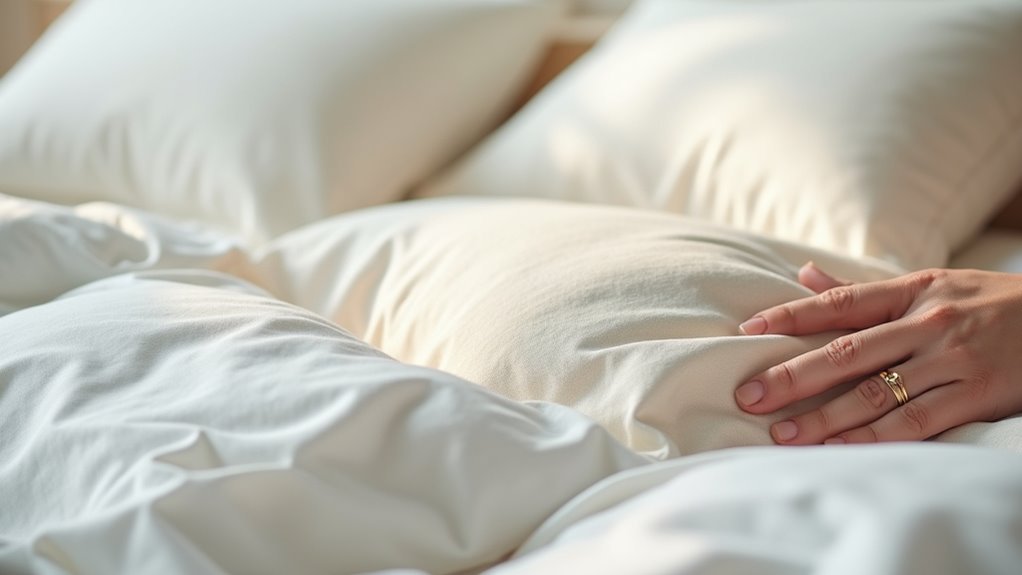
While you mightn’t think much about your pillowcase fabric, it’s actually one of the most essential factors affecting your sleep comfort and temperature regulation throughout the night.
Different pillowcase fabrics create vastly different sleeping experiences. Cotton and linen offer excellent breathability, promoting air circulation that prevents overheating.
Silk pillowcases provide superior temperature regulation, naturally adapting to keep you cool in summer and warm in winter. Their smooth texture also reduces friction against your skin and hair, preventing irritation and tangles.
Silk naturally regulates temperature while its smooth surface protects skin and hair from friction damage during sleep.
Conversely, synthetic materials like polyester trap heat and moisture, creating discomfort for hot sleepers and potentially disrupting sleep quality.
Choosing the right fabric maintains ideal skin temperature and hydration, ultimately improving your overall rest quality.
Cotton Pillowcases: Breathability and Moisture Management Benefits
Cotton pillowcases excel at creating the perfect sleep environment through their natural breathability and superior moisture management capabilities.
You’ll experience excellent air circulation that regulates your body temperature throughout the night, making cotton ideal if you’re a hot sleeper. The fabric effectively absorbs and wicks away sweat, preventing overheating that disrupts your rest.
Cotton’s durability means your investment lasts longer while actually improving over time—each wash makes the fabric softer while maintaining its breathability and moisture-wicking properties.
If you have sensitive skin or allergies, you’ll appreciate cotton’s hypoallergenic nature that reduces irritation risks.
Different weaves like percale and sateen offer varying textures, allowing you to customize your comfort preferences and enhance your overall sleep quality.
Silk Pillowcases: Luxury Fabric for Hair and Skin Health
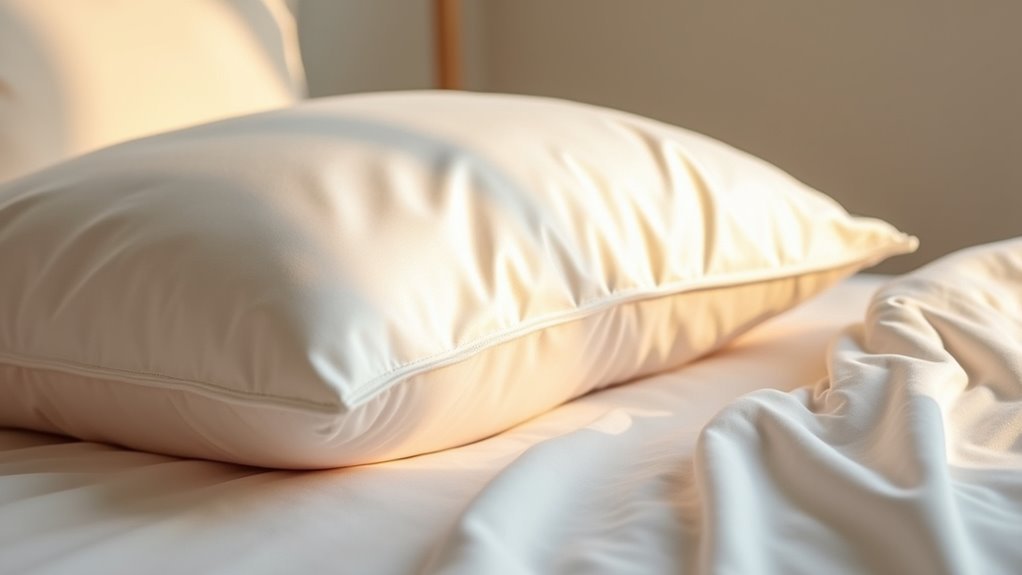
You’ll notice dramatic improvements in your hair’s condition when you switch to silk pillowcases, as the smooth surface dramatically reduces friction that causes breakage and tangles while you sleep.
Your skin benefits equally from silk’s moisture-retaining properties, which keep your face hydrated throughout the night and prevent the formation of sleep lines that can become permanent wrinkles.
The luxurious fabric works continuously as you rest, protecting both your hair cuticles and facial skin from the damage that rougher materials like cotton can cause.
Hair Breakage Prevention Benefits
Since traditional cotton pillowcases create substantial friction against your hair strands throughout the night, they’re often the hidden culprit behind morning tangles, breakage, and that dreaded bedhead frizz.
Silk pillowcases offer a game-changing solution by dramatically reducing this friction through their ultra-smooth surface texture.
When you sleep on silk, your hair glides effortlessly across the fabric instead of catching and pulling like it does on rougher materials. This gentle treatment greatly minimizes hair breakage and prevents the formation of split ends that weaken your strands over time.
Studies confirm that silk’s smooth properties lead to fewer tangles and improved hair manageability.
You’ll wake up with less damage, reduced frizz, and hair that maintains its natural moisture levels throughout the night, promoting healthier, shinier locks.
Skin Hydration and Smoothness
While silk transforms your hair health overnight, it delivers equally impressive benefits for your skin. The smooth texture of silk reduces friction against your face, preventing irritation and promoting natural smoothness while you sleep.
Unlike cotton or synthetic materials, silk doesn’t absorb your skin’s natural oils, allowing for superior skin hydration throughout the night. This moisture retention helps reduce the appearance of fine lines and wrinkles over time.
You’ll also notice fewer sleep creases when you wake up, as silk’s slippery surface allows your skin to glide effortlessly across the pillowcase. The hypoallergenic properties of silk create an ideal environment for sensitive skin, reducing exposure to dust mites and allergens that can cause breakouts or irritation.
Linen Pillowcases: Natural Moisture-Wicking for Hot Sleepers
If you’re a hot sleeper who struggles with night sweats, linen pillowcases offer exceptional breathable properties that’ll keep you comfortable throughout the night.
The flax fibers naturally wick moisture away from your skin while allowing air to circulate freely around your head and neck.
You’ll experience superior temperature regulation that adapts to both warm summer nights and cooler winter evenings.
Linen’s Breathable Properties
When you’re a hot sleeper struggling with night sweats and overheating, linen pillowcases offer an exceptional solution through their natural breathability and moisture-wicking properties. Made from flax plant fibers, linen’s loose weave creates excellent airflow that helps regulate temperature throughout the night.
| Property | Benefit |
|---|---|
| Natural texture | Increased airflow circulation |
| Moisture absorption | Manages sweat without feeling damp |
| Flax fibers | Enhanced breathability |
| Washing cycle | Becomes softer while maintaining performance |
| Hypoallergenic nature | Resists dust mites for sensitive sleepers |
You’ll find that linen’s moisture-wicking capabilities effectively handle humidity and perspiration, keeping you comfortable. As your pillowcase becomes softer with each wash, it maintains its cooling properties while providing a healthier, hypoallergenic sleep environment that’s naturally resistant to allergens.
Temperature Regulation Benefits
Because linen’s flax fibers create a naturally porous structure, your body temperature stays regulated throughout the night as heat escapes efficiently through the fabric’s loose weave.
This breathability prevents the uncomfortable heat buildup that disrupts your sleep cycles. When you’re a hot sleeper, linen’s moisture-wicking properties become essential—the fibers actively draw sweat away from your skin without retaining dampness.
Unlike synthetic materials that trap heat, linen maintains peak air circulation around your head and neck.
You’ll notice reduced humidity levels in your immediate sleeping environment, which research confirms leads to deeper, more restorative sleep.
The natural temperature regulation means you won’t wake up overheated or clammy, allowing your body to maintain its ideal sleep temperature consistently throughout the night.
Satin Pillowcases: Smooth Alternative With Cost Considerations
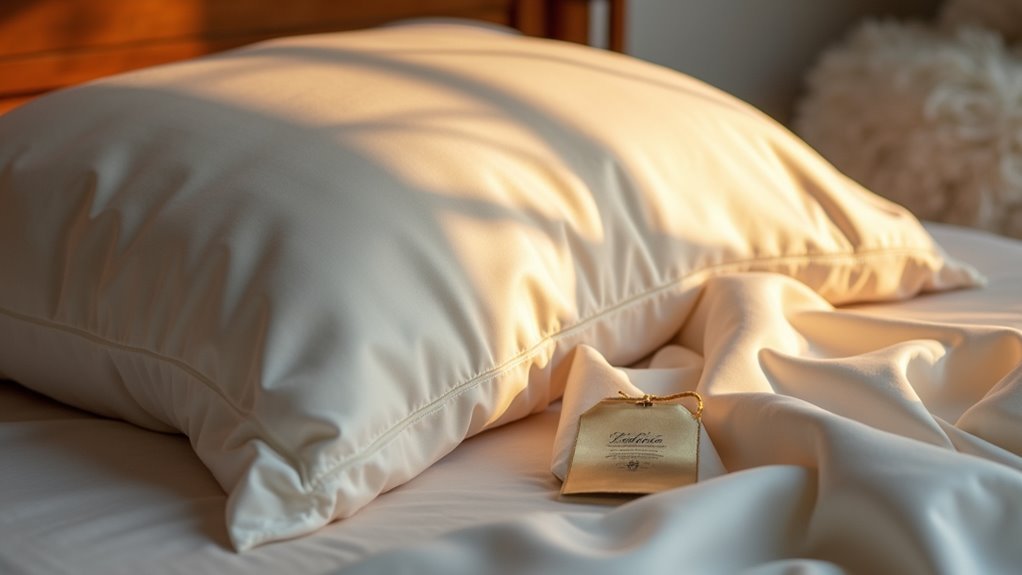
While silk pillowcases often command premium prices, satin offers a budget-friendly alternative that delivers many of the same benefits for your hair and skin.
You’ll find that satin pillowcases create a smooth surface that reduces friction, preventing hair breakage and minimizing sleep lines on your face.
However, you should consider the trade-offs. Satin’s breathability doesn’t match cotton’s, leading to heat retention that might disturb your sleep if you’re prone to overheating.
Satin’s poor breathability compared to cotton can trap heat and disrupt sleep for those who tend to overheat at night.
The synthetic material may also lack moisture-wicking properties, potentially affecting skin hydration if you have dry skin.
On the positive side, you’ll appreciate satin’s low-maintenance care and wrinkle resistance, making it more practical than delicate silk while still providing that luxurious feel.
Bamboo Pillowcases: Antimicrobial Properties and Cooling Effects
You’ll discover that bamboo pillowcases offer natural antimicrobial defense that actively fights bacteria and microbes while you sleep.
This fabric’s superior cooling technology wicks moisture away from your skin and regulates temperature throughout the night.
These dual benefits create an ideal sleep environment that’s both hygienic and comfortable.
Natural Antimicrobial Defense
As you search for the perfect pillowcase to enhance your sleep quality, bamboo fabric emerges as a standout choice due to its inherent antimicrobial properties.
These natural properties actively inhibit bacterial and fungal growth on your pillowcase’s surface, creating a cleaner sleep environment that directly benefits your health. When you sleep on bamboo pillowcases, you’re protecting yourself from harmful microorganisms that typically accumulate on traditional fabrics throughout the night.
The hypoallergenic nature of bamboo fabric provides additional protection for sensitive sleepers.
You’ll experience reduced skin irritation and fewer allergic reactions compared to synthetic materials. This antimicrobial defense works continuously without requiring special treatments or chemicals, making bamboo a naturally superior choice for maintaining pillowcase hygiene and supporting healthier rest patterns.
Superior Cooling Technology
Beyond protecting your sleep environment from harmful microorganisms, bamboo pillowcases excel at temperature regulation through their superior cooling technology.
The bamboo material’s exceptional moisture-wicking capabilities actively draw sweat away from your skin, preventing that uncomfortable dampness that disrupts sleep. You’ll notice improved airflow around your head and neck as the breathable fibers allow heat to escape efficiently.
This natural cooling system keeps you comfortable year-round. During hot summer nights, your bamboo pillowcase maintains a cool surface temperature, while winter months bring just enough warmth retention for ideal comfort.
The material’s unique fiber structure creates microscopic gaps that enhance ventilation without sacrificing softness. You’ll experience fewer night sweats and temperature fluctuations, leading to deeper, more restorative sleep cycles throughout the night.
Microfiber and Polyester: Budget-Friendly Options With Limitations
Budget constraints often lead shoppers to microfiber and polyester pillowcases, two synthetic options that deliver impressive durability and low maintenance at wallet-friendly prices.
These materials resist wrinkles, fading, and shrinking while offering quick-drying convenience. However, their synthetic nature creates significant drawbacks that can compromise your comfort and sleep quality.
While synthetic pillowcases offer practical benefits like wrinkle resistance and easy care, their artificial composition can significantly impact your nightly comfort.
Both fabrics struggle with breathability, trapping heat and moisture against your skin throughout the night. This poor ventilation becomes particularly problematic if you’re a hot sleeper or have sensitive skin.
Key limitations include:
- Heat retention – Poor airflow leads to uncomfortable temperature buildup
- Friction damage – Rough texture causes hair breakage and skin irritation
- Moisture trapping – Limited wicking capabilities create clammy sleeping conditions
While these budget-friendly options save money upfront, they often sacrifice the restful sleep quality you need.
Hypoallergenic Fabrics for Sensitive Skin and Allergies
If you suffer from allergies or have sensitive skin, choosing the right pillowcase fabric can dramatically improve your sleep quality and reduce nighttime discomfort.
Hypoallergenic fabrics like silk and tightly woven cotton resist dust mites and allergens that trigger reactions. Silk pillowcases naturally repel allergens and bacteria, promoting healthier skin while you sleep.
Organic cotton offers another gentle option for sensitive skin. It’s grown without synthetic pesticides or chemicals, providing breathability and comfort without harsh irritants.
Tencel, made from wood pulp, wicks moisture away from your skin, keeping you dry and reducing irritation risks.
To maintain these benefits, you’ll need to wash your hypoallergenic pillowcases regularly. This preserves their antimicrobial properties and guarantees your sleeping environment stays allergen-free.
Fabric Durability and Care Requirements for Long-Term Use
When selecting pillowcase fabrics, understanding their durability and care requirements helps you make informed decisions that’ll save money and effort over time.
Smart fabric choices mean fewer replacements, less maintenance hassle, and better sleep comfort for years to come.
Cotton pillowcases offer exceptional durability and withstand frequent washing, making them ideal for busy households.
Linen pillowcases actually improve with age, becoming softer after each wash while maintaining their strength, though you’ll need to iron them regularly.
Here are three key considerations for long-term fabric selection:
- Maintenance frequency – Cotton requires minimal special care, while silk demands gentle handling
- Cost vs. longevity – Microfiber and polyester offer budget-friendly durability but sacrifice breathability
- Performance over time – Linen enhances comfort with use, whereas synthetic fabrics may deteriorate in texture
Choose fabrics that align with your lifestyle and maintenance preferences for best rest quality.
Matching Pillowcase Material to Your Sleep Temperature Preferences
Beyond durability considerations, your sleep temperature plays a major role in determining which pillowcase fabric will enhance your rest quality. Your pillowcase plays a significant role in regulating body heat throughout the night.
Hot sleepers should choose breathable options like cotton percale and linen, which promote air circulation and wick moisture effectively during warm nights. If you’re a cold sleeper, cotton sateen and silk provide insulating warmth while maintaining softness.
The best pillowcase materials for night sweats include bamboo, known for excellent moisture-wicking properties. Silk offers year-round versatility, keeping you cool in summer and warm in winter.
Couples with different temperature preferences can compromise by combining cotton percale for the hot sleeper with silk for the cooler partner.
Evaluating Fabric Quality: Thread Count, Weave, and Performance Factors
While thread count often dominates pillowcase marketing, it’s only one piece of the quality puzzle you’ll need to evaluate. Higher thread counts typically indicate softer, more durable fabric, but they don’t guarantee superior quality.
The weave greatly impacts your sleep experience. Percale offers crisp breathability, while sateen provides smooth luxury with less airflow. Your fabric composition choice between natural fibers like cotton and silk versus synthetic blends affects comfort and maintenance requirements.
Focus on these essential performance factors when selecting pillowcases:
- Moisture-wicking capabilities – How effectively the fabric draws sweat away from your skin
- Breathability – The fabric’s ability to promote airflow and temperature regulation
- Allergen resistance – Tighter weaves in quality materials repel dust mites and allergens better
Consider these elements together rather than focusing solely on thread count numbers.
Frequently Asked Questions
What Is the Healthiest Fabric for Pillowcases?
You’ll find silk is the healthiest pillowcase fabric since it’s naturally hypoallergenic and reduces bacteria buildup. Organic cotton, bamboo, linen, and Tencel are also excellent choices for promoting better skin health and sleep quality.
What Is the Best Pillow Case Material to Sleep On?
You’ll find cotton, especially Egyptian long-staple, offers the best balance of breathability and comfort. However, if you’re seeking luxury with skin benefits, mulberry silk provides excellent hair protection and antimicrobial properties for better rest.
Which Material Is Best for a Pillowcase?
You’ll find cotton’s your best bet for pillowcases since it’s breathable, soft, and durable for most sleepers. If you’re seeking luxury and hair benefits, silk’s excellent but requires more care and costs considerably more.
Is It Better to Sleep on a Cotton or Satin Pillowcase?
You’ll prefer cotton if you’re a hot sleeper since it’s breathable and moisture-wicking. Choose satin if you want smoother hair and skin with reduced friction, though it traps more heat.


Leave a Reply