

You should wash your pillows every 3-6 months to remove dead skin cells, sweat, and dust mites that accumulate over time. Most synthetic, down, and feather pillows can be machine washed using a gentle cycle with lukewarm water and mild detergent. Memory foam pillows require hand washing to prevent damage. Always guarantee pillows dry completely to avoid mildew, and replace them every 1.5-2 years. There’s much more to know about proper pillow care techniques.
Understanding When and Why to Clean Your Pillows
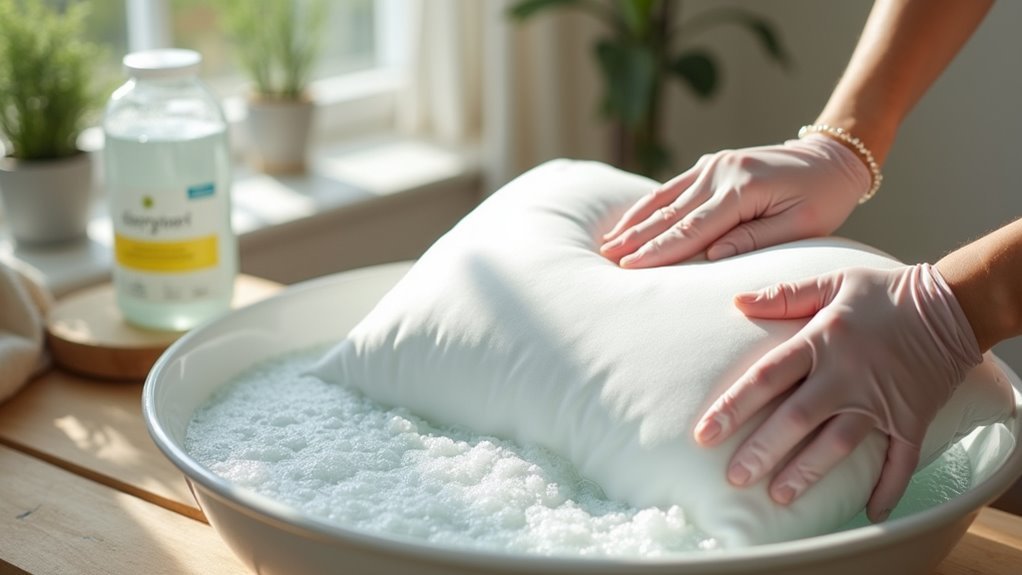
Every night, your pillow collects dead skin cells, sweat, oils, and dust mites that can quickly transform your sleep sanctuary into a breeding ground for bacteria and allergens.
Your pillow becomes a nightly magnet for dead skin, sweat, oils, and dust mites, creating the perfect bacterial breeding ground.
You should wash pillows every three to six months to reduce allergens and maintain proper hygiene. This frequency matters more than most people realize—pillows actually harbor more bacteria than other bedding items, making them just as important as cleaning your sheets regularly.
Check your pillow’s care tag and follow manufacturers instructions for proper washing techniques. Regular pillows care extends their 1.5 to 2-year lifespan while ensuring better sleep quality.
During illness, wash or replace pillowcases immediately to prevent germ spread and maintain a healthy sleep environment.
Machine Washing Methods for Different Pillow Types
Once you’ve determined your pillow needs washing, the cleaning method depends entirely on its filling material.
Most synthetic, down, and feather pillows are machine washable, while memory foam requires hand washing. Always check your pillow’s care guide before starting.
For machine washable pillows, load two at once to balance your washing machine. Use one tablespoon of liquid detergent and select a gentle cycle with lukewarm water as recommended on the care tag. After washing, remove excess water gently.
- Synthetic pillows: Dry on low heat setting
- Down and feather pillows: Air dry on no-heat to prevent damage
- Always verify pillows are completely dry to avoid mildew
- Check for specific washing instructions on care labels
- Balance loads with two pillows for best cleaning results
Hand Washing Techniques for Delicate Materials
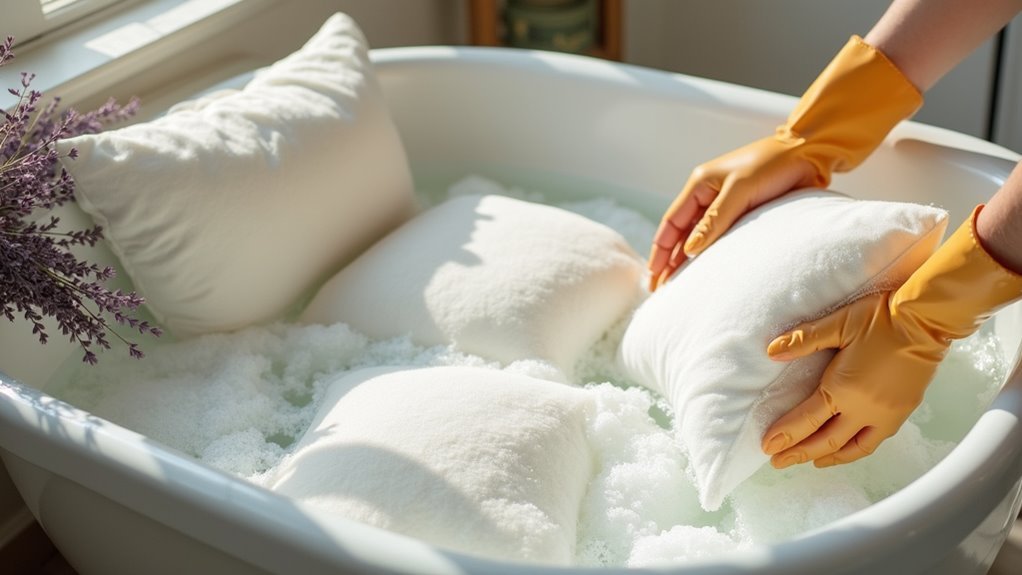
When machine washing isn’t suitable for your pillow’s delicate materials, hand washing becomes the safest cleaning method.
Memory foam pillows and latex varieties require this gentle approach to prevent structural damage. Fill a clean bathtub or basin with lukewarm water, then add natural detergent along with a small amount of vinegar for effective cleaning.
Gently squeeze and press the pillow through the soapy water, avoiding harsh agitation that could compromise its integrity. Rinse thoroughly multiple times until water runs completely clear, ensuring all detergent residue is removed.
To air dry properly, place the pillow in a well-ventilated area where you can maintain shape while avoiding direct sunlight that degrades delicate materials.
Effective Odor Removal and Freshening Strategies
Even after thorough washing, pillows can retain stubborn odors that require targeted freshening strategies to restore their cleanliness. Effective odor removal doesn’t always require another full wash cycle.
Strategic freshening techniques can eliminate persistent pillow odors without the need for repeated washing cycles.
You’ll find several natural methods that maintain your pillows without excessive washing.
- Harness sunlight’s power – Place pillows outside for 2-3 hours to naturally eliminate lingering odors while freshening fabric fibers.
- Apply baking soda treatment – Sprinkle generously, let sit 15+ minutes, then vacuum thoroughly for maximum odor absorption.
- Air out regularly – Position pillows in well-ventilated areas to reduce moisture buildup and prevent musty smells.
- Protect with pillowcases – Wash cases weekly to block skin cells, bacteria, and sweat from penetrating pillow materials.
- Store properly – Keep pillows in cool, dry locations when unused to prevent odor development.
Pillow Lifespan and Replacement Guidelines
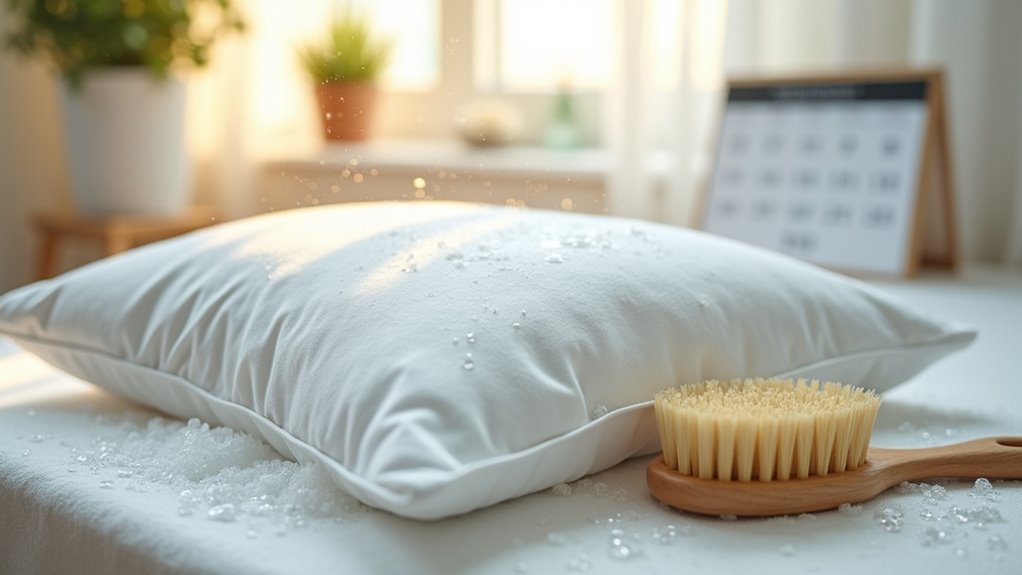
While proper maintenance and odor removal techniques can greatly extend your pillows’ usability, they won’t last forever regardless of how well you care for them. Most pillows have a typical pillow lifespan of 1.5 to 2 years for peak hygiene and support. During this time, bacteria and allergens accumulate despite regular washing.
You should replace pillows when they lose shape, develop persistent odors, or cause discomfort. However, consistent maintenance can extend lifespan beyond average replacement timeframes. Wash pillows every few months and change pillowcases frequently, especially when you’re sick.
Regular cleaning and airing out prevents moisture buildup and reduces contamination.
Quality affects durability—synthetic and down pillows have varying lifespans. Monitor your pillows’ condition and replace them when maintenance no longer maintains cleanliness and comfort.
Frequently Asked Questions
Is It Okay to Wash Pillows in a Washing Machine?
You can wash most pillows in a washing machine, including synthetic, down, and feather types. However, you should always check the care tag first and never machine wash memory foam pillows.
Can My Pillow Pillows Be Washed in the Washing Machine?
Yes, you can wash most Can My Pillow pillows in your washing machine. Check the care tag first, then use a gentle cycle with warm water and minimal liquid detergent for best results.
How Frequently Should Pillows Be Washed?
You should wash your pillows every three to six months to maintain proper hygiene and reduce allergens like dust mites. Regular cleaning helps guarantee better sleep health and prevents bacteria buildup.
Is It Okay to Put Pillows in the Dryer?
You can put most synthetic, down, and feather pillows in the dryer on low heat. However, never put memory foam pillows in dryers since heat damages the material and affects support.


