
You’ll need to stop certain medications 1-4 weeks before your sleep study, including sleep aids and antidepressants, while continuing others like blood pressure medications. Avoid caffeine and alcohol for eight hours prior, eat a light dinner 2-3 hours before arrival, and shower without using lotions or makeup that could interfere with sensors. Check in between 5:30-9:30 pm with your sleep diary and medication bottles. The thorough preparation guidelines below will guarantee you’re fully ready for your overnight study.
Understanding Your Sleep Study Appointment Details
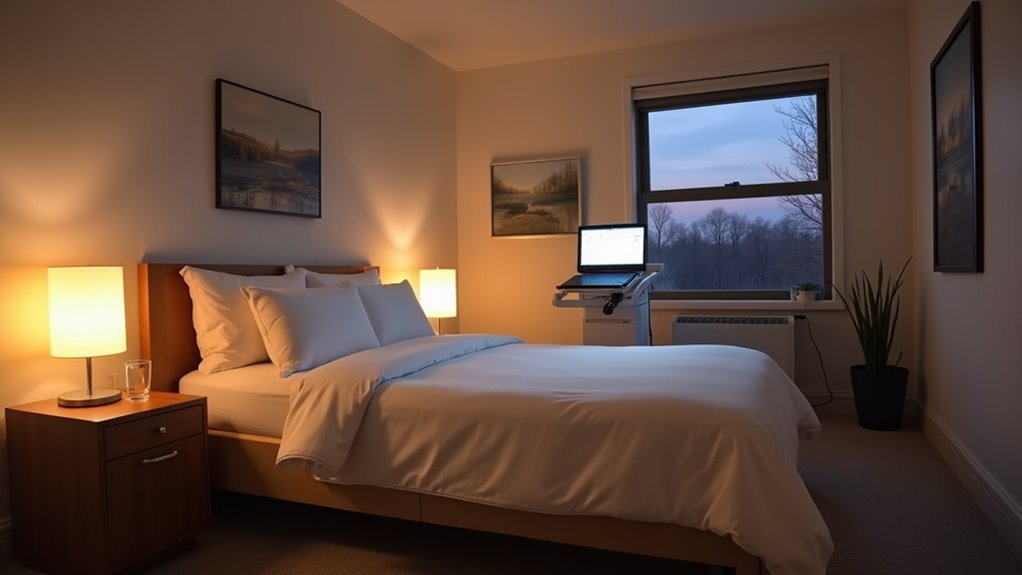
When should you arrive for your sleep study, and what can you expect during check-in?
You’ll typically check in between 5:30 pm and 9:30 pm, where staff will escort you to your private sleeping room.
Your appointment details include reviewing the sleep diary you’ve maintained for two weeks prior, documenting your sleep patterns.
The monitoring equipment consists of sensors used to track various physiological parameters, including brain waves, heart rate, and breathing patterns.
You’ll find the environment designed to be comfortable and hotel-like, ensuring you can rest naturally.
A microphone allows communication with the monitoring technician throughout the night for assistance, including bathroom breaks when needed during your study.
Medication Guidelines Before Your Sleep Study
Your medications can greatly impact your sleep study results, so you’ll need to discuss all prescription drugs, over-the-counter medications, and supplements with your healthcare provider beforehand.
Some medications may require timing adjustments or temporary discontinuation to guarantee accurate test readings.
You’ll also need to avoid certain substances like caffeine and alcohol for at least eight hours before your study, as these can interfere with your natural sleep patterns.
Disclosure Requirements for Medications
Since medications and supplements can dramatically alter your sleep patterns and skew study results, you’ll need to provide your sleep specialist with a complete list of everything you’re taking before your appointment.
This disclosure includes prescription drugs, over-the-counter medications, vitamins, and herbal supplements. Your healthcare provider will review each item and advise whether you should continue or temporarily stop certain medications before your sleep study.
Bring your actual prescription bottles to guarantee accurate reporting of dosages and timing.
Don’t make any changes to your medication routine without your doctor’s approval, especially for sleep aids or anxiety medications.
If you have concerns about stopping specific medications, discuss these with the sleep center staff beforehand to optimize your study results.
Timing of Medication Adjustments
The timing of these medication changes matters as much as which medications you adjust. Some medications require several weeks to clear your system before they’ll stop affecting your sleep patterns. Your healthcare provider will determine when adjustments are necessary for accurate test results based on your complete list of medications.
| Medication Type | Stop Timeline | Continue as Usual |
|---|---|---|
| Sleep aids | 2-4 weeks before | Blood pressure meds |
| Antidepressants | 1-3 weeks before | Heart medications |
| Stimulants | 1-2 weeks before | Diabetes medications |
| Melatonin supplements | 1 week before | Thyroid medications |
| Anti-anxiety drugs | As directed | Pain medications* |
You should consult your doctor about specific timing for your medications. Over-the-counter supplements must also be reviewed with the healthcare provider to guarantee ideal study conditions.
Prohibited Substances and Supplements
Beyond prescription medications, numerous everyday substances can interfere with your sleep study’s accuracy.
You’ll need to avoid caffeine during the afternoon and evening before your study, as it greatly impacts sleep quality and can skew assessment results.
Alcohol consumption should be completely avoided on the study day since it alters your natural sleep patterns and may produce misleading findings.
Many supplements and over-the-counter medications can also affect your sleep architecture.
You must discuss all substances you’re taking with your healthcare provider, including vitamins, herbal supplements, and non-prescription drugs.
Some may need to be discontinued days before your study to guarantee accurate results.
Bring a thorough list of all medications and supplements, including dosages and timing, to help technologists evaluate potential influences on your sleep patterns.
Dietary Restrictions and Timing Recommendations
What you eat and drink before your sleep study can greatly impact the accuracy of your results.
You’ll need to avoid caffeine and alcohol for at least eight hours prior to your appointment, as these substances can alter your natural sleep patterns.
Additionally, you should plan your meals carefully, eating light in the evening and avoiding heavy or rich foods that might disrupt your ability to fall asleep.
Caffeine and Alcohol Avoidance
Eight hours before your scheduled sleep study, you’ll need to stop consuming caffeine entirely. This restriction guarantees assessment accuracy by allowing your normal sleep patterns to remain undisturbed.
Caffeine lurks in coffee, tea, chocolate, and certain soft drinks, so you’ll want to avoid these throughout the afternoon and evening before your test.
Similarly, you should eliminate alcohol consumption during the afternoon and evening prior to your study. Alcohol notably alters sleep quality and can skew your results, making interpretation difficult for medical professionals.
While avoiding these substances, maintain your usual dietary habits otherwise. Don’t make dramatic changes to your eating patterns, as this could also affect your sleep.
Following these guidelines carefully guarantees reliable data collection during your sleep study.
Pre-Study Fasting Guidelines
Your meal timing and food choices on study day require careful attention to prevent sleep disruption.
You’ll need to avoid caffeine for at least eight hours before your sleep study, as it directly interferes with natural sleep patterns and can compromise test accuracy. Similarly, you must skip alcohol during the afternoon and evening, since it alters your normal sleep behavior.
Plan a light evening meal rather than heavy or rich foods that might cause discomfort throughout the night. This prevents digestive issues from affecting your sleep quality during monitoring.
Don’t forget to follow your doctor’s specific medication instructions, as some prescriptions may need adjustment before the study.
These dietary restrictions guarantee your sleep study produces reliable results that accurately reflect your typical sleep patterns.
Meal Timing Considerations
Beyond avoiding specific substances, proper meal timing plays an essential role in ensuring your sleep study captures accurate data.
Strategic eating habits can greatly impact your sleep quality and test results.
Follow these meal timing guidelines for ideal preparation:
- Avoid caffeine and alcohol for at least eight hours before your study, as these substances interfere with natural sleep patterns.
- Finish your last meal two to three hours prior to the scheduled study to prevent digestive discomfort.
- Choose light meals over heavy or rich foods that could disrupt your ability to fall asleep comfortably.
- Maintain your regular meal schedule throughout the day to promote normal sleep rhythms.
Consult your healthcare provider about any specific dietary restrictions based on your individual health needs before the study.
Personal Hygiene and Grooming Requirements
While preparing for your sleep study might seem straightforward, proper personal hygiene and grooming play an essential role in ensuring accurate results.
You’ll need to shower before arriving at the sleep center, but avoid using lotions, creams, or makeup that could interfere with sensor placement.
When washing your hair, use only shampoo—skip conditioners and styling products that might prevent proper adhesion.
If you have skin allergies to adhesives, inform the staff beforehand so they can use appropriate attachment methods for the sensors.
You can brush your teeth and use deodorant to maintain comfort throughout the night.
A clean appearance helps you feel relaxed, which is vital for obtaining valid sleep study data.
Packing Your Overnight Sleep Study Essentials
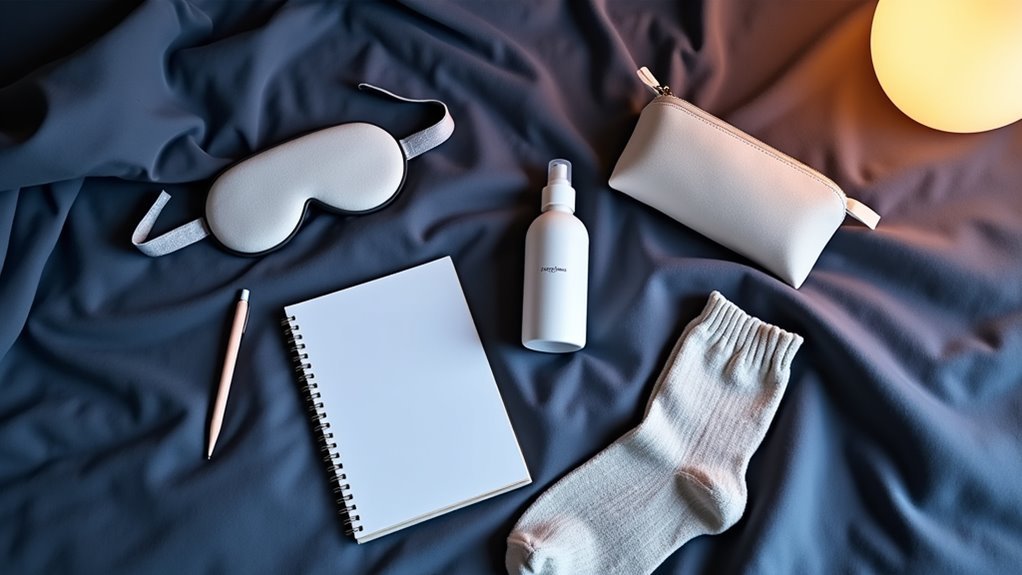
Five essential categories of items should guide your packing for an overnight sleep study.
You’ll want to create a comfortable sleep environment that mimics your home routine as closely as possible.
Your packing checklist should include:
- Comfortable sleepwear – Pack your typical pajamas to promote relaxation during the study.
- Personal hygiene items – Bring your toothbrush, toothpaste, dental floss, and other oral care essentials.
- Medications and documentation – Include all prescribed medications your doctor wants you to continue, plus a complete list of current drugs.
- Comfort and entertainment items – Pack personal pillows, books, or reading materials to help you unwind.
These essentials will help you feel more at ease during your overnight stay and guarantee you’re properly prepared for the sleep study.
Arrival Process and Check-In Procedures
You’ll typically arrive at the sleep center between 5:30 pm and 9:30 pm, when staff members will warmly greet you at check-in.
They’ll guide you through the initial paperwork process and answer any immediate questions you might’ve about the evening ahead.
Once you’ve completed the essential forms, staff will escort you to your private sleeping room that’s been specifically assigned for your study.
Arrival Time Windows
Most sleep centers schedule patient arrivals between 5:30 pm and 9:30 pm, giving technologists enough time to complete sensor setup and preparation before your normal bedtime.
When you arrive at the sleep center, you’ll follow a structured process designed to maximize your comfort:
- Check in with staff who’ll greet you and escort you to your designated bedroom.
- Complete a detailed questionnaire about your sleep habits and overall health.
- Meet with your sleep technologist for an overview of the equipment used during testing.
- Discuss any special needs or concerns to guarantee a comfortable experience.
This timing window allows adequate preparation without disrupting your natural sleep schedule.
The staff understands that undergoing sleep testing can feel unfamiliar, so they’re committed to addressing your questions and making the process as smooth as possible.
Initial Staff Greeting
| Check-in Step | Staff Role | Patient Experience |
|---|---|---|
| Arrival greeting | Welcome and guidance | Feel at ease |
| Room assignment | Show to bedroom | Get familiar with space |
| Equipment overview | Explain procedures | Understand monitoring process |
Bedroom Assignment Process
Three key steps define your bedroom assignment process once you arrive at the sleep center.
After check-in between 5:30 pm and 9:30 pm, staff will escort you to your designated room designed to feel like a comfortable hotel environment.
Your bedroom assignment includes these essential components:
- Room orientation – Staff will familiarize you with the quiet, comfortable environment.
- Sleepwear change – You’ll change into your comfortable sleepwear for the study.
- Equipment overview – A technologist will explain monitoring devices used to monitor crucial signs.
- Questionnaire completion – You’ll fill out forms about your sleep habits for study context.
The technologist guarantees you’re settled before sensor application begins.
This streamlined bedroom assignment process helps create ideal conditions for accurate sleep monitoring while maintaining your comfort throughout the night.
Sensor Placement and Equipment Setup
The sleep study technician will place several sensors on different parts of your body to monitor various physiological functions throughout the night.
During sensor placement, electrodes will be attached to your scalp using adhesive to detect brain activity, while EKG patches on your chest will track heart rate. Elastic bands around your chest will measure breathing movements.
The equipment used includes nasal prongs to monitor airflow and a finger sensor for oxygen levels. You’ll complete simple calibration tasks to guarantee accurate readings from all devices.
Technicians will periodically check the sensors throughout the night. You can sleep in your usual positions, though they may ask you to adjust if needed for ideal data collection.
Sleep Environment and Room Accommodations

Once all sensors are properly positioned, you’ll settle into your designated sleep study room for the night.
The sleep environment is designed to replicate comfortable hotel-style accommodations rather than clinical hospital settings. These private rooms create an atmosphere that promotes natural rest while allowing thorough data collection.
Your room includes several amenities to enhance comfort:
- Private bathroom and shower for complete privacy throughout your stay
- Low-light cameras that discretely record sleep behavior without disruption
- Intercom system connecting you directly to technicians monitoring your sleep
- Space for personal items like your favorite pillow or blanket from home
Technicians observe from a separate monitoring room, ensuring minimal interference with your natural sleep patterns while maintaining professional oversight throughout the night.
Movement and Bathroom Access During the Study
Despite being connected to multiple monitoring wires, you’ll maintain considerable freedom of movement throughout your sleep study. You can change sleeping positions naturally, though technologists may occasionally request you remain on your back for ideal data collection.
| Situation | Process | Staff Assistance |
|---|---|---|
| Bathroom break needed | Vocalize your request through microphone | Technologist unplugs wires for easy reconnection |
| Position changes | Move freely as comfortable | Minimal intervention required |
| Questions or concerns | Communicate via room microphone | Immediate technologist response |
Bathroom access won’t disrupt your comfortable experience. Sleep centers feature private bathrooms, and monitoring equipment disconnection is straightforward. The technologist remains attentive throughout, ensuring you can communicate any needs. This setup maintains study integrity while prioritizing your comfort and natural sleep patterns.
Monitoring and Staff Supervision Throughout the Night
While you sleep peacefully in your private room, trained technologists maintain constant vigilance from a specialized monitoring station nearby.
They’re continuously tracking your crucial signs throughout the night, including heart rate and breathing patterns. The staff uses sophisticated equipment to gather thorough data about your sleep patterns without disturbing your rest.
Your comfort remains their priority through several monitoring methods:
- Sensor adjustments – Staff may quietly enter to reposition loose sensors
- Video observation – Low-light cameras capture sleep behavior unobtrusively
- Intercom communication – You can request assistance or bathroom breaks instantly
- Medical support – Technologists address any health concerns immediately
The monitoring team’s expertise guarantees you’ll feel comfortable and relaxed, which is fundamental for obtaining accurate sleep study results.
Morning Disconnection and Departure Process
As morning arrives and your sleep study concludes, a skilled technologist will gently wake you and begin the careful process of disconnecting all sensors and monitoring equipment.
A skilled technologist will gently wake you and carefully disconnect all sensors and monitoring equipment as your sleep study concludes.
This disconnection happens systematically, ensuring no discomfort as each device is carefully removed from your body.
You’ll be provided access to a private room where you can change into comfortable daytime clothing and gather your personal belongings. The entire process prioritizes your comfort and privacy throughout.
Before departing the sleep center, you’ll receive information about next steps.
A trained sleep specialist will review and interpret your study results, with follow-up appointments typically scheduled approximately two weeks later to discuss findings and potential treatment options based on your overnight monitoring data.
Timeline for Receiving Your Sleep Study Results
After you leave the sleep center, you’ll naturally wonder when you can expect to receive your results. Your sleep study data undergoes thorough analysis by trained technologists before a board-certified sleep specialist reviews everything, which typically takes about two weeks.
The extensive review process involves examining approximately 1,000 pages of data containing your physiological measurements:
- Brain wave patterns during different sleep stages
- Eye movement tracking throughout the night
- Breathing patterns and respiratory events
- Heart rate and oxygen level fluctuations
You’ll receive a follow-up visit appointment to discuss your results in detail.
The timeline may vary depending on data complexity and the sleep center’s workload. During your initial consultation, ask about expected timeframes so you can plan accordingly for this waiting period.
Frequently Asked Questions
What Should You Not Do Before a Sleep Study?
You shouldn’t consume caffeine or alcohol eight hours before your study, take naps that day, use lotions or hair products, or change your medication routine without consulting your healthcare provider first.
Can I Go to the Bathroom During a Sleep Study?
You can definitely go to the bathroom during a sleep study. Simply vocalize your request, and the technologist will quickly disconnect your monitoring wires from the control box to assist you.
What Will Make You Fail a Sleep Study?
You’ll fail a sleep study if you consume caffeine or alcohol beforehand, nap during the day, use hair products, don’t disclose medications, or maintain irregular sleep schedules before testing.
How Many Hours of Sleep Do You Need for an Accurate Sleep Study?
You need at least two hours of sleep for an accurate sleep study. This minimum duration allows technologists to collect meaningful data on your sleep patterns, stages, and any disturbances that occur.


Leave a Reply