

You’ll get the best sleep benefits by doing cardio in the morning rather than evening. Morning workouts help regulate your circadian rhythms and align your internal clock, while intense evening exercise can raise cortisol levels and delay sleep onset by 30-90 minutes. If you prefer evening workouts, stick to moderate intensity and finish at least two hours before bedtime. Your individual response varies, so experiment with different timing to discover what optimizes both your fitness and rest.
How Cardio Exercise Affects Your Sleep Quality
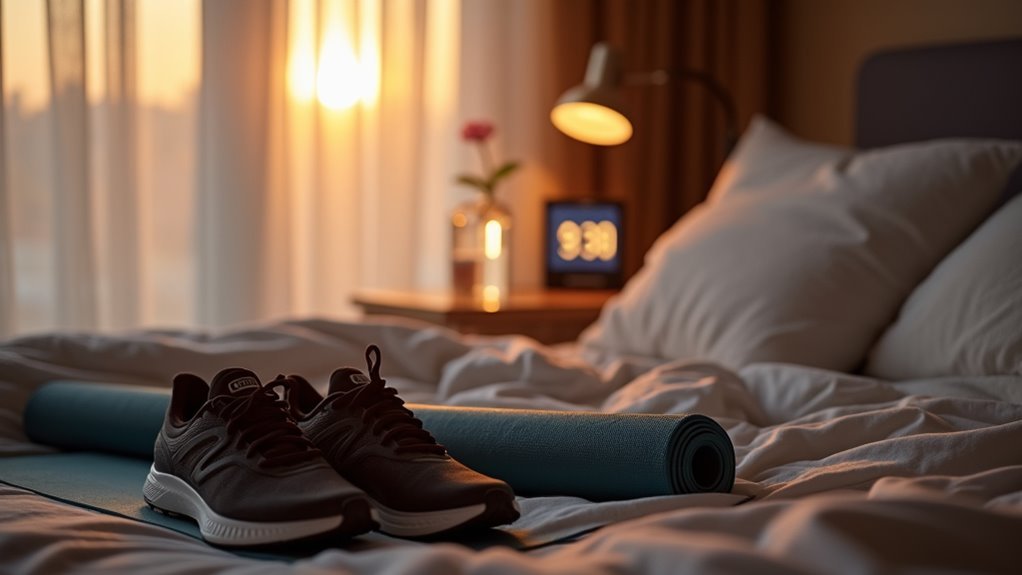
While you might think any time is good for cardio, when you exercise greatly impacts how well you’ll sleep that night.
Moderate aerobic exercise increases slow wave sleep, which helps your brain and body rejuvenate for better sleep quality. You’ll notice improvements the same night after just 30 minutes of cardio exercise – no long-term commitment required.
Just 30 minutes of moderate cardio can improve your sleep quality the very same night.
However, exercise timing matters considerably. Working out 1-2 hours before bedtime allows your core body temperature to drop, signaling your body to prepare for rest.
Exercise too close to bedtime and you’ll disrupt your sleep instead. Regular cardio exercise reduces sleep complaints and insomnia symptoms as effectively as sleeping pills.
Since individual responses vary, you’ll need to experiment with timing to optimize your sleep quality.
The Science Behind Exercise Timing and Sleep Patterns
Behind every good night’s sleep lies a complex web of biological processes that your workout timing can either support or sabotage.
When you engage in moderate aerobic exercise, your body initiates a cascade of physiological changes affecting sleep quality. Your core temperature rises during activity, then drops afterward, signaling your brain it’s time to rest. Endorphin levels spike during workouts but need time to decrease before bedtime.
The science reveals that exercise timing dramatically impacts these processes. Regular exercise enhances slow wave sleep, your deepest restorative phase.
However, intense exercise close to bedtime elevates cortisol and brain activity, disrupting natural sleep patterns. Research demonstrates that strategic timing—exercising 1-2 hours before bed—optimizes these biological rhythms for superior rest.
Morning Cardio Benefits for Nighttime Rest

Starting your cardio routine at sunrise sets the stage for exceptional sleep quality hours later. Your morning workout regulates your circadian rhythm, naturally synchronizing your body’s internal clock with daylight hours. This alignment helps you feel more alert during the day and naturally tired as evening approaches.
Aerobic exercise in the morning kickstarts your metabolism, creating a sustained calorie burn that continues throughout the day. This metabolic boost contributes to the physical fatigue necessary for deeper sleep cycles.
Studies show that consistent morning cardio reduces insomnia symptoms and improves overall sleep patterns without relying on medications.
Why Evening Workouts May Disrupt Your Sleep
Although evening workouts can feel invigorating in the moment, they often sabotage your sleep quality by triggering a cascade of physiological responses that keep your body in an awakened state.
Evening workouts trigger physiological responses that sabotage sleep quality by keeping your body in an awakened state.
When you engage in intense exercise close to bedtime, your cortisol levels spike, creating heightened alertness that counteracts your natural sleep signals. Your elevated body temperature and surging endorphins further delay sleep onset by 30 to 90 minutes.
High-intensity evening workouts performed less than an hour before bed consistently produce longer sleep onset times and reduced restfulness.
While your physical performance may peak during late afternoon and early evening hours, this timing can backfire if you prioritize sleep recovery.
You’ll achieve better sleep quality by avoiding strenuous exercise for at least two hours before bedtime.
Optimal Timing Windows for Different Cardio Intensities

You’ll find that different cardio intensities work best at specific times of day to maximize your sleep benefits.
Morning light cardio like gentle walking or easy cycling helps regulate your circadian rhythm without overwhelming your system early in the day.
Evening moderate exercise, performed 1-2 hours before bed, can actually improve your sleep quality by allowing your body temperature and heart rate to settle before you hit the sheets.
Morning Light Cardio
Many fitness enthusiasts find that morning light cardio offers the ideal balance between effectiveness and sustainability. When you exercise during this time, you’ll boost your metabolism and enhance calorie burning throughout the day. Your energy levels will increase notably due to endorphin release, setting a positive tone for daily activities.
Incorporating moderate-intensity activities like brisk walking or jogging into your morning exercise routine helps regulate circadian rhythms, promoting better sleep at night. You’ll face fewer distractions during morning workouts, allowing greater consistency in your fitness habits.
For best results, complete your cardio sessions within the first few hours after waking, before your schedule becomes hectic. Exercising outdoors in natural light further improves mood and alertness, contributing to overall well-being.
Evening Moderate Exercise
While conventional wisdom suggests avoiding exercise before bed, evening moderate cardio can actually improve your sleep quality when timed correctly.
You’ll want to complete your evening exercise at least 1-2 hours before bedtime, allowing your core body temperature to naturally decline and promote sleepiness. Stick to moderate-intensity activities like brisk walking or light jogging rather than high-intensity sessions, which can delay sleep onset within one hour of bedtime.
Research shows that moderate exercise performed in the evening increases deep sleep duration, helping your body achieve better rejuvenation.
When you establish a consistent workout routine in the evening, you’ll also experience mood stabilization and stress reduction, both essential components of proper sleep hygiene for ideal rest.
Recommended Duration and Frequency for Sleep Enhancement
Just 30 minutes of moderate cardio can transform your sleep quality that very night, making this one of the most immediate benefits of aerobic exercise.
For ideal results, you’ll want to aim for 150 to 300 minutes of moderate physical activity weekly, or 75 to 150 minutes if you prefer high-intensity workouts.
Don’t worry if you can’t complete a full 30-minute session—breaking it into three 10-minute bursts throughout your day still delivers significant sleep benefits.
Your exercise program doesn’t need to be complex; consistent moderate cardio that elevates your heart rate will improve sleep complaints as effectively as sleeping pills.
The key is regularity rather than intensity, so focus on building sustainable habits that fit your schedule while meeting these weekly targets.
Creating Your Personal Cardio Schedule for Better Sleep
You’ll need to experiment with different workout times to discover what works best for your sleep patterns and energy levels.
Morning cardio can boost your alertness and mood throughout the day, while evening sessions let you capitalize on your body’s peak performance hours for strength and endurance.
The key is timing your evening workouts carefully—aim to finish at least 1 to 2 hours before bedtime to avoid disrupting your sleep quality.
Morning Cardio Benefits
Although many people struggle to start their day with exercise, morning cardio delivers powerful benefits that extend far beyond the workout itself.
When you engage in morning activity, your body’s metabolism receives an immediate boost, enhancing calorie burning throughout the entire day. This increased metabolic rate contributes to better energy levels and supports weight management goals.
Morning exercise also helps regulate your circadian rhythms, directly improving your rest quality at night. You’ll find that early workouts are less likely to be interrupted by daily commitments, allowing you to maintain consistent routines.
Studies show that morning cardio increases alertness and focus, boosting productivity all day. For ideal results, eat a balanced breakfast before your workout to maximize energy and enjoyment.
Evening Workout Timing
While morning cardio offers clear advantages, evening workouts can be equally effective when timed correctly for your sleep schedule. Your body temperature and muscle function peak during afternoon and early evening hours, potentially enhancing your performance and heart rate response during exercise in the evening.
However, timing matters considerably for maintaining ideal sleep quality:
- Finish high-intensity cardio at least two hours before bedtime
- Monitor your personal response to evening workouts and adjust accordingly
- Create a consistent schedule to help regulate your circadian rhythms
- Choose moderate-intensity exercises if you’re working out closer to bedtime
Most people don’t experience negative sleep effects from evening workouts, and some actually see improvements.
Pay attention to how your fitness level and individual body responds to determine your ideal timing.
Individual Sleep Response
Since everyone’s body responds differently to exercise timing, creating your personalized cardio schedule requires careful observation of your sleep patterns and energy levels.
Individual responses to cardio timing vary greatly—some people sleep better after evening workouts, while others find them disruptive. You’ll need to monitor personal sleep patterns by tracking how different workout times affect your rest quality and recovery.
Start by experimenting with various schedules. Try morning sessions to boost alertness and regulate circadian rhythms, then test moderate evening workouts at least 1-2 hours before bedtime.
Pay attention to how each timing impacts your ability to fall asleep and stay asleep. This systematic approach helps you identify the ideal time for cardio that works specifically for your body, allowing you to develop the best cardio schedule to enhance sleep quality.
Frequently Asked Questions
Is It Better to Do Cardio on Rest Days?
You’ll benefit from light cardio on rest days as it promotes active recovery, reduces muscle soreness, and improves circulation. However, listen to your body—if you’re feeling fatigued, complete rest is better.
What Is the 3-3-3 Rule Gym?
You’ll perform three sets of three different exercises with three repetitions each. This high-intensity method targets multiple muscle groups, boosts metabolism, and delivers a full-body workout in just twenty to thirty minutes.
When to Do Cardio for Best Results?
You’ll get best cardio results by exercising when your energy’s highest and you can maintain consistency. Morning workouts boost metabolism all day, while evening sessions leverage peak body temperature for enhanced performance.
Is 2 Hours of Cardio a Day Too Much?
Yes, you’re likely overdoing it with 2 hours daily. You’ll risk overtraining, exhaustion, and injuries since it exceeds recommended guidelines. Stick to 60 minutes max and listen to your body’s signals.


Leave a Reply