

You can greatly improve your sleep quality by eating specific foods that naturally boost melatonin and serotonin production. Almonds provide magnesium and natural melatonin, while tart cherry juice offers concentrated sleep-regulating compounds. Fatty fish like salmon deliver omega-3s that balance your sleep-wake cycles, and kiwi fruit contains serotonin for faster sleep onset. Chamomile tea’s apigenin reduces insomnia, walnuts pack melatonin, and turkey’s tryptophan enhances drowsiness. These nutritional powerhouses will transform your nighttime rest.
Almonds: Nature’s Sleep-Promoting Powerhouse
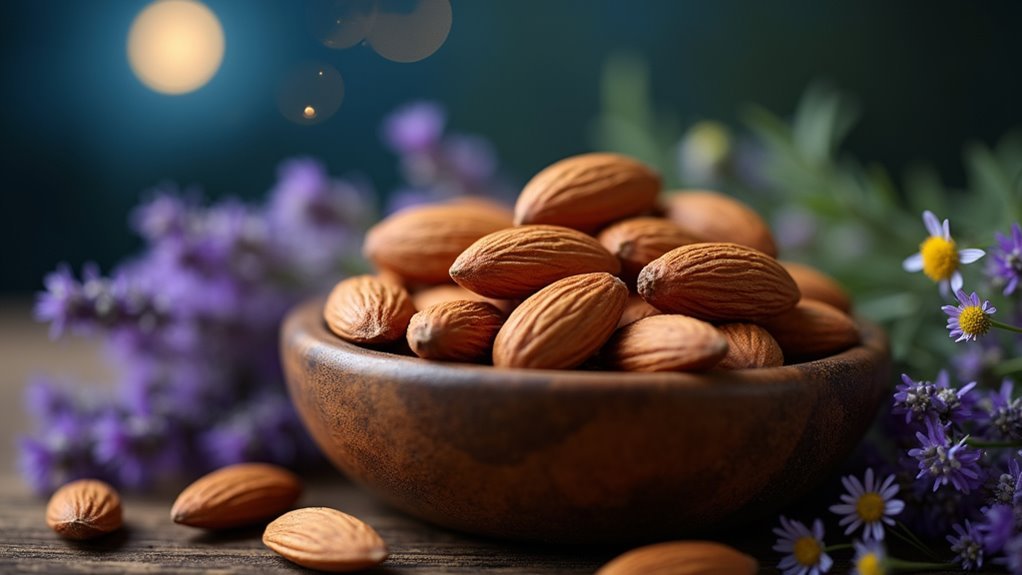
When you’re struggling to fall asleep, reaching for a handful of almonds might be your best bet for natural relief. These nutrient-packed nuts contain magnesium, which helps regulate sleep patterns and promotes better sleep by controlling melatonin production.
You’ll also benefit from their natural melatonin content, which prepares your body for rest by regulating your internal clock.
Almonds provide healthy fats and fiber that support overall wellness while potentially improving sleep quality. Research shows almond extract may lead to deeper sleep, making these nuts an ideal nighttime snack.
Beyond sleep benefits, regular consumption supports heart health, giving you additional reasons to incorporate almonds into your evening routine for enhanced rest and overall well-being.
Tart Cherry Juice: A Natural Source of Melatonin
If you’re looking for a natural way to boost your body’s melatonin production, tart cherry juice offers one of the richest dietary sources of this sleep-regulating hormone.
Research consistently shows that drinking two cups daily can greatly improve your sleep duration and quality, particularly if you struggle with insomnia.
The key to maximizing these benefits lies in timing your consumption properly, typically within a few hours before your intended bedtime.
Natural Melatonin Content
Sleep struggles often lead people to reach for synthetic supplements, but nature offers a powerful alternative in tart cherry juice. This ruby-red beverage contains naturally occurring melatonin, making it one of the most effective natural food sources for sleep enhancement.
Montmorency cherries deliver particularly high concentrations of this sleep-regulating hormone, helping you improve sleep quality without artificial additives.
When you drink two cups daily, especially before bedtime, you’ll experience increased sleep duration and reduced insomnia symptoms. The antioxidants provide additional health benefits through anti-inflammatory effects that support overall sleep health.
- Contains naturally occurring melatonin to regulate sleep-wake cycles
- Montmorency variety offers highest melatonin concentrations
- Two cups daily increases total sleep time
- Reduces insomnia symptoms effectively
- Antioxidants provide anti-inflammatory sleep benefits
Sleep Quality Research
Although countless sleep aids flood the market, scientific research consistently validates tart cherry juice as one of nature’s most effective sleep enhancers.
Studies demonstrate that consuming two cups daily notably increases sleep duration and efficiency compared to placebos. The juice’s natural melatonin content directly improves your sleep-wake cycle regulation, while its antioxidants reduce inflammation that disrupts rest.
Research specifically targeting insomnia sufferers shows remarkable improvements when you drink tart cherry juice before bed. The sleep-enhancing properties prove particularly beneficial for older adults experiencing sleep disturbances.
Clinical trials reveal that this natural remedy’s anthocyanins work synergistically with melatonin to optimize sleep quality. You’ll find that tart cherry juice consistently outperforms many conventional sleep aids in scientific testing, making it a research-backed solution for better nighttime rest.
Optimal Consumption Timing
When you’re ready to harness tart cherry juice’s sleep-promoting benefits, timing becomes essential for maximum effectiveness. You should consume tart cherry juice approximately one hour before bedtime to maximize its melatonin content and enhance your sleep quality.
This strategic timing allows the natural melatonin to work with your body’s circadian rhythms, helping you fall asleep faster and improve overall rest duration.
- Drink two cups daily to considerably increase total sleep time, especially if you suffer from insomnia
- Choose Montmorency varieties for highest melatonin concentration and sleep-promoting properties
- Consume one hour before bedtime for ideal absorption and effectiveness
- Incorporate antioxidants that reduce inflammation while supporting better sleep hygiene
- Establish consistent timing to promote sleep patterns and enhance your nightly rest routine
Fatty Fish: Omega-3s for Better Sleep Cycles
Since fatty fish like salmon, tuna, and mackerel pack high concentrations of omega-3 fatty acids, they’re powerful allies for improving your sleep quality.
These dietary sources contain EPA and DHA, which regulate serotonin production—a hormone essential for healthy sleep-wake cycles.
Research shows eating salmon three times weekly enhances nighttime rest and daytime functioning. The omega-3s work by balancing your body’s natural rhythms, promoting better sleep throughout the night.
Fatty fish also delivers vitamin D, creating a powerful combination that further supports restful sleep.
You’ll find this particularly beneficial during winter months when vitamin D levels naturally decline.
Kiwi Fruit: Serotonin-Rich Sleep Aid
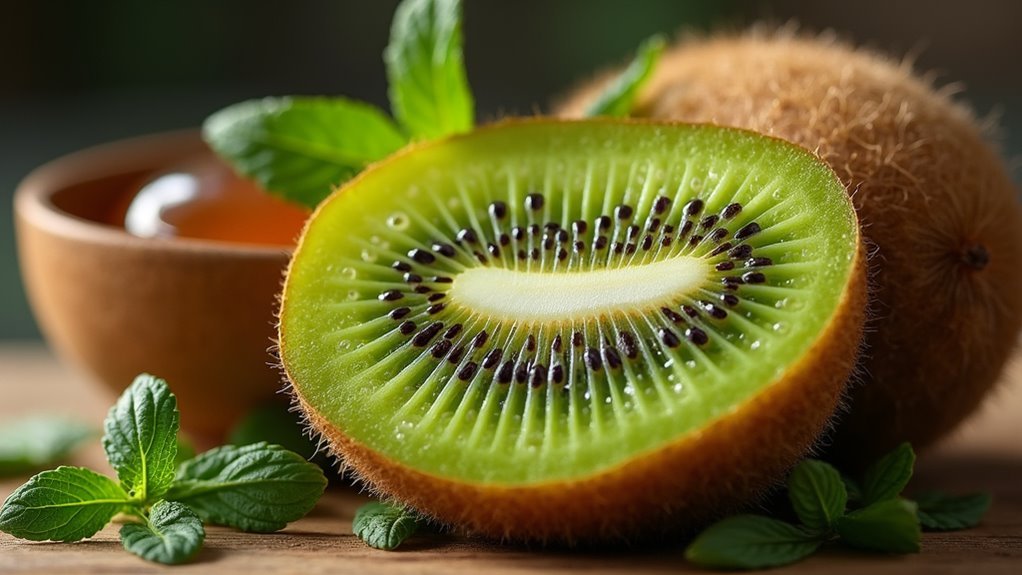
While many people reach for supplements to improve their sleep, kiwi fruit offers a natural solution that’s both delicious and scientifically proven. This fuzzy fruit contains serotonin, which helps regulate your sleep cycles and promotes better sleep quality.
Research shows that eating two kiwis one hour before bedtime helps you fall asleep faster and enhances your nighttime rest.
Kiwi fruit also provides essential vitamins C and E, potassium, and folate for overall health. The antioxidants in kiwis reduce oxidative stress, supporting improved sleep outcomes.
- Eat two kiwis an hour before bed for ideal results
- Choose this natural sleep aid over synthetic supplements
- Enjoy as a light evening snack to avoid heavy digestion
- Store ripe kiwis in the refrigerator for convenience
- Pair with other sleep-promoting foods for maximum benefits
Chamomile Tea: Ancient Remedy for Modern Sleep Issues
Though chamomile tea has soothed sleepless nights for thousands of years, modern science now confirms what ancient civilizations instinctively knew about this gentle herbal remedy.
You’ll find chamomile tea’s calming properties stem from apigenin, an active compound that binds to brain receptors and reduces insomnia symptoms. When you drink this herbal infusion before bedtime, its mild sedative properties help ease anxiety and prepare your body for relaxation.
Research supports chamomile tea’s effectiveness as a sleep aid. A 2017 study showed older adults who consumed chamomile capsules experienced considerably improved sleep quality.
You’re also getting powerful antioxidants that reduce inflammation and support overall sleep health. This ancient remedy offers modern solutions for better nighttime rest.
Walnuts: Melatonin-Packed Bedtime Snack
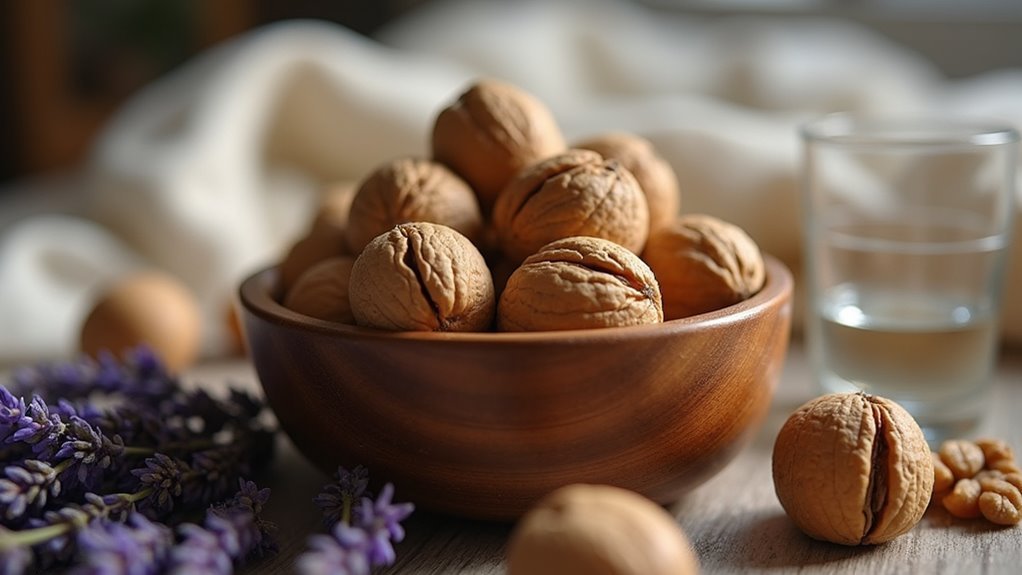
When bedtime hunger strikes, walnuts offer a scientifically-backed solution that’s both satisfying and sleep-inducing. You’ll get natural melatonin from these nutrient-dense nuts, which helps regulate your sleep patterns and enhances sleep quality.
Studies show that eating walnuts increases blood melatonin levels, leading to longer, more restful sleep.
Beyond melatonin, you’re also getting omega-3 fatty acids and antioxidants that support overall health while promoting better rest. A small handful makes an excellent bedtime snack that won’t disrupt your digestion.
- Choose raw or lightly roasted walnuts for maximum nutritional benefits
- Eat them 30-60 minutes before bed for ideal melatonin absorption
- Pair with a small piece of fruit for added natural sweetness
- Store in airtight containers to maintain freshness and potency
- Incorporate into your regular nighttime routine for consistent sleep improvement
Turkey: Tryptophan’s Role in Sleep Enhancement
You’ve likely heard that turkey makes you sleepy, and there’s solid science behind this claim.
Turkey’s high tryptophan content—around 350-400 mg per serving—directly supports your body’s natural melatonin production, making it easier to fall asleep.
When you combine turkey’s quality protein with its sleep-promoting amino acids, you’re giving your brain the essential building blocks it needs for restorative nighttime rest.
Tryptophan and Melatonin Production
Since turkey contains high levels of tryptophan, an essential amino acid that serves as a building block for serotonin production, it’s become one of the most recognized foods for promoting better sleep.
Your body converts tryptophan into serotonin, which then transforms into melatonin—the hormone that regulates your sleep-wake cycles.
When you consume turkey before bedtime, you’re enhancing melatonin production, leading to increased drowsiness and improved sleep quality.
Research shows that moderate protein intake from turkey supports better sleep patterns.
Additionally, turkey’s nutrients like riboflavin, phosphorus, and selenium contribute to your overall health, indirectly supporting restful sleep.
- Turkey naturally boosts serotonin levels in your brain
- Tryptophan converts to sleep-regulating melatonin hormone
- Moderate protein intake improves overall sleep patterns
- Essential nutrients support your body’s health systems
- Evening turkey consumption enhances natural drowsiness
Protein’s Sleep Benefits
Beyond the specific tryptophan pathway, turkey’s complete protein profile amplifies these sleep-promoting effects through multiple mechanisms.
When you consume turkey as a nighttime meal, you’re getting high-quality protein that supports steady amino acid release throughout the night. This sustained protein delivery helps maintain peak serotonin production, extending beyond tryptophan’s initial impact on sleep quality.
Turkey’s protein density also provides essential nutrients like riboflavin and selenium, which support your body’s natural sleep processes.
You’ll experience enhanced drowsiness as these amino acids work synergistically to promote restful sleep. The moderate protein intake from turkey helps stabilize blood sugar levels during sleep, preventing middle-of-the-night awakenings.
This complete nutritional package makes turkey an ideal choice for improving your overall sleep architecture and morning recovery.
Frequently Asked Questions
What Healthy Food Can Help You Get Better Quality Sleep at Night?
You can eat kiwi, drink tart cherry juice, consume fatty fish like salmon, snack on almonds or walnuts, and have brown rice before bed. They’ll help you fall asleep faster and improve your overall sleep quality naturally.
What Foods Are Good for Bed Rest?
You’ll benefit from eating turkey, kiwi, almonds, and tart cherries before bed. These foods contain tryptophan, melatonin, and magnesium that naturally promote drowsiness and help you fall asleep faster while improving sleep quality.
How to Improve Sleep Quality at Night?
You’ll improve sleep quality by maintaining consistent bedtimes, creating a dark cool environment, limiting screen time before bed, exercising regularly during daytime, managing stress through relaxation techniques, and avoiding late caffeine consumption.
What Is the Best Food to Eat Before Bed?
You’ll want to choose tryptophan-rich foods like turkey or dairy, paired with complex carbohydrates such as whole grain crackers. These combinations help your body produce melatonin naturally, making it easier to fall asleep.


Leave a Reply