
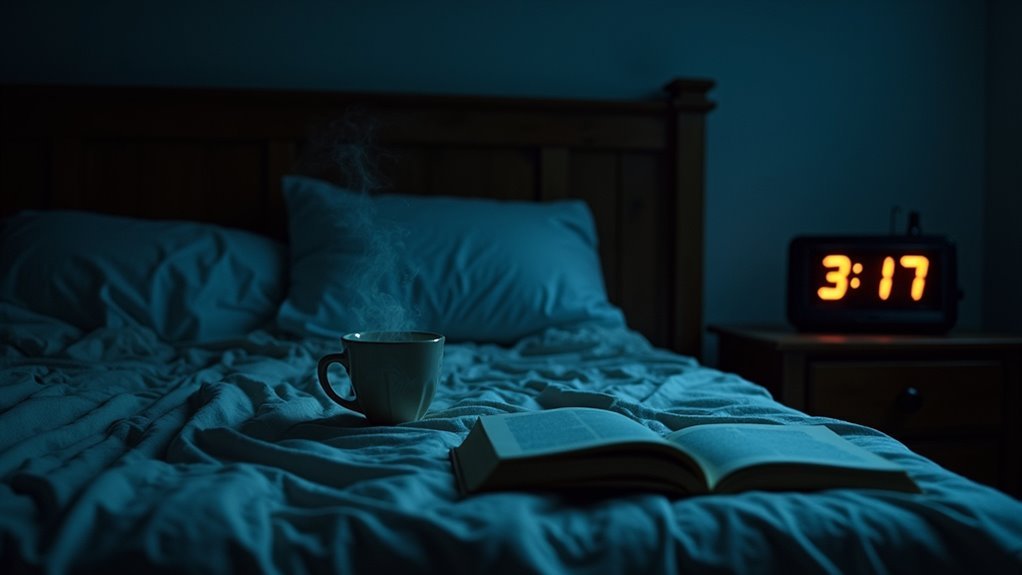
You’re disrupting your sleep quality when you consume caffeine within six hours of bedtime. Caffeine blocks adenosine receptors in your brain, preventing natural drowsiness signals and reducing total sleep time by up to 1.2 hours. Your genetic makeup affects how quickly you metabolize caffeine, with some people needing stricter timing restrictions. This creates a vicious cycle where poor sleep leads to increased caffeine dependence, worsening your sleep debt and requiring strategic intervention to restore natural rest patterns.
How Caffeine Blocks Your Body’s Natural Sleep Signals

When you drink that afternoon cup of coffee, caffeine molecules race through your bloodstream and attach themselves to adenosine receptors in your brain, effectively hijacking your body’s natural sleep system.
Adenosine normally accumulates throughout your day, making you progressively sleepier. However, caffeine’s molecular structure mimics adenosine, allowing it to block these vital receptors and prevent drowsiness signals from reaching your brain.
Caffeine’s molecular mimicry hijacks your brain’s natural drowsiness signals by blocking adenosine receptors throughout the day.
This disruption doesn’t end quickly. Caffeine’s half-life ranges from 2 to 12 hours, meaning even moderate caffeine consumption can disrupt your natural sleep signals well past bedtime.
Research shows consuming caffeine just 6 hours before sleep reduces total sleep time by up to 1.2 hours, markedly compromising your sleep quality and creating a cycle of dependence.
The Six-Hour Rule: When Your Last Cup Matters Most
Understanding caffeine’s persistence in your system becomes especially important when you consider the timing of your last daily dose.
Research shows that caffeine consumption within six hours of bedtime can disrupt sleep and reduce your total sleep time by approximately one hour. Even consuming caffeine just three hours before bed increases nighttime wake periods by nearly 28 minutes.
Caffeine’s half-life ranges from 2 to 12 hours, depending on individual factors like metabolism and genetics. This means your afternoon coffee might still be affecting you at midnight.
The FDA recommends you limit caffeine intake and cut off consumption by 2 or 3 p.m. for ideal sleep quality. If you’re particularly sensitive to caffeine, you’ll need to be even more mindful about your timing of intake.
Individual Differences in Caffeine Sensitivity and Metabolism
Your body’s response to caffeine isn’t one-size-fits-all—it’s determined by your unique genetic makeup, which controls how quickly you metabolize caffeine.
Your age and weight also play vital roles, with older adults typically processing caffeine much slower than younger people.
Additionally, any medications you’re taking can dramatically alter how caffeine affects your system, creating unexpected interactions that influence your sleep patterns.
Genetic Factors Affect Metabolism
Although you might assume caffeine affects everyone equally, your genetic makeup actually determines how your body processes this stimulant.
Genetic variations in your CYP1A2 gene dictate whether you metabolize caffeine quickly or slowly, dramatically affecting your sensitivity to effects. If you’re a slow metabolizer, caffeine’s half-life extends from 2 to 12 hours, prolonging stimulant effects and increasing sleep disruption risks.
Your genetic predisposition influences tolerance levels and potential health risks associated with caffeine consumption. Fast metabolizers can typically consume more without experiencing heightened cardiovascular responses, while slow metabolizers face increased sleep disturbances and stronger physiological reactions.
Understanding your genetic caffeine metabolism rate helps you make informed decisions about timing and quantity, potentially preventing those restless nights when caffeine lingers longer than expected in your system.
Age and Weight Variations
Beyond genetic variations, your age and body weight create additional layers of complexity in how caffeine affects your sleep patterns.
As you get older, your metabolism naturally slows down, making you more sensitive to caffeine’s effects. This means older individuals often experience stronger sleep disruptions from the same amount of caffeine that younger people can handle easily.
Your body weight also plays a significant role in sensitivity levels. If you’re lighter, you’ll likely feel caffeine’s effects more intensely than heavier individuals who need larger doses for similar stimulation.
Combined with genetic factors that influence half-life duration, these personal characteristics determine your unique caffeine tolerance and sleep quality response.
Medication Interaction Effects
When you take medications alongside caffeine, you’re creating a complex chemical interaction that can markedly alter how your body processes both substances.
Your caffeine metabolism changes markedly when medications interact with your system. If you’re a smoker taking nicotine, you’ll metabolize caffeine 50% faster, reducing its half-life and potentially lessening caffeine effects on sleep.
However, certain antidepressants and hormonal treatments can enhance or diminish caffeine’s stimulating properties, affecting your sensitivity and sleep disruption patterns. Your individual experience varies greatly depending on these interactions.
When you combine caffeine with alcohol or specific dietary components, you’re further altering metabolism rates, which directly impacts your alertness levels and sleep quality throughout the night.
Hidden Sources of Caffeine That Sabotage Sleep
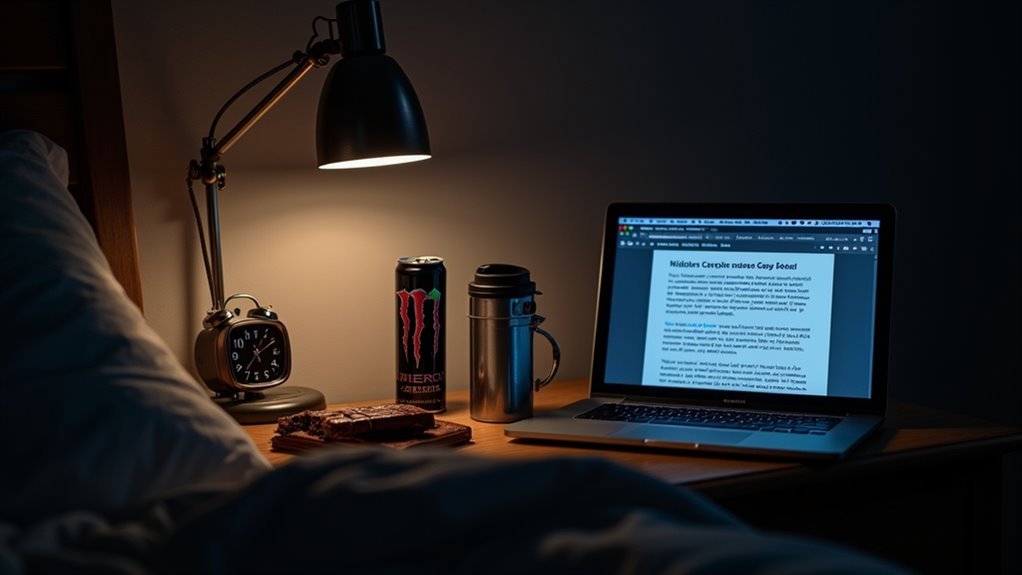
Why does your sleep suffer even when you’ve sworn off coffee after 2 PM? You’re likely consuming hidden sources of caffeine that sabotage your rest without realizing it.
| Hidden Source | Caffeine Content |
|---|---|
| Dark chocolate (50g) | 10-25 mg |
| Pain medications | 30-65 mg |
| Energy bars | 50-100 mg |
Chocolate consumption increases your caffeine intake, especially with higher cocoa percentages that can disrupt sleep quality. When you combine chocolate with tea, you’re getting caffeine levels comparable to espresso. Many medications contain caffeine too—particularly pain relievers and cold treatments that unknowingly boost your daily consumption.
Energy drinks aren’t the only culprits; certain soft drinks and energy bars pack significant amounts. Managing these hidden sources is essential for protecting your sleep quality and establishing better rest patterns.
Breaking the Cycle: Caffeine Dependence and Sleep Debt
Hidden caffeine sources compound an even bigger problem: the self-perpetuating cycle between caffeine dependence and sleep debt.
When you’re chronically tired, you naturally reach for more caffeine to counteract daytime sleepiness. However, this caffeine intake disrupts your sleep cycles, reducing total sleep time by up to 41 minutes when consumed six hours before bedtime.
This vicious cycle manifests through:
- Regular caffeine consumption leading to increased sleep problems and worsening sleep quality
- Using caffeine as a coping mechanism for insomnia-related fatigue
- Disrupted sleep cycles preventing restorative sleep
- Cumulative sleep debt driving higher caffeine dependence
- Escalating fatigue despite increased consumption
Breaking free requires reducing caffeine, especially afternoons and evenings, allowing your natural sleep patterns to restore and improve overall well-being.
Alternative Strategies for Sustained Energy Without Sleep Disruption
Instead of relying on caffeine’s temporary boost, you can cultivate lasting energy through natural strategies that won’t sabotage your sleep.
Staying hydrated throughout the day enhances alertness and cognitive function, as mild dehydration causes fatigue. A balanced diet rich in whole grains, lean proteins, and produce delivers sustained energy without crashes.
Regular physical activity, even brief walks or stretches, increases blood flow to your brain and boosts mood. Short naps of 10-20 minutes effectively recharge you without causing sleep disruption later.
Morning exposure to natural light regulates your circadian rhythm, promoting daytime alertness naturally. These evidence-based approaches provide consistent energy while protecting your nighttime rest, breaking the destructive cycle of caffeine dependence.
Frequently Asked Questions
Can Caffeine Cause Interrupted Sleep?
Yes, caffeine can cause interrupted sleep. You’ll experience increased wake time during the night because caffeine blocks adenosine receptors that promote sleepiness, disrupting your sleep continuity and reducing restorative rest.
How to Stop Caffeine From Affecting Your Sleep?
Cut off caffeine intake at least eight hours before bedtime, ideally after 2 p.m. Monitor your daily consumption, staying under 400 milligrams. Replace caffeinated drinks with herbal teas in afternoons and evenings.
Why Does Caffeine Keep Me up All Night?
Caffeine blocks adenosine receptors in your brain, preventing natural sleepiness signals. It stays in your system for hours, maintaining alertness when you should feel tired, making it nearly impossible to fall asleep naturally.
How to Tell if Caffeine Is Affecting Your Sleep?
You’ll notice difficulty falling asleep, frequent nighttime awakenings, or feeling unrefreshed despite adequate sleep duration. Track your caffeine intake timing against sleep quality to identify patterns and correlations.


Leave a Reply