

You don’t need to stress about the mythical 30-minute post-workout window – your muscles remain sensitive to protein for up to 24 hours after exercise. Focus on consuming 20-30 grams of protein every 3-4 hours throughout the day, aiming for 1.6-2.2 grams per kilogram of body weight total. Both pre and post-workout protein work equally well, so choose what fits your schedule. Discover how personalizing your approach can maximize your recovery results.
Understanding the Anabolic Window for Recovery
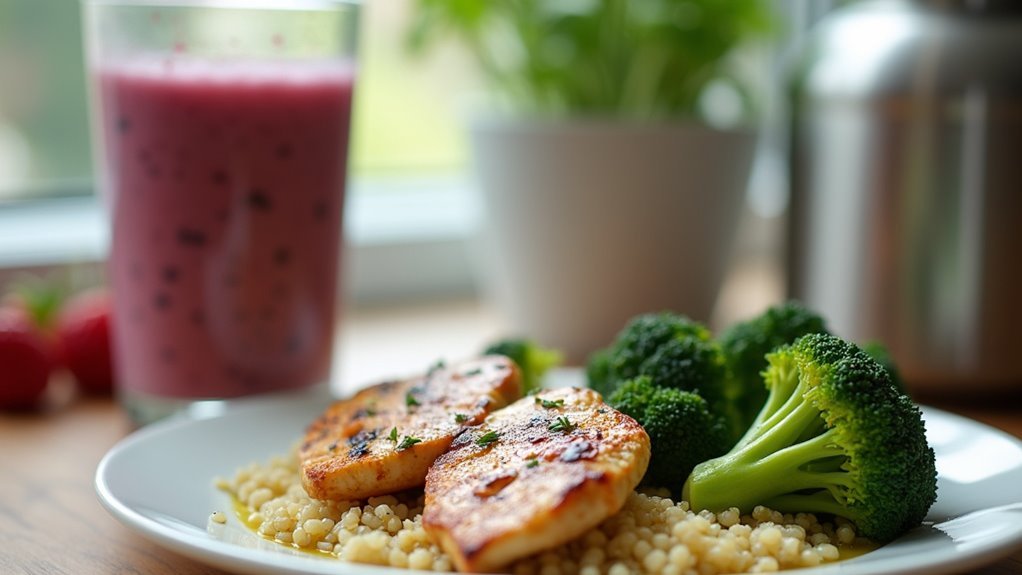
While you’ve probably heard that you must consume protein within 30-60 minutes after your workout, research reveals this “anabolic window” isn’t as narrow as once believed.
The traditional anabolic window concept suggests ideal muscle recovery requires immediate post-exercise protein intake. However, studies demonstrate this window actually extends 5-6 hours after training, giving you considerable flexibility.
Your muscles remain sensitive to protein for up to 24 hours post-exercise, meaning protein synthesis continues well beyond that initial hour.
This extended timeframe shifts focus from strict timing to consistent daily protein intake. Whether you consume protein before or after training doesn’t greatly impact muscle protein synthesis rates.
What matters most is meeting your total daily protein requirements through regular, well-distributed meals throughout the day.
Pre-Workout Vs Post-Workout Protein Timing
Given that the anabolic window extends several hours, you might wonder whether consuming protein before or after your workout makes a meaningful difference.
Research shows both strategies work effectively. A pre-workout meal containing protein provides sustained amino acids during exercise, enhancing muscle protein synthesis and supporting recovery.
Post-workout protein consumption capitalizes on heightened muscle sensitivity to amino acids, particularly within 30-60 minutes after training.
However, studies reveal no significant differences in muscle strength or size regardless of timing. What matters most is your total daily protein intake.
For ideal results, aim for 0.4-0.5 grams per kilogram of lean body mass around training times. You’ll maximize benefits by consuming protein at both times, especially during intense training phases focused on muscle growth.
Daily Protein Distribution for Muscle Repair

Beyond workout timing, how you distribute protein throughout your entire day greatly impacts muscle repair and recovery.
You’ll maximize muscle protein synthesis by spreading your daily protein needs evenly across meals, aiming for 20-30 grams per meal rather than consuming large amounts sporadically.
Your body responds best to consistent protein intake throughout the day, with meals spaced approximately every 3-4 hours. This steady supply guarantees amino acids remain available for ongoing muscle repair processes.
Consistent protein intake every 3-4 hours ensures amino acids remain available for continuous muscle repair and recovery.
Don’t overlook breakfast’s importance – prioritizing protein in your morning meal counteracts overnight muscle protein synthesis declines.
For ideal results, target 1.6-2.2 grams per kilogram of body weight daily. This strategic distribution approach supports continuous recovery, making your training efforts more effective than relying solely on post-workout protein timing.
Nighttime Protein Intake for Sleep Recovery
As your body enters its overnight fasting state, strategic protein consumption before bed transforms this period into an active recovery phase rather than a time of muscle breakdown.
Nighttime protein intake provides essential amino acids during sleep’s natural fasting window. Casein protein stands out as the best choice due to its slow digestion rate, releasing amino acids steadily for hours while you rest.
Research shows consuming approximately 30 grams of casein before bed effectively stimulates muscle protein synthesis and reduces overnight muscle breakdown.
This timing strategy offers additional benefits beyond recovery. Protein consumption can stabilize blood sugar levels and minimize nighttime hunger, potentially improving sleep quality.
When you consistently incorporate nighttime protein intake into your routine, you’ll experience enhanced muscle growth, improved recovery from resistance training, and maximize your body’s natural repair processes during sleep.
Combining Protein With Other Nutrients for Enhanced Recovery
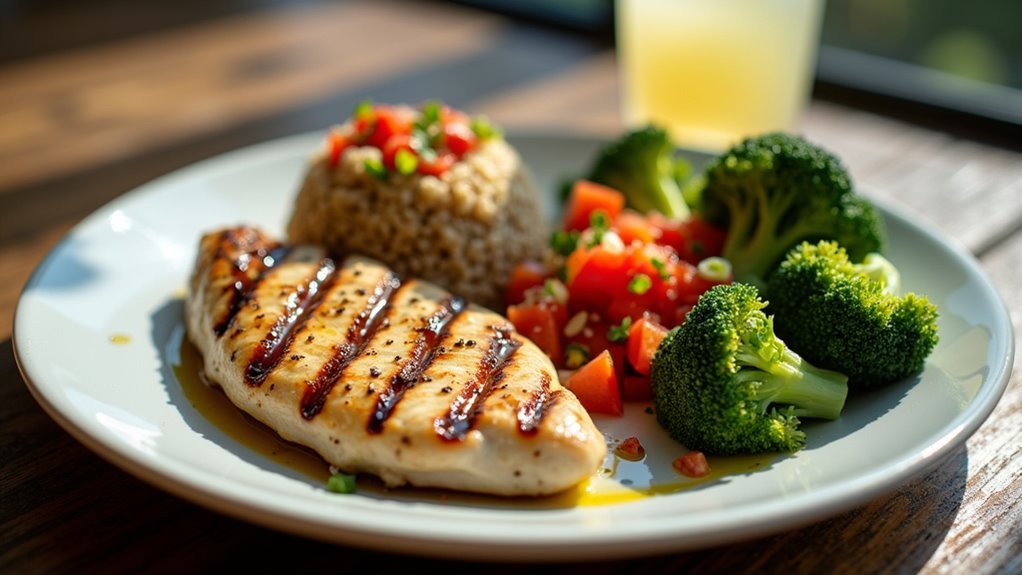
You’ll maximize your recovery potential when you combine protein with carbohydrates in a 3:1 or 4:1 ratio after intense workouts.
This powerful synergy enhances glycogen replenishment while supporting muscle repair more effectively than protein alone.
Adding proper hydration and healthy fats creates an ideal nutrient environment that boosts absorption and sustains your recovery process.
Protein and Carbohydrate Synergy
While protein alone supports muscle recovery, combining it with carbohydrates creates a powerful synergistic effect that amplifies your body’s repair mechanisms.
This dynamic duo works by triggering insulin release, which enhances amino acid uptake into your muscle cells and accelerates repair processes.
You’ll want to aim for a 3:1 or 4:1 ratio of carbohydrates to protein for ideal results. Research shows athletes consuming this combination experience greater muscle mass and strength gains compared to protein-only supplementation.
The carbohydrates replenish your glycogen stores while simultaneously supporting muscle protein synthesis.
For maximum effectiveness, consume fast-digesting carbohydrates like glucose or maltodextrin alongside high-quality protein sources such as whey within 30-60 minutes post-workout.
This strategic pairing considerably reduces muscle soreness and enhances your overall recovery.
Hydration Plus Healthy Fats
Beyond carbohydrates, two other nutrients greatly amplify protein’s recovery benefits: water and healthy fats.
Proper hydration guarantees your muscles receive the amino acids and nutrients needed for repair by maximizing transport throughout your body. Without adequate water, even perfect protein timing won’t deliver maximum results.
Healthy fats enhance this process by improving absorption of fat-soluble vitamins and providing essential fatty acids for cellular repair.
When you combine protein with omega-3 rich sources like fish or flaxseed, you’ll reduce post-workout inflammation while accelerating muscle recovery.
This trio of protein, hydration, and healthy fats creates an ideal recovery environment. Your post-workout meal should include all three components to maximize muscle protein synthesis and guarantee your body has everything required for effective repair and growth.
Individual Factors That Influence Optimal Protein Timing
Your protein timing needs aren’t one-size-fits-all – they’re shaped by several key factors that make your recovery strategy unique.
Whether you train fasted or fed, your current body weight, and your daily lifestyle all play vital roles in determining when you should consume protein for maximum benefit.
Understanding these individual variables will help you create a personalized approach that optimizes your recovery and muscle-building potential.
Training State Considerations
When you’re planning your protein intake, your individual training state becomes an essential factor that determines how effectively your muscles will respond to nutrition. Whether you’re fasted or fed before exercising notably impacts muscle protein sensitivity and your post-workout nutritional needs.
| Training State | Pre-Workout Protein | Post-Workout Window | Muscle Growth Benefits |
|---|---|---|---|
| Fasted Training | Highly beneficial | Extended 24-hour sensitivity | Enhanced protein synthesis |
| Fed Training | Moderate benefit | Flexible timing | Sustained anabolic response |
| High-Intensity | Essential for performance | Immediate-24 hours | Reduced breakdown |
| Endurance Training | Performance enhancing | 6-24 hours | Improved recovery |
| Strength Training | Optional | 2-24 hours | Maximized hypertrophy |
Your muscle remains sensitized to protein for up to 24 hours post-exercise, allowing flexibility in timing based on your specific training approach and personal schedule.
Body Weight Variables
Body weight greatly determines your ideal protein timing strategy, as heavier individuals require larger absolute amounts of protein to maximize muscle recovery and growth. Your daily protein intake should align with the 1.2-2.0 grams per kilogram recommendation, but timing becomes essential for optimization.
Consider these body weight-specific strategies:
- Heavier athletes: Consume larger protein portions (0.4-0.5g per kg lean mass) around workouts to fuel substantial muscle recovery demands.
- Lighter individuals: Adjust portions downward while maintaining consistent timing to avoid overwhelming your system.
- Variable distribution: Spread your total daily protein intake across meals based on your specific body weight requirements.
- Personalized approach: Factor in your body composition and activity level alongside weight for maximum effectiveness.
Your protein timing isn’t one-size-fits-all—it’s uniquely yours based on your body weight and muscle growth goals.
Lifestyle and Preferences
Although ideal protein timing follows general scientific principles, your personal lifestyle and preferences ultimately determine what works best for your recovery goals.
Your training frequency and intensity should guide your protein intake schedule—if you’re training multiple times daily, you’ll need more frequent protein distribution throughout the day.
Consider your dietary restrictions, food availability, and cooking habits when planning protein sources and meal timing.
Listen to your body’s hunger cues, as your unique recovery needs may require different amounts and timing than standard recommendations suggest.
Don’t overlook psychological factors either.
Choose protein sources you enjoy and incorporate them into social meal settings when possible.
This approach enhances adherence to your protein schedule, ultimately supporting better recovery and muscle growth while fitting seamlessly into your lifestyle and personal preferences.
Frequently Asked Questions
What Is the Best Time to Eat Protein for Muscle Recovery?
You’ll maximize muscle recovery by consuming protein within 30-60 minutes post-workout, though you can distribute it evenly throughout the day. Your total daily protein intake matters more than precise timing.
What Is the 2 Hour Protein Rule?
You should consume protein within two hours after exercising to maximize muscle recovery and protein synthesis. This rule helps optimize your body’s ability to repair and build muscle tissue effectively.
What Is the 20 Minute Protein Rule?
You should consume 20-25 grams of high-quality protein within 20 minutes after exercising. This rule maximizes muscle protein synthesis during the anabolic window, enhancing recovery and muscle growth more effectively.
What Is the Optimal Time for Protein After Workout?
You’ll maximize recovery by consuming 20-40 grams of fast-absorbing protein within 15-60 minutes post-workout. However, you’ve got flexibility since muscle sensitivity extends 4-6 hours, making consistent daily protein intake equally important.


Leave a Reply