
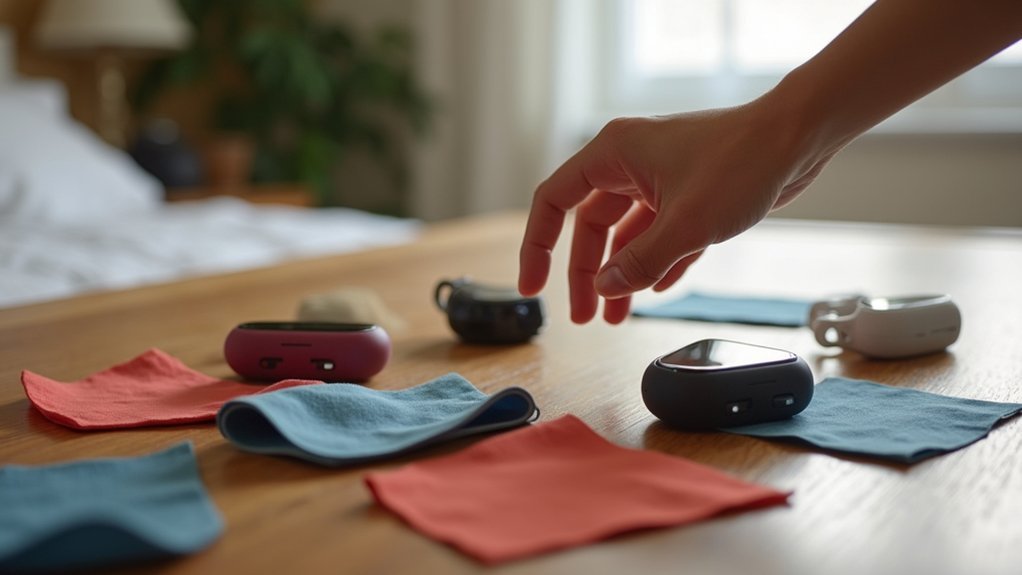
When choosing actigraphy devices for long-term monitoring, you’ll need to prioritize battery life of 10+ days, lightweight designs under 50 grams, and high-precision 3-axis accelerometers for accurate data collection. Consider waterproof capabilities, ample storage capacity, and seamless wireless data transfer through Bluetooth or Wi-Fi. Balance upfront costs against long-term value while ensuring clinical-grade validation for reliable results. User comfort directly impacts compliance rates, so select devices with breathable materials and adjustable fits to maximize participant adherence throughout your extended study period.
Understanding Long-Term Actigraphy Monitoring Requirements

When selecting an actigraphy device for extended research periods, you’ll need to prioritize several critical features that distinguish long-term monitoring from short-duration studies.
Battery life becomes paramount, as your device must operate for days or weeks to guarantee uninterrupted data collection without frequent charging interruptions.
Precision and accuracy are equally essential since you’re capturing subtle movement patterns over extended timeframes where even minor detection errors can compromise your study’s validity.
User comfort directly impacts participant compliance – lightweight, non-intrusive designs prevent dropout rates that could jeopardize your research.
Additionally, you’ll require substantial data storage capacity to accommodate weeks of continuous movement data.
Finally, seamless data transfer capabilities streamline your analysis workflow once the long-term monitoring period concludes.
Essential Technical Specifications for Extended Studies
Since extended actigraphy studies demand rigorous data collection over weeks or months, you’ll need devices that meet stringent technical specifications to secure research success.
Battery life should exceed ten days minimum to reduce charging interruptions during long-term monitoring. Select devices featuring high-precision 3-axis accelerometer technology that captures subtle movements essential for accurate sleep and activity analysis.
Extended actigraphy requires devices with 10+ day battery life and high-precision 3-axis accelerometers for uninterrupted sleep and activity monitoring.
Prioritize ample data storage capacity to prevent data loss during extended collection periods. Look for seamless data transfer capabilities that streamline large dataset management and analysis workflows.
Evaluate durability ratings and waterproof specifications to guarantee devices withstand various environmental conditions.
Consider comfort factors that directly impact user compliance—lightweight designs with smooth edges prevent skin irritation that could compromise participant adherence throughout your study duration.
Battery Life and Power Management Considerations

Battery performance determines the success or failure of your actigraphy research more than any other single factor.
You’ll need devices that support continuous data collection without frequent interruptions. Research-grade actigraphy devices like ActiGraph LEAP typically offer 10-15 days of battery life, while advanced models such as Fibion SENS can run up to 22 weeks on a single charge.
You should prioritize devices with efficient power management features, including sleep modes and low-power consumption settings. These extend operational time while maintaining data integrity for long-term monitoring.
Choose models that provide clear indications of battery status, enabling you to schedule recharging proactively. This guarantees uninterrupted data acquisition throughout your study period, minimizing gaps that could compromise your research outcomes.
Data Storage Capacity and Memory Requirements
When selecting an actigraphy device, you’ll need to evaluate its memory capacity requirements based on your study’s duration and sampling frequency.
You should consider data transfer options that allow seamless retrieval without compromising data integrity during extended monitoring periods.
Planning for adequate storage duration becomes critical since higher sampling rates generate larger data files that can quickly fill available memory space.
Memory Capacity Requirements
Although many researchers focus primarily on a device’s sensing capabilities, you’ll find that memory capacity often determines whether your actigraphy study succeeds or fails.
For continuous monitoring, you’ll need devices with sufficient data storage to handle your study’s duration without interruption. Memory capacity requirements vary greatly based on sampling frequency—20Hz recording demands more storage than lower rates.
Long-term studies spanning several weeks require robust data collection capabilities, with some devices offering up to 128MB of internal memory. You should consider devices with remote data transfer features to manage storage constraints by offloading data to cloud systems.
Inadequate memory can compromise research integrity by causing data loss, so carefully match your device’s storage capacity to your monitoring timeline.
Data Transfer Options
Beyond storage capacity alone, you’ll need reliable data transfer options that align with your study’s workflow and timeline. Efficient data transfer through Bluetooth and Wi-Fi connectivity enables seamless synchronization from your device to analysis software.
These wireless options eliminate manual data collection, reducing participant burden during long-term monitoring studies.
Cloud-based data management systems offer significant advantages for research protocols. You’ll gain real-time data access to monitor participant compliance and verify data integrity throughout your study.
This immediate feedback helps identify issues early, preventing data loss from storage capacity limitations.
Consider devices like the Fibion SENS, which stores continuous data for 22 weeks on a single charge. This extended capacity reduces transfer frequency while maintaining thorough monitoring capabilities.
Match your data transfer frequency to sampling rates and available storage capacity for ideal study management.
Storage Duration Planning
Storage duration planning requires careful calculation of your device’s memory capacity against your study’s data collection needs.
You’ll need to evaluate how much data storage capacity each device offers relative to your intended monitoring periods. For instance, the Fibion Flash’s 128MB internal memory determines how long you can collect data before requiring downloads.
Consider devices like the Fibion SENS, which provides 22 weeks of battery life, but verify its storage aligns with your timeline.
The ActiGraph LEAP captures detailed raw data, so you’ll want sufficient memory to prevent data loss during long-term monitoring.
Choose actigraphy devices with seamless data transfer capabilities to efficiently manage large datasets without interrupting your study’s continuity.
Sensor Technology and Movement Detection Accuracy
When you’re evaluating actigraphy devices, the sensor technology serves as the foundation for accurate movement detection and dependable sleep data.
Look for devices with 3-axis accelerometers that capture movement across multiple planes, greatly improving data accuracy compared to single-axis models. You’ll find that precision matters immensely—even minor movements can dramatically affect sleep-wake classifications.
Consider advanced models incorporating ambient light and skin temperature sensors. These additional features provide thorough circadian rhythms monitoring and environmental context for your data.
Remember that sensor variations between devices create accuracy differences, with some detecting subtle movement patterns others miss completely.
Pay close attention to the algorithms processing raw accelerometer data. Validated algorithms guarantee reliable movement detection and accurate sleep analysis, making them essential for meaningful long-term monitoring results.
Device Durability and Waterproof Capabilities

Outstanding sensor technology means nothing if your actigraphy device can’t survive the rigors of extended wear.
You’ll need durability that withstands daily impacts, environmental factors, and general wear without compromising data integrity during long-term monitoring studies.
Waterproof capabilities are non-negotiable features you should prioritize. Devices like the Fibion SENS offer complete water resistance, protecting against moisture damage from sweat, rain, or water activities.
This protection directly extends your device’s operational lifespan.
Battery life considerably impacts overall durability by reducing recharge frequency.
Look for devices offering extended operation—some models run up to 22 weeks on single charges.
Robust designs using quality construction materials ensure your investment withstands participant activities throughout monitoring periods while maintaining consistent data collection performance.
User Comfort and Wearability Factors
When you’re selecting an actigraphy device, you’ll need to prioritize comfort features that encourage consistent long-term wear.
The device’s size and weight directly impact whether you’ll forget you’re wearing it or constantly feel bothered by its presence on your wrist or ankle.
You should also examine the materials used in the strap and casing, as skin-friendly, breathable options prevent irritation during extended monitoring periods.
Device Size and Weight
One of the most critical factors you’ll need to evaluate when selecting an actigraphy device is its size and weight, as these physical characteristics directly influence user comfort and long-term compliance.
You should prioritize devices weighing less than 50 grams, since heavier models often cause discomfort and lead to higher non-adherence rates. A compact design like those from Fibion SENS and Helix enhances wearability by allowing seamless integration into daily routines.
You’ll find that participants prefer wristband designs or clothing-attachable options because they mimic everyday accessories. For ideal participant satisfaction, choose devices offering adjustable fits for different body types.
This secure fit reduces premature removal while maintaining comfort during extended monitoring periods, ultimately improving your study’s data quality and reliability.
Skin-Friendly Materials and Design
Material selection plays an essential role in determining whether participants will tolerate wearing your actigraphy device throughout the entire monitoring period.
Skin-friendly materials like breathable fabrics and hypoallergenic plastics minimize irritation while maintaining user comfort during extended wear. You’ll need lightweight design and ergonomic structures to prevent fatigue and encourage consistent usage.
Key features that maximize user compliance rates include:
- Non-intrusive features – Slim profiles that don’t interfere with daily activities
- Breathable materials – Fabrics that prevent moisture buildup and skin irritation
- Customizable fit options – Adjustable straps and multiple sizes for different body types
Research shows that devices incorporating these user-friendly elements achieve considerably higher compliance rates, resulting in more reliable data collection for your long-term monitoring studies.
Data Transfer Methods and Connectivity Options
Since seamless data collection forms the backbone of successful actigraphy studies, you’ll want to prioritize devices with robust wireless connectivity features like Bluetooth or Wi-Fi that automatically sync data to your smartphone or computer.
These data transfer options eliminate manual downloading hassles while ensuring continuous data flow.
Look for devices offering cloud storage capabilities that provide automatic backup and remote access, greatly improving data management efficiency.
User-friendly applications with real-time monitoring features let you visualize data instantly and track participant engagement effectively.
Ensure your chosen device supports standardized data formats for seamless integration with popular analysis software.
Consider whether you need continuous real-time monitoring or can work with interval-based syncing, as this affects both battery life and data accessibility for your research requirements.
Software Integration and Analysis Platforms
You’ll need to establish clear data collection protocols that align with your research objectives and guarantee consistent data capture across all study participants.
Your chosen platform’s analysis algorithms require thorough validation to confirm they accurately interpret the specific metrics you’re measuring, whether that’s sleep efficiency, activity counts, or circadian patterns.
You should evaluate cloud platform capabilities to determine if they provide the computational power, storage capacity, and real-time processing features necessary for your study’s scale and timeline.
Data Collection Protocols
While selecting the right actigraphy device is essential, establishing robust data collection protocols through proper software integration can make or break your research outcomes.
Effective protocols guarantee seamless data management while maintaining data integrity throughout long-term studies.
Your data collection strategy should prioritize these key elements:
- Cloud-based solutions – Enable remote monitoring and real-time access to participant data, greatly improving participant compliance during extended monitoring periods.
- Standardized data formats – Establish consistent protocols during setup to guarantee data remains shareable and comparable across different actigraphy devices and studies.
- Compatible analysis platforms – Choose devices that integrate with R, Python, or proprietary software for flexible data visualization and advanced statistical modeling.
These protocols create the foundation for reliable, actionable insights from your actigraphy research.
Analysis Algorithm Validation
Strong data collection protocols mean nothing if your analysis algorithms can’t accurately interpret the raw actigraphy data they’ve captured. You’ll need validated analysis algorithms to guarantee accuracy and reliability in your sleep metrics and activity measurements.
Many actigraphy devices use proprietary algorithms like Fibion Krono’s TAP algorithm, which has been rigorously tested against traditional sleep measures.
Look for devices that incorporate multiple sensors beyond accelerometry—ambient light and body temperature enhance sleep-wake analysis performance.
Prioritize software with seamless data management capabilities, including real-time visualization and automated reporting features. Machine learning advancements are revolutionizing validation processes, enabling algorithms to adapt to individual user patterns.
Choose systems where algorithm validation is transparent and documented, guaranteeing your long-term monitoring delivers consistently reliable results.
Cloud Platform Capabilities
Modern actigraphy devices rely heavily on cloud platform capabilities to transform raw sensor data into actionable insights.
You’ll benefit from seamless data transfer and real-time data monitoring that streamline your research workflow. These platforms provide secure data storage while offering compatibility with analysis platforms that expand your analytical options.
Key cloud platform advantages include:
- Advanced Integration – Real-time data monitoring enables immediate access to participant information from any location
- Flexible Analysis – Compatibility with analysis platforms allows you to leverage specialized tools for thorough assessments
- Intuitive Visualization – User-friendly interfaces simplify complex data interpretation and reporting
You’ll find that cloud capabilities enhance your ability to conduct thorough assessments of physical activity and sleep patterns, integrating multiple sensor types for richer insights into circadian rhythms and participant behavior.
Cost-Benefit Analysis for Research Budgets
When evaluating actigraphy devices for your research project, you’ll need to balance upfront costs against long-term value to maximize your budget’s effectiveness.
A thorough cost-benefit analysis should examine the total cost of ownership, including device costs and software licensing fees. While budget-friendly options like the Fibion SENS cost €135, research-grade devices such as the ActiGraph LEAP at US$600 offer superior data accuracy that may justify higher expenses.
Don’t overlook software costs—Fibion’s Advanced Sleep Marking Software runs €1950, considerably impacting your budget.
User-friendly devices enhance participant compliance, improving research integrity and reducing the financial burden of data collection issues.
Consider FDA-cleared devices that meet insurance criteria, as reimbursement opportunities can greatly offset your investment.
Participant Compliance and Adherence Strategies
Selecting the right device represents only half the battle—your research success ultimately depends on participants actually wearing their actigraphy monitors consistently.
Participant compliance requires strategic planning beyond device selection. User comfort drives adherence, so prioritize lightweight, non-intrusive monitors that won’t disrupt daily activities.
Implement these essential adherence strategies:
- Comprehensive training sessions – Provide clear instructions on proper wearing techniques and device operation to minimize user errors.
- Regular communication protocols – Schedule follow-ups to address concerns and maintain engagement throughout the study duration.
- Strategic incentive programs – Offer rewards for consistent device usage to motivate long-term participation.
Leverage built-in feedback mechanisms for monitoring device usage in real-time.
This allows you to identify adherence issues immediately and intervene before data quality suffers, ensuring your research objectives remain achievable.
Clinical Vs Consumer Device Validation Standards
Beyond ensuring participant compliance, you must navigate the stark differences between clinical and consumer device validation standards when choosing your actigraphy equipment.
Clinical actigraphy devices undergo rigorous FDA clearance processes, ensuring they meet strict reliability benchmarks for diagnosing sleep disorders and delivering accurate research outcomes. These devices feature advanced capabilities like remote monitoring and detailed data outputs that maintain research quality standards.
Consumer actigraphy devices often lack stringent validation requirements, resulting in variable data accuracy that can compromise your study’s integrity. While consumer devices prioritize user-friendly interfaces, they may rely on unverified manufacturer claims rather than independent testing.
Clinical devices undergo extensive real-world performance evaluations, making them essential for serious monitoring applications where data accuracy directly impacts your research conclusions.
Future-Proofing Your Actigraphy Investment
As technology rapidly evolves, your actigraphy investment must withstand the test of time while adapting to emerging research demands.
Future-proofing your actigraphy device selection guarantees you’ll maintain reliable data collection capabilities while maximizing your research budget’s value.
Consider these essential future-proofing strategies:
- Extended battery life and durability – Choose devices offering weeks of continuous operation, like the Fibion SENS with 22-week battery life, reducing maintenance costs and research interruptions.
- Seamless data transfer capabilities – Prioritize devices with cloud integration and remote access features that’ll adapt to evolving data management requirements.
- Advanced algorithms and user-friendly interfaces – Invest in multi-sensor technology with sophisticated processing capabilities that enhance long-term monitoring accuracy while maintaining participant compliance through comfortable, intuitive designs.
Frequently Asked Questions
What Are the Different Types of Actigraphy?
You’ll find research-grade devices offering clinical accuracy, consumer wearables providing smartphone integration, pediatric-specific units with tailored algorithms, and specialized devices incorporating light and temperature sensors for enhanced circadian rhythm analysis.
What Actigraphy Devices Are FDA Approved?
You’ll find FDA-approved actigraphy devices include the ActiGraph GT9X for sleep studies and physical activity monitoring, plus the Empatica EmbracePlus for continuous sleep and physiological signal tracking in clinical settings.
What Is the Difference Between Actigraph and Smartwatch?
You’ll find actigraphs offer research-grade accuracy with specialized sensors and weeks-long battery life, while smartwatches prioritize multiple features over precise sleep data and require frequent charging for general fitness tracking.
What Are the Disadvantages of Actigraphy?
You’ll face overestimated sleep duration from inactivity misclassification, limited sleep stage detection, and reduced accuracy from improper device placement. Compliance issues can cause data loss, and it can’t match polysomnography’s detailed sleep disorder assessments.




Leave a Reply