

Alcohol sabotages your recovery rest by fragmenting your sleep cycles and reducing REM sleep by 20-30%, which is vital for emotional regulation and memory consolidation. It disrupts deep sleep stages that your body needs for physical restoration, creating sleep debt that accumulates night after night. While alcohol might make you drowsy initially, it prevents your brain from completing essential healing processes and hinders protein synthesis needed for muscle repair. Understanding these mechanisms can help you optimize your recovery journey.
How Alcohol Disrupts Sleep Architecture During Recovery
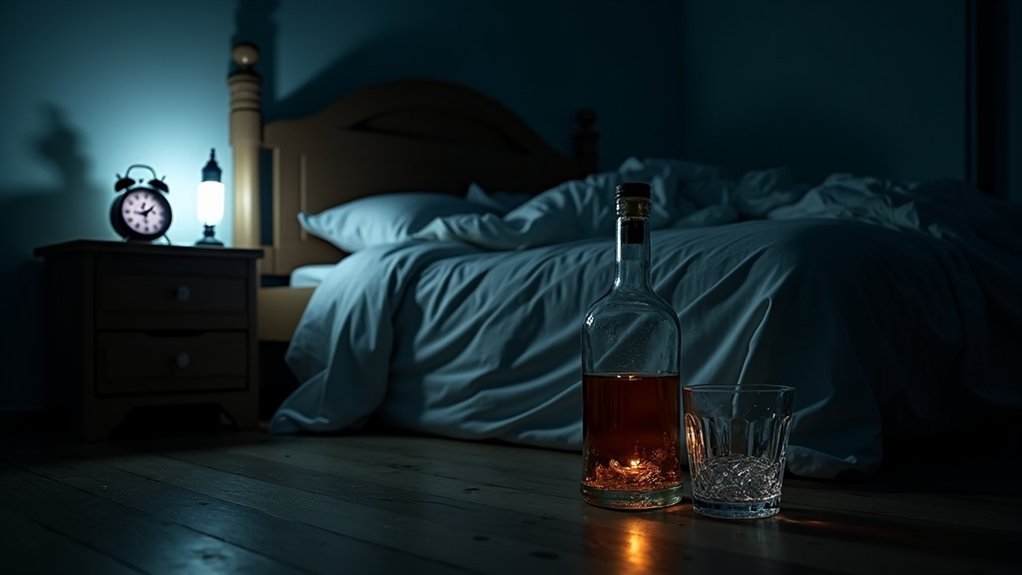
Although alcohol might seem like a helpful sleep aid when you’re struggling with recovery, it actually wreaks havoc on your body’s natural sleep patterns. When you consume alcohol, it fragments your sleep cycle and increases nighttime wakefulness, destroying healthy sleep architecture.
This disruption particularly targets REM sleep, which your brain desperately needs for cognitive function and emotional regulation during recovery from alcohol.
Your disrupted sleep creates a vicious cycle that undermines your mental health and makes abstinence from alcohol considerably more challenging. The fragmented sleep leaves you exhausted and groggy the next day, weakening your resolve and coping mechanisms.
Understanding how alcohol sabotages your sleep architecture helps you recognize why prioritizing quality rest without substances becomes essential for sustainable recovery and improved mental health outcomes.
The Impact of Alcohol on REM Sleep and Deep Sleep Stages
When alcohol enters your system before sleep, it systematically dismantles the two most critical stages of your sleep cycle: REM sleep and deep sleep.
You’ll experience a 20-30% reduction in REM sleep, which directly impairs your memory consolidation and emotional regulation during recovery. This disruption becomes particularly problematic if you’re managing alcohol use disorder, as your brain desperately needs quality REM sleep to heal.
Your deep sleep stages also suffer considerably, with alcohol reducing slow-wave sleep duration.
Alcohol significantly disrupts your deep sleep phases, preventing the essential physical restoration your body requires for proper recovery.
This means you’ll miss out on essential physical recovery and muscle healing. These combined disruptions don’t just affect one night—they can worsen existing sleep disorders like insomnia and sleep apnea, creating a destructive cycle that undermines your overall well-being and complicates your recovery process.
Alcohol’s Effect on Sleep Quality After Physical Exertion

After an intense workout, you might feel tempted to unwind with a drink, but alcohol sets off a chain reaction that sabotages your body’s recovery process.
While alcohol affects your initial ability to fall asleep by making you drowsy, it severely disrupts sleep quality once your body enters deeper sleep stages. This interference with REM sleep creates fragmented rest, leaving you groggy and cognitively impaired the next day.
Your physical and mental performance suffers as alcohol hinders protein synthesis, delaying vital muscle repair.
Combined with a healthy diet and proper hydration, quality sleep remains your most powerful recovery tool. To maximize athletic gains and recovery efforts, you should abstain from alcohol post-workout.
Recovery Sleep Debt and Alcohol’s Role in Sleep Fragmentation
Sleep debt accumulates when alcohol repeatedly fragments your recovery rest, creating a compounding cycle that undermines your body’s repair mechanisms. Each night of alcohol consumption adds to this deficit, making it increasingly difficult to achieve the quality sleep your body demands for proper recovery.
The disruption doesn’t just affect one night—it builds over time, leaving you perpetually behind on restorative rest.
You’ll find yourself caught in a harmful pattern where sleep fragmentation prevents your physical and mental well-being from returning to baseline. Your brain’s chemical balance remains altered, and the deeper sleep stages essential for tissue repair become consistently compromised.
Breaking this cycle requires eliminating alcohol to restore your natural sleep architecture and reduce the mounting sleep debt that sabotages recovery.
Restoring Healthy Sleep Patterns When Eliminating Alcohol

Although breaking free from alcohol presents initial sleep challenges, you can rebuild healthy rest patterns through deliberate strategies that support your body’s natural recovery process.
Start by establishing a consistent bedtime routine that signals your body to wind down naturally. Create a sleep-friendly environment with darkness and quiet to enhance sleep quality considerably. Regular exercise and nutritious eating habits become powerful allies in overcoming the sleep disruptions caused by substance abuse.
Don’t underestimate the importance of professional support during this change. Therapists and addiction specialists can address persistent sleep disturbances that complicate your recovery process.
These lifestyle changes work synergistically to restore your natural sleep cycle, helping you break free from alcohol addiction while building sustainable rest patterns.
Frequently Asked Questions
Does Alcohol Stop Your Body From Recovering?
Yes, alcohol considerably impairs your body’s recovery by suppressing protein synthesis, disrupting sleep cycles, increasing inflammation, and delaying hormonal balance. You’ll experience reduced muscle repair and potentially reverse weeks of training progress.
Does Alcohol Ruin Your Muscle Recovery?
Yes, alcohol greatly ruins your muscle recovery by decreasing protein synthesis rates by up to 37%. You’ll experience impaired muscle repair, reduced strength gains, and potentially negate weeks of training progress if you drink during recovery periods.
Does Alcohol Affect Rest?
Yes, alcohol considerably affects your rest. You’ll fall asleep faster initially, but you’ll experience fragmented sleep with frequent awakenings. Alcohol reduces deep sleep and REM stages, leaving you groggy and fatigued.
How Does Alcohol Affect Running Recovery?
Alcohol severely impairs your muscle recovery after running by suppressing protein synthesis needed for repair. You’ll experience reduced strength gains, disrupted recovery timing, and potentially lose up to fourteen days of training benefits.
In Summary
You’re sabotaging your body’s natural recovery process when you drink alcohol before sleep. It’s disrupting your sleep architecture, reducing essential REM and deep sleep stages that repair your muscles and restore energy. You’ll experience fragmented sleep, accumulate sleep debt, and wake up feeling unrefreshed despite spending hours in bed. Cut alcohol from your evening routine, and you’ll notice improved sleep quality and faster physical recovery within days.




Leave a Reply