

Alcohol devastates your recovery by reducing REM sleep up to 20%, impairing memory consolidation and emotional regulation you need for sound financial decisions. It fragments your sleep architecture, causing four times more night awakenings that fuel anxiety and impulsive spending. Withdrawal compounds sleep debt while tolerance forces you to drink more, escalating costs. Rebound insomnia affects 40-60% of people in recovery, triggering cravings and relapse risk. Understanding these interconnected cycles reveals deeper strategies for breaking free.
Alcohol Impairs REM Sleep Quality During Critical Recovery Hours

When you consume alcohol during recovery, you’re directly sabotaging one of your brain’s most critical repair processes: REM sleep.
Even moderate alcohol consumption reduces REM sleep by up to 20%, severely compromising your emotional regulation and cognitive function when you need them most.
Even small amounts of alcohol can slash your REM sleep by 20%, crippling the emotional control you desperately need.
This disruption creates a vicious cycle. Poor sleep quality from alcohol consumption increases your stress and anxiety levels, making you more likely to reach for alcohol as a coping mechanism.
Your brain can’t properly consolidate memories or learning during compromised REM sleep, hindering your ability to develop effective recovery strategies.
The National Institute on Alcohol Abuse and Alcoholism confirms that quality sleep is essential for recovery success, as sleep deprivation impairs judgment and increases impulsivity around alcohol use.
Chronic Drinking Fragments Sleep Architecture Throughout the Night
When you drink chronically, you’re not just losing sleep—you’re destroying its fundamental structure through constant fragmentation.
Your brain can’t maintain the deep, restorative phases it needs because alcohol triggers frequent awakenings that shatter your natural sleep cycles.
This architectural breakdown hits hardest during REM and deep sleep stages, leaving you with poor-quality rest that compounds your recovery challenges and financial stress.
REM Sleep Disruption
Although alcohol might initially make you feel drowsy, chronic drinking systematically destroys your REM sleep cycles throughout the night, creating a devastating ripple effect on your financial recovery. Alcohol reduces REM sleep by up to 20%, directly impairing the cognitive functions you need for sound decision-making and emotional regulation.
| REM Sleep Disruption Effects | Impact on Debt Recovery |
|---|---|
| Impaired decision-making ability | Poor financial choices |
| Increased impulsivity | Overspending behaviors |
| Heightened anxiety levels | Stress-driven alcohol reliance |
| Reduced emotional regulation | Panic-based money decisions |
This REM sleep disruption creates mental health challenges that sabotage your financial stability. You’ll experience increased stress and anxiety, making alcohol seem like a necessary coping mechanism. Poor sleep quality leads to daytime fatigue, preventing you from effectively managing financial difficulties and maintaining the focus essential for successful debt recovery.
Night Awakening Frequency
Beyond disrupting REM cycles, chronic drinking fragments your entire sleep architecture by triggering frequent night awakenings that devastate your financial recovery efforts.
When you consume alcohol regularly, you’ll experience up to four times more night awakening frequency compared to non-drinkers, creating severely fragmented sleep patterns. This disrupted sleep occurs as alcohol’s sedative effects wear off, causing a rebound effect that jolts you awake repeatedly throughout the night.
Heavy drinkers consistently struggle with this fragmented sleep cycle, which elevates stress levels and worsens mental health conditions.
These sleep disturbances directly sabotage your recovery from addiction by impairing cognitive function and decision-making abilities needed for managing financial debt.
Your disrupted sleep patterns create a vicious cycle where poor rest fuels continued alcohol consumption.
Deep Sleep Reduction
These frequent awakenings rob you of something even more damaging to your recovery—deep sleep stages that your brain desperately needs for restoration.
Deep sleep reduction from alcohol consumption creates a vicious cycle that undermines your ability to overcome financial challenges and addiction simultaneously.
When alcohol disrupts your sleep architecture, you’ll experience three critical impairments:
- Impaired cognitive function – Your brain can’t process information effectively, making financial planning nearly impossible.
- Compromised emotional regulation – Stress management becomes harder, increasing relapse risk during debt recovery.
- Poor decision-making abilities – Without restorative sleep, you’ll struggle with financial responsibilities and recovery choices.
This sleep disruption often develops into chronic insomnia and other sleep disorders, perpetuating stress cycles that sabotage both sobriety and financial stability.
Withdrawal Symptoms Compound Existing Sleep Debt During Early Recovery
When you’re battling alcohol withdrawal, your body fights against sleep just when you need it most. Withdrawal symptoms create a vicious cycle where existing sleep debt becomes exponentially worse, sabotaging your recovery efforts.
You’ll experience difficulty falling asleep and frequent awakenings that leave you exhausted and cognitively impaired. This sleep deprivation directly impacts your emotional regulation and decision-making abilities during early recovery.
When you can’t think clearly due to sleep disturbances, you’re more likely to make impulsive financial choices that derail debt repayment plans. The combination of financial stress and alcohol dependence becomes even harder to manage when withdrawal-induced insomnia clouds your judgment.
Breaking this destructive cycle requires professional support and establishing healthy sleep hygiene practices alongside your recovery program.
Tolerance Development Requires Increasing Amounts to Achieve Sleep
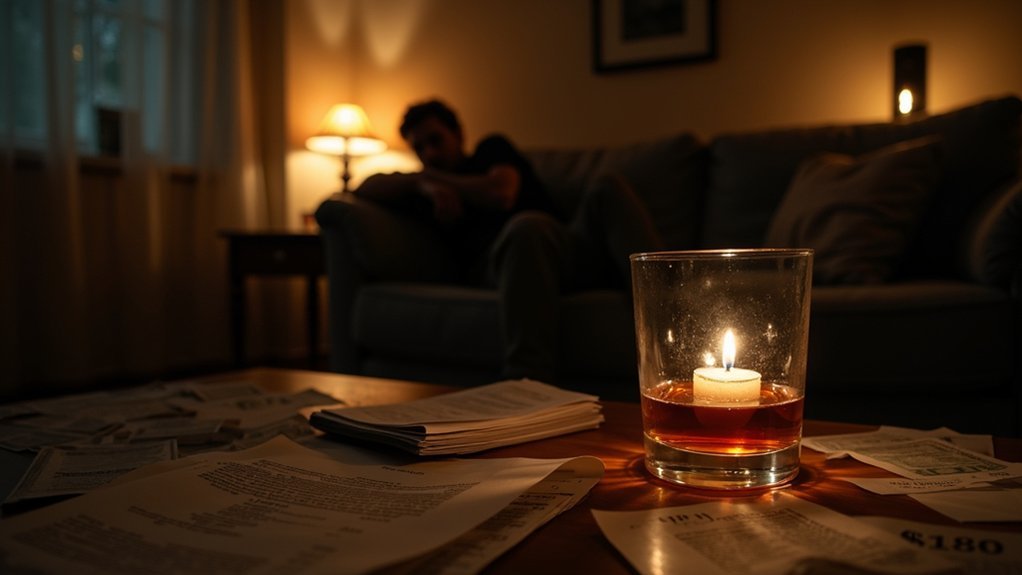
As your body adapts to regular alcohol consumption, you’ll find yourself needing larger quantities to achieve the same sleep-inducing effects that once worked with smaller amounts.
This tolerance development creates a dangerous escalation that impacts both your recovery and financial situation.
The progression follows a predictable pattern:
- Increased consumption costs – You’ll spend progressively more money on alcohol to achieve sleep, deepening your debt cycle.
- Heightened addiction risk – Higher tolerance accelerates alcohol dependence, making recovery exponentially more difficult.
- Disrupted sleep quality – Chronic use alters your brain’s neurotransmitters, destroying natural sleep-wake cycles and worsening mental health.
This vicious cycle traps you in a pattern where you need more alcohol to rest, creating financial strain while simultaneously making it harder to break free from addiction.
Rebound Insomnia Creates Deeper Sleep Deficits After Alcohol Cessation
Why does stopping alcohol consumption often lead to worse sleep problems than you experienced before drinking?
Rebound insomnia occurs when your body withdraws from alcohol’s sedative effects, creating heightened arousal and anxiety during alcohol cessation. This condition affects 40-60% of people in recovery, generating deeper sleep deficits than pre-drinking patterns.
You’ll experience increased difficulty falling asleep and staying asleep for several weeks post-cessation. These sleep deficits worsen existing mental health issues and complicate your recovery process.
Chronic sleep deprivation intensifies alcohol cravings, potentially triggering relapse and perpetuating destructive debt cycles linked to alcohol misuse.
Addressing sleep hygiene becomes essential in breaking these patterns. Without proper sleep management, you’re trapped in cycles where poor rest fuels cravings, leading back to drinking and financial consequences.
Cross-Tolerance With Sleep Medications Complicates Recovery Treatment

Because your body develops tolerance to alcohol’s sedative effects, you’ll face increased vulnerability to sleep medication dependencies during recovery.
Cross-tolerance between alcohol dependence and prescription sedatives creates dangerous complications since both function as central nervous system depressants.
Three critical risks you’ll encounter:
- Respiratory depression – Combining or sequencing these substances increases overdose likelihood considerably.
- Medication dependence – Research shows 25% of recovering alcoholics misuse prescription sedatives.
- Recovery setbacks – Disrupted sleep patterns worsen anxiety and depression symptoms.
Your recovery treatment requires careful monitoring of any prescribed sleep medications.
Improper use can trigger relapse by perpetuating the cycle of substance dependence.
The interplay between these substances disrupts natural sleep restoration, making your brain’s healing process more challenging and potentially undermining long-term sobriety goals.
Sleep Debt Accumulation Triggers Relapse Risk and Emotional Dysregulation
When sleep debt accumulates during recovery, your emotional regulation systems become severely compromised, creating a dangerous pathway toward relapse.
You’ll experience heightened cravings for alcohol as your brain struggles to cope with insufficient rest. This emotional dysregulation increases impulsivity and risk-taking behaviors that directly threaten your sobriety.
Sleep disturbances are particularly common if you’re dealing with alcohol use disorder, making sleep debt a critical factor in recovery plans.
Your mental health deteriorates when chronic sleep deprivation persists, amplifying stress vulnerability and weakening your ability to resist alcohol consumption.
Research shows this creates a cyclical pattern where relapse risk escalates dramatically.
You can’t effectively manage recovery without addressing sleep debt, as it undermines every aspect of emotional stability and decision-making capacity essential for maintaining sobriety.
Frequently Asked Questions
What Is the 1/2/3 Rule for Alcohol?
You should follow the 1/2/3 Rule: limit yourself to one drink daily if you’re a woman, two if you’re a man, and drink no more than three days weekly to maintain moderation.
Does Alcohol Slow Down the Recovery Process?
Yes, alcohol considerably slows your recovery process. It impairs your decision-making abilities, increases impulsivity, heightens stress levels, and makes it harder for you to regulate emotions effectively during recovery.
What Is the 20 Minute Rule for Alcohol?
You’ll wait 20 minutes after drinking alcohol before having another drink. This pause lets you assess alcohol’s effects on your body and mood, preventing impulsive decisions that lead to overconsumption.
How Does Alcohol Affect Running Recovery?
Alcohol considerably impairs your running recovery by disrupting sleep quality, dehydrating your body, reducing protein synthesis, increasing inflammation, and slowing muscle repair processes that you need for peak performance.
In Summary
You’re now aware of how alcohol sabotages your sleep recovery in multiple ways. Each disruption creates a domino effect that deepens your sleep debt and makes quality rest harder to achieve. Don’t underestimate how these cycles compound over time. If you’re struggling with alcohol-related sleep issues, you’ll need professional support to break free from these destructive patterns and restore your natural sleep architecture.




Leave a Reply