
Alcohol fragments your rest through five key mechanisms: it disrupts your natural sleep cycle by blocking essential deep sleep stages, severely suppresses REM sleep which impairs memory consolidation and cognitive function, increases nighttime awakenings by 39% creating fragmented sleep patterns, causes dehydration and blood sugar fluctuations that disturb comfortable rest, and triggers withdrawal-induced rebound insomnia that makes quality sleep nearly impossible. Understanding these mechanisms reveals why recovery requires thorough sleep management strategies.
Alcohol Disrupts Natural Sleep Cycle Progression
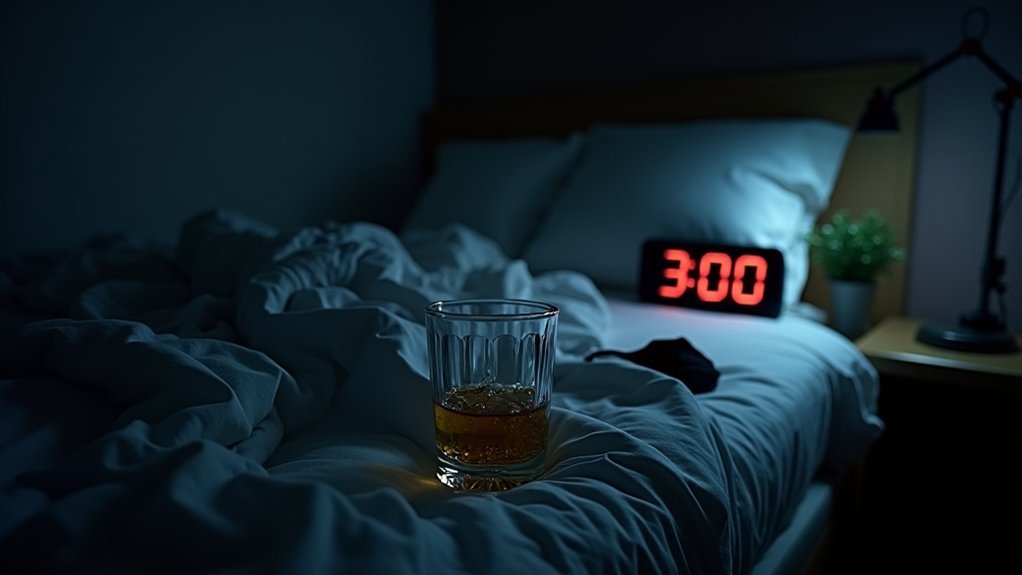
When you consume alcohol before bed, it fundamentally alters how your body progresses through the natural sleep cycle stages.
Alcohol disrupts your brain’s ability to reach and maintain deep sleep, which is vital for physical restoration. Your REM sleep becomes notably shortened, impairing cognitive function and emotional regulation essential for recovery.
Alcohol blocks deep sleep and shortens REM cycles, undermining your brain’s ability to restore and regulate emotions effectively.
This interference creates fragmented sleep patterns, preventing you from experiencing truly restorative rest. As your body metabolizes alcohol throughout the night, you’ll likely experience multiple night awakenings that further compromise sleep quality.
The disruption becomes particularly problematic if you have existing sleep disorders, creating a destructive cycle where poor sleep quality leads to increased alcohol dependence while simultaneously undermining your body’s natural recovery processes.
REM Sleep Suppression Impairs Memory Consolidation
Among the most damaging effects of alcohol’s sleep disruption is its severe suppression of REM sleep, which directly undermines your brain’s ability to consolidate memories and process information.
Even moderate alcohol consumption before bedtime drastically reduces REM sleep duration, impairing your cognitive function and memory retention the following day. Your brain depends on this critical sleep stage to process and store memories effectively.
Frequent alcohol use creates persistent memory deficits and accelerates cognitive decline over time.
If you’re struggling with alcohol use disorder, these sleep disturbances and resulting withdrawal symptoms considerably hinder your brain’s healing capacity.
Recovery from alcohol requires addressing these sleep issues, as restored REM sleep is essential for rebuilding memory functions and supporting your overall health.
Increased Sleep Fragmentation and Nighttime Awakenings
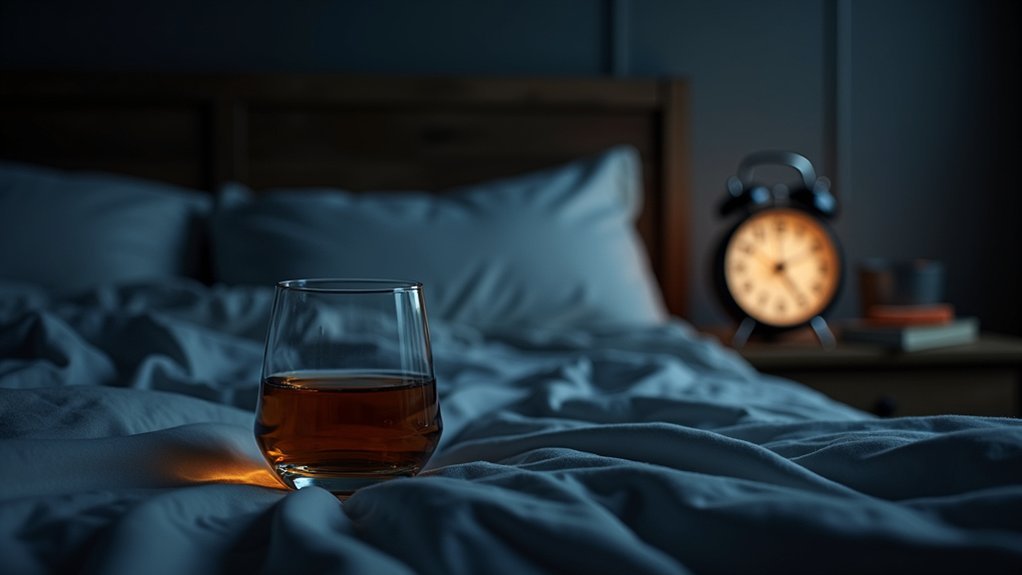
While alcohol might seem like a helpful sleep aid that gets you to fall asleep faster, it actually fragments your sleep quality by causing frequent awakenings throughout the night.
Research reveals you’re 39% more likely to experience nighttime awakenings when consuming alcohol before bed. This sleep fragmentation disrupts vital stages 3 and 4, preventing your body from achieving restorative rest necessary for recovery.
Alcohol increases nighttime awakenings by 39%, disrupting deep sleep stages essential for physical and mental recovery.
The constant interruptions compromise your overall sleep quality, leaving you with persistent fatigue the next day.
If you’re dealing with alcohol dependence, chronic sleep disorders like sleep apnea become worse, creating a challenging cycle.
These disrupted sleep patterns don’t just affect your immediate recovery—they compound existing health conditions, making it harder to break free from dependency patterns.
Dehydration and Blood Sugar Fluctuations Disturb Rest
Beyond disrupting your sleep cycles, alcohol creates a cascade of physiological imbalances that directly interfere with rest.
Dehydration from alcohol consumption forces your body to work harder, causing frequent awakenings and discomfort throughout the night. You’ll experience temperature regulation problems that prevent restful sleep and proper recovery.
Blood sugar fluctuations compound these issues, creating energy spikes followed by crashes that trigger fragmented sleep.
When your blood sugar drops, you’ll face sweating, shaking, and anxiety that destroy sleep quality. These symptoms particularly worsen with alcohol abuse, creating a destructive cycle.
Maintaining proper hydration and stable blood sugar becomes essential for your overall well-being.
Without addressing these imbalances, your quality of life suffers as your body can’t achieve the deep, restorative sleep necessary for healing.
Withdrawal Effects Create Rebound Insomnia Patterns

When you stop drinking alcohol, your body enters a withdrawal phase that triggers rebound insomnia—a condition where sleep becomes markedly more difficult than even your worst drinking nights.
Alcohol withdrawal creates rebound insomnia that makes sleep more elusive than during your heaviest drinking periods.
Your withdrawal symptoms peak between 24-72 hours, creating severe sleep disturbances that fragment your rest.
Alcohol dependency disrupts your brain’s neurotransmitter balance, particularly GABA and glutamate levels.
During recovery, this chemical imbalance intensifies anxiety and restlessness, making sleep nearly impossible. You’ll experience heightened wakefulness when your body desperately needs rest.
These insomnia patterns aren’t just uncomfortable—they’re dangerous for your recovery journey.
Poor sleep quality increases your relapse risk considerably. That’s why addressing sleep disturbances becomes vital in your treatment options.
Your recovery success depends on managing these withdrawal-induced sleep challenges.
Frequently Asked Questions
How to Quickly Recover From Alcohol Poisoning?
You must seek immediate medical attention for alcohol poisoning. Keep the person awake, sitting upright, and hydrated with water. Monitor breathing closely and call emergency services if they become unresponsive.
What Helps the Body Recover From Alcohol?
You’ll recover faster by staying hydrated, eating nutrient-rich foods with B vitamins, exercising regularly, getting quality sleep, and seeking professional support when needed for thorough healing.
How to Flush Alcohol Out of Your System?
You can’t speed up alcohol metabolism, but you’ll help your body by staying hydrated with water, eating nutritious foods, getting quality sleep, and exercising regularly to support natural detoxification processes.
What Is the Recovery Process of Alcohol?
You’ll experience immediate physical improvements within 24 hours, but withdrawal symptoms peak at 24-72 hours. Your brain chemistry normalizes over weeks to months, while your liver regenerates within weeks of quitting alcohol.
In Summary
You’ve seen how alcohol systematically undermines your body’s recovery processes. It disrupts your natural sleep architecture, suppresses vital REM cycles, fragments your rest with frequent awakenings, destabilizes your hydration and blood sugar levels, and creates rebound insomnia when it wears off. If you’re serious about optimizing your rest and recovery, you’ll need to reconsider alcohol’s role in your routine. Your sleep quality depends on it.




Leave a Reply