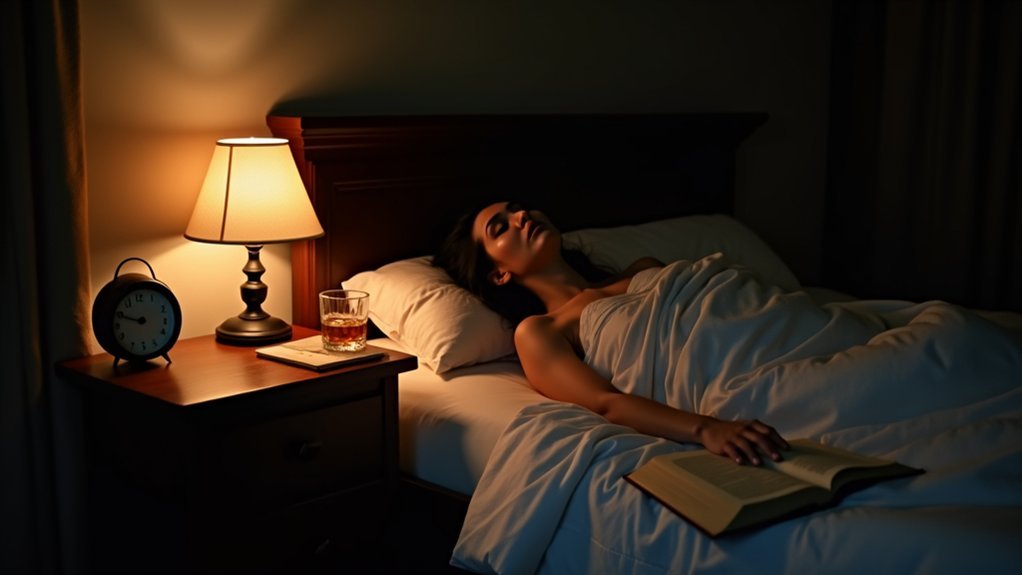
Alcohol acts as a central nervous system depressant that enhances GABA neurotransmitters, creating immediate drowsiness and reducing your bedtime delay. It suppresses your brain’s activity, promotes muscle relaxation, and diminishes anxious thoughts that typically keep you awake. Higher doses trigger faster sleep onset by shifting your brain waves toward sleep-ready patterns and raising adenosine levels. While you’ll fall asleep quicker, this artificial sedation disrupts your natural sleep architecture throughout the night, leading to poor-quality rest and potential dependency issues that worsen over time.
Alcohol’s Sedative Properties Create Immediate Drowsiness
When you drink alcohol before bed, it acts as a central nervous system depressant that enhances GABA’s effects and creates immediate drowsiness. This sedative action helps you fall asleep more quickly, reducing your bedtime delay considerably.
You’ll notice the drowsiness sets in shortly after consumption, with higher doses producing more pronounced effects that facilitate faster sleep onset.
However, while alcohol’s sedative properties initially work in your favor, they come with consequences. Though you’ll experience reduced bedtime delay, alcohol ultimately disrupts sleep architecture throughout the night.
While alcohol helps you fall asleep faster, it significantly disrupts your sleep quality throughout the night.
This leads to fragmented sleep patterns and increased awakenings as the evening progresses. The trade-off means sacrificing overall sleep quality for quicker initial drowsiness, making alcohol a problematic long-term sleep aid despite its immediate sedative benefits.
GABA Neurotransmitter Enhancement Accelerates Sleep Onset
As alcohol enters your bloodstream, it enhances GABA’s inhibitory effects throughout your central nervous system, creating a powerful calming cascade that accelerates sleep onset. This neurotransmitter boost promotes deep relaxation and sedation, effectively reducing your bedtime delay. Higher alcohol consumption—typically 3-6 standard drinks—maximizes these sedative effects, helping you achieve quicker sleep than usual.
However, lower doses around two drinks won’t provide the same sleep-promoting benefits. While GABA enhancement initially works in your favor, it creates a double-edged scenario for your nightly rest.
- Dose-dependent effectiveness: Higher alcohol intake creates stronger GABA enhancement and faster sleep onset
- Temporary solution: Initial sedation wears off as your body metabolizes alcohol throughout the night
- Sleep cycle disruption: Enhanced GABA effects don’t guarantee sustained, quality rest
- Diminishing returns: Regular alcohol consumption reduces GABA’s sleep-promoting effectiveness over time
Central Nervous System Suppression Shortens Pre-Sleep Period
Beyond GABA’s specific neurotransmitter effects, alcohol’s broader impact on your central nervous system creates an even more pronounced sedative effect that markedly shortens your pre-sleep period.
When you consume higher doses of alcohol—typically three to six standard drinks—you’ll experience notably faster sleep onset due to enhanced GABA action throughout your brain.
This central nervous system suppression acts as a powerful depressant, reducing your bedtime delay considerably more than lower doses, which don’t produce the same sedative effects.
However, while alcohol initially accelerates sleep onset, you’ll face rebound effects as your body metabolizes it.
These disruptions lead to increased awakenings and compromised sleep quality, making your shortened pre-sleep period a temporary benefit followed by disrupted sleep patterns.
Reduced Sleep Anxiety Through Muscle Relaxation Effects
The profound muscle relaxation that alcohol delivers throughout your body greatly reduces the physical tension that often fuels bedtime anxiety.
Alcohol’s sedative effects work by enhancing GABA activity in your brain, creating a calming sensation that diminishes worried thoughts and physical restlessness. This reduced tension can lead to quicker sleep onset as your mind and body settle into a more relaxed state.
However, these alcohol effects come with significant drawbacks that you’ll experience later:
- Temporary relief only – The anxiety reduction lasts just a few hours before wearing off
- Disrupted sleep patterns – Your sleep becomes fragmented in the second half of the night
- Dependency cycle risk – Regular use can make you reliant on alcohol for sleep
- Declining sleep quality – Overall rest becomes less restorative over time
Brain Wave Activity Shifts Promote Faster Transition to Sleep

When you drink alcohol, it triggers immediate changes in your brain’s electrical activity that fast-track your journey to sleep. Alcohol’s sedative effects enhance GABA activity while raising adenosine levels, creating powerful drowsiness that shifts your brain waves toward sleep-ready patterns.
| Brain State | Wave Pattern | Sleep Shift |
|---|---|---|
| Alert/Awake | Beta waves dominant | Delayed onset |
| Alcohol-influenced | Alpha/theta increase | Faster sleep onset |
| Early NREM sleep | Delta waves emerge | Accelerated entry |
| Later sleep phases | Disrupted patterns | Fragmented sleep |
Higher alcohol doses create more pronounced brain activity changes, promoting relaxation and quicker NREM sleep entry. However, while alcohol initially accelerates your shift to sleep, it ultimately compromises sleep architecture throughout the night, leading to disrupted rest despite the faster onset.
Frequently Asked Questions
Does Alcohol Reduce Sleep Latency?
Yes, alcohol can reduce your sleep latency initially. You’ll fall asleep faster, especially with higher doses. However, alcohol disrupts your sleep quality later, causing more awakenings and leaving you tired.
Will Alcohol Help Me Last Longer in Bed?
You might think alcohol helps you last longer, but it’ll actually impair your sexual performance, reduce sensitivity, and cause erection difficulties. It creates performance anxiety and relationship problems long-term.
What Is the 1/2/3 Rule for Drinking?
The 1/2/3 drinking rule suggests you limit yourself to one drink if you’re a woman, two if you’re a man, and stop drinking three hours before bedtime for better sleep.
Why Do I Sleep Better if I Drink Alcohol?
You sleep better initially because alcohol acts as a sedative, increasing sleepiness-promoting adenosine and helping you relax. However, it’ll disrupt your sleep cycles later, causing fragmented rest.
In Summary
You’ll fall asleep faster when alcohol acts as a sedative, but don’t rely on it as a sleep solution. While it enhances GABA activity and suppresses your central nervous system to reduce bedtime delay, alcohol disrupts your sleep quality later in the night. You’re better off developing healthy sleep habits that won’t interfere with your REM cycles or leave you feeling groggy the next morning.


Leave a Reply