
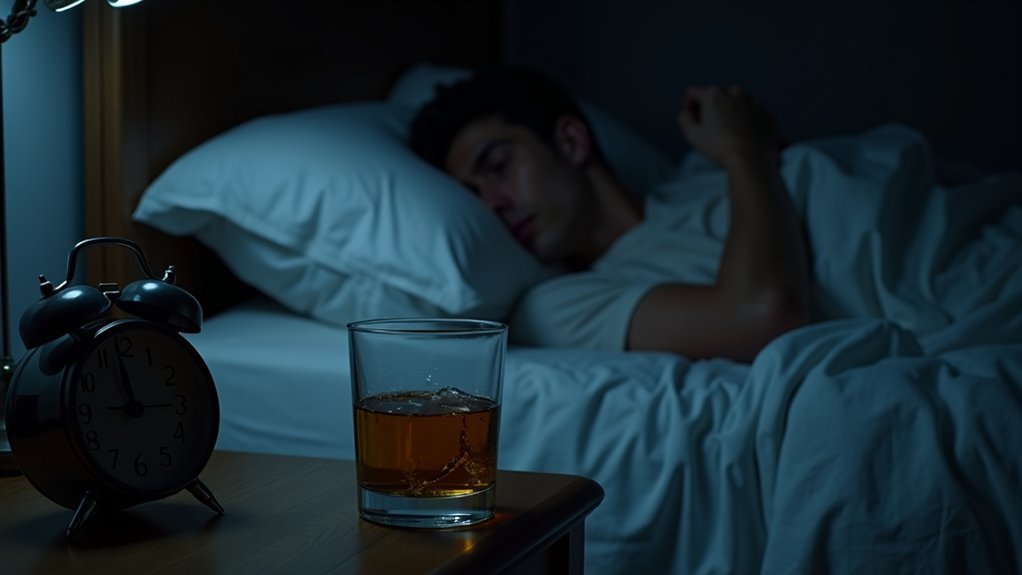
Alcohol disrupts your nightly recovery in three devastating ways. First, it fragments your sleep cycles by initially boosting deep sleep but severely reducing REM sleep, which you need for emotional processing and memory consolidation. Second, it relaxes your throat muscles, increasing sleep apnea risk and causing breathing interruptions that wake you frequently. Third, it creates a dependency cycle where you rely on alcohol’s sedative effects, trapping you in poor sleep patterns that prevent natural recovery and leave 75% of dependent users with chronic insomnia.
Alcohol Fragments Your Sleep Cycles and Reduces REM Sleep
While that evening drink might help you fall asleep faster, alcohol actually wreaks havoc on your sleep architecture throughout the night.
Alcohol disrupts your natural sleep patterns by initially increasing deep sleep but greatly reducing REM sleep, which is essential for emotional processing and memory consolidation. As alcohol is metabolized during the night, your sleep becomes increasingly fragmented.
Alcohol initially boosts deep sleep but severely cuts REM sleep, causing fragmented rest as your body processes it overnight.
You’ll experience more light sleep and frequent awakenings that prevent restorative sleep from occurring.
This fragmentation means alcohol consumption fragments sleep cycles, leaving you feeling unrefreshed despite spending adequate time in bed.
The disruption becomes particularly problematic for those who drink regularly, as chronic use can worsen existing insomnia and make achieving quality sleep increasingly difficult over time.
Alcohol Worsens Sleep Apnea and Breathing Difficulties
Beyond disrupting your sleep cycles, alcohol creates even more serious problems by interfering with your ability to breathe properly during sleep.
When you drink, alcohol causes relaxation of your throat muscles, considerably increasing your risk of obstructive sleep apnea and other breathing difficulties.
Here’s how alcohol worsens sleep-related breathing problems:
- Blocks your airways – Relaxed throat tissues collapse more easily, creating airway obstructions.
- Impairs brain signals – Alcohol disrupts your brain’s ability to regulate breathing patterns.
- Increases snoring severity – Enhanced muscle relaxation leads to louder, more disruptive snoring.
- Fragments sleep quality – Repeated breathing interruptions cause frequent awakenings.
These breathing difficulties result in disrupted sleep and increased daytime fatigue.
Research shows 75% of people with alcohol dependence experience considerable sleep-related issues, including various forms of sleep apnea.
Alcohol Creates a Dependency Cycle That Prevents Natural Sleep Recovery
Although alcohol might seem like an effective sleep aid, it actually traps you in a destructive cycle that prevents your body from achieving natural, restorative sleep. When you develop an alcohol use disorder, you’re likely relying on alcohol’s sedative effects to fall asleep, but this creates a dangerous dependency cycle. Up to 75% of people with alcohol dependency experience chronic insomnia and disrupted sleep patterns.
Alcohol fundamentally alters your sleep cycle, reducing essential REM sleep and causing fragmented sleep with frequent awakenings. While you might feel relaxed initially, your sleep quality deteriorates markedly as alcohol metabolizes overnight.
This leads to increased light sleep stages and prevents natural sleep recovery. The resulting daytime fatigue often drives you toward caffeine, further perpetuating poor sleep patterns and reinforcing your dependency on alcohol.
Frequently Asked Questions
How Does Alcohol Affect Your Recovery?
Alcohol impairs your recovery by disrupting sleep quality, reducing REM sleep, and causing frequent awakenings. You’ll experience cognitive issues, mood instability, and physical health problems that make maintaining sobriety markedly more challenging.
Does Alcohol Prevent Restful Sleep?
Yes, alcohol prevents restful sleep by reducing REM sleep and causing frequent awakenings. You’ll experience fragmented sleep patterns and decreased sleep quality by 10-40%, depending on how much you’ve consumed.
What Is the 1/2/3 Rule for Alcohol?
You should wait one hour per alcoholic drink before bedtime. If you’ve had three drinks, wait three hours before sleeping. This timing helps your body metabolize alcohol, preventing sleep disruption.
How Does Alcohol Affect Sleep Patterns and Physical Recovery?
Alcohol disrupts your sleep by initially increasing deep sleep but reducing REM sleep, causing frequent nighttime awakenings. This fragmented sleep pattern considerably impairs your body’s physical recovery processes during rest.
In Summary
You’ve seen how alcohol sabotages your sleep through fragmented cycles, breathing problems, and dependency patterns. While that nightcap might seem relaxing, it’s actually stealing your body’s chance to recover properly. You’re not getting the deep, restorative sleep you need when alcohol’s in your system. Skip the drinks before bed and you’ll wake up more refreshed, alert, and ready to tackle whatever comes next.



Leave a Reply