

You’ll experience better asthmatic sleep in allergen-free bedrooms because they eliminate dust mites, pet dander, and mold that trigger nighttime coughing and wheezing attacks. These common bedroom allergens disrupt sleep for over 20 million Americans with asthma. When you remove carpeting, use allergen-proof mattress covers, wash bedding weekly in 130°F water, and maintain humidity below 50%, you’re creating an environment where asthma triggers can’t thrive. Discover extensive strategies to transform your bedroom into a peaceful sleep sanctuary.
Understanding the Connection Between Bedroom Allergens and Asthma Symptoms

While you may think your bedroom offers sanctuary from allergens, it’s actually one of the most problematic areas for asthma sufferers. Common bedroom allergens like dust mites, pet dander, and mold directly trigger nocturnal asthma symptoms, causing nighttime coughing and wheezing that disrupts your sleep.
Over 20 million Americans experience these sleep-disrupting symptoms regularly.
Your bedroom’s indoor air quality deteriorates when humidity levels exceed 50%, creating perfect conditions for dust mites to thrive. These microscopic creatures feed on dead skin cells in your mattress, pillows, and bedding.
Without proper allergy-proofing measures like dust mite-proof covers and HEPA filters, you’re constantly exposed to these triggers throughout the night, making quality sleep nearly impossible and worsening your asthma symptoms.
Essential Bedding and Mattress Modifications for Allergen Control
Since your mattress and bedding harbor millions of dust mites that feed on dead skin cells, creating an effective barrier becomes your first line of defense against nighttime asthma triggers.
You’ll need certified asthma & allergy friendly encasements that block allergens from reaching you during sleep. Replace your current mattress with hypoallergenic, low-emission options to minimize harmful VOCs that worsen asthma symptoms.
Transform your sleep quality with these allergen-proof modifications:
- Wash all bedding weekly in 130°F water to eliminate dust mites and their waste products
- Install certified allergen-proof covers on mattresses and pillows to create impermeable barriers
- Choose easily cleanable pillows that resist dust mite colonization
- Maintain bedroom humidity levels below 50% to starve dust mites of necessary moisture
Flooring, Air Quality, and Humidity Management Strategies
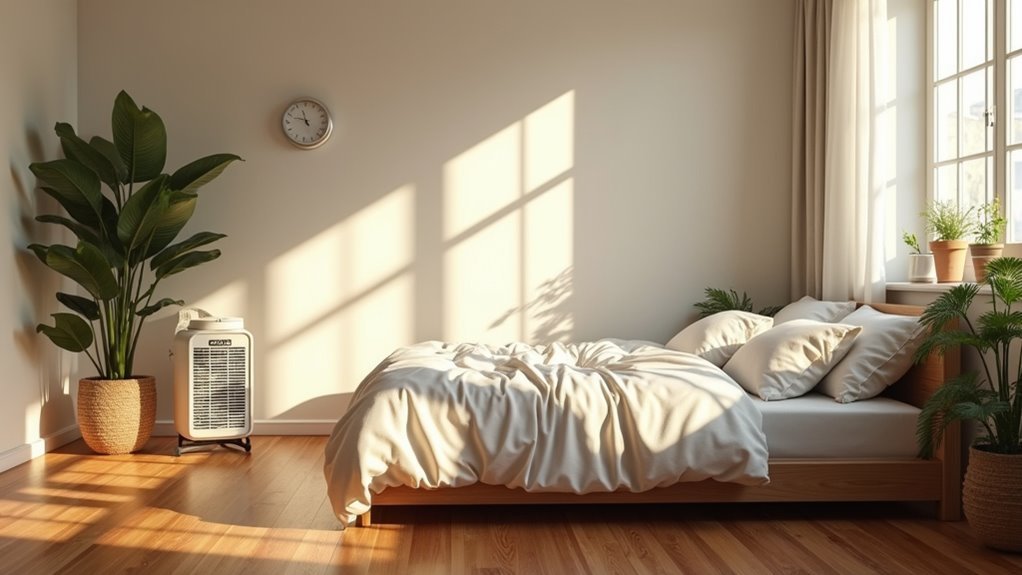
Beyond protecting your bed from allergens, the surfaces beneath your feet and the air you breathe throughout the night play equally important roles in controlling asthma triggers.
Replace carpets with hard flooring to eliminate dust mites and allergens that accumulate in carpet fibers. Maintain humidity levels below 50% to prevent mold growth and dust mite proliferation.
Install HEPA filter air purifiers to capture airborne allergens circulating in your sleep environment. Establish cleaning routines using HEPA-filtered vacuums and damp mopping to minimize allergen build-up on surfaces.
Guarantee proper ventilation with exhaust fans while avoiding strong chemical fumes. These air quality and humidity management strategies create an ideal bedroom environment that reduces nighttime asthma symptoms and promotes restful sleep.
Pet Dander and Dust Mite Prevention in Sleep Spaces
Although you’ve addressed flooring and air quality concerns, two microscopic enemies remain your biggest threats in the bedroom: pet dander and dust mites.
Despite tackling floors and air quality, pet dander and dust mites remain the most dangerous microscopic threats lurking in your bedroom.
These allergens in the bedroom create havoc for your sleep environment, triggering asthma symptoms throughout the night.
Pet dander stays airborne for hours, settling on every surface and causing allergic asthma flare-ups. Dust mites feast on your skin cells in bedding and carpets, multiplying rapidly in warm, humid conditions.
Essential prevention strategies include:
- Keep pets out of bedrooms to eliminate pet dander exposure during sleep
- Install mattress encasements and pillow covers to block dust mite allergens
- Wash bedding weekly in 130°F water to kill dust mites effectively
- Replace carpeting with hard flooring to reduce allergen accumulation
These steps greatly reduce asthma and allergies triggers.
Creating a Comprehensive Allergen-Free Sleep Environment

While individual prevention tactics help control specific allergens, you’ll achieve ideal asthma management by implementing a thorough bedroom transformation strategy.
Start with allergen-proof covers for mattresses and pillows to minimize dust mite exposure. Control indoor humidity below 50% to prevent mold growth and dust mite proliferation. Wash all bedding weekly in hot water at 130°F to eliminate accumulated allergens.
Install HEPA-filter air purifiers to capture airborne allergens circulating throughout your sleep space.
Focus on clutter reduction by removing carpets, stuffed animals, and non-washable decorative items that harbor allergens. This extensive approach creates multiple barriers against allergic reactions, dramatically improving your sleep quality and respiratory health.
You’ll experience fewer nighttime symptoms and wake feeling more rested when allergens can’t penetrate your protected environment.
Frequently Asked Questions
What Role Do Allergens Play in Asthma?
Allergens trigger your asthma by causing airway inflammation and obstruction when you’re exposed to substances like dust mites, pet dander, or mold spores, leading to wheezing, coughing, and breathing difficulties.
What Is the Best Flooring for Asthma Sufferers?
You should choose hard flooring like hardwood, tile, or linoleum since they don’t trap allergens like carpets do. These surfaces are easier to clean and won’t harbor dust mites or mold.
How to Make Your Bedroom Asthma Friendly?
You’ll create an asthma-friendly bedroom by using allergen-proof mattress covers, washing bedding in 130°F water weekly, maintaining humidity below 50%, choosing hard flooring, and running a certified air purifier.
What Furniture Is Best for Asthma Sufferers?
You’ll want furniture made of non-porous materials like leather, wood, or plastic. These options don’t harbor allergens and they’re much easier to clean than upholstered furniture that traps dust mites.



Leave a Reply