

Amber evening routines work by filtering out blue light wavelengths that suppress your body’s melatonin production by up to 50%. When you switch to amber lighting 1-2 hours before bedtime, you’re mimicking natural sunset patterns that signal your brain to prepare for sleep. The 600-620 nanometer wavelengths preserve your circadian rhythm while creating a calming atmosphere that reduces eye strain and enhances relaxation. Strategic timing and placement amplify these benefits even further.
The Science Behind Amber Light and Circadian Rhythm Regulation
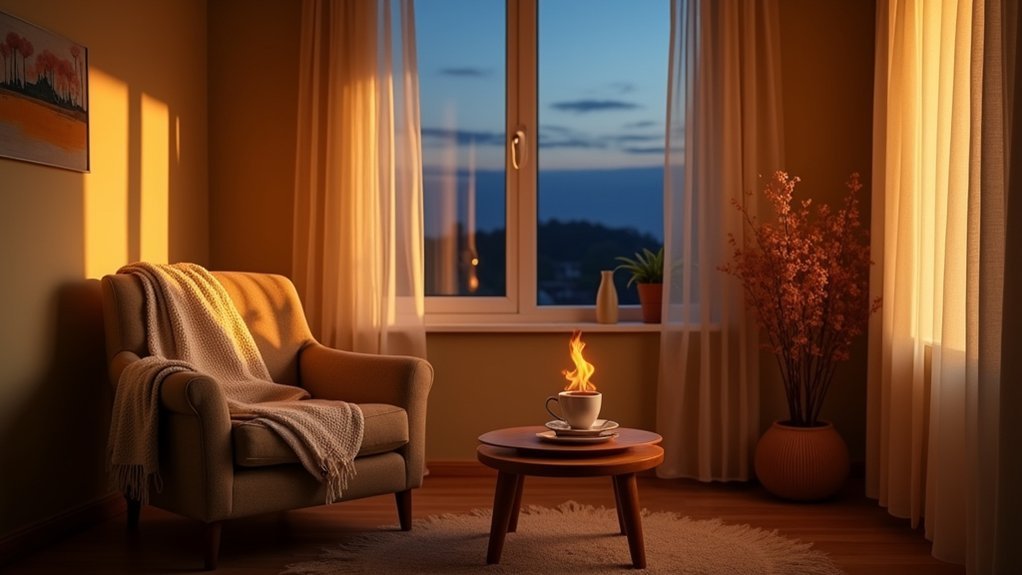
When evening arrives and artificial lights flood your home, your body faces a modern challenge that disrupts millions of years of evolutionary programming. Your circadian rhythm, the internal clock governing sleep-wake cycles, relies on light cues to function properly.
Blue light from standard bulbs tricks your brain into thinking it’s still daytime, suppressing melatonin production and keeping you alert when you should be winding down.
Amber light offers a science-backed solution. Operating at wavelengths around 600-620 nanometers, amber light mimics natural sunset patterns without interfering with your body’s preparation for sleep.
Amber light’s 600-620 nanometer wavelengths replicate natural sunset conditions, supporting your body’s innate sleep preparation without circadian disruption.
Studies demonstrate that this warm-colored illumination allows melatonin production to proceed naturally, helping you shift smoothly from day to night. By choosing amber light for evening activities, you’re working with your biology rather than against it.
How Amber Lighting Reduces Blue Light Exposure Before Bed
When you’re exposed to blue light from screens and LED bulbs during evening hours, your brain receives signals that it’s still daytime, which suppresses melatonin production and disrupts your natural sleep-wake cycle.
Amber lighting works by filtering out these problematic blue wavelengths while maintaining enough illumination for your evening activities.
You’ll create an environment that supports your body’s natural preparation for sleep by switching to amber bulbs or using amber filters on your devices.
Blue Light Science
Why does scrolling through your phone before bed leave you wide awake hours later? Blue light science reveals the answer. When you’re exposed to blue light from screens and artificial lighting during evening hours, your body’s melatonin production drops by up to 50%.
This hormone regulates your sleep-wake cycle, so reduced levels keep you alert when you should be winding down.
Amber lighting offers a solution by filtering out harmful blue wavelengths. With its lower color temperature, amber lighting helps preserve your natural circadian rhythms.
Research shows that switching to amber or warm-colored lights enhances melatonin levels, allowing you to fall asleep faster and experience deeper sleep.
You’ll also notice reduced eye strain and improved mood, creating the perfect relaxed state for bedtime.
Amber Light Benefits
After learning how blue light disrupts your sleep, you’ll appreciate amber lighting’s targeted solution.
Amber light benefits include greatly reducing blue light exposure that interferes with melatonin production. Unlike harsh electronic device screens, amber bulbs emit wavelengths that won’t trigger alertness when you’re trying to wind down.
You’ll notice amber lighting creates a calming atmosphere that naturally signals your body it’s time to sleep. This specialized lighting works with your circadian rhythm instead of against it, promoting smoother sleep shifts.
When you incorporate amber lights into your evening routine during that essential hour before bedtime, you’re actively supporting your body’s natural sleep processes.
The result? You’ll experience improved sleep quality and easier shifts from wakefulness to rest, especially if you’re sensitive to sleep disruptions.
Optimal Timing for Switching to Amber Light in the Evening
You’ll want to understand the science behind amber light’s impact on your circadian rhythm to determine the best alteration time for your evening routine.
Most sleep experts recommend beginning your change to amber lighting 1-2 hours before your intended bedtime, though you can choose between making a gradual shift throughout the evening or an immediate switch at a specific time.
The timing you select should align with your personal sleep schedule and how sensitive you’re to light changes.
Science Behind Amber Light
When the sun begins to set, your body naturally starts preparing for sleep by ramping up melatonin production—but modern artificial lighting can throw this delicate process completely off track.
Blue light wavelengths, prevalent in LED bulbs and screens, suppress melatonin synthesis and keep your brain alert when it should be winding down. Amber light works differently by filtering out these disruptive blue wavelengths while maintaining adequate illumination for evening activities.
Research shows that amber light’s longer wavelengths don’t interfere with your circadian rhythms. Instead, they allow your pineal gland to maintain natural melatonin production, signaling your body that nighttime is approaching.
This biological response reduces cortisol levels and promotes relaxation, creating the ideal hormonal environment for quality sleep and improved mood regulation.
When to Begin Transition
Understanding how amber light supports your natural sleep chemistry leads to an important practical question: exactly when should you make the change from regular lighting?
Research shows you’ll get ideal results by shifting to amber light 1-2 hours before your intended sleep time. This timing allows your body to naturally increase melatonin production and align with your circadian rhythm.
Here’s your amber light change timeline:
- Two hours before bed – Begin dimming blue-rich lights and switch to amber alternatives
- One hour before bed – Confirm all lighting in your sleep environment is amber-toned
- Final 30 minutes – Use only minimal amber lighting to maximize melatonin release
Incorporating this schedule into your bedtime routine consistently helps reduce eye strain while promoting deeper, more restorative sleep.
Gradual Vs Immediate Switch
While many people wonder whether to switch abruptly to amber lighting or ease into it gradually, research clearly favors the gradual approach for ideal sleep preparation.
When you make immediate switches to amber light, you’re creating abrupt changes that can disturb your body’s acclimatization process, potentially causing increased alertness and difficulty falling asleep.
Instead, you’ll find that gradually shifting to amber light allows your body to naturally adjust its circadian rhythms.
This gentle approach promotes melatonin production and creates a smoother shift toward rest.
Choosing the Right Amber Light Temperature and Intensity
Three key factors determine how effectively amber light will enhance your evening routine: color temperature, brightness level, and timing of implementation.
Three critical elements—color temperature, brightness, and timing—determine amber light’s effectiveness in optimizing your nightly wind-down routine.
You’ll want to select amber light within the 2000K to 2700K range for ideal melatonin protection. This temperature mimics sunset’s natural warmth while minimizing blue light exposure that disrupts sleep patterns.
Essential amber light settings for better sleep:
- Temperature: Choose 2000K-2700K bulbs to eliminate sleep-disrupting blue wavelengths.
- Brightness: Set intensity to 30-50% to create a calming atmosphere without overstimulation.
- Timing: Begin using amber light 2-3 hours before bedtime to support circadian rhythm alignment.
Lower intensity amber lighting reduces eye strain from daily screen exposure while signaling your body to prepare for rest.
This combination is critical for sleep quality improvement.
Strategic Placement of Amber Lights Throughout the Bedroom
You’ll want to position your amber lights at eye level or slightly below to minimize glare while creating that warm, enveloping glow your body craves before sleep.
Installing dimmer switches lets you gradually reduce brightness as bedtime approaches, perfectly syncing with your natural circadian rhythm.
The key is matching your light’s color temperature to the time—start with warmer amber tones around sunset and shift to deeper, redder hues as you get closer to sleep.
Optimal Light Placement Heights
Although many people overlook the importance of light positioning, the height at which you place amber lights dramatically affects your bedroom’s sleep-promoting atmosphere.
Positioning amber lights at eye level—approximately 4 to 5 feet above the ground—minimizes glare while creating a soothing environment that naturally signals your body to prepare for rest. This strategic height placement helps you shift smoothly into your nighttime routine without harsh brightness disrupting your circadian rhythm.
Consider these ideal placement strategies:
- Bedside table level – Install lights at surface height for easy access to gentle illumination during evening activities.
- Eye-level wall mounting – Position fixtures 4-5 feet high to reduce glare and create comfortable ambient lighting.
- Corner positioning – Place lights in room corners at medium height to eliminate stark shadows and promote relaxation.
Dimmer Switch Integration Benefits
When you integrate dimmer switches with your amber lighting system, you’ll gain precise control over your bedroom’s brightness levels throughout the evening.
This customizable approach lets you gradually reduce light intensity as bedtime approaches, supporting your body’s natural melatonin production for healthy sleep.
The dimmer switch integration benefits extend beyond simple brightness control.
You can create the perfect ambiance that matches your personal relaxation preferences while greatly reducing blue light exposure.
As you lower the amber lights throughout your evening routine, you’re actively decreasing environmental stimulation levels, which helps your mind unwind and reduces pre-bedtime anxiety.
This strategic lighting control transforms your bedroom into a calming sanctuary, making it easier to shift from active daytime hours to restful sleep preparation.
Color Temperature Timing
Strategic placement of amber lights throughout your bedroom creates distinct zones that guide your body’s natural shift from alertness to sleepiness.
You’ll want to position these warm-toned fixtures strategically to maximize their circadian rhythm benefits.
Consider these ideal placement strategies for amber lights:
- Bedside table lamps – Position amber lights on nightstands to create a calming reading zone while reducing blue light exposure that interferes with melatonin production.
- Corner floor lamps – Place amber lighting in bedroom corners to provide gentle ambient illumination that signals your brain it’s time to wind down.
- Behind headboard accent lighting – Install amber LED strips behind your headboard to create a serene backdrop that enhances relaxation without overstimulating your visual senses.
This thoughtful arrangement transforms your bedroom into a sleep-promoting sanctuary.
Combining Amber Lighting With Natural Evening Light Reduction
As evening approaches, you can maximize the sleep-promoting benefits of amber lighting by simultaneously reducing natural light sources throughout your home.
Drawing curtains, dimming overhead lights, and closing blinds creates a darker environment that enhances your amber lighting’s effectiveness. This dual approach sends stronger signals to your body that it’s time to wind down.
When you combine amber lighting with reduced natural evening light, you’re creating an ideal environment for melatonin production.
The warm, low color temperature of amber bulbs minimizes blue light exposure while the darkened surroundings amplify this effect.
Research shows this combination leads to improved sleep quality and duration compared to using cooler lighting in bright environments, supporting your circadian rhythms for better overall health.
The Role of Amber Light in Melatonin Production Enhancement
Understanding how amber light interacts with your body’s natural hormone production reveals why it’s so effective for evening routines.
Unlike blue light, which can suppress melatonin production by up to 50%, amber light’s longer wavelength has negligible effects on this vital sleep hormone.
When you use amber lighting during evening hours, you’re supporting your body’s natural melatonin release patterns.
This creates three key benefits:
- Consistent hormone cycles – Your melatonin production remains steady, signaling it’s time to wind down
- Enhanced sleep quality – More reliable melatonin release leads to longer, deeper sleep periods
- Reduced screen-related disruption – Amber light counteracts artificial lighting effects from devices
This hormone-friendly approach makes your shift to sleep smoother and more natural.
Creating Gradual Light Transitions for Better Sleep Preparation
When you create a gradual light shift in your evening hours, you’re mimicking the natural progression from daylight to darkness that your body expects. This gentle change signals your system to begin melatonin production, preparing you for restorative sleep.
Start your routine one hour before bedtime by dimming overhead lights and switching to warm, soft lighting sources. You’ll reduce overstimulation while encouraging your mind to wind down naturally. Smart bulbs and dimmer switches make this process effortless, allowing you to control the change smoothly.
Avoid bright lights during this period, as they’ll disrupt your circadian rhythms and make falling asleep difficult.
Amber Light Integration With Other Sleep Hygiene Practices
Your gradual dimming strategy becomes even more powerful when you combine amber lighting with proven sleep hygiene practices.
Amber light integration creates a thorough approach that reinforces your body’s natural wind-down process and maximizes sleep quality.
Here are three key practices that work synergistically with amber lighting:
- Reading under amber light – Create a calming ritual that signals bedtime while protecting your circadian rhythms from blue light interference.
- Meditation sessions – Use warm amber tones to enhance relaxation and reduce anxiety levels during evening mindfulness practices.
- Consistent timing – Establish clear day-night distinctions by switching to amber light at the same time each evening, strengthening your body’s sleep-wake cycle.
This integrated approach transforms your evening routine into a powerful tool for restorative sleep.
Measuring the Sleep Quality Impact of Amber Evening Routines
Since implementing amber evening routines requires commitment and time investment, you’ll want concrete evidence that your efforts are paying off through measurable improvements in sleep quality.
Track your sleep duration using apps or journals to document how consistent evening rituals enhance your rest. Monitor how quickly you fall asleep and note any reduction in nighttime awakenings.
Use sleep apps or journals to track duration, sleep onset time, and nighttime awakenings for measurable progress.
Pay attention to morning energy levels and emotional balance throughout the day, as these directly reflect restorative sleep quality. When you make time for mindfulness practices and next-day preparation, measure decreased stress levels and anxiety.
Document your overall mental fatigue patterns to see cumulative improvements. These quantifiable metrics prove your amber evening routine’s effectiveness.
Frequently Asked Questions
What Are the Benefits of Evening Routine?
Evening routines help you signal your body it’s bedtime, reduce stress through calming activities, prepare for tomorrow, process emotions via journaling, and reinforce your natural sleep-wake cycle for better rest.
What Is the Best Evening Routine?
You’ll create an effective evening routine by writing tomorrow’s to-do list, doing gentle stretches or meditation, dimming lights, and maintaining consistent bedtime timing. These activities help you shift from day stress to peaceful sleep.
What Are the Benefits of a Bedtime Routine?
You’ll improve your sleep quality and reduce stress through consistent bedtime routines. They signal your body to wind down, create stability during change, and help you shift peacefully into sleep each night.
What Is the Best Sleep Routine?
You’ll create the best sleep routine by establishing consistent bedtimes, avoiding caffeine late, engaging in calming activities like reading, preparing tomorrow’s tasks, and maintaining a dark, quiet bedroom environment nightly.
In Summary
You’ll find that amber evening routines work because they’re perfectly aligned with your body’s natural biology. By switching to amber light 2-3 hours before bed, you’re supporting your circadian rhythm and boosting melatonin production. You’re fundamentally telling your brain it’s time to wind down. When you combine proper amber lighting with consistent timing and good sleep hygiene, you’ll experience deeper, more restorative sleep that leaves you refreshed.




Leave a Reply