

You can achieve immediate stress relief through simple aromatherapy techniques like inhaling lavender or bergamot oils directly, using a diffuser to create a calming atmosphere, or adding essential oils to steaming water for deep inhalation. For topical application, mix 2-3 drops of essential oil with a teaspoon of carrier oil like jojoba or coconut, then apply to pulse points. Aromatherapy baths offer the deepest relaxation when you combine warm water with properly diluted oils and soak for 15-20 minutes while maintaining water temperature at 98-102°F. These techniques work by activating your olfactory receptors, which directly influence your limbic system and trigger the release of calming neurochemicals like serotonin. There’s much more to discover about building effective routines.
Understanding Essential Oils and Their Therapeutic Properties
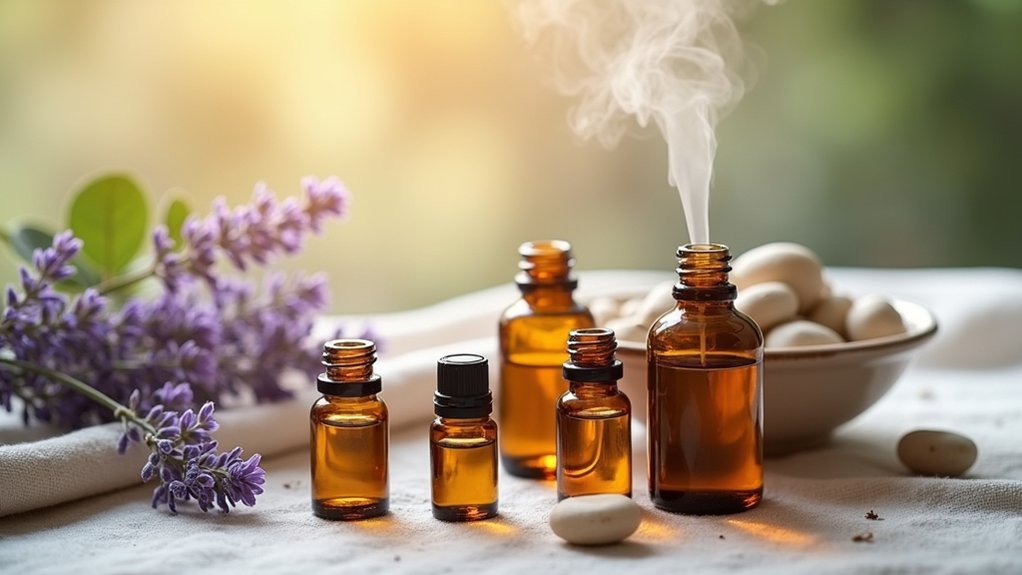
Essential oils possess remarkable therapeutic properties that make them powerful allies in your stress management toolkit. These concentrated plant extracts derive from various plant parts and contain potent compounds that promote physical and mental well-being.
Concentrated plant extracts packed with potent compounds serve as powerful natural allies for managing stress and promoting overall well-being.
You’ll find that producing just one pound of lavender essential oil requires over 200 pounds of lavender flowers, demonstrating their incredible concentration and value.
When you inhale essential oils, they activate your olfactory receptors, sending direct signals to your brain’s limbic system. This process influences your emotions and promotes deep relaxation.
For effective stress relief, you’ll want to choose common oils like lavender, bergamot, and chamomile, known for their calming properties.
How Aromatherapy Works on the Brain and Nervous System
When you inhale essential oils, the scent molecules travel through your olfactory pathways directly to your brain, creating an immediate connection between aromatherapy and your nervous system.
This process specifically targets your limbic system, the brain’s emotional control center, which explains why certain scents can instantly shift your mood or trigger vivid memories.
Your brain then responds by releasing neurochemicals like serotonin and endorphins, creating the measurable stress-relieving effects that make aromatherapy so effective for relaxation.
Olfactory Pathways to Brain
As you breathe in the delicate scent of lavender or peppermint, aromatic molecules travel through your nasal passages and bind to specialized olfactory receptors located high in your nose.
These receptors immediately convert chemical signals into electrical impulses that travel along the olfactory nerve directly to your brain. What makes olfactory pathways uniquely powerful is their direct connection to your limbic system—the brain’s emotional control center that governs memory, mood, and stress responses.
Unlike other senses that must pass through multiple brain regions, smell travels the shortest route to influence your emotions.
Within seconds, your limbic system triggers the release of calming neurotransmitters like serotonin while simultaneously reducing cortisol production. This rapid neurochemical response explains why you’ll often feel immediate relaxation when inhaling therapeutic essential oils.
Limbic System Activation
Once aromatic molecules reach your limbic system, they release a cascade of neurochemical changes that directly influence your emotional state. This brain region processes emotions and memories, making it highly receptive to essential oils’ therapeutic compounds.
When you inhale these aromatic molecules, your hypothalamus responds by releasing mood-regulating neurotransmitters like serotonin, creating feelings of calm and happiness.
Your limbic system’s direct connection to emotional processing explains why certain scents trigger immediate responses. Essential oils effectively modulate hormonal activity within these emotional pathways, markedly reducing anxiety and stress levels.
- Activates memory centers linked to positive emotional experiences
- Triggers immediate release of calming neurotransmitters
- Bypasses conscious thought for direct emotional impact
- Regulates stress hormone production naturally
- Creates lasting mood improvements through repeated exposure
Neurochemical Response Mechanisms
The neurochemical pathways that facilitate these emotional changes operate through precise molecular interactions between aromatic compounds and your brain’s receptor sites. When you inhale essential oils, the molecules directly influence your hypothalamus, triggering the release of vital neurotransmitters like serotonin.
This neurochemical cascade creates measurable physiological changes throughout your body, including decreased heart rate and lowered blood pressure.
The neurochemical effects extend beyond simple relaxation. Your nervous system responds to these aromatic compounds by activating specific brain regions that regulate stress hormones.
Clinical research demonstrates that essential oils create lasting neurochemical changes that greatly reduce anxiety symptoms. These molecular interactions explain why aromatherapy produces consistent, measurable results rather than just providing temporary pleasant sensations.
Top Essential Oils for Stress Reduction and Anxiety Relief
When stress overwhelms your daily life, certain essential oils can provide remarkably effective relief through their scientifically-backed calming properties.
These natural remedies work by triggering neurochemical responses that reduce cortisol levels and promote relaxation.
Lavender stands out as the most researched oil for anxiety reduction and sleep improvement. Its compounds directly calm your nervous system, making it perfect for evening routines.
Bergamot’s fresh citrus scent effectively alleviates depression while lowering stress hormones, particularly beneficial for postpartum emotional support.
- Lavender – Reduces anxiety symptoms and greatly improves sleep quality
- Bergamot – Lowers cortisol levels and alleviates postpartum depression
- Lemongrass – Demonstrates considerable anxiety reduction in clinical studies
- Neroli – Provides uplifting properties and pain relief during stressful situations
- Orange – Effectively combats depression and anxiety symptoms
Lavender Oil: The Ultimate Sleep and Relaxation Companion
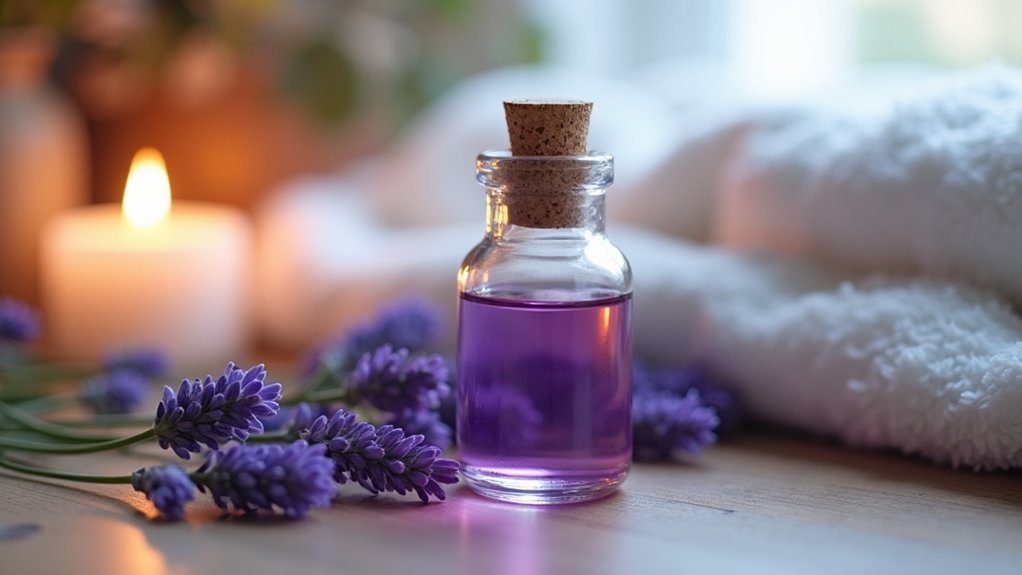
Among all stress-relieving oils, lavender deserves special recognition as your most reliable ally for achieving deep relaxation and restorative sleep.
This remarkable lavender oil delivers proven results, lowering your blood pressure and heart rate while effectively addressing stress-related insomnia. Research spanning 30 studies confirms its ability to enhance sleep quality by targeting pain, anxiety, and depression simultaneously.
You can harness lavender’s power through multiple methods. Try inhaling it via diffusers, applying it topically with carrier oils, or adding drops to your bath for immediate stress relief.
Hospitals routinely use lavender aromatherapy to reduce stress and calm pre-surgery anxiety, demonstrating its clinical effectiveness.
When you need to reduce stress and achieve peaceful sleep, lavender oil consistently delivers the therapeutic results you’re seeking.
Citrus Oils for Mood Enhancement and Mental Clarity
While lavender excels at promoting relaxation, citrus essential oils like bergamot and orange take a different approach by actively lifting your spirits and sharpening your mental focus.
These invigorating oils work directly on your stress levels by lowering cortisol hormones, creating an immediate sense of calm while boosting alertness.
Research shows that inhaling citrus scents greatly improves emotional well-being and reduces anxiety.
You’ll experience enhanced mood enhancement alongside improved productivity as these oils naturally sharpen your concentration.
- Bergamot oil specifically targets cortisol reduction for stress relief
- Orange oil provides instant mood elevation and mental clarity
- Diffusion offers continuous atmospheric benefits throughout your day
- Topical application delivers concentrated aromatherapy effects
- Morning routines benefit most from citrus essential oils’ energizing properties
Effective Inhalation Techniques for Immediate Stress Relief
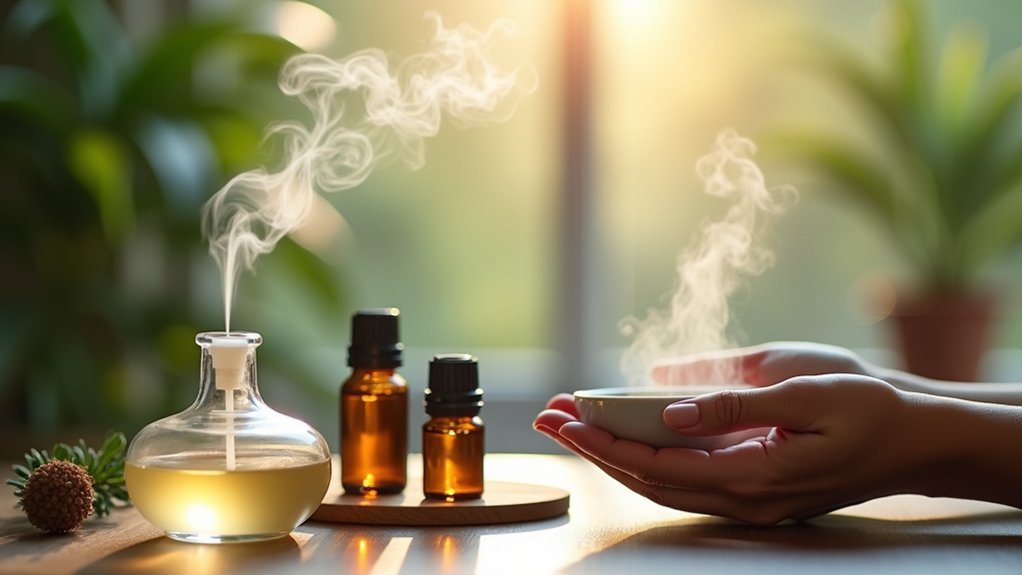
Beyond selecting the right oils, mastering proper inhalation techniques transforms how quickly you’ll experience stress relief.
You’ll feel the calming effect within just 15 minutes when you inhale essential oils like lavender or bergamot directly.
Use a diffuser to create a soothing atmosphere throughout your space, dispersing oils evenly for continuous aromatherapy benefits.
Transform your entire living space into a peaceful sanctuary with a diffuser that delivers consistent, therapeutic aromatherapy throughout the day.
For deeper inhalation, add several drops to steaming water and breathe in the fragrant vapor. This method promotes intense relaxation and immediate stress reduction.
When you’re on-the-go, apply oils to a tissue or cotton ball for portable stress relief.
These inhalation techniques work by stimulating your limbic system, the brain region controlling emotions, providing instant mood enhancement and stress relief.
Creating the Perfect Aromatherapy Diffuser Routine
Establishing a consistent diffuser routine amplifies aromatherapy’s stress-relieving benefits and creates predictable moments of calm in your daily life.
Start by selecting calming essential oils like lavender or bergamot, which research confirms greatly reduce stress and enhance relaxation. Use 3-5 drops in your diffuser, adjusting for room size and personal preference.
Begin diffusing at least 30 minutes before bedtime to create a calming atmosphere that improves sleep quality through reduced anxiety levels.
- Choose research-backed calming essential oils such as lavender or bergamot for maximum stress relief
- Add 3-5 drops to your diffuser, adjusting quantity based on room size and scent preference
- Start diffusing 30 minutes before bedtime to promote relaxation and better sleep quality
- Clean your diffuser regularly to maintain pure essential oil scents and routine effectiveness
- Experiment with oil combinations like lavender-orange blends for personalized aromatherapy experiences
Topical Application Methods With Carrier Oils
Three essential steps transform aromatherapy into a powerful stress-relief tool through topical application: selecting the right carrier oil, achieving proper dilution ratios, and targeting strategic application points.
Choose jojoba or coconut oil as your carrier oil to dilute essential oils safely. Mix 2-3 drops of essential oil per teaspoon of carrier oil to prevent skin irritation while maintaining therapeutic benefits.
Jojoba and coconut oils provide safe dilution bases when mixing 2-3 drops of essential oil per teaspoon of carrier oil.
Lavender and chamomile work exceptionally well for topical application, delivering calming effects when you massage them into pulse points like wrists and temples. Your skin absorbs these oils quickly, so you’ll feel relaxation benefits within minutes.
Always perform a patch test before full application to check for allergic reactions. Apply the blend to a small skin area and wait 24 hours to verify you don’t experience sensitivities.
Aromatherapy Bath Rituals for Deep Relaxation
When you sink into a warm aromatherapy bath, you’re creating one of nature’s most effective stress-relief sanctuaries. The warm water opens your pores, allowing essential oils to penetrate your skin while their calming scents work through inhalation.
Studies show that bathing with essential oils greatly decreases cortisol levels, helping alleviate stress and anxiety.
Always mix essential oils with carrier oils like jojoba or coconut oil before adding them to prevent skin irritation. Lavender and chamomile are particularly effective for relaxation.
Essential bath ritual elements:
- Dim the lights to create a tranquil atmosphere
- Add calming background music for enhanced relaxation
- Use 5-10 drops of essential oils mixed with carrier oil
- Maintain water temperature between 98-102°F
- Soak for 15-20 minutes for ideal aromatherapy benefits
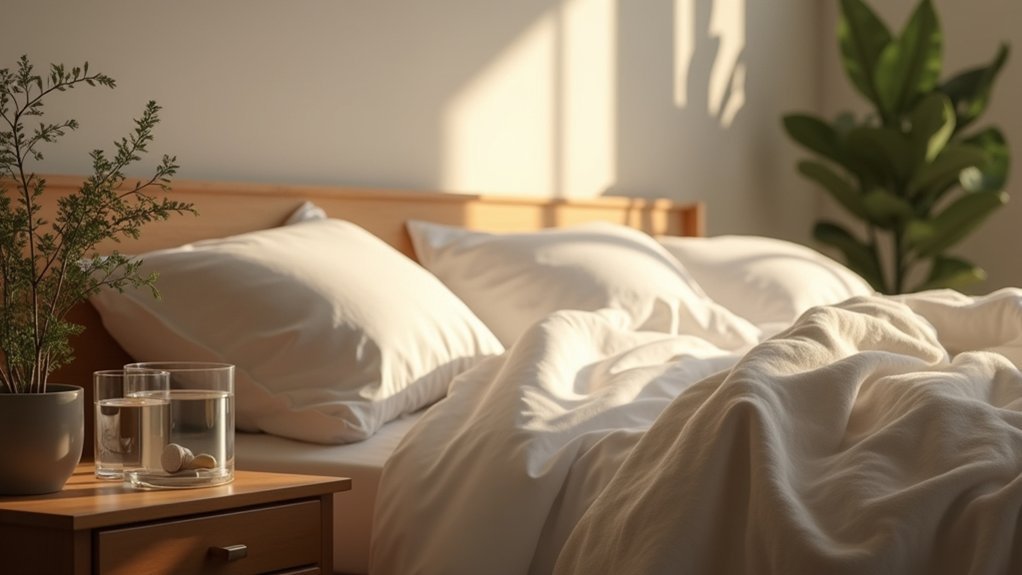
Setting up Your Sleep Environment With Calming Scents
You’ll transform your bedroom into a sanctuary of calm by strategically placing essential oil diffusers and creating consistent bedtime aromatherapy rituals.
Position your diffuser about three feet from your bed to guarantee ideal scent distribution without overwhelming your senses as you sleep.
Establish a nightly routine that includes activating your diffuser thirty minutes before bedtime and applying calming scents to your pillow or pulse points.
Essential Oil Diffuser Placement
Although the benefits of aromatherapy extend throughout your home, strategic placement of your essential oil diffuser in the bedroom creates the most powerful impact on sleep quality.
Position your diffuser on a bedside table or shelf at least 3 feet off the ground for ideal scent distribution. Keep it away from direct air currents like fans or windows to maintain consistent essential oil release.
- Choose diffusers with timer functions to prevent air over-saturation during sleep
- Experiment with lavender and orange essential oils for maximum relaxation benefits
- Place the unit where calming scents can circulate freely around your bed
- Maintain distance from electronics to avoid interference with sleep cycles
- Clean regularly according to manufacturer instructions for effective aromatherapy massage benefits
Bedtime Aromatherapy Rituals
Creating a consistent bedtime aromatherapy ritual transforms your sleep environment into a sanctuary of calm that signals your body it’s time to unwind.
Start by using a diffuser with lavender and bergamot essential oils thirty minutes before sleep to promote deeper rest and reduce anxiety.
Apply a diluted blend of chamomile and cedarwood mixed with carrier oil to your pulse points for direct relaxation benefits.
Create a homemade room spray using water and calming essential oils to enhance your bedroom’s peaceful ambiance.
Incorporate aromatherapy massage techniques, as studies show this combination considerably improves sleep quality.
Finally, indulge in a warm bath with lavender or orange oils to ease tension and prepare your body for restorative sleep through these bedtime aromatherapy rituals.
Building a Consistent Nighttime Aromatherapy Routine
When stress accumulates throughout the day, establishing a consistent nighttime aromatherapy routine can transform your evening hours into a sanctuary of calm and prepare your body for restorative sleep.
Your routine’s effectiveness depends on regular practice, as cumulative benefits develop over time to improve sleep patterns and reduce anxiety.
Consistency is key—regular aromatherapy practice builds cumulative benefits that gradually enhance sleep quality and reduce daily stress accumulation.
Start by experimenting with different essential oils to discover your personal preferences.
Create multiple aromatherapy applications—diffusing lavender and bergamot, preparing massage oils with carrier bases for pulse points, and mixing room sprays with water.
Track which scents resonate most with your stress levels and sleep quality.
- Use a diffuser with calming essential oils like lavender and bergamot
- Create massage oil blends for pulse point application
- Make room sprays to establish a soothing bedroom atmosphere
- Practice your routine consistently for cumulative benefits
- Experiment and track different scent preferences for best results
Safety Guidelines and Best Practices for Essential Oil Use
Before you incorporate essential oils into your stress-relief routine, you’ll need to master proper dilution methods to protect your skin from irritation.
Always conduct a patch test on a small area of your skin before using any new oil, as individual sensitivities can vary greatly.
Following safe application techniques guarantees you’ll experience aromatherapy’s calming benefits without risking adverse reactions or health complications.
Proper Dilution Methods
Three key principles form the foundation of safe essential oil dilution: proper ratios, appropriate carrier selection, and thorough testing.
You’ll need to master proper dilution methods to avoid skin irritation and maximize aromatherapy benefits. Standard dilution requires 2-3 drops of essential oil per teaspoon of carrier oil, while sensitive skin demands just 1 drop per teaspoon. Carrier oils like jojoba and coconut oil effectively dilute potent essential oils while nourishing your skin.
Essential dilution guidelines include:
- Always perform patch tests before trying new essential oil blends
- Never apply undiluted oils directly to skin, especially cinnamon or clove
- Mix 5-10 drops with carrier oil before adding to bathwater
- Choose appropriate carrier oils based on your skin type
- Increase dilution ratios when treating sensitive or damaged skin areas
Skin Sensitivity Testing
Although proper dilution protects most users from adverse reactions, you’ll still need to perform skin sensitivity testing before incorporating any new essential oil into your aromatherapy routine.
Conduct a patch test by applying one diluted drop to a small skin area, then monitor for irritation over 24 hours. Choose an inconspicuous location like your inner forearm for testing.
During skin sensitivity testing, avoid sensitive areas near your eyes, mucous membranes, or broken skin where reactions occur more readily.
If you have existing skin conditions or allergies, consult an aromatherapist before testing essential oils.
Keep detailed records of any reactions you experience, noting which specific oils caused problems. This documentation helps you identify allergens and prevents future adverse reactions during your aromatherapy practice.
Safe Application Techniques
Once you’ve confirmed your skin can tolerate a new oil through testing, implementing proper application techniques becomes your next priority for safe aromatherapy practice.
Essential oil safety requires consistent dilution with carrier oils like jojoba or coconut oil before skin contact. Never apply undiluted oils directly to your body, as this increases irritation risk considerably.
- Always dilute essential oils with carrier oils before topical application
- Avoid sensitive areas including eyes, mucous membranes, and broken skin
- Guarantee proper ventilation during inhalation sessions to prevent respiratory irritation
- Limit exposure time to high concentrations of essential oils
- Consult your healthcare provider before internal use or application on children
These safe application techniques protect you from adverse reactions while maximizing aromatherapy’s stress-relief benefits for ideal wellness outcomes.
Frequently Asked Questions
What Is the Best Aromatherapy for Stress?
You’ll find lavender essential oil works best for stress relief due to its proven calming properties. Bergamot’s also excellent for reducing cortisol levels, and you can combine both oils for enhanced relaxation effects.
How to Use Aromatherapy for Stress Relief?
You can diffuse lavender or bergamot oils for quick relief within fifteen minutes. Add oils to warm baths with carrier oils, massage onto pulse points, or establish a consistent daily routine for long-term stress reduction.
What Are Some Good Stress Relief Techniques?
You can reduce stress by exercising regularly to release endorphins, practicing mindfulness meditation, doing breathing exercises, and maintaining good sleep hygiene with consistent bedtimes and relaxing routines.
What Essential Oil Helps You Relax and Sleep?
You’ll find lavender essential oil’s your best choice for relaxation and sleep. It considerably reduces anxiety while improving sleep quality. You can also try bergamot for deeper sleep stages or combine both oils for enhanced rest.


Leave a Reply