

You’ll sleep better on carpet since it provides natural insulation and cushioning that supports your joints throughout the night. If you’ve chosen hardwood, you can still achieve comfort by placing plush area rugs strategically around your bed to create warm, pressure-relieving zones. The key is ensuring your flooring choice doesn’t leave you feeling cold or experiencing joint discomfort during rest. These foundational comfort principles will guide you toward creating the ideal sleep environment.
Temperature Regulation: How Flooring Choice Affects Sleep Warmth

When you’re choosing between carpet and hardwood for your bedroom, the flooring material directly impacts your sleep temperature and overall comfort.
Carpet provides superior insulation and natural warmth underfoot, creating a cozy atmosphere that enhances sleep quality during colder months. This built-in temperature regulation helps maintain comfortable conditions throughout the night.
Carpet’s natural insulation creates a warm, cozy bedroom environment that promotes better sleep quality during cold winter nights.
Hardwood floors, while elegant, can feel cold and unwelcoming, potentially disrupting your comfort. However, you can bridge this gap by strategically placing area rugs around your bed, which adds both warmth and insulation to counter hardwood’s cooler nature.
Your flooring choice greatly affects your bedroom’s thermal environment. Carpet naturally creates a warmer sleeping space, while hardwood requires additional elements like area rugs to achieve similar comfort levels.
Joint Support and Pressure Relief During Rest
While temperature plays an essential role in sleep comfort, your flooring choice also greatly impacts joint support and pressure relief throughout the night. If you’re dealing with joint pain or arthritis, carpet’s softer surface can cushion pressure points and reduce discomfort during rest. The plush texture promotes comfort and warmth, contributing to a better night’s sleep.
Hardwood floors, while beautiful, can be unforgiving on joints. Hard surfaces don’t provide adequate pressure relief, especially if you sleep on your side or back. Joint health experts recommend soft flooring options to minimize discomfort during prolonged rest periods.
| Flooring Type | Joint Support | Pressure Relief | Sleep Quality |
|---|---|---|---|
| Carpet | Excellent cushioning | High comfort | Enhanced rest |
| Hardwood | Minimal support | Limited relief | Potential discomfort |
| Combination | Moderate benefit | Variable comfort | Depends on area |
Creating Cozy Sleep Zones With Strategic Rug Placement
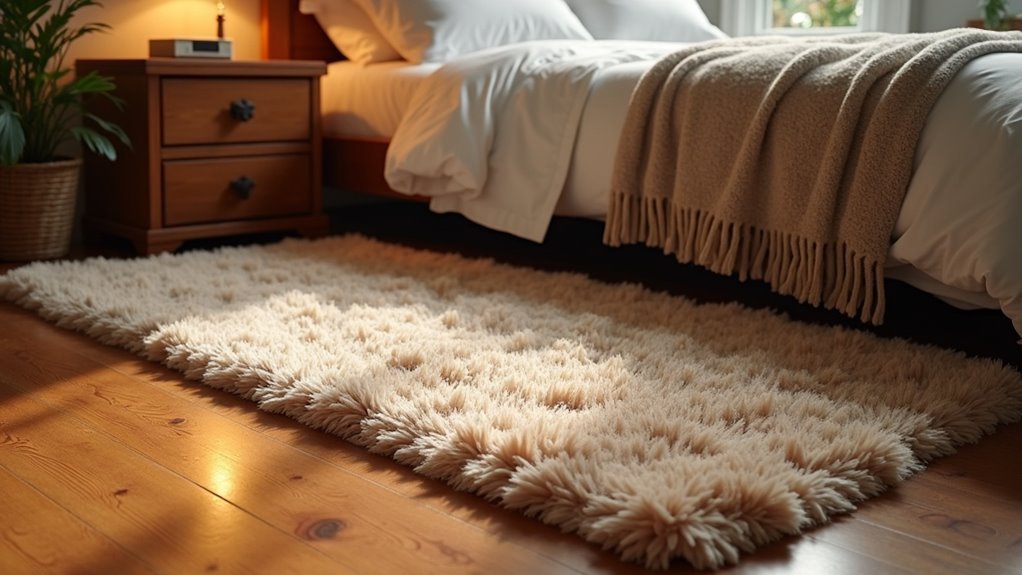
If you’re dealing with hardwood floors but want the comfort benefits of carpet, strategic rug placement offers the perfect compromise for your sleep environment.
Area rugs transform cold hardwood floors into cozy sleep zones that promote better relaxation. You’ll immediately notice reduced noise levels, creating a quieter atmosphere for quality rest.
Area rugs instantly transform hard floors into warm, quiet sanctuaries that enhance sleep quality and bedroom comfort.
Choose plush rugs that add essential softness underfoot, making your bedroom feel more inviting. Position rugs strategically to visually define your sleeping area while maintaining the aesthetic appeal of your hardwood floors.
Opt for hypoallergenic materials to improve indoor air quality, especially if you suffer from allergies. This approach delivers carpet-like comfort without permanent flooring changes.
Frequently Asked Questions
Is It Better to Have Carpet or Hardwood Floors in Bedrooms?
You’ll find carpet offers superior comfort and warmth for bedrooms, providing cushioned surfaces and noise reduction. However, if you’re an allergy sufferer, hardwood’s easier maintenance and better air quality make it your healthier choice.
Do Buyers Prefer Carpet or Hardwood in Bedrooms?
You’ll find most buyers prefer hardwood in bedrooms since homes with hardwood floors sell faster and for about 10% more than carpeted ones, though some families still favor carpet’s warmth.
What Is the Healthiest Flooring for Bedrooms?
You’ll find hardwood flooring is the healthiest bedroom choice. It doesn’t trap allergens like dust, mildew, or pet dander that carpets harbor. You can easily clean spills and maintain better indoor air quality.
What Is the Best Carpet for Comfort and Durability?
You’ll want nylon or polyester carpets with 1-1.5 inch pile height and 25-50 ounce face weight. Choose twist or frieze styles with built-in stain protection for maximum comfort and durability.




Leave a Reply