
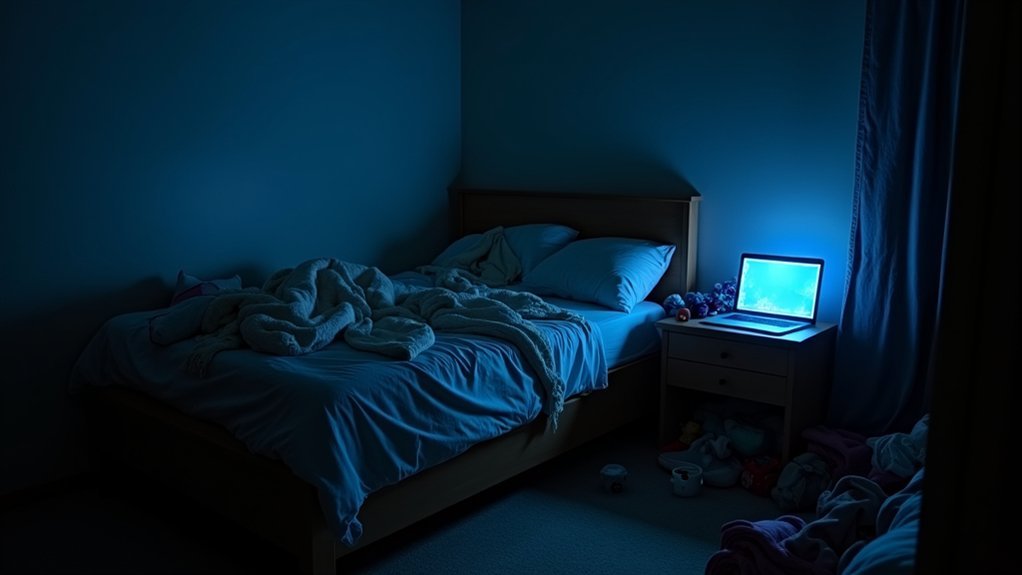
Your bedroom environment triggers insomnia through multiple disruptive factors that interfere with your body’s natural sleep processes. Temperatures outside the 60-67°F range disrupt thermoregulation, while ambient noise above 30 decibels fragments deep sleep phases. Light exposure, especially blue light from electronic devices, suppresses melatonin production and delays sleep onset. Uncomfortable mattresses cause physical restlessness, and cluttered spaces create cognitive overload. Understanding these environmental triggers can help you transform your bedroom into a sleep-promoting sanctuary.
Temperature Extremes Disrupt Natural Sleep Cycles
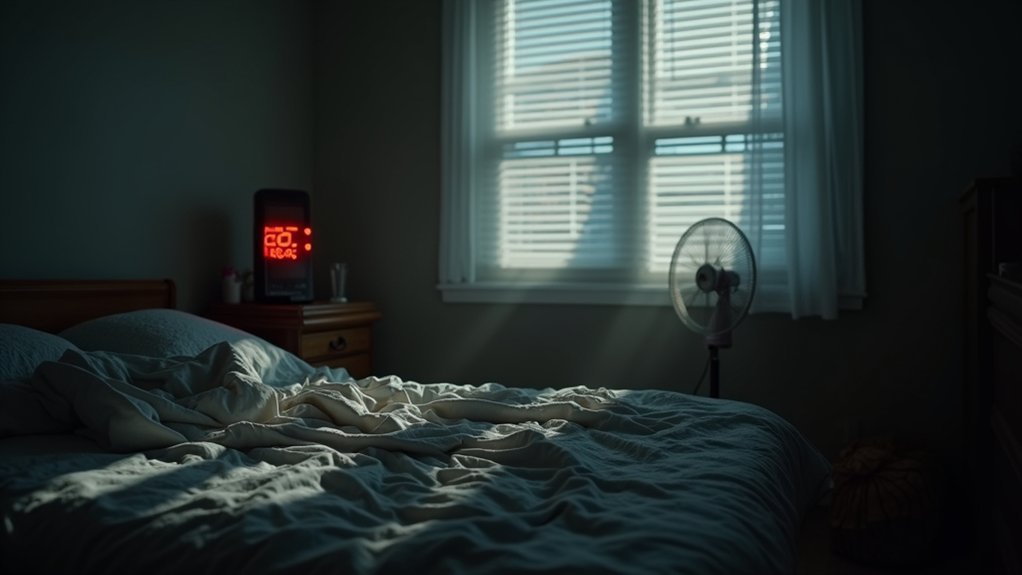
While you mightn’t realize it, your bedroom temperature plays an essential role in determining whether you’ll toss and turn or sleep soundly through the night.
Temperature extremes wreak havoc on your natural sleep cycles, preventing your body from achieving the restorative rest it needs. When your bedroom environment falls outside the ideal 60-67°F range, you’re likely to experience frequent awakenings and fragmented sleep.
Maintaining bedroom temperatures between 60-67°F prevents sleep disruptions and supports your body’s natural restorative processes throughout the night.
Your core body temperature naturally drops around 4 a.m., and a cool environment supports this biological process.
However, if you’re waking up shivering or drenched in sweat, temperature extremes are disrupting your sleep architecture. These disruptions compromise your sleep quality and leave you feeling groggy the next day.
Creating an optimal bedroom environment requires careful attention to temperature control for consistent, uninterrupted rest.
Noise Pollution Fragments Deep Sleep Phases
Beyond temperature control, sound levels in your bedroom can make or break your sleep quality. Noise pollution from traffic, neighbors, or household appliances fragments your deep sleep phases by interrupting natural sleep cycle progression.
When exposed to sounds above 30 decibels, you’ll experience disrupted REM sleep and increased sleep latency, meaning it takes longer to fall asleep. These disturbances cause frequent awakenings throughout the night, preventing you from reaching restorative sleep stages.
Your brain processes these interruptions even during sleep, keeping you in lighter phases rather than the deep sleep your body needs for recovery.
A white noise machine or fan can effectively mask disruptive sounds, creating consistent audio that promotes uninterrupted rest and better overall sleep quality.
Light Exposure Inhibits Melatonin Production
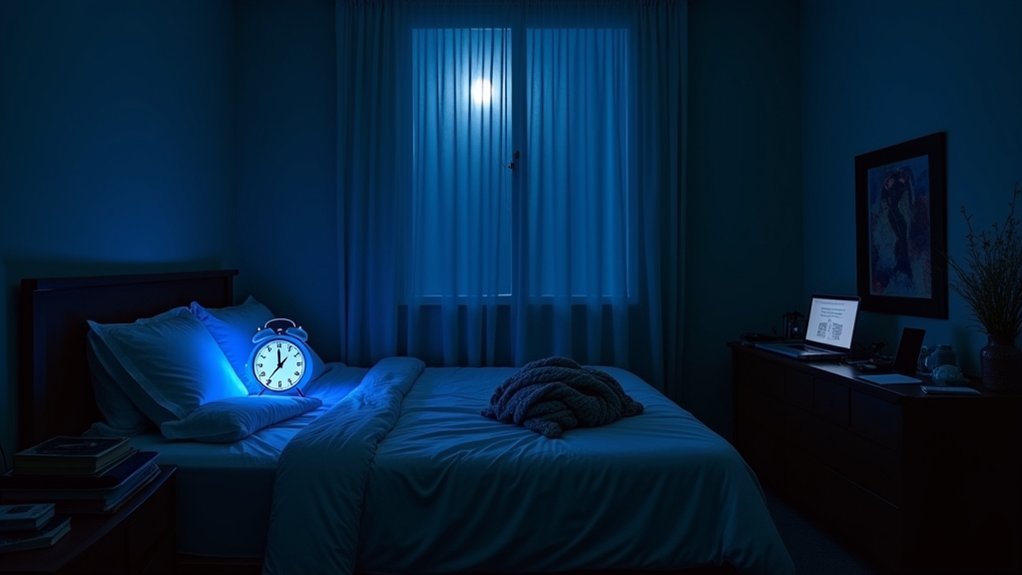
Light exposure, especially from screens and bright fixtures, actively suppresses your body’s melatonin production and disrupts your natural sleep-wake cycle.
When you’re exposed to artificial light during evening hours, particularly blue light from phones, tablets, and TVs, your brain receives mixed signals about when it’s time to sleep. Your melatonin levels naturally rise as darkness sets in, but bright light exposure interferes with this process.
Even minimal light intensity above 10 lux can delay your sleep onset by disrupting circadian rhythms. To optimize your sleep environment, reduce light exposure during the hour before bedtime.
Even small amounts of light above 10 lux can significantly delay when you fall asleep by disrupting your natural rhythms.
Create complete darkness in your bedroom during sleep hours, as this darkness promotes healthy melatonin production and greatly enhances your overall sleep quality.
Electronic Devices Emit Sleep-Disrupting Blue Light
Your smartphone, tablet, and computer screen emit concentrated blue light that directly sabotages your sleep preparation process. This blue light blocks melatonin production, the hormone that signals your body it’s time to sleep.
When you scroll through your phone before bed, you’re fundamentally telling your brain to stay alert and awake.
The intensity from these devices exceeds 10 lux, powerful enough to fragment your sleep patterns and delay sleep onset. You’ll find yourself lying in bed longer, struggling to fall asleep at your desired time.
This creates a cascade of sleep problems including shorter sleep duration and reduced sleep quality.
For good sleep, power down all electronic devices one to two hours before bedtime, or activate blue light filters and night mode settings.
Uncomfortable Mattresses Cause Physical Restlessness
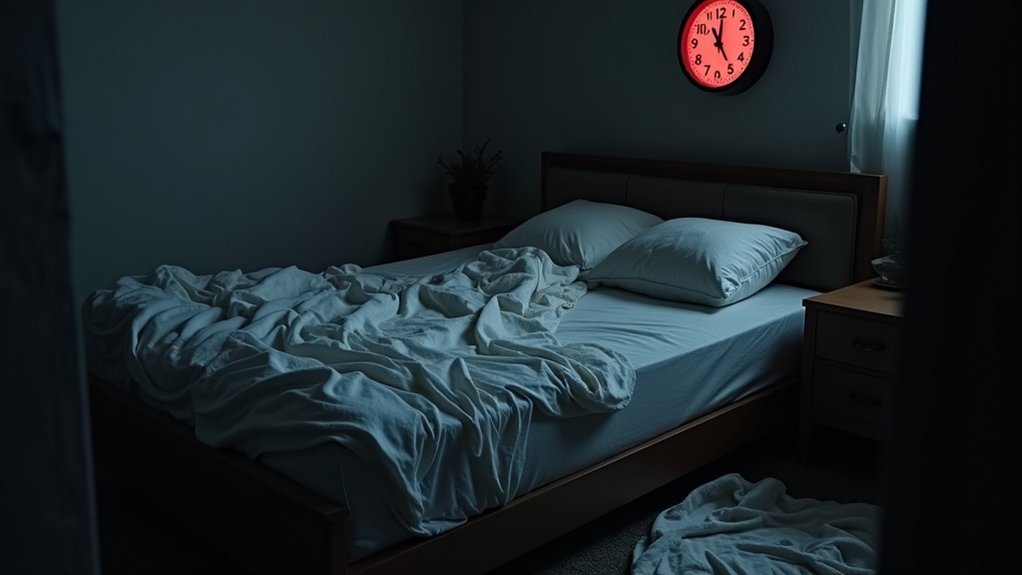
While blue light affects your brain’s sleep signals, physical discomfort from an inadequate mattress creates an entirely different barrier to restful sleep.
Uncomfortable mattresses force you into constant position adjustments throughout the night, preventing deep sleep phases from developing properly. When your mattress doesn’t provide adequate support, you’ll experience increased back pain that triggers frequent awakenings.
Memory foam options can reduce pressure points, but worn-out mattresses lacking proper support guarantee physical restlessness. Heat-retaining mattresses compound the problem by causing overheating, adding thermal discomfort to physical issues.
Research consistently shows people using newer, high-quality mattresses experience notably fewer sleep disturbances. Investing in proper sleep surface alignment with your firmness preferences delivers measurable sleep improvement and reduces nighttime tossing and turning.
Poor Bedding Choices Lead to Temperature Regulation Issues
Beyond mattress support issues, three critical bedding choices directly sabotage your body’s natural temperature regulation during sleep. When your mattress lacks breathability, it traps heat against your body, preventing the natural temperature drop needed for quality rest. Non-moisture-wicking sheets compound this problem by creating a humid microclimate that disrupts your sleep cycles.
| Bedding Element | Poor Choice Impact | Temperature Effect |
|---|---|---|
| Mattress Material | Heat retention, no airflow | Overheating, sweating |
| Sheet Fabric | Moisture trapped against skin | Humidity buildup |
| Pillow Design | Inadequate ventilation | Localized heat spots |
| Blanket Weight | Excessive insulation | Core temperature elevation |
These poor bedding choices create temperature regulation issues that prevent your body from reaching the ideal 60-67°F sleep zone, sabotaging any chance of a good night’s rest.
Bedroom Clutter Creates Mental Stimulation
Temperature issues aren’t the only environmental factor disrupting your sleep—visual chaos in your bedroom creates equally damaging mental interference.
Bedroom clutter overwhelms your senses and triggers cognitive overload, disrupting your body’s natural preparation for sleep. When you’re surrounded by excess items, your brain stays stimulated instead of winding down. This mental stimulation makes it harder to relax and shift into sleep, often triggering anxiety and insomnia.
The disarray keeps your mind distracted, preventing the peaceful state necessary for quality rest. You can greatly improve your sleep quality by maintaining an organized space.
Studies confirm that tidy bedrooms promote relaxation and create restful environments, making it easier to fall asleep naturally.
Artificial Lighting Confuses Circadian Rhythms
Even after decluttering your bedroom, artificial lighting can sabotage your sleep by confusing your body’s internal clock. When you’re exposed to artificial lighting in the evening, especially light levels over 10 lux, your melatonin production gets suppressed. This hormone is essential for signaling your body it’s time to sleep.
Blue light from your smartphone, tablet, or computer screen is particularly disruptive to your circadian rhythms. It tricks your brain into thinking it’s still daytime, keeping you alert when you should be winding down.
Even small amounts of artificial lighting during sleep hours can interfere with melatonin release. To protect your sleep, install blackout curtains and dim your lights in the evening.
Even minimal artificial light disrupts melatonin production during sleep, so use blackout curtains and dim evening lighting for optimal rest.
Creating complete darkness signals your brain to produce the melatonin you need for quality rest.
Sound Sensitivity Varies Among Insomnia Sufferers
Your tolerance for nighttime sounds likely differs markedly from other insomnia sufferers, as sensitivity levels vary widely among individuals with sleep disorders.
You might find yourself waking to the slightest creak or distant traffic noise, while others can sleep through much louder disturbances.
White noise machines can help mask these disruptive sounds by creating consistent background audio that drowns out sudden noises that would otherwise fragment your sleep.
Individual Noise Tolerance Levels
How sensitive are you to the sounds around you when you’re trying to sleep? Your noise sensitivity level directly impacts your sleep quality in ways you mightn’t realize.
While some people can sleep through thunderstorms, others wake up from a dripping faucet. If you’re dealing with insomnia, you’re likely more sensitive to environmental sounds than average sleepers.
Research shows that ambient noise above 30 decibels can fragment your sleep patterns, even if you don’t fully wake up. Higher frequencies tend to be particularly disruptive for sensitive individuals.
This sensitivity often triggers anxiety and stress responses, making your insomnia worse. Effective sound management becomes essential for creating your ideal sleep environment, whether through white noise machines or other sound-masking strategies.
White Noise Solutions
White noise machines offer one of the most practical solutions for managing disruptive sounds, but they’re not universally effective for everyone with insomnia. Your personal sound sensitivity determines whether white noise will provide better sleep or worsen your sleep issues.
| Sound Type | Best For | Potential Drawback |
|---|---|---|
| Traditional White Noise | Light sleepers sensitive to sudden sounds | May feel harsh or monotonous |
| Ambient Sounds (Rain/Waves) | Those finding white noise too mechanical | Might not mask all disruptions |
| Combined Approach | Severe noise sensitivity cases | Requires multiple tools/adjustments |
Studies show consistent white noise exposure helps you fall asleep faster and reduces nighttime awakenings. Consider pairing white noise with earplugs or noise-blocking curtains for maximum effectiveness in creating your best sleep environment.
Room Temperature Preferences Impact Sleep Quality
Your bedroom’s temperature directly affects how well you’ll sleep, with most people finding the sweet spot around 65 degrees Fahrenheit.
This ideal range of 60 to 67 degrees helps your body maintain the lower core temperature needed for quality rest.
However, you’ll need to adjust this range based on your personal comfort level, as what works for others might leave you too hot or too cold.
Optimal Temperature Range
Temperature serves as a vital factor in achieving quality sleep, with research consistently pointing to 65 degrees Fahrenheit (18.3 degrees Celsius) as the ideal bedroom temperature.
This optimal temperature range supports your body’s natural thermoregulation process, allowing your core body temperature to drop approximately two degrees during sleep onset.
Your sleep environment benefits from cooler conditions because they help sustain the lower core temperature that’s essential for restful sleep.
However, you’ll need to adjust your bedding layers based on personal comfort preferences, as individual tolerance varies.
When your bedroom’s too warm, you’ll experience sleep disruptions that fragment your rest cycles.
Your body temperature naturally dips around 4 a.m., making consistent room temperature control essential for maintaining uninterrupted sleep throughout the night.
Individual Comfort Variations
While 65 degrees Fahrenheit represents the scientifically-backed perfect, most people find their ideal sleep temperature falls somewhere within a broader 60-67 degree range. Individual comfort variations mean you’ll need to experiment with your specific preferences to improve sleep quality.
| Temperature | Sleep Quality | Bedding Adjustment |
|---|---|---|
| Too Hot | Restless, sweating | Remove layers, lighter materials |
| Too Cold | Shivering, tension | Add blankets, warmer fabrics |
| Just Right | Deep, uninterrupted | Maintain current setup |
| Variable | Inconsistent | Layered bedding options |
| Personal Zone | Optimal comfort | Custom temperature control |
Your comfortable temperature depends on factors like metabolism, age, and personal preferences. Pay attention to nighttime disruptions—waking up sweating or shivering signals temperature problems. Adjust your bedding materials and thickness until you find your perfect balance for consistent, quality rest.
Bedding Materials Affect Comfort and Sleep Onset
Because your body responds differently to various textures and materials, the bedding materials you choose plays an essential role in how quickly you’ll fall asleep and stay comfortable throughout the night.
Your sheet preferences between crisp cotton and soft silky textures directly impact your sleep comfort. A comfortable mattress that aligns with your specific sleep position prevents discomfort and greatly enhances your sleep health.
You’ll need pillows with appropriate firmness and thickness, as improper support causes neck and back pain that disrupts sleep onset. Quality breathable fabrics help regulate your body temperature, reducing nighttime awakenings from overheating.
Testing different bedding options helps you identify what works best for your personal comfort, ultimately facilitating quicker sleep onset and improved rest quality.
Environmental Consistency Supports Better Sleep Patterns
You’ll sleep better when your bedroom maintains the same conditions night after night.
Keep your room’s temperature, lighting, and sound levels consistent to help your body recognize when it’s time to rest.
This predictable environment trains your internal clock and reduces the sleep disruptions that often lead to insomnia.
Maintain Consistent Temperature Nightly
Although your bedroom might feel comfortable during the day, maintaining a consistent temperature between 60 to 67 degrees Fahrenheit throughout the night creates the ideal environment for quality sleep.
Temperature fluctuations trigger insomnia by disrupting your body’s natural cooling process, causing restlessness and frequent awakenings. When you maintain cooler conditions, you’ll fall asleep faster because it promotes the core body temperature drop necessary for deep sleep.
You can achieve consistent temperature through fans, air conditioning, or temperature-regulating bedding.
Since individual preferences vary, adjust your clothing layers and bedding while keeping the room cool. This approach supports your body’s natural temperature decline around 4 a.m., which is essential for reaching restorative sleep phases and avoiding insomnia triggers throughout the night.
Establish Regular Light Exposure
When you expose yourself to bright natural light during the day, your circadian rhythms synchronize with your body’s internal clock, making nighttime sleep onset considerably easier.
However, bright artificial light exposure in the evening disrupts this natural process by inhibiting melatonin production, which you need for sleep initiation.
Create an ideal sleep environment by maintaining bedroom light levels below 10 lux during nighttime hours.
Install blackout curtains to block external light sources that can interfere with your rest.
Establish a consistent bedtime routine that includes dimming lights at least an hour before sleep. This simple practice will signal to your brain that it’s time to wind down.
Managing light exposure throughout your day creates the environmental consistency your body craves for better sleep patterns.
Create Predictable Sound Levels
Just as light consistency regulates your circadian rhythms, maintaining predictable sound levels in your bedroom creates the stable environment your brain needs for quality sleep.
Fluctuating noise volumes from televisions or traffic activate your body’s stress response, making it harder to fall asleep and stay asleep throughout the night. Even brief disturbances during sleep increase awakenings and decrease overall sleep quality through fragmentation of deep sleep phases.
You can create an environment that promotes restful sleep by using white noise machines or fans that mask disruptive sounds with steady auditory backgrounds.
Installing noise-blocking curtains and positioning your bed away from noise sources enhances tranquility. These consistent sound levels prevent sudden noises from jarring you awake, supporting more stable sleep cycles.
Frequently Asked Questions
Can Your Environment Cause Insomnia?
Yes, your environment can absolutely cause insomnia. You’ll struggle with sleep when exposed to bright lights, excessive noise, uncomfortable temperatures, cluttered spaces, or unsupportive bedding that disrupts your body’s natural sleep patterns.
What Should Your Bedroom Environment Be Like for Better Sleep?
You should maintain your bedroom temperature between 60-67°F, keep it completely dark, minimize noise with white noise machines, choose comfortable mattresses and bedding, and maintain a clutter-free, organized space for ideal sleep.
Why Can’t I Fall Asleep in My Bedroom?
You can’t fall asleep because your bedroom’s too bright, noisy, or warm. Electronics emit blue light disrupting your circadian rhythm, while clutter creates anxiety that prevents relaxation and sleep.
What Is the Best Environment for Falling Asleep and Staying Asleep?
You’ll sleep best in a cool room between 60-67°F with complete darkness and minimal noise. Use comfortable, supportive bedding, keep your space clean and organized, and establish a consistent bedtime routine.




Leave a Reply