

You’ll need complete bedroom darkness to optimize your circadian rhythm and melatonin production, as even minimal light exposure can disrupt your sleep-wake cycle. Install 100% blackout-rated curtains with wraparound rods, cover electronic devices that emit blue light, and use sleep masks like the Manta Sleep Mask for thorough light blocking. If you can’t invest in blackout curtains immediately, temporary solutions include aluminum foil or thick blankets over windows. These strategies will reveal deeper insights into transforming your sleep environment.
Understanding Circadian Rhythms and Light’s Impact on Sleep
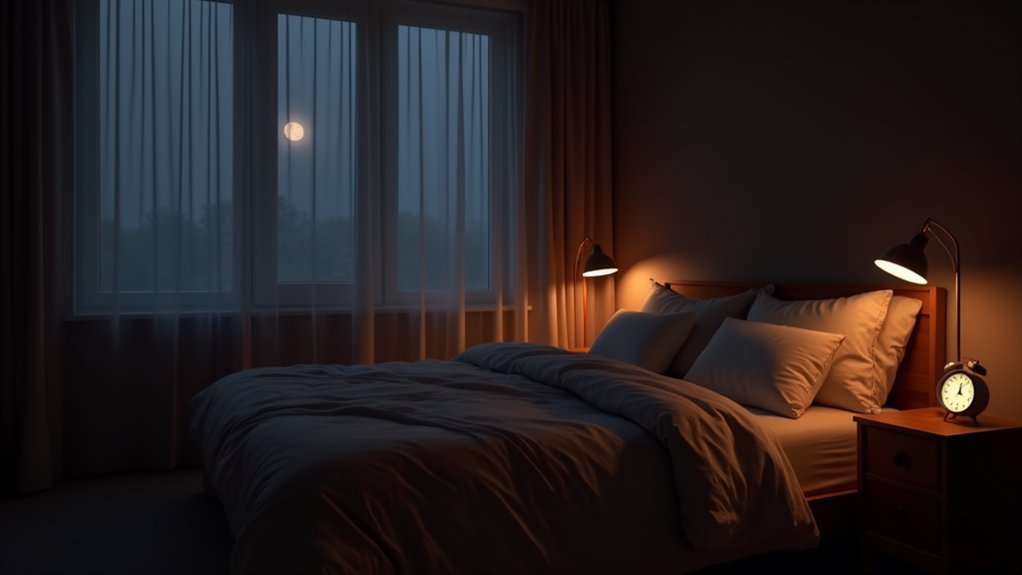
While you might think any dim lighting won’t affect your sleep, your body’s circadian rhythm is incredibly sensitive to even the smallest amounts of light exposure.
Your internal biological clock relies on light signals to regulate sleep-wake cycles, with natural light promoting wakefulness and darkness triggering sleepiness.
Your body’s internal clock depends on light cues to control when you feel awake or sleepy throughout the day.
When you’re exposed to artificial light, especially blue light from electronic devices, your melatonin production gets disrupted.
This hormone is essential for quality sleep, and even minimal light can signal your brain to stay alert. Complete darkness is vital for ideal melatonin release.
The consequences extend beyond poor sleep quality.
Studies reveal that higher nighttime light exposure doubles your risk of developing type 2 diabetes and increases obesity and high blood pressure risks.
The Science Behind Melatonin Production and Darkness
Once your brain detects complete darkness, it signals your pineal gland to ramp up melatonin production, flooding your system with this crucial sleep hormone within hours.
This natural process requires complete absence of light – even minimal exposure through your eyelids can suppress melatonin levels and delay sleep onset.
Light at night disrupts this delicate mechanism, tricking your brain into thinking it’s still daytime. Your circadian rhythms depend on clear light-dark contrasts to function properly.
When artificial lighting interferes with darkness, you’ll experience poor sleep quality and extended time falling asleep.
The consequences extend beyond tiredness. Disrupted melatonin production from inadequate darkness increases your risk of obesity, diabetes, and heart disease, making bedroom darkness essential for peak health.
Health Consequences of Nighttime Light Exposure

When you’re exposed to light during nighttime hours, you’re setting yourself up for serious health problems that extend far beyond just feeling tired the next day.
Your body’s natural processes become disrupted, leading to sleep disturbances, dangerous metabolic changes, and significant mental health challenges.
Understanding these three major consequences will help you recognize why achieving complete bedroom darkness isn’t just about comfort—it’s about protecting your long-term health.
Sleep Disruption Effects
Although you might think a little light while sleeping is harmless, exposure to artificial illumination during nighttime hours can trigger serious health consequences that extend far beyond simple sleep disruption.
When you’re exposed to light during sleep, your circadian rhythms become disrupted at a cellular level, preventing your body from achieving quality sleep cycles.
These sleep disruption effects manifest through various health complications you can’t ignore. Your exposure to light during critical darkness hours doubles your risk of developing type 2 diabetes and increases your likelihood of experiencing obesity and high blood pressure.
Additionally, you’ll face heightened risks of insomnia, depression, and cardiovascular disease when your biological clocks consistently malfunction due to nighttime illumination interference.
Metabolic Health Risks
While sleep disruption represents just the surface of nighttime light exposure’s dangers, the metabolic consequences pose even more severe threats to your long-term health.
Research reveals that light pollution during sleep doubles your risk of developing type 2 diabetes. When artificial light infiltrates your dark bedroom, it disrupts melatonin production and throws your circadian rhythms into chaos.
This biological disruption creates a cascade of metabolic problems that extend far beyond poor sleep quality.
Key metabolic risks include:
- Diabetes development – Light exposure during sleep considerably increases type 2 diabetes risk
- Weight gain – Disrupted circadian rhythms promote obesity among older adults
- Blood pressure elevation – Nighttime light correlates with hypertension in study participants
- Hormonal imbalance – Suppressed melatonin production affects metabolic regulation
Creating complete darkness isn’t optional—it’s essential for metabolic health.
Mental Health Impact
Beyond metabolic dysfunction, nighttime light exposure devastates your mental well-being in ways that compound over time.
You’re twice as likely to experience depressive symptoms when artificial light disrupts your sleep environment, with adolescents facing particularly severe risks. Light exposure penetrates your eyelids during sleep, suppressing melatonin production and creating a cascade of mental health challenges.
Your circadian rhythms become severely disrupted, leading to poor sleep quality and shortened sleep duration that amplifies depression and anxiety.
Research reveals that less than half of people achieve five hours of complete darkness daily, demonstrating how widespread this problem has become.
Installing blackout curtains provides essential protection against these mental health risks by creating the darkness your brain desperately needs for ideal psychological functioning.
Installing Blackout Curtains and Window Treatments

When you’re ready to transform your bedroom into a sanctuary of darkness, installing blackout curtains becomes your most effective weapon against unwanted light infiltration.
Making your bedroom dark requires strategic planning and proper execution to eliminate all light sources that disrupt your circadian rhythm.
For maximum effectiveness, you’ll need to focus on these essential installation elements:
- Choose 100% blackout-rated curtains that guarantee complete light elimination rather than standard room-darkening options.
- Install wraparound curtain rods that extend beyond window frames to prevent light seepage around edges.
- Ensure proper mounting by securing curtains close to walls and ceiling for gap-free coverage.
- Consider energy efficiency benefits as quality blackout curtains reduce heat transfer while promoting melatonin production.
Proper installation transforms any bedroom into a sleep-optimized environment.
Alternative Window Covering Solutions
When you’re caught without proper blackout curtains, you’ll need quick solutions that work immediately.
Emergency methods like aluminum foil taped directly to windows can block nearly all light while costing just a few dollars.
You can also create temporary darkness using thick blankets, cardboard, or even garbage bags secured with painter’s tape for situations requiring instant light control.
Emergency Light Blocking Methods
Although permanent blackout curtains or shades offer the best long-term solution, you don’t always have time to shop for proper window treatments when you desperately need darkness.
Emergency light blocking methods can quickly transform your bedroom into a sleep-friendly environment using common household items.
These temporary solutions effectively block unwanted light:
- Aluminum foil – Tape shiny side out to windows for maximum light reflection
- Heavy blankets or towels – Hang over curtain rods or tape directly to glass
- Cardboard cutouts – Measure and fit pieces into window frames for custom coverage
- Black trash bags – Secure with tape for complete light elimination
Don’t forget to address light leaking under doors by placing rolled towels or draft stoppers at the base.
Temporary Darkening Solutions
Beyond emergency fixes, several temporary darkening solutions provide better coverage and easier installation than household items while remaining budget-friendly and removable. These methods bridge the gap between quick fixes and permanent blackout curtains.
| Solution | Installation | Effectiveness | Cost |
|---|---|---|---|
| Travel Curtains | Portable hanging system | High light blocking | Low |
| Aluminum Foil | Tape directly to glass | Excellent reflection | Very Low |
| Heavy Blankets | Drape over existing rods | Good coverage | Low |
| Duct Tape Sealing | Apply around frames | Eliminates light leaks | Very Low |
You can wrap material around curtain rods to prevent edge seepage, creating a more complete dark room environment. These temporary darkening solutions offer flexibility while you decide on permanent installations for ideal bedroom darkness.
Sleep Masks and Wearable Light-Blocking Options
Sleep masks represent one of the most versatile and immediate solutions for achieving complete darkness during sleep.
These wearable light-blocking devices create an ideal environment that promotes melatonin production, helping regulate your natural sleep-wake cycles.
Quality sleep masks like the Manta Sleep Mask offer several advantages:
- 100% blackout capability – Blocks all light sources effectively, even in bright environments
- Adjustable comfort features – Prevents eye pressure while maintaining complete darkness
- Portable convenience – Perfect for travel or inconsistent sleeping environments
- Sensitive sleeper friendly – Eliminates minimal light exposure that can disrupt rest
You’ll find that incorporating sleep masks into your bedtime routine provides an instant solution for achieving darkness anywhere.
The comfortable materials and ergonomic designs guarantee you can improve your sleep quality without compromising comfort, making them essential tools for better circadian health.
Managing Electronic Devices and Blue Light Sources
You’ll need to address the electronic devices in your bedroom that emit blue light and interfere with your natural sleep patterns.
Your smartphone, tablet, computer, and TV all produce this disruptive light that tricks your brain into staying alert when you should be winding down.
Managing when and how you use these devices becomes essential for creating the dark environment your body needs for quality sleep.
Blue Light Disruption
How does that innocent late-night scroll through your phone morph into hours of restless tossing and turning?
Blue light from your electronic devices disrupts melatonin production, the hormone that signals your body it’s time to sleep. This interference throws off your circadian rhythms, leading to poor sleep quality and delayed sleep onset.
Even minimal exposure tricks your brain into staying alert when you should be winding down.
Here’s how blue light sabotages your sleep:
- Screens emit wavelengths that suppress melatonin for hours after exposure
- Your brain interprets blue light as daylight, keeping you unnaturally awake
- Sleep duration decreases considerably with pre-bedtime screen time
- The alertness signal prevents your body from evolving into restful sleep
Understanding this disruption helps you take control of your sleep environment.
Screen Time Management
What practical steps can you take tonight to break the cycle of screen-induced sleeplessness?
Effective screen time management starts with powering down electronic devices at least one hour before bedtime. This simple change allows your natural melatonin production to increase without blue light interference.
Enable night mode or blue light filters on devices you must use during evening hours. These settings reduce harmful light emissions that disrupt your sleep cycle.
Consider investing in blue light-blocking glasses for additional protection while using screens.
Transform your bedroom into a screen-free sanctuary. Remove televisions, tablets, and charging phones from your sleep space.
This creates an environment optimized for better sleep by eliminating light sources that suppress melatonin.
Sealing Light Gaps Under Doors and Around Windows
Even the smallest light leaks around doors and windows can sabotage your sleep quality by disrupting melatonin production and throwing off your circadian rhythms.
Research shows that minimal light exposure during sleep increases risks of obesity and type 2 diabetes, making sealing light gaps essential for good sleep.
Here’s how to eliminate these disruptive light sources:
- Install weather stripping around windows and door frames to prevent light leakage and create ideal darkness
- Place draft stoppers or rolled towels at door bases to block unwanted light from hallways
- Combine blackout blinds with proper sealing for maximum light control
- Check for any remaining gaps after installation, as even tiny leaks can interfere with production of melatonin
Ensuring complete darkness protects your circadian health and promotes restorative sleep.
Covering or Eliminating LED Lights and Digital Displays
While sealing doors and windows eliminates external light sources, the LED lights and digital displays inside your bedroom can be equally disruptive to your sleep quality.
These devices emit blue light that suppresses melatonin production and signals your body to stay awake, causing fragmented sleep patterns.
Blue light from electronic devices disrupts melatonin production, keeping your body in an alert state and fragmenting natural sleep cycles.
Cover alarm clocks, phone chargers, and other electronic devices with blackout tape or position them away from your bed.
Even minimal LED exposure can interfere with your circadian rhythm regulation.
For devices you can’t relocate, use blue light-filtering screen protectors or apps to reduce harmful emissions.
Digital displays should be completely darkened or removed from your bedroom entirely.
Creating this electronics-free environment allows peak melatonin production and promotes deeper, more restorative sleep throughout the night.
Choosing Sleep-Friendly Lighting for Nighttime Needs
Although complete darkness works best for sleep, you’ll sometimes need minimal lighting for nighttime bathroom trips or checking on children.
Sleep-friendly lighting becomes essential for maintaining your circadian rhythms without disrupting melatonin levels.
Here’s how to create the ideal nighttime lighting environment:
- Choose amber or red bulbs for nightlights, as these colors won’t stimulate your brain like blue light does.
- Position lights low and dim near the floor to minimize overall bedroom light exposure.
- Use smart lighting solutions that let you adjust color temperature and brightness for sleep-friendly atmospheres.
- Limit electronic devices in your bedroom since screens emit sleep-disrupting blue light.
Combine these lighting strategies with blackout curtains to maximize bedroom darkness and enhance your overall sleep quality.
Room Layout and Design Considerations for Optimal Darkness
Beyond selecting the right lighting, your bedroom’s physical layout and design choices play a major role in achieving ideal darkness for better sleep. Strategic furniture placement can greatly enhance your room darkening efforts. Position your bed away from windows and use tall furniture like bookshelves to block light penetration. Keep electronic devices away from your sleeping area to prevent blue light from disrupting your body’s internal clock.
| Design Element | Room Darkening Strategy |
|---|---|
| Wall Colors | Choose darker paint colors that absorb light |
| Window Treatments | Install blackout shades extending beyond window frames |
| Furniture Placement | Position tall pieces against windows as light barriers |
These thoughtful design decisions create a superior sleep environment that supports your circadian rhythm naturally.
Creating a Complete Dark Sleep Environment Strategy
Since achieving perfect darkness requires more than just one solution, you’ll need to combine multiple strategies to create a truly effective sleep environment.
Your circadian rhythm depends on complete darkness to trigger proper melatonin production, so implementing a thorough approach is essential.
Complete darkness is crucial for your body’s natural melatonin release and healthy sleep-wake cycles.
Here’s your multi-layered strategy for ideal bedroom darkness:
- Install blackout curtains as your primary defense against external light sources that disrupt sleep cycles.
- Add sleep masks for extra protection, especially if you’re particularly sensitive to even minimal light exposure.
- Eliminate all light leaks by sealing gaps around windows and doors with weather stripping or draft stoppers.
- Power down electronic devices at least one hour before bedtime to prevent blue light from suppressing melatonin.
This dark environment will help you sleep better naturally.
Frequently Asked Questions
Does a Darker Room Help You Sleep Better?
Yes, you’ll sleep better in a darker room. Darkness boosts your melatonin production, helping regulate your sleep-wake cycle. You’ll fall asleep faster, sleep deeper, and reduce your risk of diabetes and cardiovascular problems.
What Is the Best Color for the Circadian Rhythm?
You’ll benefit from bright white or blue light during daytime hours to maintain alertness, then switch to warm, dim lighting around 2700K-3000K in the evening to promote melatonin production and better sleep.
How to Get Total Darkness in Bedroom?
Install blackout curtains, use aluminum foil on windows, wear sleep masks like Manta, seal door gaps with draft stoppers, and eliminate electronics before bed to block all light sources completely.
Does a Dark Room Help Produce Melatonin?
Yes, you’ll produce more melatonin in darkness. When you’re in a dark room, your body naturally increases melatonin production, which helps regulate your sleep-wake cycle and promotes deeper, more restorative sleep.
In Summary
You’ve learned the essential strategies for transforming your bedroom into a dark sanctuary that supports healthy sleep. By implementing blackout solutions, eliminating light pollution from electronics, and designing your space with darkness in mind, you’ll optimize your body’s natural melatonin production. Don’t underestimate how these changes will improve your sleep quality and overall circadian health. Start with the most disruptive light sources and gradually create your ideal sleep environment.


Leave a Reply