

You’ll sleep better by decluttering your bedroom surfaces and removing work materials that increase cortisol levels. Replace your mattress every 5-7 years and choose moisture-wicking bedding made from natural fibers like cotton or bamboo. Install blackout curtains to block 99% of external light and eliminate noise sources like ticking clocks. Use under-bed storage containers and multi-purpose nightstands to maintain organization. Keep your bedroom temperature between 60-67°F for ideal comfort and discover additional strategies that transform your space into a sleep sanctuary.
Declutter Your Sleep Space for Maximum Relaxation
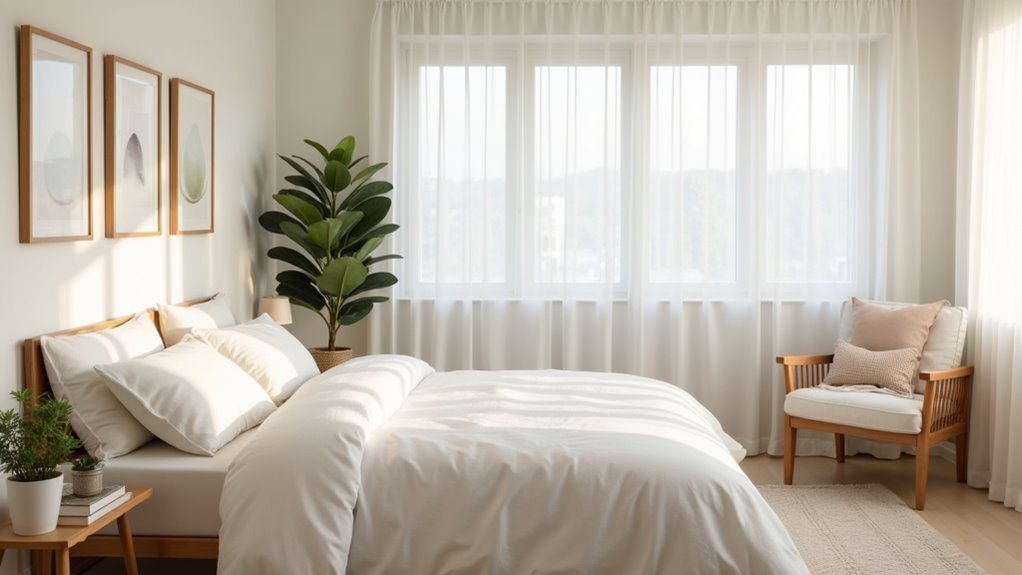
The state of your bedroom directly impacts how well you sleep each night. When you declutter your sleep space, you’re creating an environment that naturally promotes better rest. Visual clutter increases your cortisol levels and triggers anxiety, making it harder to unwind after a long day.
A cluttered bedroom elevates stress hormones and anxiety, preventing your mind from naturally transitioning into the restful state needed for quality sleep.
Start by clearing unnecessary items from all visible surfaces. Remove work materials, excess decor, and anything that doesn’t belong in your sleeping area. This simple step helps your mind shift into relaxation mode more easily.
Maximize your storage space with under-bed bins and multi-purpose nightstands to keep essentials organized but hidden. Dedicate just thirty minutes monthly to maintaining this clutter-free environment.
You’ll notice improved sleep quality as your bedroom becomes a true sanctuary for rest.
Choose the Right Mattress and Replace When Necessary
Your mattress plays an essential role in sleep quality, so you’ll want to replace it every 5-7 years or when it starts causing discomfort.
Consider materials like memory foam or latex that offer superior durability and support while conforming to your body shape.
You’ll also need to test different firmness levels in-store to find what works best for your sleeping position and personal comfort preferences.
Mattress Lifespan and Replacement
When you’re tossing and turning on a mattress that’s lost its support, you’re likely dealing with a bed that’s outlived its usefulness.
Understanding mattress lifespan helps you replace your bed before it seriously impacts your sleep quality and comfort.
Most mattresses last 7 to 10 years, but you’ll need to evaluate yours every 5 to 7 years.
Here’s what to watch for:
- Visible sagging or body impressions deeper than 1 inch
- Increased discomfort during sleep or upon waking
- Memory foam and latex typically outlast traditional spring mattresses
- Regular rotation every 3 to 6 months extends lifespan
When shopping for a replacement, prioritize your comfort preferences and take advantage of trial periods that let you test before committing fully.
Material Types and Durability
Beyond knowing when to replace your mattress, choosing the right materials greatly impacts both your sleep comfort and how long your investment will last.
When searching for the best mattress for back support and overall comfort, prioritize latex and memory foam materials. These options conform to your body shape while typically lasting 10-15 years, considerably outlasting traditional spring mattresses that generally last 7-10 years.
High-quality materials directly influence your sleep quality and provide better value over time. Memory foam and latex mattresses resist sagging and body impressions longer than innerspring alternatives.
You’ll need to replace mattresses less frequently when you invest in superior materials upfront. Check warranty coverage for defects in materials and workmanship before purchasing to protect your investment and guarantee lasting comfort.
Size and Comfort Considerations
Finding the perfect mattress size sets the foundation for quality sleep, especially if you share your bed with a partner. Queen or King sizes provide adequate space for couples to move comfortably without disrupting each other’s rest.
Beyond size, comfort depends on several key factors:
- Firmness testing – Try different levels in-store since personal preferences vary greatly.
- Material longevity – Memory foam and latex typically outlast traditional spring mattresses.
- Replacement timing – Change your mattress every 10 years or when deep sagging appears.
- Pillow maintenance – Replace pillows every 1-2 years to prevent neck and back pain.
Your mattress choice directly impacts sleep wellness, so invest time in finding the right combination of size and comfort.
Don’t underestimate how proper pillows complement your mattress selection for ideal support.
Keep Pillows Fresh and Properly Supportive
Your pillow plays an essential role in maintaining proper spinal alignment and ensuring restful sleep, yet it’s often the most neglected element of bedroom organization.
To keep your bedroom optimized for better sleep, you’ll need pillows that are properly supportive for your specific sleeping position. Back sleepers should choose thinner options to maintain neck alignment, while side sleepers require firmer support. A flat or overly thick pillow contributes to back pain by disrupting your spine’s natural curvature.
The wrong pillow height disrupts spinal alignment and causes neck pain, regardless of your preferred sleeping position.
Replace down alternative and poly-fill pillows every 1-2 years, though latex, memory foam, and buckwheat varieties last longer with proper care.
Regularly fluff and air out your pillows to maintain shape and reduce moisture. Consider allergen-proof covers to create a fresher sleeping environment and minimize disturbances.
Select Moisture-Wicking Bedding Materials

Temperature regulation during sleep greatly impacts your sleep quality, and selecting the right bedding materials can make the difference between restless tossing and peaceful rest.
Moisture-wicking bedding draws moisture away from your skin, creating ideal sleeping conditions throughout the night.
Choose natural fibers over synthetic fabrics for a breathable sleep experience:
- Cotton, wool, bamboo, and linen naturally regulate temperature and prevent moisture buildup
- High thread count fabrics (300+) provide softness while maintaining breathability
- Moisture-wicking pillowcases keep your head cool and dry during sleep
- Regular laundering maintains fabric effectiveness and moisture management properties
Synthetic materials trap heat and moisture, causing discomfort and sleep disruptions.
Control Temperature for Optimal Comfort
You’ll sleep better when your bedroom temperature stays between 60 to 67 degrees Fahrenheit, as this range naturally supports your body’s cooling process during rest.
Your thermostat isn’t the only tool available—cooling mattress pads, lightweight bedding, fans, and air conditioning can all help regulate temperature throughout the night.
Since everyone’s comfort preferences differ, you’ll need to experiment with these methods to find what works best for your sleep quality.
Ideal Temperature Range
When it comes to creating the perfect sleep sanctuary, controlling your bedroom temperature stands as one of the most essential factors you can’t afford to overlook. The ideal temperature range for restful sleep falls between 60 to 67 degrees Fahrenheit, supporting your body’s natural cooling process throughout the night.
Maintaining a cool bedroom enhances sleep quality by reducing wakefulness and facilitating deeper sleep stages essential for restoration.
Consider these effective temperature control strategies:
- Use air conditioning, fans, or cooling mattress pads for precise regulation
- Adjust thermostat settings based on seasonal changes
- Choose lightweight fabrics during warmer months
- Experiment within the recommended range to find your personal sweet spot
A cooler sleep environment improves sleep efficiency, helping you spend more time in restorative stages with fewer nighttime disruptions.
Cooling Methods Available
While understanding the ideal temperature range provides the foundation, implementing effective cooling methods transforms your bedroom into a comfortable sleep haven.
You can regulate your bedroom’s climate using air conditioning or strategically placed fans to maintain that vital 60-67 degree range. These cooling methods create consistent airflow that promotes better sleep quality.
Consider investing in cooling mattress pads or gel-infused mattresses that actively dissipate body heat throughout the night.
Your bedding choices matter greatly—lightweight bedding made from cotton or bamboo materials allows superior airflow and moisture-wicking properties.
Don’t overlook your thermostat’s timing. Set it to automatically lower temperatures during evening hours, supporting your body’s natural cooling process as it prepares for rest.
Block Light Sources and Create Darkness
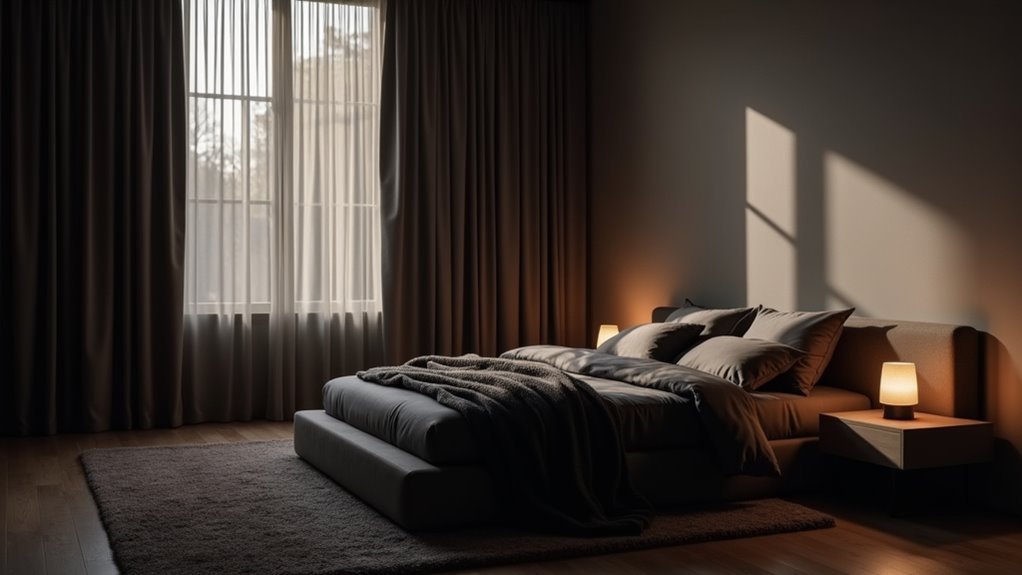
Creating complete darkness in your bedroom transforms it into an ideal sleep sanctuary.
Light exposure during sleep disrupts your circadian rhythms and reduces melatonin production, making it harder to achieve restorative rest. You’ll want to block light sources systematically to enhance your sleep environment.
Consider these effective darkness strategies:
- Install blackout curtains that block up to 99% of external light, or combine them with sheer fabric for flexible light control.
- Turn off or cover all electronic devices to eliminate blue light exposure before bedtime.
- Use breathable sleep masks for additional darkness, especially if you’re light-sensitive or sleep during daytime hours.
- Address small light sources like alarm clocks or charging indicators that can interfere with your natural sleep-wake cycle.
Complete darkness guarantees your body produces ideal melatonin levels for quality sleep.
Minimize Noise and Remove Electronics
Just as light pollution sabotages your sleep quality, unwanted noise and electronic distractions work against your body’s natural ability to wind down and stay asleep throughout the night.
To minimize noise, identify irritating sounds like ticking clocks or dripping faucets and eliminate them. Consider using a white noise machine or soft music to mask disruptive sounds from outside your bedroom.
Small household sounds like ticking clocks can significantly disrupt sleep quality, while white noise machines effectively mask external disturbances.
Keep electronic devices out of your sleeping space entirely. This removes digital distractions while creating a more peaceful environment.
Implement a digital curfew by turning off electronics at least one hour before bedtime to reduce blue light exposure.
Apply soundproofing techniques like thick curtains and rugs to absorb noise and enhance your bedroom’s acoustic quality for truly restful sleep.
Maximize Storage With Smart Organization Solutions
A cluttered bedroom doesn’t just look chaotic—it actively disrupts your ability to relax and fall asleep peacefully.
When you maximize storage with smart organization solutions, you’ll create a serene environment that promotes better rest.
Start implementing these effective storage strategies:
- Under-bed containers – Store seasonal items and extra linens out of sight while freeing up valuable floor space.
- Multi-purpose furniture – Choose storage benches that hold books, pillows, and clothing while adding decorative appeal.
- Wall shelves – Utilize vertical space to display personal items and keep surfaces clutter-free.
- Nightstands with compartments – Organize bedside essentials for easy access.
You’ll also want to incorporate decorative baskets throughout your space.
They keep things like blankets and pillows organized while enhancing your bedroom’s aesthetic appeal.
Frequently Asked Questions
How to Set up Your Room for the Best Sleep?
You’ll sleep better by keeping your room between 60-72°F, installing blackout curtains, using white noise machines, choosing calming colors like soft blues, and removing electronics to avoid blue light exposure.
Can Rearranging Your Room Help You Sleep Better?
Yes, you can improve your sleep by rearranging your room. Moving your bed away from noise sources, creating open space, and positioning furniture strategically will enhance airflow and create a more relaxing environment.
How Can You Optimize Your Bedroom Environment for Sleep?
You’ll optimize your bedroom by maintaining 60-72°F temperatures, installing blackout curtains, using white noise machines, choosing calming blue or green colors, and decluttering regularly to create a tranquil space that promotes deeper, more restorative sleep.
How to Declutter Your Bedroom Fast?
You’ll declutter your bedroom fast by removing trash and clearing all surfaces first. Then organize drawers with bins, use under-bed storage for seasonal items, and apply a “Keep and Donate” strategy for quick decisions.




Leave a Reply