

Overhead fixtures disrupt your circadian rhythm by emitting consistent brightness and blue wavelengths that trick your brain into thinking it’s daytime. These lights suppress melatonin production by up to 50%, interfering with your body’s natural sleep preparation signals. Your retinas detect fixed color temperatures from ceiling lights instead of the warm amber hues that naturally occur at sunset, delaying sleep onset and reducing sleep quality. Understanding proper lighting alternatives can restore your body’s evolutionary programming.
The Science Behind Circadian Rhythms and Light Sensitivity
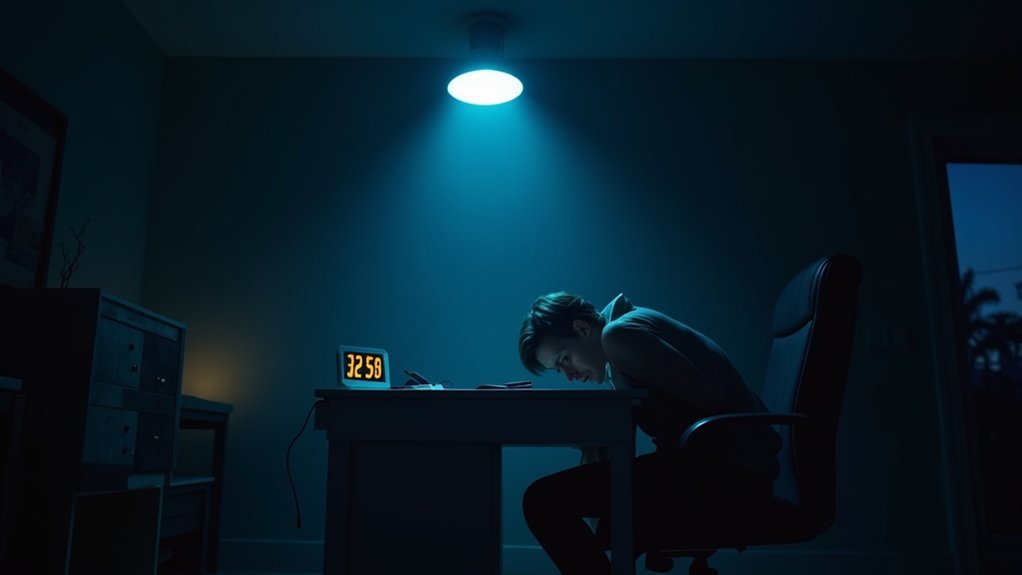
While your body evolved to respond to natural sunlight patterns, overhead fixtures disrupt this ancient biological programming by flooding your living spaces with unvarying artificial lighting.
Your circadian rhythms depend on light-sensitive cells in your retinas that detect color temperature changes throughout the day. Natural light shifts from cool blue tones in the morning to warm amber hues at sunset, signaling your brain when to produce melatonin.
Your retinas contain specialized cells that track daily color temperature shifts, from morning’s cool blues to sunset’s warm ambers, triggering essential melatonin production.
However, overhead fixtures typically maintain fixed color temperatures between 3000K-4500K, confusing your internal clock. This constant exposure to artificial lighting prevents your body from recognizing evening cues, suppressing melatonin production when you need it most.
Without proper light changes, your sleep cycle becomes disrupted, leading to poor rest and compromised health.
Why Overhead Fixtures Are Problematic for Sleep Quality
Because overhead fixtures emit consistent brightness levels throughout the evening, they actively sabotage your body’s preparation for sleep by mimicking daylight conditions when you need darkness cues.
These overhead lights typically maintain neutral color temperatures between 3000K-4500K, which directly interfere with your melatonin production. When you’re exposed to this artificial lighting for 90% of your day, your brain can’t distinguish between day and night signals.
The brightness from these fixtures creates glare that tricks your circadian rhythm into thinking it’s still daytime. Without proper natural cues, your body struggles to initiate its winding-down process.
This disruption prevents quality sleep by delaying sleep onset and reducing overall sleep effectiveness, leaving you chronically misaligned with your body’s biological clock.
Blue Light From Bedroom Ceiling Lights and Melatonin Suppression
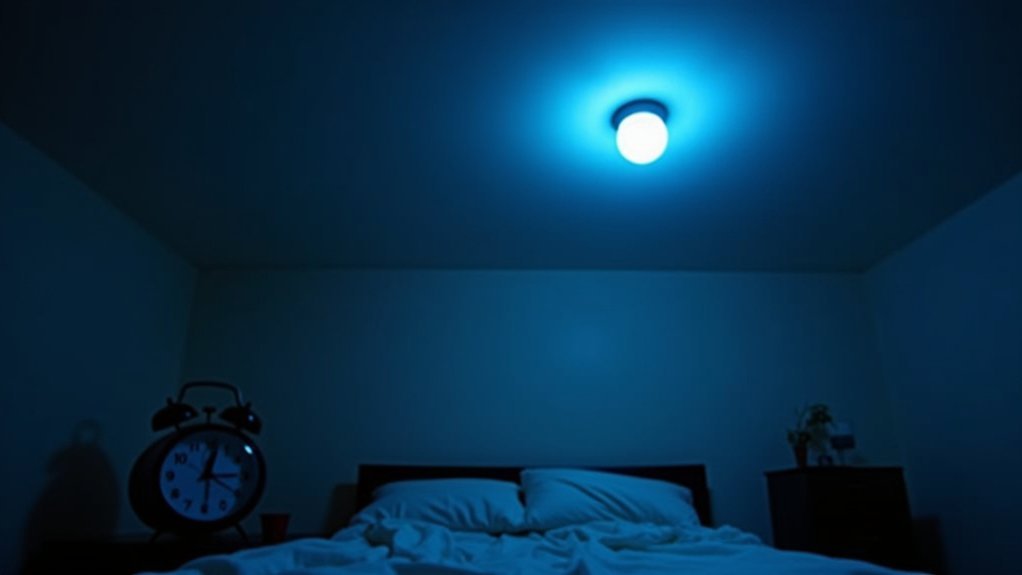
Your bedroom ceiling lights emit blue wavelengths that directly interfere with your body’s melatonin production, making it considerably harder to fall asleep naturally.
When you’re exposed to blue light in the evening, particularly from overhead LED or fluorescent fixtures, your brain receives signals to stay alert rather than prepare for rest.
This disruption can reduce your melatonin levels by up to 50%, creating a cascade of sleep problems that affect your overall health and well-being.
Blue Light Sleep Impact
Although you might not realize it, those bright bedroom ceiling lights you’re using before bedtime are actively sabotaging your sleep quality. Blue light exposure from these overhead fixtures disrupts your natural cycle by suppressing melatonin levels, the hormone that signals your body it’s time to sleep.
| Blue Light Effect | Sleep Impact | Duration |
|---|---|---|
| Melatonin suppression | Delayed sleep onset | 2-3 hours |
| Circadian rhythm disruption | Poor sleep quality | All night |
| Increased alertness | Difficulty falling asleep | 1-2 hours |
| Reduced sleep hormones | Shortened sleep duration | 6-8 hours |
| Brain stimulation | Frequent awakenings | Throughout night |
This lighting refers to the short-wavelength light that tricks your brain into thinking it’s daytime. Your sleep patterns suffer as your circadian rhythm becomes confused. Switch to dim light options in the evening to restore healthy sleep cycles.
Melatonin Production Disruption
When blue light from your bedroom ceiling fixtures hits your eyes during evening hours, it sends false daytime signals directly to your brain’s master clock, causing a dramatic drop in melatonin production.
This disruption throws off your entire circadian rhythm and sleep-wake cycle.
Your body’s natural sleep mechanisms become confused when LED fixtures emit high levels of blue light during nighttime hours.
The effects include:
- 50% reduction in melatonin secretion when exposed to blue light before bed
- Increased sleep onset latency – you’ll struggle to fall asleep quickly
- Reduced sleep duration leading to morning grogginess and fatigue
- Impaired cognitive performance the following day due to poor sleep quality
To protect your natural sleep patterns, switch to warm light sources during evening hours for better melatonin production.
Intensity and Positioning Issues With Overhead Bedroom Lighting
Since most overhead bedroom fixtures cast intense, concentrated light downward, they create the exact opposite environment your brain needs for sleep preparation. This direct positioning generates harsh glare that tricks your circadian rhythms into thinking it’s still daytime, suppressing melatonin production when you need it most.
Overhead bedroom lighting disrupts sleep by mimicking daytime conditions and suppressing crucial melatonin production when your body needs rest most.
The concentrated light intensity from ceiling fixtures overwhelms your visual field, keeping your nervous system in an alert state rather than promoting relaxation.
You’ll benefit from replacing or supplementing overhead lighting with indirect lighting sources positioned at eye level or below. Dimmed fixtures give you control over bedroom illumination, allowing you to gradually reduce brightness as evening progresses.
This approach supports your body’s natural shift toward sleep while maintaining functional visibility for nighttime activities.
Timing Matters: When Overhead Lights Cause Maximum Disruption
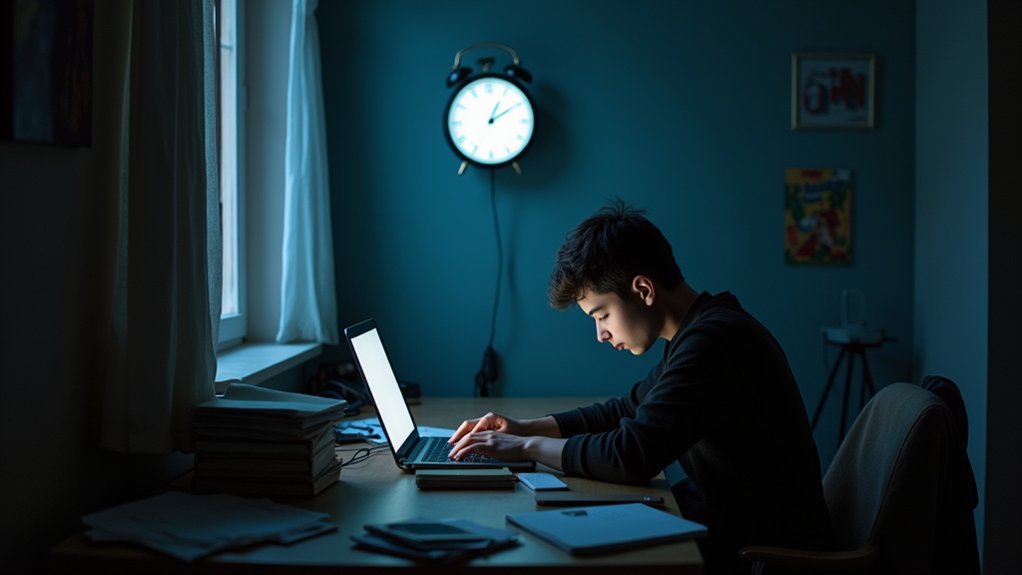
The essential window for light exposure damage begins around 2 PM and extends through bedtime.
During these critical evening hours, your overhead lights become circadian rhythm saboteurs, disrupting your body’s natural preparation for sleep.
Here’s when overhead lights cause maximum disruption:
- 2-6 PM: Bright light exposure starts interfering with your body’s change signals.
- 6-8 PM: Color temperature from overhead fixtures confuses your internal clock.
- 8-10 PM: Melatonin production becomes greatly suppressed by continued bright light.
- 10 PM-bedtime: Any overhead lighting creates the most severe circadian misalignment.
Your sleep quality suffers most when you’re exposed to these fixtures during late afternoon and evening.
The neutral color temperature of typical overhead lights tricks your brain into believing it’s still daytime, leading to long-term health issues.
Health Consequences of Poor Bedroom Lighting Choices
Your bedroom’s overhead lighting doesn’t just keep you awake—it triggers a cascade of biological disruptions that compromise your body’s core sleep mechanisms.
When you’re exposed to bright, cool-toned lights during evening hours, you’re fundamentally hijacking your circadian rhythm and suppressing melatonin production, which makes falling asleep and staying asleep considerably harder.
These lighting choices create long-term health consequences that extend far beyond temporary tiredness, potentially increasing your risk of obesity, diabetes, and mood disorders through chronic circadian misalignment.
Sleep Disruption Mechanisms
When overhead fixtures flood your bedroom with bright, cool light ranging from 3000K to 4500K, they confuse your body’s internal clock and prevent the natural decrease in melatonin production that’s essential for sleep onset.
This exposure to artificial lights triggers specific mechanisms that sabotage your circadian rhythm and compromise sleep quality.
Here’s how overhead fixtures disrupt your sleep:
- Increased alertness – Harsh lighting keeps your brain in wake mode, making you feel less sleepy when you should be winding down.
- Prolonged sleep latency – You’ll take longer to fall asleep as your body struggles to shift into rest mode.
- Melatonin suppression – Blue light exposure can reduce melatonin levels by 50% or more.
- Stress response activation – Poor lighting creates an environment that promotes insomnia and sleep disorders.
Long-Term Health Impacts
While disrupted sleep from poor bedroom lighting might seem like a minor inconvenience, it creates a cascade of serious health problems that compound over time.
Your overhead fixtures with harsh light temperature consistently interrupt circadian rhythms, leading to chronic sleep quality deterioration that increases your risk of obesity, diabetes, and cardiovascular disease.
Poor lighting choices don’t just affect your physical health—they greatly impact your mental health too.
When you’re exposed to bright overhead fixtures during evening hours, you’ll experience mood disruption and heightened stress levels.
This combination of factors creates a vicious cycle where insomnia perpetuates itself, leading to daytime cognitive impairment and reduced productivity.
Your overall health suffers as these long-term health consequences accumulate, making proper bedroom lighting essential for maintaining wellness.
Alternative Lighting Solutions for Better Sleep Hygiene
Since traditional overhead fixtures can sabotage your sleep with their static color temperatures, you’ll need to explore lighting alternatives that work with your body’s natural rhythms instead of against them.
Your bedroom lighting could be the hidden culprit disrupting your sleep cycle and preventing restorative rest.
Here are four effective solutions to improve your sleep hygiene:
- Install dimmers throughout your home – Control brightness levels to gradually reduce light intensity as evening approaches, signaling your body to prepare for rest.
- Add task lighting at lower levels – Position lamps and decorative fixtures below eye level to minimize glare and create comfortable ambient lighting.
- Use circadian lighting systems – Invest in fixtures that automatically shift from cool morning tones to warm lighting as day changes to night.
- Implement red or warm evening lights – Switch to low-intensity warm bulbs for nighttime activities to preserve melatonin production and achieve better sleep quality.
Smart Lighting Technologies That Support Natural Rhythms
Although basic dimmers and warm bulbs can help, smart lighting technologies take circadian support to the next level by automatically mimicking natural sunlight patterns throughout your day.
These circadian lighting systems use sensors to adjust color temperature based on external conditions, ensuring your indoor environment stays aligned with your biological clock. You can program personalized schedules that deliver bright, cool light during daytime hours to boost energy levels, then shift to warm, dim lighting as evening approaches.
This automation helps regulate melatonin production naturally, reducing sleep disorders that traditional overhead fixtures often cause.
Creating an Optimal Bedroom Environment for Circadian Health
Smart lighting technologies work best when paired with a bedroom environment specifically designed to support your circadian health.
Your bedroom’s natural light sources and artificial lighting greatly impact your internal clock’s ability to regulate sleep onset.
Here’s how to enhance your space:
- Install blackout curtains to eliminate external light sources that interfere with melatonin production and disrupt good quality sleep.
- Maintain cool temperatures between 60-67°F to support your body’s natural temperature drop during sleep onset.
- Use dim warm lighting with lower correlated color temperature (CCT) during evening hours instead of bright overhead fixtures.
- Remove blue light devices like smartphones and TVs from your bedroom to prevent circadian rhythm disruption.
These changes create an environment where your internal clock can function at its best.
Frequently Asked Questions
What Can Disrupt Circadian Rhythm?
You’ll disrupt your circadian rhythm through irregular sleep schedules, excessive screen time, shift work, jet lag, caffeine late in the day, bright lights at night, and inconsistent meal timing patterns.
Do LED Lights Disrupt Circadian Rhythm?
Yes, LED lights can disrupt your circadian rhythm, especially those above 3000K that emit blue light. They’ll suppress melatonin production and delay sleep if you’re exposed during evening hours.
What Is an Activity That Can Typically Disrupt Our Circadian Rhythms?
You’re disrupting your circadian rhythm when you use bright screens, work night shifts, travel across time zones, drink caffeine late, exercise vigorously before bed, or maintain irregular sleep schedules consistently.
Can Head Injury Throw off Your Circadian Rhythms?
Yes, head injuries can severely disrupt your circadian rhythms by damaging your brain’s suprachiasmatic nucleus. You’ll likely experience sleep disorders, reduced melatonin production, and worse disruption with more severe injuries.
In Summary
You’ve learned how overhead fixtures can sabotage your sleep by disrupting your body’s natural rhythms. It’s time to make changes. Start by dimming or avoiding ceiling lights at least two hours before bed. Consider investing in warmer, lower-positioned lamps and smart lighting systems that adjust throughout the day. Your circadian rhythm will thank you, and you’ll experience deeper, more restorative sleep that improves your overall health.




Leave a Reply