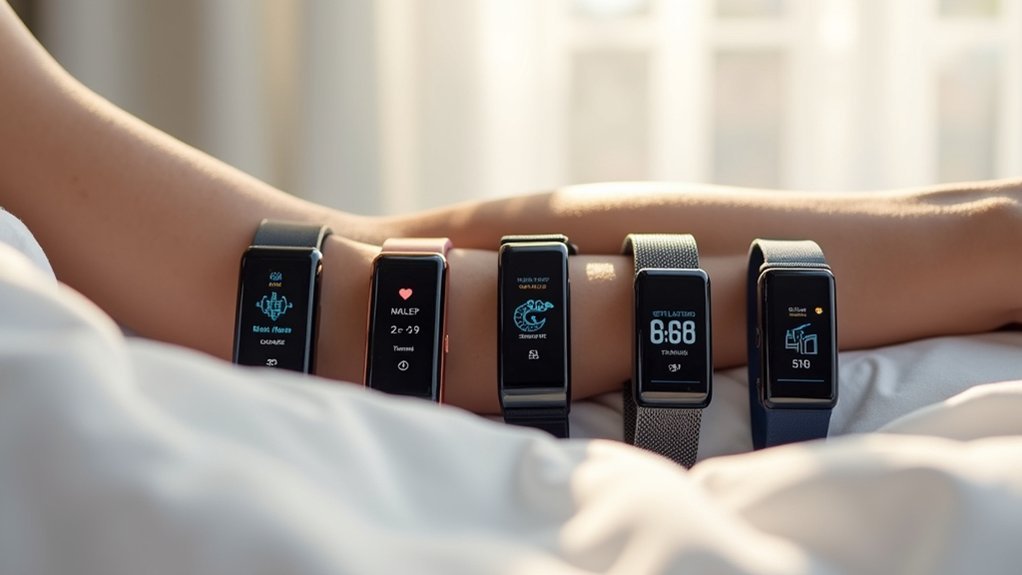
You’re probably tired of waking up groggy, wondering if you actually got quality sleep last night. While basic fitness trackers count steps and calories, the game-changing models of 2025 go deeper into your sleep cycles, revealing insights that could transform your energy levels and overall health. The right device won’t just tell you how long you slept—it’ll show you exactly why you’re still exhausted and what you can do about it.
Fitness Tracker Watch with Sleep Tracker/IP68 Waterproof (Compatible Android iOS)
If you’re seeking an affordable entry point into extensive health monitoring, the TOOBUR Fitness Tracker Watch delivers impressive functionality without breaking the bank. You’ll get 24/7 heart rate and stress monitoring, plus thorough sleep tracking across awake, light, and deep phases through the VeryFit app. The IP68 waterproof rating handles swimming and intense workouts across 14 sports modes. You can receive notifications from your Android or iOS device via Bluetooth connectivity. The impressive battery lasts 5-7 days with regular use, charging fully in just two hours. While step counting isn’t perfect, it’s excellent value for fitness tracking beginners.
Best For: Budget-conscious fitness beginners who want comprehensive health monitoring features including sleep tracking, heart rate monitoring, and waterproof capabilities for swimming and various sports activities.
Pros:
- Excellent battery life with 5-7 days of regular use and quick 2-hour charging time
- Comprehensive health monitoring including 24/7 heart rate, stress levels, and detailed sleep phase tracking
- IP68 waterproof rating suitable for swimming and 14 different sports modes
Cons:
- Step counting accuracy issues due to sensitivity to arm movement
- Small display may be difficult to read for older users
- Privacy concerns with the VeryFit app requiring extensive permissions and data access
Smart Watch Fitness Tracker with Heart Rate Monitor
This Smart Watch Fitness Tracker stands out with its extensive 24/7 health monitoring system that tracks heart rate, blood oxygen levels, and blood pressure alongside detailed sleep analysis. You’ll get thorough sleep reports through the FitCloudPro app that break down your deep sleep, light sleep, and wake-up patterns.
The device supports 114+ sports modes while maintaining IP67 waterproof protection for daily activities. You can make calls via Bluetooth connectivity and customize watch faces to match your style. The 230mAh battery delivers 3-7 days of heavy usage with just two hours of charging. You’re covered by a 5-year warranty and 24/7 technical support for peace of mind.
Best For: Fitness enthusiasts and health-conscious individuals who want comprehensive 24/7 health monitoring, extensive sports tracking capabilities, and smart connectivity features in a durable, waterproof device with long battery life.
Pros:
- Comprehensive health monitoring with 24/7 heart rate, SpO2, blood pressure tracking, and detailed sleep analysis through the FitCloudPro app
- Extensive activity support with 114+ sports modes, IP67 waterproof rating, and Bluetooth call functionality with customizable watch faces
- Excellent battery performance providing 3-7 days of heavy use with only 2 hours charging time, backed by 5-year warranty and 24/7 tech support
Cons:
- Blood pressure monitoring accuracy may not match medical-grade devices and should not replace professional medical equipment
- With 114+ sports modes and numerous features, the interface and app navigation could potentially feel overwhelming for users seeking simplicity
- IP67 waterproof rating covers light water exposure but may not be suitable for swimming or high-pressure water activities
Fitbit Inspire 3 Health & Fitness Tracker with Sleep & Heart Rate Monitoring
The Fitbit Inspire 3 stands out as an exceptional choice for users who want thorough sleep insights without breaking the bank. You’ll receive automatic sleep tracking, a personalized Sleep Profile, and daily Sleep Score to help optimize your rest. The device monitors your sleep stages and includes a smart wake vibrating alarm that gently rouses you during lighter sleep phases.
Beyond sleep, you’ll enjoy 24/7 heart rate monitoring, stress management features, and up to 10 days of battery life. The 50-meter water resistance and color touchscreen add practical value, making this tracker versatile for daily use.
Best For: Budget-conscious users seeking comprehensive sleep tracking and reliable fitness monitoring with extended battery life.
Pros:
- Exceptional 10-day battery life and 50-meter water resistance for versatile daily use
- Comprehensive sleep analysis including personalized Sleep Profile, daily Sleep Score, and smart wake alarm
- Strong value proposition with 24/7 heart rate monitoring, stress management features, and 6-month Premium membership included
Cons:
- Limited recovery tracking capabilities compared to higher-end fitness trackers
- Heart rate zone monitoring may not function properly during swimming activities
- Strap durability issues reported by some users requiring eventual replacement
Fitbit Charge 6 Fitness Tracker with Google Apps & GPS
Google app integration sets Fitbit’s Charge 6 apart for users who want seamless connectivity between their fitness tracker and daily digital habits. You’ll access YouTube Music, Google Maps, and Google Wallet directly from your wrist while tracking sleep stages, heart rate, and 40+ exercise modes.
The 1.04-inch touchscreen delivers clear visibility, and you’ll get 5-7 days of battery life with 90-minute charging. Users praise its accurate sleep and heart rate monitoring, plus ECG and stress management tools. However, you might encounter band durability issues and inaccurate distance tracking. The 6-month Premium membership adds value, though some features require ongoing subscriptions.
Best For: Users who want Google app integration with fitness tracking and prefer a cost-effective alternative to smartwatches while needing accurate health monitoring.
Pros:
- Google apps integration (YouTube Music, Google Maps, Google Wallet) provides seamless connectivity from your wrist
- Accurate sleep and heart rate monitoring with additional ECG and stress management tools
- Excellent battery life of 5-7 days with quick 90-minute charging time
Cons:
- Band durability issues and potential fit problems reported by users
- Inaccurate distance tracking and calorie burn estimates
- Cannot sync with iPhone Fitness app and requires subscriptions for some premium features
Fitbit Versa 4 Fitness Smartwatch with GPS & Heart Rate Tracking
Earning a 4.3-star rating from over 15,000 users, Fitbit’s Versa 4 stands out as an excellent choice for fitness enthusiasts who want detailed sleep insights without sacrificing smartwatch functionality. You’ll get personalized Sleep Profiles, daily sleep stages analysis, and Sleep Scores that help optimize your rest patterns. The device excels with its 6+ day battery life, built-in GPS, and 24/7 heart rate monitoring. You can track 40+ exercise modes while monitoring stress levels and SpO2. Smart features include Alexa integration, on-wrist calls, and Fitbit Pay. At 6.4 ounces with water resistance up to 50 meters, it’s perfect for extensive health tracking.
Best For: Fitness enthusiasts who prioritize comprehensive sleep tracking, long battery life, and detailed health monitoring while wanting essential smartwatch features like GPS and heart rate tracking.
Pros:
- Exceptional 6+ day battery life with comprehensive fitness tracking including built-in GPS, 24/7 heart rate monitoring, and 40+ exercise modes
- Advanced sleep analysis with personalized Sleep Profiles, daily sleep stages, and Sleep Scores for optimizing rest patterns
- Strong smart features including Amazon Alexa integration, on-wrist calls, Fitbit Pay, and water resistance up to 50 meters
Cons:
- Mixed user feedback regarding notification reliability and call handling functionality
- Initial setup and syncing issues reported by users, though resolved with app updates
- Build quality and materials received mixed reviews from customers despite overall positive ratings
Factors to Consider When Choosing Fitness Trackers With Advanced Sleep Tracking Features
When you’re selecting a fitness tracker for sleep monitoring, you’ll need to evaluate several critical features that directly impact your experience. Sleep tracking accuracy tops the list, but you can’t overlook battery life duration, comfort during sleep, app data analysis capabilities, and water resistance level. These factors work together to determine whether your device will provide reliable, long-term sleep insights without disrupting your nightly routine.
Sleep Tracking Accuracy
Since sleep tracking accuracy varies dramatically between devices, you’ll want to understand how different fitness trackers measure and interpret your nightly rest before making a purchase. Higher-end models typically use sophisticated algorithms and advanced sensors to differentiate between light, deep, and REM sleep stages through heart rate variability and motion data analysis.
You should know that continuous heart rate monitoring helps detect sleep disturbances, awakenings, and restlessness throughout the night. However, accuracy depends heavily on sensor quality and proper device placement. Your sleeping position can also influence readings, potentially causing discrepancies in reported sleep duration and quality.
Look for trackers that analyze your sleep patterns over time, offering personalized recommendations based on your behavior and trends for improved sleep quality.
Battery Life Duration
Battery life stands as one of the most critical factors you’ll need to evaluate when selecting a fitness tracker for sleep monitoring, since dead devices can’t collect the continuous data necessary for accurate sleep analysis. You’ll want a tracker offering at least 7 days of battery life to guarantee uninterrupted data collection across multiple nights without frequent charging disruptions.
Many trackers deliver impressive longevity, with some lasting up to 30 days on standby and 5-7 days during regular use. However, you should consider how features like continuous heart rate monitoring can reduce overall battery performance. Look for devices with fast charging capabilities—some require only 2 hours for full charging, minimizing downtime and maximizing your sleep tracking consistency.
Comfort During Sleep
Beyond ensuring your tracker stays powered through the night, you’ll need to contemplate how comfortable the device feels on your wrist during sleep. Weight plays a significant role in your ability to fall asleep, with lighter models generally preferred for overnight wear. You’ll want to prioritize trackers featuring soft, breathable materials and adjustable bands that won’t cause irritation or leave marks on your skin.
Consider the device’s size and display carefully—smaller, less obtrusive designs minimize distractions while you’re resting. Look for trackers offering dedicated sleep modes that automatically reduce screen brightness and disable vibrations during nighttime hours. These features prevent unnecessary interruptions that could fragment your sleep cycles. A well-designed ergonomic tracker shouldn’t remind you it’s there, allowing for natural movement and uninterrupted rest throughout the night.
App Data Analysis
While comfort guarantees you’ll actually wear your tracker to bed, the real value lies in how effectively the companion app analyzes and presents your sleep data. Look for apps that break down your sleep into distinct stages—deep, light, and REM—providing thorough insights beyond basic duration tracking. The best platforms offer personalized sleep scores with actionable recommendations to improve your sleep hygiene.
You’ll want detailed graphs and statistics that reveal long-term patterns, helping you identify lifestyle factors affecting your rest quality. Apps that integrate sleep data with heart rate variability, stress levels, and daily activity create a holistic wellness picture. This cross-referencing enables you to make informed decisions about bedtime routines, caffeine intake, and exercise timing that directly impact your sleep performance.
Water Resistance Level
Although sleep tracking might seem like a dry-land activity, water resistance becomes essential when you’re wearing your fitness tracker 24/7. You’ll sweat during workouts and sleep, exposing your device to moisture constantly.
Look for trackers with IP68 ratings if you swim or shower while wearing them. This rating provides full dust protection and handles submersion beyond one meter. If you only need protection from rain and splashes, IP67 ratings work fine, protecting against water immersion up to one meter for thirty minutes.
Higher water resistance ratings let you maintain consistent sleep data without removing your tracker for various activities. Always check manufacturer specifications to verify your chosen device handles your intended water exposure level during workouts and daily routines.
Price Value Comparison
When evaluating fitness trackers with advanced sleep tracking features, you’ll encounter a wide price spectrum ranging from budget-friendly $30 models to premium devices exceeding $200. You’ll need to weigh battery life carefully, as some trackers offer impressive 30-day standby time while others last only 5-10 days, affecting daily convenience. Consider how many sports modes you’ll actually use – some devices boast over 100 modes, but you might not need them all. Higher-priced models typically include smartphone notifications and seamless health app integration. Don’t overlook warranty coverage and customer support quality, which often improve with pricier options, potentially offering better long-term value for your investment.
Frequently Asked Questions
How Accurate Are Fitness Tracker Sleep Stages Compared to Medical Sleep Studies?
You’ll find fitness trackers are moderately accurate for basic sleep stages, typically 70-80% compared to medical polysomnography. They’re less precise with REM detection but reasonably good at identifying deep sleep patterns.
Can Sleep Tracking Drain Battery Life Significantly on Fitness Trackers?
Sleep tracking can moderately drain your fitness tracker’s battery, but it’s typically minimal. You’ll lose about 5-15% extra battery daily since sensors continuously monitor movement, heart rate, and sometimes blood oxygen throughout the night.
Do Fitness Trackers Work for People With Sleep Disorders Like Sleep Apnea?
You’ll find fitness trackers can detect some sleep apnea patterns, but they’re not medical diagnostic tools. They’ll monitor oxygen levels and breathing irregularities, helping you identify potential issues to discuss with your doctor.
How Long Should I Wear a Fitness Tracker Before Getting Reliable Data?
You’ll need to wear your fitness tracker for at least one week to establish baseline patterns. For truly reliable sleep data, aim for two to three weeks of consistent nightly wear.
Can I Share My Sleep Tracking Data With My Doctor Easily?
You can easily share your sleep data with your doctor through most fitness trackers’ companion apps. They’ll generate detailed reports you can email or print, making it simple to discuss sleep patterns during appointments.




Leave a Reply