
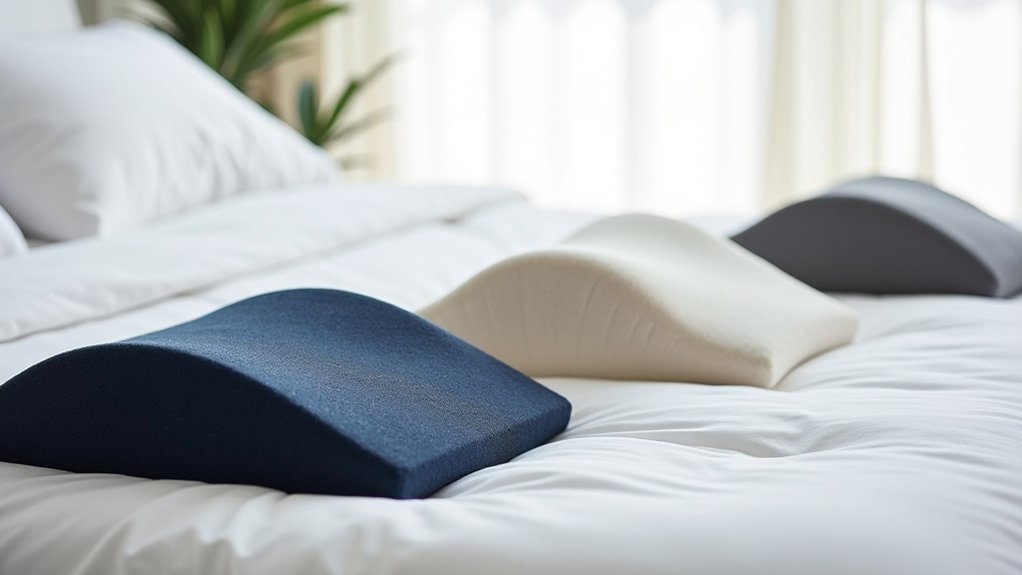
You’ve probably experienced that uncomfortable leg swelling after a long day, surgery, or extended periods of sitting. While propping your legs up with regular pillows might seem like a solution, physical therapists know there’s a significant difference between makeshift elevation and proper therapeutic support. The right leg elevation pillow can transform your circulation, reduce pain, and accelerate recovery—but only if you choose one that meets specific clinical standards most people overlook.
Leg Elevation Pillow with Soft Memory Foam
If you’re recovering from surgery or dealing with chronic leg pain, the Leg Elevation Pillow with Soft Memory Foam delivers targeted relief through its ergonomic wedge design. The premium high-density memory foam contours to your body’s natural curves, supporting your ankles, calves, knees, and thighs while improving blood circulation. At 24″ long by 17″ wide, it comfortably accommodates one or both legs with medium-firm support. You’ll appreciate the washable, removable cover and non-slip rubber pads that prevent sliding. With 4.4 out of 5 stars from 241 customers, it’s proven effective for reducing varicose veins and alleviating pain from prolonged sitting or standing.
Best For: People recovering from surgery, those with chronic leg pain, varicose veins, or circulation issues, and anyone who experiences discomfort from prolonged sitting or standing.
Pros:
- Premium high-density memory foam contours to body’s natural curves and maintains shape over time
- Versatile design works for post-surgery recovery, pain relief, and general relaxation while reading or watching TV
- Practical features include washable removable cover and non-slip rubber pads to prevent sliding
Cons:
- Some customers have concerns about the overall size not meeting their expectations
- Zipper durability issues reported in customer feedback
- Medium-firm support may not suit those who prefer softer or firmer cushioning
Leg Elevation Pillow for After Surgery, Height Adjustable Memory Foam Wedge
Recovery from surgery demands proper leg elevation, and this height-adjustable memory foam wedge delivers three distinct positioning options to meet your changing needs. You’ll choose between 3, 6, and 9-inch heights for personalized comfort throughout your healing process. The 40º incline and U-shaped groove contour to your legs, reducing pressure points while improving circulation and minimizing swelling. High-density memory foam provides firm yet comfortable support that won’t lose its shape. Front and side handles make repositioning effortless, while anti-slip silicone particles keep the pillow stable. The removable cover’s machine-washable for easy maintenance during extended recovery periods.
Best For: Post-surgery patients, people with leg swelling or circulation issues, and anyone needing comfortable leg elevation for reading or relaxation.
Pros:
- Three adjustable height settings (3, 6, and 9 inches) provide versatile positioning options for different recovery stages
- Ergonomic 40º incline with U-shaped groove contours to leg shape while reducing pressure points
- Convenient features including carry handles, anti-slip base, and machine-washable removable cover
Cons:
- Memory foam may retain heat during extended use, potentially causing discomfort
- Limited to three fixed height positions rather than infinite adjustability
- May be too firm for some users who prefer softer cushioning materials
Leg Elevation Pillows, Memory Foam Wedge Pillow for Pain Relief (8 Pack)
The Memory Foam Wedge Pillow for Pain Relief stands out as an orthopedist-tested solution crafted by American ergonomics experts specifically for users dealing with leg swelling, knee pain, ankle discomfort, and back issues. You’ll appreciate its 19.5 x 16 x 8-inch dimensions and high-density medical grade memory foam construction that provides ideal body contouring. The anti-slip bottom prevents movement while you’re using it for sciatica relief, varicose veins, or post-surgery recovery. You’ll find the machine washable cover and portable design with handles particularly convenient. With a 4.4-star rating from 408 reviews and a one-year warranty, it’s earned its #62 ranking among leg positioner pillows.
Best For: People suffering from leg swelling, knee pain, ankle discomfort, back issues, sciatica, varicose veins, or those recovering from surgery who need elevation and support for pain relief and improved circulation.
Pros:
- Orthopedist-tested design made from high-density medical grade memory foam with anti-slip bottom for stability
- Versatile usage for multiple conditions and activities including sleeping, reading, and post-surgery recovery
- Convenient features like machine washable cover, portable design with handles, and comes in an 8-pack
Cons:
- Some users report needing additional padding for enhanced comfort
- Large dimensions (19.5 x 16 x 8 inches) may not fit all bed sizes or spaces
- Memory foam may retain heat, potentially causing discomfort for some users
Factors to Consider When Choosing Leg Elevation Pillows for Circulation and Comfort
When you’re selecting a leg elevation pillow, you’ll need to evaluate the material and foam quality to guarantee proper support and durability. Consider the size and height options that match your specific needs, along with ergonomic design features that promote ideal circulation. Don’t overlook stability features that prevent slipping and cover materials that make maintenance simple.
Material and Foam Quality
Comfort and durability hinge on the foam quality you’ll find inside your leg elevation pillow. High-density memory foam stands out as the top choice because it maintains its shape while delivering firm yet soft support that won’t flatten over time. You’ll want premium memory foam that’s breathable, allowing proper air circulation to keep you comfortable during extended use and prevent overheating.
The foam’s ergonomic design matters greatly since it should contour to your body’s natural curves. This contouring provides better alignment and pressure distribution, which helps alleviate pain and improve blood circulation. Look for pillows with anti-slip features like silicone particles or rubber pads on the bottom to prevent unwanted movement and enhance stability during use.
Size and Height Options
Beyond foam quality, finding the right size and height for your leg elevation pillow directly impacts its effectiveness for circulation and comfort. Standard dimensions of 24 inches long by 17 inches wide accommodate one or both legs comfortably. You’ll want to take into account adjustable height options, which typically offer 3, 6, and 9-inch settings to match your specific needs and comfort preferences.
A proper 40º incline angle helps contour to your leg shape while providing ideal elevation for blood flow. Some models feature 8-inch thickness for additional lift, which can further enhance circulation benefits. Make sure the pillow’s dimensions align with your body size and available space. Choosing the wrong size can reduce effectiveness and leave you uncomfortable during extended use sessions.
Ergonomic Design Features
While size matters for basic functionality, ergonomic design features determine whether you’ll experience genuine comfort and therapeutic benefits during use. Look for pillows with contoured surfaces that align with your body’s natural curves, reducing pressure points and enhancing comfort. A 40º incline angle optimizes blood circulation while promoting relaxation. U-shaped grooves are particularly effective, conforming to your leg shape for superior stability and support.
Height adjustability is essential for personalized comfort. Models offering multiple elevation levels—typically 3, 6, and 9 inches—let you customize support based on your specific needs. Don’t overlook anti-slip features like silicone particles on the pillow’s bottom surface. These materials prevent unwanted movement across various surfaces, maintaining proper positioning and enhancing your overall ergonomic experience throughout extended use sessions.
Stability and Slip Prevention
Three key stability factors separate premium leg elevation pillows from basic models that constantly shift and slide. First, you’ll find anti-slip bases featuring silicone particles or rubber pads that grip various surfaces effectively. These materials prevent unwanted movement whether you’re using the pillow on leather, fabric, or smooth bedding.
Second, look for wider base designs that distribute weight evenly and resist tipping. This becomes essential when you’re repositioning during sleep or recovery periods.
Third, consider pillows with textured covers that create friction against your legs and clothing. Without proper stability features, your pillow’s therapeutic benefits diminish considerably. You’ll lose the consistent elevation needed for improved circulation, and shifting pillows increase accident risks—especially important if you’re recovering from surgery or managing mobility challenges.
Cover and Maintenance Requirements
Cover quality and maintenance requirements directly impact your leg elevation pillow’s longevity and hygiene standards. You’ll want removable, machine-washable covers that make cleaning effortless and maintain proper sanitation. Look for soft, breathable materials that enhance comfort while regulating temperature during extended use.
Durability matters considerably when selecting cover materials. You need fabrics that withstand frequent washing cycles without compromising quality, fit, or appearance. Hotel-quality covers offer luxurious comfort and superior construction that enhances your overall experience.
Consider pillows featuring anti-slip bottoms that secure the pillow during use across different surfaces. This prevents unwanted movement that could disrupt your positioning. Quality covers combined with practical features like slip-resistant bases guarantee you’re investing in a pillow that delivers consistent performance and easy maintenance throughout its lifespan.
Frequently Asked Questions
How Long Should I Elevate My Legs Each Day for Optimal Circulation Benefits?
You should elevate your legs for 15-20 minutes several times daily. Start with shorter sessions and gradually increase duration. Don’t exceed 30 minutes at once, as prolonged elevation can reduce blood flow to your feet.
Can Leg Elevation Pillows Help With Restless Leg Syndrome Symptoms?
You’ll find leg elevation pillows can provide some relief for restless leg syndrome by improving circulation and reducing pressure. However, they’re not a cure-all solution, so you’ll need additional treatments for thorough management.
Are There Any Medical Conditions Where Leg Elevation Should Be Avoided?
You shouldn’t elevate your legs if you’ve got severe heart failure, certain blood clots, or acute kidney problems. Always check with your doctor first, especially if you’re dealing with cardiovascular issues.
What’s the Ideal Angle for Leg Elevation to Improve Blood Flow?
You’ll want to elevate your legs at a 15-30 degree angle for ideal blood flow. This gentle incline helps gravity assist venous return without putting excessive strain on your back or causing discomfort during extended periods.
Can I Use Regular Pillows Instead of Specialized Leg Elevation Pillows?
You can use regular pillows, but they won’t maintain the proper angle consistently. They’ll compress and shift during use, reducing effectiveness. Specialized elevation pillows provide better support and maintain ideal positioning for improved circulation.




Leave a Reply